 Anacortes Exterior
 Composite Decking Built for Edison's Weather, Not Just Installed In It
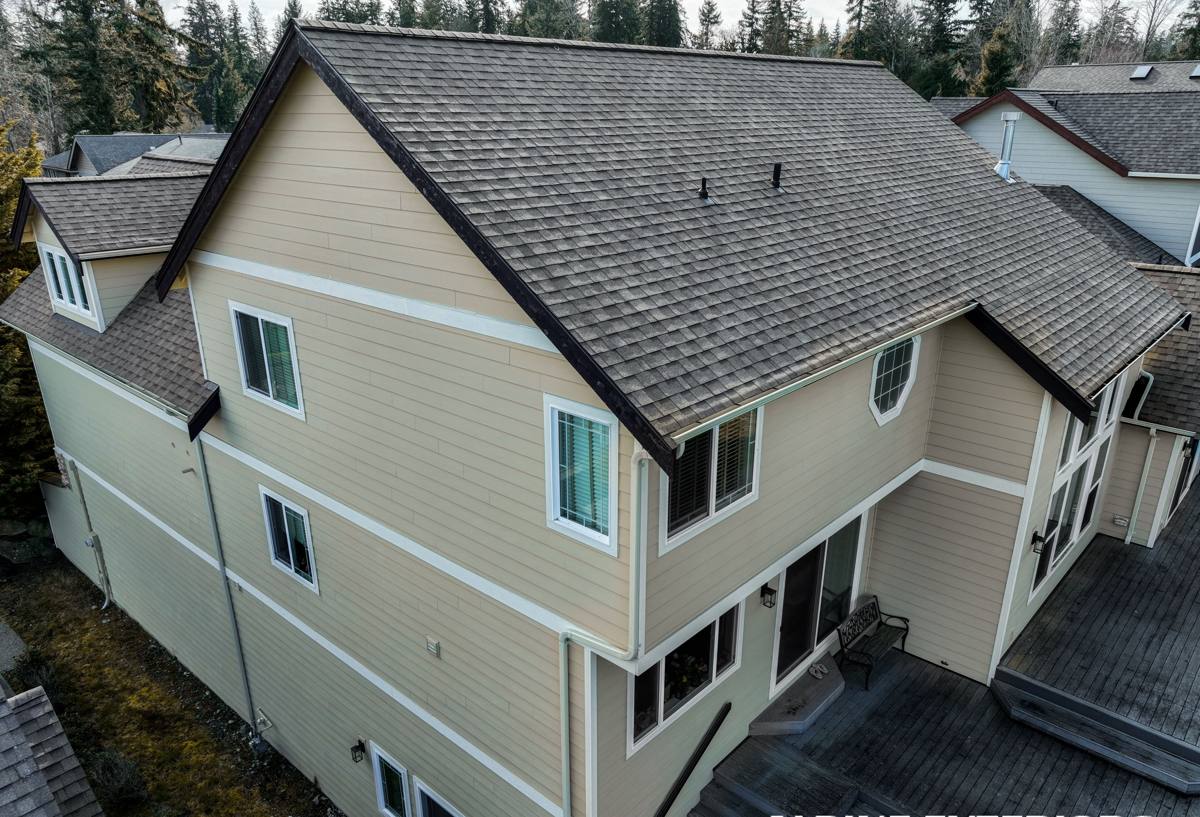
Edison sits low in the Skagit Valley, close enough to Samish Bay and the tidal flats that the air carries salt most of the year, and close enough to farmland and tree cover that shade and standing moisture are a fact of life. A deck out here doesn't fail because someone picked a bad color. It fails because the board, the fasteners, or the framing underneath it weren't matched to what this specific stretch of Skagit County throws at outdoor wood day after day. We build and replace composite decks for homes in and around Edison, and the work changes because the conditions here are different from a dry backyard twenty miles inland.
What This Climate Actually Does to a Deck
Three things do most of the damage to decking around Edison, and they work together rather than separately.
Salt-Laden Air
Proximity to Samish Bay means fine salt content in the air, especially on windier days. Salt accelerates corrosion in exposed metal fasteners, screws, and structural hardware. It doesn't hurt composite boards directly the way it hurts bare wood or untreated steel, but it absolutely shortens the life of whatever holds the deck together underneath.
Driving Rain
Skagit County gets a long wet season, and rain here often comes with wind behind it, pushing water sideways into ledger connections, under rail posts, and into any gap that wasn't flashed or sealed correctly. A deck that's fine in a light, straight-down rain can still take on water at the house connection when storms roll through sideways off the water.
Extended Moss and Algae Season
Edison's mix of farmland humidity, tree shade, and slow-drying conditions means moss and algae get a long window to establish themselves — often eight or nine months of the year rather than just winter. Once moss gets a foothold on a deck surface, it holds moisture against the board, and on wood decking that's the beginning of rot. On composite decking it's mostly a surface and slip-hazard issue rather than a structural one, but it still needs to be dealt with.
Why Composite Decking Fits This Environment
We don't push composite decking on every job — it's not the right call for every budget or every homeowner's taste. But for a property in Edison's climate, it solves the two biggest recurring problems we see with wood decks in this area: rot from sustained moisture exposure, and the endless cycle of sanding, staining, and sealing that wood needs to survive salt air and rain.
- Composite boards don't absorb water the way wood fibers do, so they don't swell, crack, or rot from repeated wet-dry cycles.
- They don't need annual staining or sealing, which matters if you don't want yearly maintenance weekends.
- Capped composite boards resist moss and algae staining far better than wood, and what does grow on the surface rinses off more easily.
- Color and grain hold up better under UV and salt exposure over the long term compared to painted or stained wood.
The trade-off is upfront cost and the fact that composite is a manufactured product — it has to be installed to spec, with correct spacing and ventilation, or it won't perform the way it's supposed to. That's the part that separates a deck that lasts from one that doesn't.
Composite Board Types: What's Actually Different
Not all composite decking is built the same way, and the differences matter more in a wet, salty climate than they would somewhere dry.
| Board Type | Moisture Behavior | Maintenance | Best Fit for Edison |
|---|---|---|---|
| Uncapped composite | Wood fiber content can absorb some moisture at cut ends and edges over time | Occasional cleaning; more prone to surface staining | Lower cost option; needs careful edge sealing at cuts |
| Capped composite (cap on top only) | Top surface resists moisture and staining well; edges still exposed | Low; rinse to control moss and algae | Good middle-ground for most Edison homes |
| Fully capped composite (cap on all sides) | Best resistance to moisture intrusion at cut ends and edges | Lowest; best moss/algae resistance | Best fit for exposed, shaded, or waterfront-adjacent lots |
| PVC decking | No wood content; essentially immune to moisture absorption | Very low | Strong option where moisture exposure is severe, at a higher price point |
We'll walk through which category actually makes sense for your lot, your sun exposure, and your budget rather than defaulting to whatever has the best margin. A shaded, moss-prone yard in Edison often justifies spending more on a fully capped board; a sunny, open lot may not need it.
What "Correct" Actually Involves
Getting the composite decking material right is maybe half the job. The other half is what's underneath and how it's fastened.
What a Correct Installation Involves
Framing and Substructure
Composite boards are heavier than wood and behave differently under load and temperature change, so joist spacing has to match the manufacturer's specification for that specific board — not a generic "16 inches on center" assumption carried over from wood-deck habits. Undersized or incorrectly spaced framing is one of the most common causes of bounce, sag, and premature board wear we find when we're asked to fix someone else's deck.
Fasteners and Hardware
Given the salt content in the air near the bay, we use corrosion-resistant fasteners and structural connectors rated for coastal or high-moisture exposure, not standard interior-grade hardware. This is one of the easiest things for a crew to cut corners on because it's invisible once the deck is finished — and one of the fastest things to fail if it's wrong.
Ledger Board Flashing
Where the deck connects to the house, proper flashing keeps wind-driven rain from working its way behind the ledger board and into the wall structure. This connection point is the single most common source of hidden water damage on decks in this region, because it's easy to see a finished deck and assume the connection underneath was done right.
Ventilation and Drainage
Composite decking still needs airflow underneath to dry out properly after rain and to keep moss from taking hold in shaded gaps. Skirting, if you want it for appearance, needs venting built in rather than sealing the underside completely.
Our Process for an Edison Deck
- On-site assessment — we look at sun exposure, shade patterns, drainage, and the condition of any existing structure before recommending a board type.
- Honest material recommendation — based on your specific lot conditions and budget, not a one-size-fits-all pitch.
- Permitting — where required, we handle the paperwork with the county so you're not chasing it down yourself.
- Demolition and framing — old decking removed, substructure inspected and rebuilt or reinforced to current spec.
- Installation — boards, fasteners, and flashing installed to manufacturer specification, not shortcut spacing.
- Final walkthrough — we go over the finished deck with you, including basic care specific to your board type.
Living with Moss Season: A Practical Checklist
Composite decking cuts maintenance dramatically compared to wood, but "low maintenance" isn't "no maintenance" in a climate like Edison's. A few habits keep a composite deck looking and performing the way it should through the wet months.
- Sweep debris and organic buildup off the surface regularly, especially in shaded corners where moss gets a head start.
- Rinse the deck with a garden hose periodically through the wet season rather than letting grime sit and accumulate.
- Avoid pressure washing at close range or high PSI — it can damage the surface texture on some composite boards.
- Keep planters and rugs from sitting in one spot for months at a time; trapped moisture under an object is exactly what moss favors.
- Check gaps between boards each season to make sure they haven't filled with debris that blocks drainage.
- Inspect fastener heads and any visible hardware once a year for early signs of corrosion.
Cost Factors to Expect
Composite decking costs vary based on board grade, deck size, framing condition, and site access, but the main cost drivers on an Edison project generally break down like this:
| Factor | Why It Moves the Price |
|---|---|
| Board category | Uncapped, capped, or fully capped/PVC boards carry different material costs |
| Existing structure condition | Rotted or undersized framing needs replacement before new decking goes down |
| Deck size and shape | Cuts, angles, and stairs add labor time beyond straight square footage |
| Railing and fastener specification | Corrosion-resistant hardware and hidden fastener systems cost more than standard-grade options |
| Site access | Tight lots or elevated decks take longer to frame and finish safely |
We'll give you a real number for your specific project rather than a ballpark that doesn't hold up once we're on site.
Why a Crew That Already Works Edison Matters
Edison is a small community, and its building conditions — soil, drainage, wind exposure off the bay, shade patterns from the surrounding farmland and tree lines — aren't identical to a dry, sun-exposed lot elsewhere in Skagit County. A crew that regularly works this specific area already knows which fastener grade holds up, which board types shed moss with the least fuss, and where ledger flashing tends to get skipped by crews unfamiliar with the moisture load here. That local repetition is what keeps a deck performing ten years out, not just at the final walkthrough.
If you're weighing composite decking for a home in Edison, we're happy to take a look and give you a straight assessment — no pressure, no inflated quote to "win" the job. Request a free estimate through the form below and we'll set up a time to come look at your space.