 Anacortes Exterior
 Storm Damage in Edison: What Skagit County Weather Actually Does to a Roof
Edison sits out on the open delta land between Anacortes and Bow, low and flat, with clear exposure to wind coming off Samish Bay. That geography matters when a storm rolls through. Homes here don't have the tree cover or terrain breaks that shelter roofs further inland, so wind gets a straight run at the roof deck, and driving rain gets pushed sideways into laps and flashings that were only ever designed to shed water moving straight down. Add in the salt-laden air off the bay, which speeds up corrosion on fasteners, flashing, and metal roofing, and you've got a roof that ages differently than one ten miles inland in Anacortes proper.
Then there's moss. Skagit County's long wet season — often eight or nine damp months a year — gives moss and algae plenty of time to establish on north-facing slopes and shaded valleys. Moss holds moisture against shingles and shakes far longer than open air would, and during a windstorm, moss mats can actually help wind get a grip under shingle tabs, tearing them loose more easily than on a clean roof. Storm damage in Edison is rarely just "wind damage" in isolation — it's usually wind acting on a roof that's already been softened by months of moss and moisture.
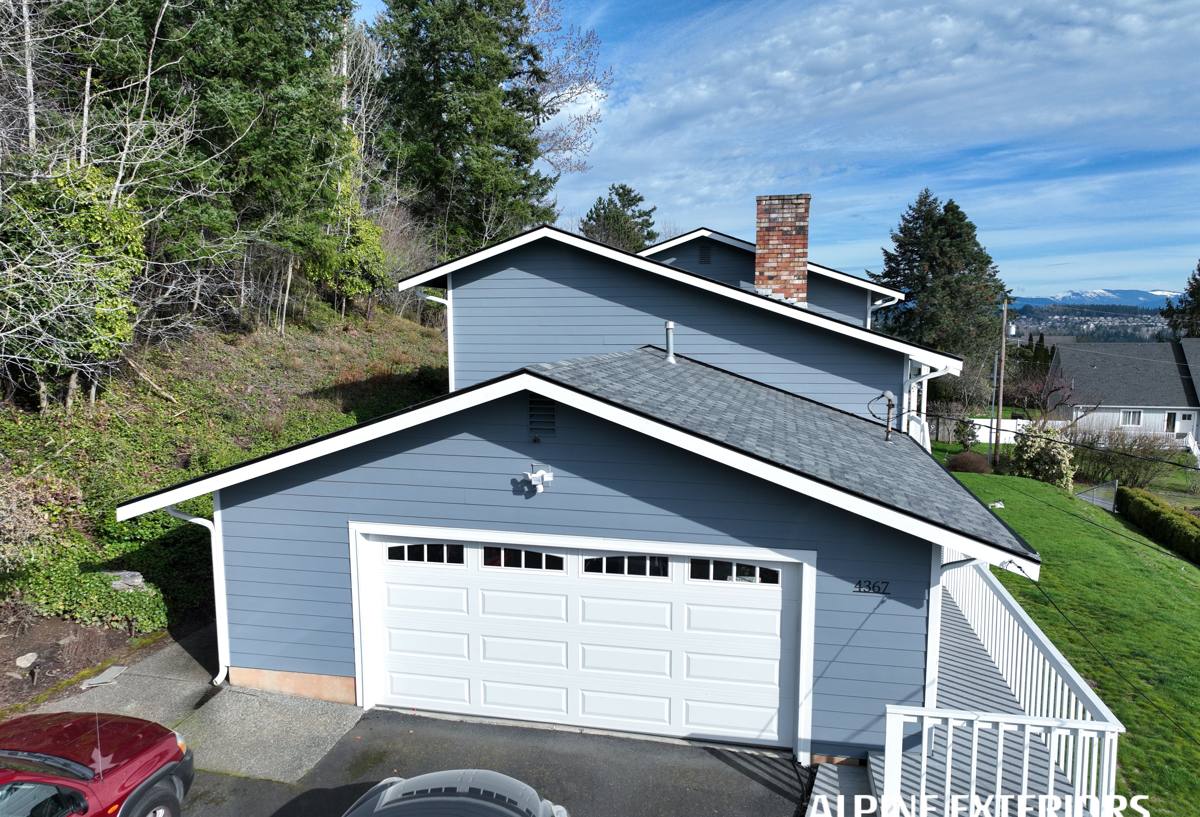
Signs Your Edison Roof Has Storm Damage
Some storm damage is obvious. Most of it isn't — at least not from the ground. Here's what we actually look for, and what you can check yourself without getting on a ladder:
- Shingles or shake pieces in the yard, gutters, or against the fence line after a windstorm
- Shingle tabs that look lifted, curled, or out of alignment when viewed with binoculars from the ground
- Granules collecting in gutters or downspout runoff, especially after heavy rain
- New or worsening stains on interior ceilings, particularly near chimneys, skylights, or where roof planes meet
- Flashing around vents, chimneys, or valleys that looks bent, lifted, or separated
- Soft spots in the roof deck you can feel when walking the attic (a sign water has already gotten past the surface)
- Moss clumps that appear disturbed or torn loose, exposing bare shingle underneath
The tricky part is that wind damage and moisture damage often show up together. A gust can lift a shingle edge just enough to break the seal without tearing it off entirely — the shingle looks fine from the street, but the next rain gets underneath it. That's why a post-storm inspection needs someone actually on the roof, not just a look from the driveway.
Why Delayed Inspection Costs More
A lifted shingle or a cracked flashing seam doesn't announce itself right away. It leaks quietly into the underlayment and decking, and by the time you see a ceiling stain, water has usually been getting in for weeks or months. Catching storm damage within days of a wind event, rather than waiting for visible interior signs, is the single biggest factor in whether a repair stays small or turns into a deck replacement.
What a Correct Storm Damage Repair Involves
A proper storm repair isn't just swapping out the shingles that are obviously missing. It's a sequence:
- Full roof inspection — every slope, not just the damaged area, since wind rarely limits itself to one spot
- Deck check — pulling back damaged material to confirm the plywood or plank decking underneath is dry and sound before anything new goes down
- Underlayment repair or replacement — the water barrier is what actually keeps your home dry; damaged shingles are the visible symptom, but a torn or aged underlayment is often the real vulnerability
- Flashing correction — valleys, chimneys, vents, and wall-to-roof transitions get re-sealed or re-flashed as needed, since these are the most common failure points in wind-driven rain
- Matching material installation — replacement shingles or shakes set to proper exposure and nailing pattern, matched as closely as possible to existing material
- Cleanup and debris removal — gutters cleared of granules and moss debris that came loose during the storm or the repair itself
Skipping the deck check is the most common shortcut in storm repairs, and it's the one that causes the most callbacks. If the plywood underneath has already started to soften, new shingles over a compromised deck buy you a year or two at most before the same spot fails again.
Repair vs. Replace: How We Make That Call
Not every storm-damaged roof needs a full replacement, and not every roof can be patched and called good. The right call depends on a handful of factors:
| Factor | Favors Repair | Favors Replacement |
|---|---|---|
| Extent of damage | Isolated to one slope or a few dozen shingles | Widespread across multiple slopes |
| Roof age | Under 12-15 years, matching material available | Nearing or past expected service life |
| Deck condition | Dry, sound plywood or planking | Soft spots, rot, or repeated past leaks |
| Moss history | Light, surface-level growth | Heavy moss with granule loss underneath |
| Material match | Discontinued or weathered material can be closely matched | No reasonable match available, patch would look obvious |
We'll always tell you honestly which side of that table your roof falls on. If a repair will genuinely hold, we don't push a replacement — but if the deck is already compromised or the damage is spread across the roof, patching it is a short-term fix that costs you more in the long run.
Materials, Moss, and Salt Air: What Holds Up in Edison
Because Edison roofs deal with more moss pressure and salt exposure than a lot of inland Skagit County properties, material choice and detailing matter more here. A few things we pay close attention to:
Fasteners and Flashing
Salt air corrodes standard fasteners faster than it does further inland. We use corrosion-resistant nails and flashing appropriate for coastal exposure — it costs a little more up front, but replacing rusted-through flashing in eight years instead of twenty isn't a trade-off worth making on a roof this close to the bay.
Moss Prevention During Repair
Where it fits the roof design, we'll discuss zinc or copper strip installation near the ridge during a repair — rainwater running over these metals inhibits moss regrowth on the slopes below. It's not a guarantee against moss, and we won't oversell it as one, but it's a reasonable, low-maintenance addition when we're already up there working.
Ventilation
Roofs in this climate hold moisture longer than roofs in drier regions, and a poorly ventilated attic makes that worse from the inside out — trapped moisture softens decking and accelerates shingle aging regardless of how good the storm repair on top was. If we find ventilation issues while diagnosing storm damage, we'll flag it, because it directly affects how long the repair lasts.
Insurance Claims and Documentation
Most homeowner policies cover sudden storm damage — wind, falling limbs, hail impact — though coverage details and deductibles vary by policy and insurer. What we can do on our end is document the damage thoroughly: photos of the affected areas before any repair work starts, notes on likely cause, and a written scope of work that an adjuster can use. We're not the ones who decide what your policy covers, and we won't promise a claim outcome, but clear documentation from the start makes the claims process go a lot smoother than trying to reconstruct what happened after the repair is already done.
If you're not sure whether the damage is significant enough to file a claim, that's a fair question to ask us during the inspection — we'll give you a straight answer about what we're seeing and let you weigh it against your deductible.
What to Do Right After a Storm
The first 24-48 hours after a windstorm or heavy rain event set the tone for how the repair goes. A short checklist:
- Walk the yard and check for shingle or shake debris — note roughly where it was found relative to the house
- Check attic spaces and ceilings for new staining, especially near chimneys, valleys, and skylights
- Photograph any visible exterior damage from the ground before cleanup
- Avoid getting on the roof yourself, especially on wet or moss-covered surfaces — this is exactly the kind of fall risk that turns a roof problem into a much worse problem
- Call for an inspection promptly rather than waiting to see if a small leak "dries up" — it usually doesn't
- Keep any insurance claim number and adjuster contact handy if you file a claim
Why a Crew That Already Works Edison Matters
A roofing crew that works this specific stretch of Skagit County regularly knows what a wind-driven storm typically does to roofs out here versus what it does in a more sheltered Anacortes neighborhood a few miles away. We know to check moss-heavy north slopes first, to expect corrosion on older flashing near the bay, and to look for the specific lifted-tab pattern that open-exposure wind tends to leave behind. That local pattern recognition means a faster, more accurate diagnosis — which matters when water is actively getting into your home and every day of delay adds cost.
It also means we're not guessing at material availability or driving distance. We show up when we say we will, with the right materials for coastal Skagit County conditions already in mind, and we stand behind the repair because we're not a crew that did one job in the area and moved on.
If you've had storm damage — or you're just not sure whether what you're seeing needs attention — we're happy to come take a look. The estimate is free, there's no pressure to move forward, and you'll get a straight answer about what your roof actually needs.