 Anacortes Exterior
 Edison Sits in a Tough Spot for Siding
Edison is a small, unincorporated community in Skagit County, tucked between farmland and the saltwater edge of the Samish Bay area. It's a beautiful place to live, but it's also one of the harder places in the county to keep exterior siding looking and performing well for the long haul. Homes here deal with a combination most siding products were never engineered for: salt-laden air rolling in off the bay, long stretches of driving rain, and a moss and algae season that can run most of the year in the shaded, damp pockets common to this part of Skagit County.
If you own a home in or around Edison and you're starting to look at siding replacement, it's worth understanding what's actually working against your walls before you pick a material or a contractor. This page walks through the local conditions, what a correct replacement job looks like, and why we only install one product system on homes in this area.
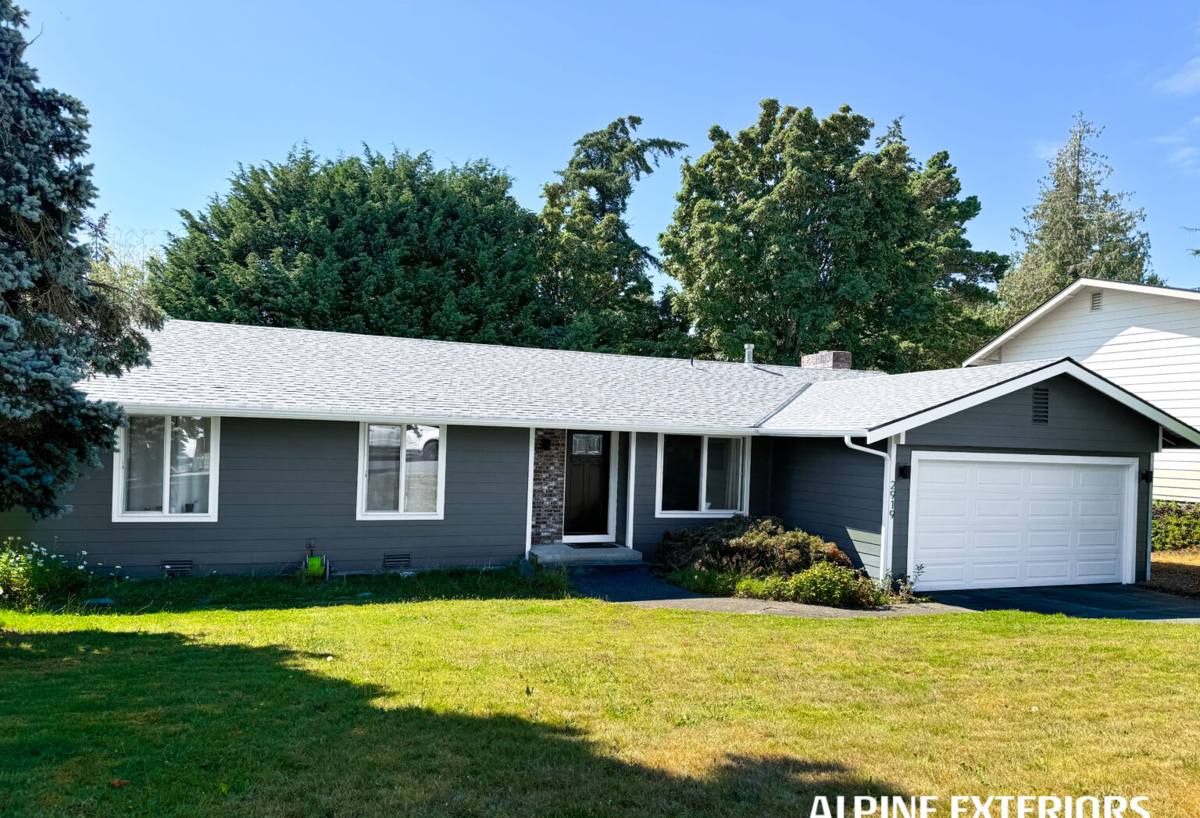
What Salt Air, Rain, and Moss Actually Do to Siding
Salt Air
Even a few miles inland from open saltwater, airborne salt settles on exterior surfaces and accelerates corrosion of fasteners, trim fasteners, and any metal flashing or hardware that isn't rated for coastal exposure. On siding itself, salt residue combined with moisture speeds up finish breakdown, especially on products with a factory paint layer that isn't formulated for it. Over years, this shows up as chalking, fading, and premature failure at panel edges and seams.
Driving Rain
Skagit County gets its share of straight-down rain, but Edison's more open, lower-lying terrain also sees a fair amount of wind-driven rain — the kind that hits siding at an angle and gets pushed up under laps, around trim, and into any gap in the water-resistive barrier. Siding that isn't installed with correct overlaps, flashing, and clearances will eventually let that water behind the cladding, where it doesn't dry out easily.
Moss and Algae
Shaded elevations, tree cover, and consistent moisture give moss and algae exactly what they need to take hold. On porous or textured siding materials, moss can actually root into the surface rather than just sitting on top of it, which holds moisture against the wall and can accelerate rot in the substrate underneath if the siding and its backing aren't moisture-tolerant.
Why This Matters More for Siding Replacement Than New Construction
On a replacement project, you're not just picking a look — you're replacing a system that's already proven it can't keep up with Edison's climate. That's the moment to fix the underlying issues, not just swap old panels for new ones of the same type. A correct replacement addresses three things at once: the water-resistive barrier and flashing details underneath, the fastening and clearances of the new siding, and the long-term durability of the material itself against salt, rain, and moss.
What a Correct Siding Replacement Involves
Tear-Off and Inspection
Old siding comes off in sections so the sheathing underneath can be inspected as we go, not just at the end. In a coastal, high-moisture area like Edison, it's common to find soft or water-damaged sheathing around windows, at the base of walls, or wherever the old siding was already showing wear. Any damaged material gets identified and repaired before anything new goes up — new siding over compromised sheathing just resets the clock on the same failure.
Water-Resistive Barrier and Flashing
This layer is what actually keeps wind-driven rain out of your wall assembly. We install a continuous water-resistive barrier with properly lapped and taped seams, and we flash every window, door, and penetration so water sheds outward and down, never inward. In Edison's climate, corners cut here are the single most common reason a "new" siding job leaks within a few years.
Correct Installation to Manufacturer Spec
James Hardie siding has specific requirements for fastener type, fastener placement, panel clearance from grade and roof lines, and caulking at joints. These specs exist because they've been engineered for exactly the conditions Edison sees — they're not optional extras. Installing to spec is also what keeps the manufacturer's warranty valid, which matters if anything does go wrong down the road.
Why We Only Install James Hardie Fiber Cement
We don't install vinyl, LP SmartSide, Cemplank, Allura, primed spruce, or cedar. That's not a marketing position — it's a standard we hold because of what we've seen these products do, and not do, in coastal Skagit County conditions over time. Each has real strengths. Vinyl is inexpensive and low-maintenance in mild climates. LP SmartSide and primed spruce offer a wood look at a lower cost than real wood. Cedar is a genuinely beautiful, traditional material. But in an environment with salt air, sustained moisture, and heavy moss pressure, each carries trade-offs we're not willing to put our name behind: vinyl can warp and become brittle with age and UV exposure, and its seams give water an easy path in wind-driven rain; engineered wood products and primed spruce are wood-based and depend heavily on perfect installation and maintenance to resist moisture absorption and rot; cedar is a natural product that requires ongoing sealing, staining, and vigilance against moss and rot, or it will show it.
James Hardie fiber cement is non-combustible, dimensionally stable, and doesn't absorb moisture the way wood-based products do, which matters directly for moss resistance and rot prevention. It's factory-finished with ColorPlus technology, a baked-on finish designed to hold color and resist the fading and chalking that salt air accelerates on field-painted surfaces. Hardie also engineers specific product lines (its HZ5 line, for example) for regions with more moisture exposure, and backs the product with a strong, transferable warranty — one that stays with the house if you sell.
| Material | Common Strength | Trade-Off in Edison's Climate |
|---|---|---|
| Vinyl siding | Low upfront cost | Seams and panel edges vulnerable to wind-driven rain; can warp/fade over time |
| LP SmartSide / primed spruce | Wood look, moderate cost | Wood-based core is moisture-sensitive; installation and caulking must be near-perfect |
| Cedar | Natural, traditional appearance | Requires ongoing sealing/staining; prone to moss growth and rot without upkeep |
| Cemplank / Allura fiber cement | Fiber cement durability | Different manufacturing and warranty structure than Hardie; we standardized on one system for consistency and accountability |
| James Hardie fiber cement | Non-combustible, moisture-resistant, factory ColorPlus finish | Higher material cost than vinyl; requires correct installation to hold its warranty |
Our Process for Edison Siding Replacement
- On-site assessment: We walk the exterior with you, checking for existing moisture damage, moss buildup, and problem areas specific to your home's exposure to sun, shade, and prevailing wind and rain direction.
- Written estimate: A clear scope covering tear-off, sheathing repair contingencies, water-resistive barrier, flashing, and Hardie product selection.
- Tear-off and sheathing inspection: Old siding removed in sections; any damaged sheathing repaired before moving forward.
- Weather barrier and flashing installation: Continuous, properly lapped water-resistive barrier and flashing at every penetration.
- Hardie installation to manufacturer spec: Correct fasteners, clearances, and joint treatment throughout.
- Final walkthrough: We review the finished work with you and cover care and maintenance specific to Edison's conditions.
Signs Your Edison Home May Need Siding Replacement
- Visible moss or algae growth that returns quickly after cleaning
- Soft spots, bubbling, or delamination in the siding surface
- Paint that's chalking, peeling, or fading unevenly, especially on sides facing the bay or prevailing wind
- Warping, cracking, or gaps opening up at panel seams and corners
- Water stains or discoloration on interior walls near exterior corners or windows
- A musty smell near exterior walls, which can indicate moisture trapped behind the siding
- Siding that's original to a home more than 20-25 years old, especially wood-based or vinyl products
What Affects the Cost of Siding Replacement
| Factor | Why It Matters |
|---|---|
| Home size and wall complexity | More corners, gables, and trim details mean more labor and material cuts |
| Sheathing condition underneath old siding | Hidden moisture damage found during tear-off may require repair before new siding goes on |
| Hardie product line and profile | Lap siding, panel systems, and shingle-style profiles vary in material and labor cost |
| ColorPlus finish vs. field paint | Factory-finished ColorPlus adds cost but removes an entire maintenance cycle down the road |
| Access and site conditions | Rural lots, tree cover, and equipment access can affect scheduling and labor time |
We give every homeowner a written, itemized estimate before any work starts — no vague allowances, no surprises once tear-off begins.
Why a Crew That Already Works in Edison Makes a Difference
Siding installation isn't one-size-fits-all across Skagit County. A crew that's used to inland, more sheltered neighborhoods may not automatically account for Edison's combination of open exposure to salt air and heavy moss pressure in shaded areas. Working in this area regularly means knowing where wind-driven rain tends to hit hardest, which elevations need extra attention to moss and moisture, and how to sequence a tear-off around this region's weather rather than fighting it. That local familiarity translates directly into fewer callbacks and a siding job that actually holds up to what Edison's climate throws at it year after year.
If you're weighing siding replacement for a home in Edison, we're happy to take a look and walk you through what we're seeing and what we'd recommend — no pressure, no obligation. Use the form below to request a free estimate.