 Anacortes Exterior
 Why Cap Sante Siding Takes a Different Kind of Beating
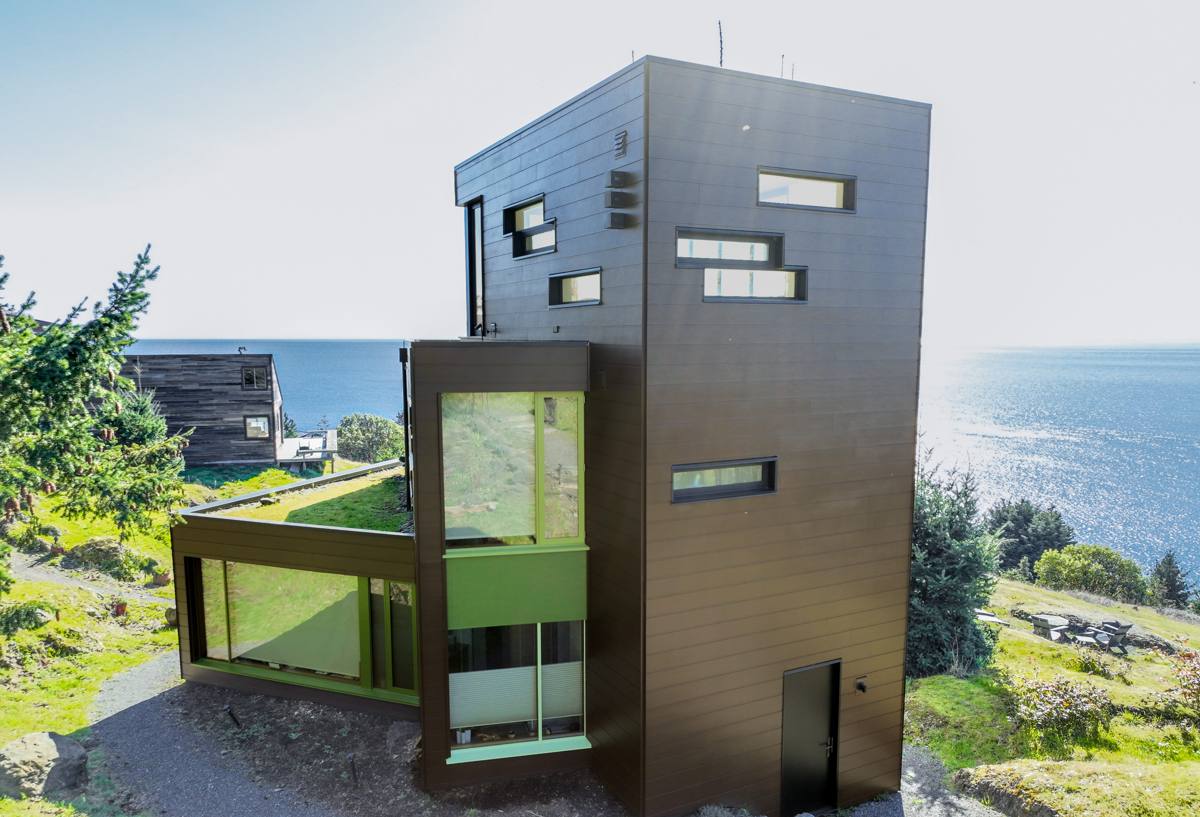
Homes around Cap Sante sit close enough to the water that salt-laden air is a daily fact of life, not an occasional weather event. Add Anacortes' long wet season, driving rain that comes in sideways off Guemes Channel and Rosario Strait, and the shaded, damp conditions that let moss and algae take hold on north- and west-facing walls, and you have an exterior envelope that works harder here than it does ten miles inland. Siding on a Cap Sante home isn't just a weather barrier — it's fighting a slow chemical and biological process every single day it's up.
That combination is exactly why we treat siding replacement in this neighborhood as a distinct job, not a generic swap-the-boards project. What holds up on a dry hillside lot in eastern Skagit County can fail early two miles away with a water view.
What Salt Air and Moisture Actually Do to Siding
Salt Air
Airborne salt is corrosive to fasteners, trim flashing, and any exposed metal components in a siding system. It also accelerates the breakdown of lower-grade coatings, causing chalking, fading, and surface degradation faster than the same product would show inland. On engineered wood and some composite products, salt-laden moisture speeds up edge swelling wherever the factory seal has been compromised by a cut, a fastener, or a joint.
Driving Rain
Anacortes gets weather off the water, and wind-driven rain doesn't fall straight down — it gets pushed sideways into laps, joints, and butt seams. A siding system that isn't detailed correctly at those points will take on moisture behind the cladding, where it does the most damage and is the hardest to catch early.
Moss and Algae
Shaded exposures near the water stay damp longer between storms, which is ideal for moss and algae growth. Beyond the cosmetic issue, sustained organic growth holds moisture against the siding surface for extended periods, which is a problem for any product that isn't fully sealed and non-absorptive.
Why We Install Only James Hardie Fiber Cement
We don't offer vinyl, LP SmartSide, primed spruce, cedar, or other fiber cement brands like Cemplank or Allura. That's a deliberate standard, not a sales pitch, and it matters more in a place like Cap Sante than almost anywhere else we work.
Vinyl siding can perform fine in mild climates, but it's a petroleum-based product that expands and contracts with temperature swings, and its long-term color and rigidity can suffer under sustained salt exposure and UV. Engineered wood products like LP SmartSide use real wood strand cores — well-engineered, but still wood-based, meaning any breach in the factory coating (a cut edge, a fastener hole, a damaged corner) creates a path for moisture absorption and swelling. Primed spruce and cedar are natural wood: beautiful, but they require an ongoing maintenance commitment — recoating, caulking, inspection — that most homeowners don't want to sign up for indefinitely, and that commitment only gets more demanding in a marine climate.
James Hardie fiber cement is cement, sand, and cellulose fiber — non-combustible, dimensionally stable, and not vulnerable to rot or insect damage the way wood-based products are. It's also engineered specifically for climate: Hardie's HZ5 product line is formulated for regions like ours with sustained moisture exposure, and the factory-applied ColorPlus finish is baked on and warranted against fading and chipping in a way that field-applied paint or primer can't match. That factory finish matters directly here — it's a sealed surface that isn't giving salt air and moss the foothold a field-primed product would.
What Hardie Gets Right, Plainly Stated
- Non-combustible core — a real safety consideration in Western Washington's increasingly active fire seasons
- Factory-cured ColorPlus finish resists fading, chipping, and cracking better than field-applied paint
- Dimensionally stable — doesn't swell, warp, or rot the way wood-based sidings can
- Climate-engineered HZ product lines matched to regional moisture and temperature conditions
- Strong transferable warranty backing the product
We're not going to pretend Hardie is the cheapest option on the market or the lightest material to install — it isn't. It's heavier, requires proper fastening and cutting technique (including dust control), and costs more upfront than vinyl. We think that trade-off is worth it for a house that has to stand up to salt air, driving rain, and moss season year after year.
What a Correct Siding Replacement Actually Involves
Replacing siding is not just removing old boards and hanging new ones. In a marine-exposed neighborhood like Cap Sante, the work that happens before the new siding goes up is what determines whether the job lasts.
Tear-Off and Inspection
Full removal of the existing siding lets us see the sheathing underneath — this is where hidden water damage from years of wind-driven rain often shows up, especially around old window and door flashing that wasn't properly integrated with a weather-resistive barrier.
Water-Resistive Barrier and Flashing
A correctly installed weather-resistive barrier, properly lapped and sealed, is the actual line of defense against wind-driven rain — the siding itself is the second line, not the first. Flashing at windows, doors, and roof-to-wall intersections has to be integrated with that barrier in the right shingle-lap order so water is directed out, not trapped in.
Fastening and Joint Treatment
Hardie siding has specific fastening patterns and clearance requirements — from grade, from roof lines, and at butt joints — that are designed around moisture management. Joints and seams get treated correctly so they shed water rather than wick it.
Finish and Detailing
Corners, trim, and caulking are finished to keep water from finding a way behind the cladding at the places where two materials meet — historically the most common failure points on any siding job, regardless of brand.
Our Process for Cap Sante Homes
- On-site assessment — we look at your home's specific exposure: how much direct wind and rain it takes, where moss and algae are already established, and the condition of the sheathing and trim underneath the existing siding.
- Product and color selection — we walk through Hardie's HZ5 lines and ColorPlus options suited to marine exposure, and help you land on something that fits the home and the neighborhood.
- Tear-off and moisture check — full removal, with an honest look at what's underneath before anything new goes up.
- Barrier, flashing, and install — done to manufacturer spec, with the fastening and clearance details that matter most in a wet, salt-air environment.
- Final walkthrough — we go over the finished work with you and explain basic care going forward.
Because we work in this area regularly, we already know what Cap Sante exposures tend to look like — which walls take the worst of the weather, and where moss and algae typically show up first. That's not a substitute for inspecting your specific home, but it means we're not guessing at what a marine-climate installation needs to hold up.
What Affects the Scope and Cost of a Siding Replacement
| Factor | Why It Matters Here |
|---|---|
| Extent of hidden moisture damage | Sheathing repair or replacement adds scope once old siding comes off — more likely on long-standing homes with water exposure |
| Home size and wall complexity | More corners, dormers, and trim details mean more cutting, flashing, and finish work |
| Existing siding type | Some materials (like certain older wood or composite sidings) require different tear-off handling than others |
| Trim and accessory scope | Fascia, soffit, and trim replacement alongside siding affects total project size |
| Access and site conditions | Slopes, tight lot lines, and staging space common on Cap Sante properties can affect labor time |
We give straightforward, honest estimates after actually seeing the home — we're not going to quote a number sight unseen, because the factors above genuinely change scope from house to house.
Living With Hardie Siding After Installation
One of the practical benefits of switching to fiber cement in a place like Cap Sante is how little ongoing maintenance it asks for compared to wood-based alternatives. It doesn't need repainting on a recurring schedule the way cedar or primed spruce does. That said, a periodic rinse to keep moss and salt residue from building up, and an annual look at caulking and trim joints, goes a long way toward keeping any siding system — Hardie included — performing the way it's supposed to over the long run.
Questions Worth Asking Before You Hire
- Do you install to the manufacturer's published fastening and clearance specifications, not just "how it's always been done"?
- Will you inspect the sheathing and flashing before new siding goes up, not just after issues appear?
- Are you factory-certified or trained on the specific product line you're installing?
- Can you explain, in plain terms, how your weather-resistive barrier and flashing integration works?
- Do you have experience with homes in similarly exposed, marine-climate settings — not just siding in general?
If you're weighing a siding replacement for a Cap Sante home, we're glad to take a look and give you a straightforward, no-pressure estimate — no obligation, just an honest read on what your home needs. The form below is the easiest way to get started.