 Anacortes Exterior
 Why Cap Sante Decks Wear Differently
Cap Sante sits close enough to the water that salt-laden air is part of daily life, not an occasional visitor. Combine that with Skagit County's long wet season and the moss that thrives in shaded, damp corners, and you get a deck environment that's tougher on wood and hardware than what you'd find twenty miles inland. We've worked on enough decks in this part of Anacortes to know the failure patterns aren't random — they follow the weather.
Salt air accelerates corrosion on any exposed metal: nails, screws, joist hangers, bolts, and railing brackets. Driving rain off the water finds every seam, end-grain cut, and fastener hole that isn't properly sealed. And moss doesn't just look bad on decking boards — it holds moisture against the wood surface far longer than open air would, which is exactly the condition that invites rot. A deck that would need attention every decade in a dry inland climate often needs it sooner here.
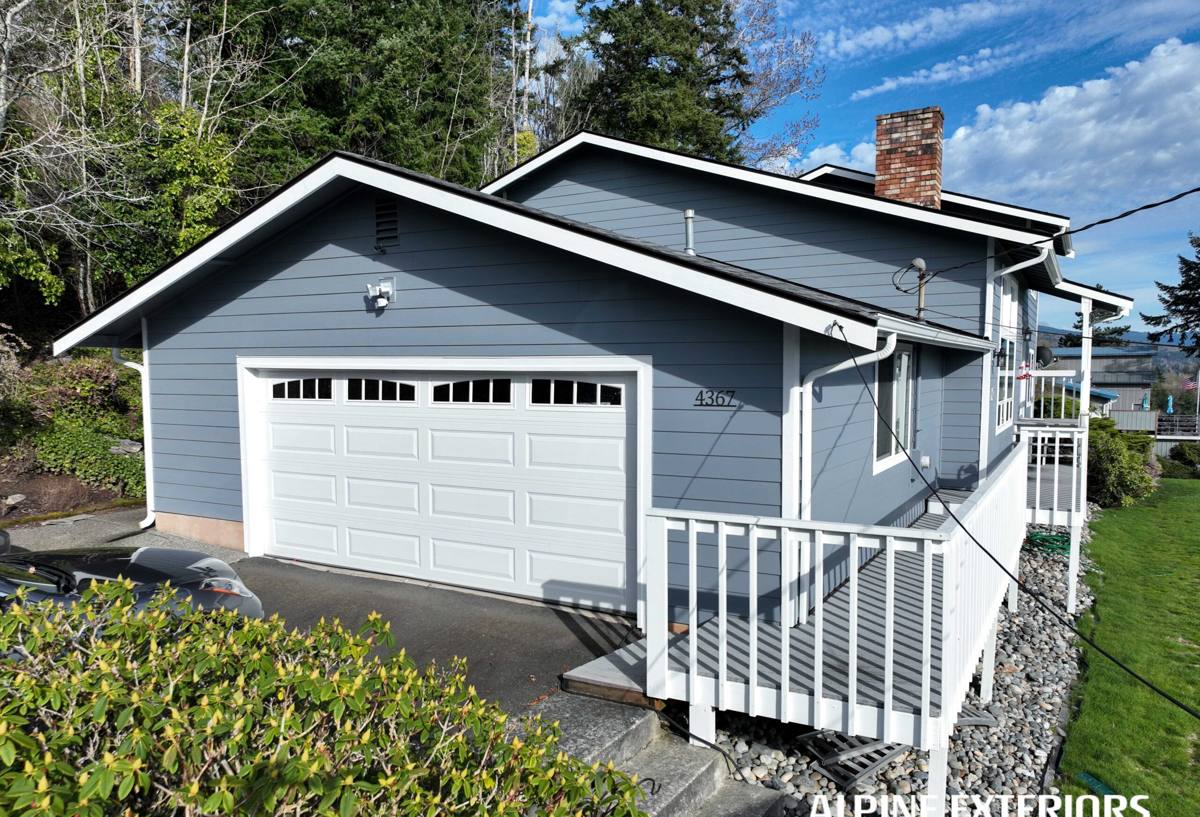
Signs a Cap Sante Deck Needs Repair
Most deck problems don't show up as a single dramatic failure. They show up as small signals that get ignored until the underlying structure is compromised. Here's what we look for, and what homeowners can check themselves before calling anyone.
- Soft or spongy spots underfoot, especially near the house or in shaded corners where moss collects
- Rust streaks bleeding from screw heads or around joist hangers
- Gaps opening up where the deck ledger board meets the house siding
- Railings or posts that flex more than they used to
- Boards that have cupped, split along the grain, or pulled away from fasteners
- Green or black staining that persists even after a dry stretch of weather
- Stair stringers or the bottom few inches of posts showing discoloration or crumbling wood
Any one of these on its own might just mean routine maintenance. Several at once, or anything involving the ledger board or main support posts, means it's time for a real structural look before someone gets hurt.
Structural Repair vs. Cosmetic Fixes
There's an important distinction between a deck that looks tired and a deck that's actually unsafe. Cosmetic issues — faded finish, minor surface checking, a loose railing cap — are worth fixing for appearance and to prevent them from becoming bigger problems, but they don't threaten the deck's integrity. Structural issues do, and they're the ones that get overlooked most often because they're hidden underneath the walking surface.
The ledger board — the piece that bolts the deck to the house — is the single most important connection on the whole structure, and it's also the one most exposed to water running off the siding above it. In our experience, a large share of the deck failures reported nationally trace back to a ledger connection that was never properly flashed or that corroded quietly for years. Joist hangers, post bases, and the fasteners holding them are the second most common culprit, especially in a salt-air environment where standard zinc-coated hardware corrodes faster than it would elsewhere.
What We Check on Every Repair Call
- Ledger board attachment and flashing condition where the deck meets the house
- Joist hangers and structural fasteners for rust, loosening, or wood pull-through
- Post bases and any wood-to-concrete contact points for moisture wicking
- Beam and joist spans for sagging, splitting, or insect damage
- Railing post connections, since these take lateral load and are frequently under-fastened
- Stair stringer condition, particularly at ground contact
- Decking board fastening pattern and moisture trapped beneath the boards
Common Deck Materials in Anacortes and How They Hold Up
What a deck is built from changes both how it fails and how it should be repaired. We see a mix of materials across Cap Sante and the rest of Anacortes, and each one has a different relationship with salt air, rain, and moss.
| Material | How it typically fails here | Repair approach |
|---|---|---|
| Pressure-treated pine | Surface checking, moss staining, fastener corrosion, rot at ground contact | Board and fastener replacement is usually straightforward; structural members need close inspection for hidden rot |
| Cedar | Graying and softening with UV/moisture exposure, splitting along the grain | Often repairable board-by-board; framing beneath tends to outlast the surface boards |
| Composite decking | Fading, occasional moisture wicking at cut ends, hidden-fastener clip failure | Board replacement rather than patching; framing below (usually PT lumber) inspected separately |
| Older or DIY hardware | Rust bleed, loosening, incompatible fastener/flashing combinations | Hardware upgrade to corrosion-resistant fasteners as part of any structural repair |
None of these materials are wrong choices — each has legitimate trade-offs in cost, maintenance, and appearance. Our job is to repair what's there correctly, using hardware and methods suited to this climate, whether or not it matches what was originally installed.
Hardware Matters More Here Than Inland
This is worth its own section because it's the part homeowners are least likely to think about and the part that causes the most repeat failures. Standard galvanized fasteners are rated for general outdoor use, but in a salt-air marine environment they corrode noticeably faster than the same hardware would inland. We use fasteners and structural connectors rated for coastal or treated-lumber exposure — typically hot-dip galvanized or stainless steel depending on the application — because replacing a deck board is a lot cheaper than replacing a deck board twice because the screws failed again in a few years.
The same logic applies to joist hangers, post bases, and ledger bolts. It's common to find an older deck where the visible decking looks fine but the hardware underneath is well into corrosion. That mismatch is exactly why a proper repair includes pulling back decking to inspect framing, not just replacing what's visibly damaged on the surface.
Our Deck Repair Process
Every repair starts with an honest look at the whole structure, not just the spot that prompted the call. A soft board near the stairs, for example, is often a symptom of a moisture problem that's affecting more than that one board.
- Full inspection. We walk the deck, check the ledger connection, probe suspect boards and framing with an awl, and look underneath wherever access allows.
- Written scope. We tell you plainly what's cosmetic, what's structural, and what we recommend fixing now versus what can reasonably wait.
- Repair or replace decision. For each affected area we determine whether board/hardware replacement is enough or whether framing needs to come out.
- Structural work first. Ledger, joists, hangers, and posts get addressed before any cosmetic surface work, since everything else depends on that being solid.
- Decking and railing repair. Damaged boards and railing components are replaced with material and fastening appropriate to the existing deck or to your preference if you're upgrading.
- Final check and cleanup. We walk the deck again, check for level and secure connections, and clean up debris before we leave.
What Drives the Cost of a Deck Repair
Deck repair costs vary widely because the range of possible problems is wide — a few loose boards is a very different job than a compromised ledger board. Rather than quote a number that won't mean much without seeing your deck, here's what actually moves the price up or down.
| Factor | Effect on cost |
|---|---|
| Extent of hidden framing damage | The biggest variable — surface repairs are inexpensive, structural rebuilds are not |
| Ledger board condition | Ledger reattachment or flashing correction adds labor and often requires temporary support |
| Deck material | Composite and specialty boards generally cost more to replace than PT lumber or cedar |
| Access and deck height | Elevated decks or limited underside access add time for inspection and repair |
| Hardware upgrades | Corrosion-resistant fasteners cost more up front but reduce repeat repair costs in this climate |
| Railing and stair scope | Code-driven railing and stair repairs add cost but aren't optional when safety is involved |
We'd rather give you a real number after we've actually looked at the deck than a rough estimate that turns out to be wrong once we open things up.
Maintaining Your Deck Between Repairs
A repaired deck still needs regular attention in this climate, especially with the moss season Skagit County gets every year. A little maintenance goes a long way toward stretching the time between repair calls.
- Sweep debris and standing moss off the deck surface regularly, especially in shaded areas
- Keep gutters and downspouts clear so runoff isn't dumping extra water onto or near the deck
- Reapply sealant or stain on wood decking on the schedule the product recommends — salt air and UV both break it down faster than average
- Check railing connections for looseness once or twice a year
- Look underneath the deck periodically, not just at the walking surface, for early signs of moisture or rust
- Trim back vegetation that's shading the deck and keeping it damp longer than it needs to be
Why Local Experience in Cap Sante Matters
A deck repair crew that's worked other homes in and around Cap Sante already knows what to expect before they set foot on your property — where moss builds up fastest, which hardware holds up and which doesn't, and how the water-facing exposure common in this part of Anacortes tends to accelerate certain kinds of wear. That's not a substitute for a careful inspection of your specific deck, but it does mean fewer surprises and a repair plan built around how decks actually behave in this exact environment, not a generic set of assumptions imported from a drier climate.
It also means we're around after the repair is done. Deck problems that come back are usually a sign the first repair didn't address the real cause — often a hardware or drainage issue rather than the board that happened to be visibly damaged. We'd rather fix that root cause once than come back for the same complaint next year.
Get a Straightforward Estimate
If your deck in Cap Sante has soft spots, rust stains, moss buildup, or just feels less solid than it used to, it's worth having someone look before it gets worse or someone gets hurt. Fill out the form below for a free, no-pressure estimate — we'll tell you honestly what needs fixing now, what can wait, and what it'll take to do it right.