 Anacortes Exterior
 Why Homes Near Cap Sante Wear Out Roofs Faster
The Cap Sante area sits close to the water, on the exposed north end of Fidalgo Island, which means roofs here take a beating that inland Skagit County homes simply don't see. Salt-laden air off the marina and the strait, wind gusts that funnel around the headland, and long stretches of damp, shaded weather all add up. A roof that would last two or three decades in a drier, more sheltered part of the county can start showing real trouble a lot sooner near Cap Sante if it wasn't built with that exposure in mind.
We work on roofs throughout Anacortes, but the ones close to the water get a different level of scrutiny from us, because the failure points are different. This page covers what actually matters for a full roof replacement in this specific neighborhood — not a generic rundown of roofing basics.
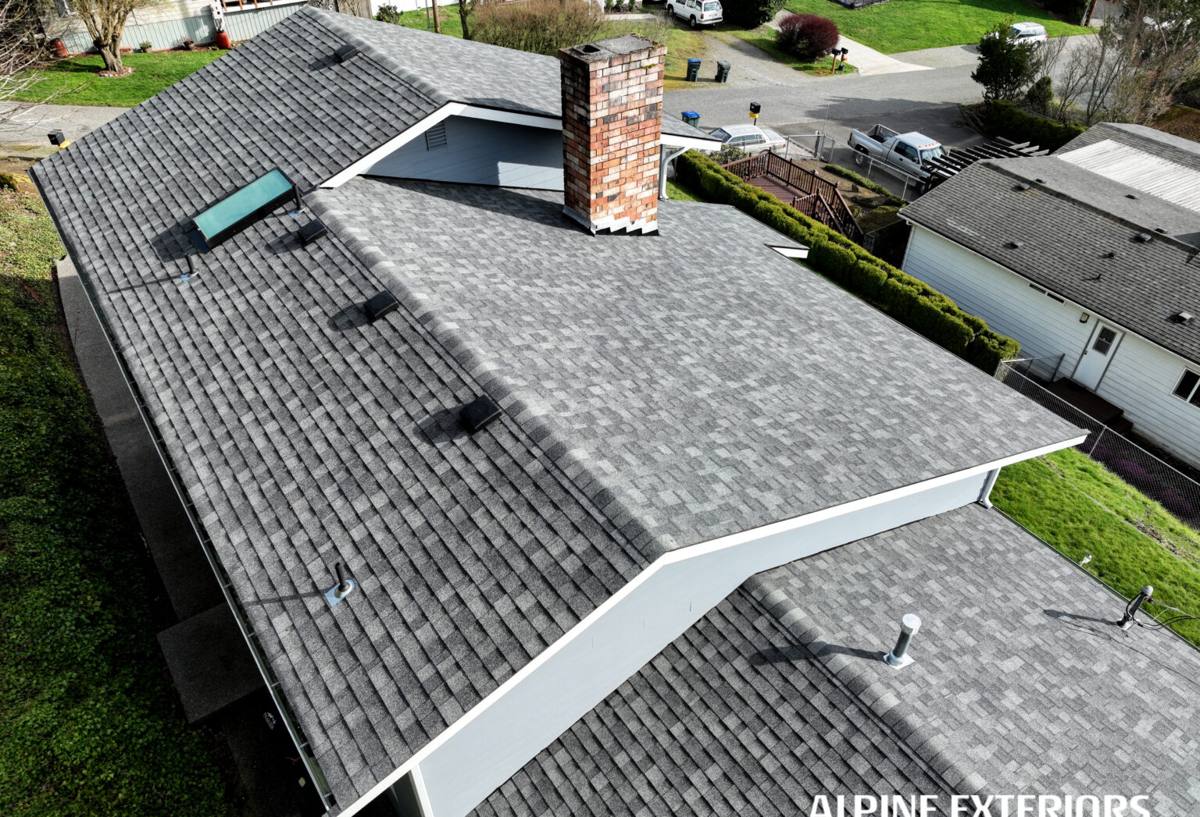
What the Marine Climate Does to a Roof
Salt Air and Corrosion
Airborne salt is corrosive to exposed metal. On a roof, that means fasteners, flashing, vent caps, and gutter hardware are all candidates for early rust and pitting if they weren't rated for coastal exposure. Standard electro-galvanized nails and off-the-shelf flashing can start showing rust streaks and weak points years before they should. Once a fastener corrodes, it loses grip, and that's how shingles start lifting in wind long before the roofing material itself is actually worn out.
Driving Rain and Wind-Driven Water
Anacortes doesn't get the heaviest rainfall totals in Western Washington, but wind off the water pushes rain sideways and up under laps, ridge caps, and flashing edges that would stay dry in a calmer setting. A roof near Cap Sante needs underlayment, flashing details, and fastening patterns that assume water will be tested from more than one direction — not just falling straight down.
Moss, Shade, and an Extended Damp Season
Between tree cover on many lots and the region's long stretch of overcast, cool months, moss has a lot of time to establish itself on north-facing slopes and shaded valleys. Moss holds moisture against the roofing material, works its way under shingle tabs, and can lift edges enough to let wind and water in behind it. On an older roof, moss is often less about looks and more a sign that the surface has been staying wet longer than it should.
Signs a Cap Sante Roof Needs Replacement, Not Another Patch
Repairs make sense for isolated damage. Full replacement becomes the honest answer when the roof's problems are spread across the whole system rather than one spot. Here's what we look for during an inspection:
- Granule loss heavy enough that you can see bare asphalt on multiple slopes, not just one worn patch
- Curling, cupping, or cracked shingles showing up in several different areas of the roof
- Soft or spongy decking felt underfoot, or sagging visible from the ground
- Rust staining or visibly corroded flashing, vent boots, or fasteners
- Moss or algae established deeply enough that it's lifting shingle edges rather than just discoloring the surface
- Daylight, staining, or musty smells in the attic, especially near valleys or chimneys
- A roof that's already had two or more significant repairs in the last several years
- Age at or beyond the manufacturer's rated service life for the original material
If you're only seeing one or two of these, a repair may still be the right call. When several show up together, patching tends to become a cycle of chasing the next leak rather than solving the underlying problem.
Roofing Materials That Hold Up Near the Water
There's no single "best" roofing material for every home — it depends on your roof's pitch, your home's style, your budget, and how much long-term maintenance you want to take on. What we do insist on for homes in this area is choosing materials and fastener hardware rated for coastal or high-moisture exposure, regardless of which product you land on.
| Material | How It Handles Salt Air & Moisture | Maintenance Reality |
|---|---|---|
| Architectural asphalt shingle | Performs well when installed with corrosion-resistant fasteners and proper underlayment; algae-resistant granule options help with moss and staining | Periodic moss removal and gutter clearing; typical mid-range lifespan |
| Standing seam metal | Sheds wind-driven rain well and handles moisture better than most systems when it uses marine-grade or coated fasteners and flashing | Low routine maintenance, but installation quality and fastener choice matter more than with any other material |
| Cedar shake | Traditional look, but sustained dampness and shade near the water shorten its service life unless the roof gets excellent airflow and upkeep | Higher ongoing maintenance; needs regular treatment and inspection to manage moss and rot |
| Synthetic/composite shake or slate | Resists moisture absorption well and doesn't corrode; a reasonable alternative where the cedar look is wanted with less upkeep | Generally low maintenance once installed correctly |
We'll walk you through the honest trade-offs for your specific roof rather than pushing one product — what matters most is that whatever you choose gets installed with hardware and details built for this climate, not a generic inland installation.
What a Correct Roof Replacement Actually Involves
A roof replacement is only as good as what's underneath the finished surface. For a home in the Cap Sante area, that means a few things get extra attention:
Full Tear-Off and Deck Inspection
We remove the old roofing down to the deck so we can actually see what's there. Soft, rotted, or delaminated sheathing gets replaced — covering it up just moves the problem underground where you can't see it until it's worse.
Underlayment and Ice-and-Water Protection
Eaves, valleys, and any low-slope transitions get self-adhering waterproof underlayment, not just standard felt, because those are the areas most likely to see wind-driven water work its way backward under the shingles.
Flashing and Fasteners Rated for the Exposure
Around chimneys, skylights, dormers, and roof-to-wall transitions, we use flashing and fasteners suited to salt-air conditions rather than the cheapest standard hardware. This is one of the most common places we find corrosion causing leaks on older coastal-area roofs.
Ventilation That Actually Balances
Proper intake and exhaust ventilation keeps moisture from condensing in the attic, which matters even more in a climate where the air outside is already damp much of the year. Poor ventilation shortens the life of any roofing material, no matter how good it is.
Our Process, Start to Finish
- Inspection and honest assessment — we get on the roof (not just a drive-by look) and tell you plainly whether you need replacement, repair, or can reasonably wait
- Written estimate — a clear scope of work and pricing, with material options explained in plain terms
- Scheduling around weather — we plan the tear-off and dry-in around a realistic weather window, not just whenever it's convenient for us
- Tear-off and deck repair — old material removed, decking inspected and replaced where needed
- Underlayment, flashing, and roofing installation — installed to the standard described above, not a shortcut version
- Ventilation check — confirming intake and exhaust are balanced for the finished roof
- Cleanup and final walkthrough — magnetic sweep for stray fasteners, debris hauled off, and a walk of the finished roof with you
Timing a Reroof Around Skagit County Weather
Roofing can technically happen in most months here, but a full replacement goes smoother — and dries in more reliably — when it's scheduled around drier stretches rather than the height of the wet season. We plan tear-offs so a section of roof is never left exposed longer than necessary, and we adjust scheduling if a forecast turns against us. Rushing a reroof into a bad weather window is how corners get cut, and that's not how we operate.
What Affects the Cost of a Cap Sante Roof Replacement
Every roof is different, so we don't quote a number until we've actually inspected yours. In general, these are the factors that move the price:
| Factor | Why It Matters |
|---|---|
| Roof size and number of planes | More material and more seams, valleys, and transitions to detail correctly |
| Pitch and access | Steeper or harder-to-access roofs take longer and require more safety setup |
| Decking condition | Rotted or soft sheathing found during tear-off adds material and labor |
| Material choice | Asphalt, metal, and shake/composite systems carry different material and labor costs |
| Flashing and penetrations | Chimneys, skylights, and multiple roof-to-wall transitions add detail work |
| Ventilation upgrades | Adding or correcting intake/exhaust venting is sometimes needed on older homes |
We'll give you an itemized, written number after a hands-on inspection, so you know exactly what you're paying for and why.
Why a Crew That Already Works Cap Sante Matters
A roofer who mostly works inland jobs can still do competent work, but they may not default to marine-grade fasteners, may under-spec the underlayment for wind-driven rain, or may not think twice about moss until it's already a problem. We work this side of Skagit County regularly, so the coastal-exposure details aren't an upsell we mention after the fact — they're just how we build a roof near the water from the start. That local familiarity also means we're realistic with you about timelines, weather, and what your specific home actually needs, rather than applying a one-size-fits-all approach to a roof that has to deal with conditions most of the county doesn't.
If your roof is showing wear, or you just want an honest read on how much life it has left, we're happy to take a look. Reach out for a free, no-pressure estimate using the form below.