 Anacortes Exterior
 Why Cap Sante Homes Need a Different Approach to Windows
Cap Sante sits up on the bluff above the Anacortes waterfront, and that elevation is exactly why the windows up here take more abuse than windows a mile inland. Homes on or near the bluff get direct exposure to wind coming off the water, with little to break it up. That means salt-laden air hitting glass and frames year-round, plus wind-driven rain that doesn't just fall straight down — it gets pushed sideways into window edges, trim, and siding joints during winter storms.
We've replaced and custom-fit windows all over this neighborhood, and the pattern is consistent: homes closer to the water fail faster at the window level than homes even a few blocks inland in Anacortes. It's not that the windows were installed badly (though sometimes they were) — it's that standard products and standard installation details weren't chosen with this specific exposure in mind.
What "Custom" Means in This Context
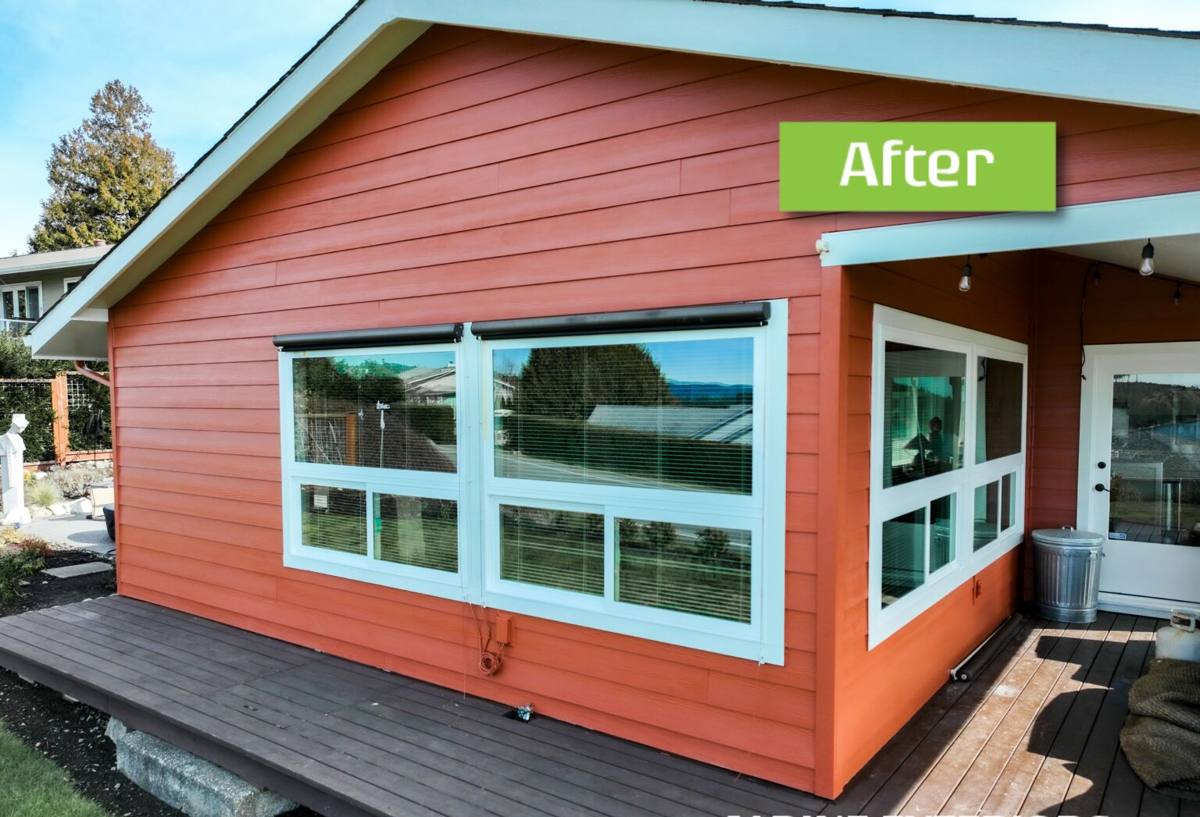
Custom windows here doesn't necessarily mean unusual shapes or oversized glass, though we do plenty of that too. More often it means matching the window unit, the frame material, and the installation detailing to the actual conditions of a specific wall on a specific house — the west-facing wall that catches every storm differently than the sheltered side facing the yard, for example. A one-size-fits-all window order rarely holds up as well on a waterfront-adjacent property as one that's been specified with that wall's exposure in mind.
What Salt Air, Rain, and Moss Actually Do to a Window Over Time
It helps to understand the specific failure modes we see, because they shape how we recommend building a window replacement or custom window install.
Salt Air
Airborne salt is corrosive to unprotected metal. On windows, that shows up first in hardware — locks, cranks, hinges, and balance mechanisms — and in aluminum components that aren't properly coated or clad. Over years, salt exposure can pit finishes, seize moving hardware, and accelerate corrosion on fasteners that were never meant for a marine-adjacent environment.
Driving Rain
Skagit County storms don't always deliver rain straight down. On an exposed bluff like Cap Sante, wind pushes rain laterally into the vertical joints around a window — the interface between the frame and the wall opening. If flashing, sealant, and drainage weren't done correctly at install, water finds its way behind the trim and into the wall assembly long before anyone notices a stain inside.
Moss and Sustained Moisture
Western Washington's long moss season means extended stretches of damp, low-sun conditions, especially on north- and west-facing exposures. Moss and algae growth on nearby siding, trim, and sills holds moisture against the building longer than it would in a drier climate. Wood components in a window system — sills, jambs, exterior trim — that sit in that dampness without adequate protection or drainage are the first things to soften and rot.
Warning Signs Cap Sante Homeowners Should Know
Because water damage around windows develops behind the wall before it's visible inside, it pays to check for early signs rather than waiting for an obvious leak.
- Soft or spongy wood at the sill or bottom corners of the exterior trim
- Paint or finish bubbling, peeling, or discoloring near window edges
- Hardware — locks, cranks, or balances — that's stiff, corroded, or won't latch cleanly
- Visible gaps between the window frame and siding or trim
- Condensation building up between panes (a sign the seal has failed on a double- or triple-pane unit)
- A noticeable draft or whistle during windy weather
- Green or black growth on the sill, trim, or the wall directly below a window
- Difficulty opening or closing a window that used to operate smoothly
Any one of these on its own isn't necessarily an emergency, but a combination — especially soft wood plus visible gaps — usually means water has already been getting behind the window for a while.
What a Correctly Done Custom Window Job Involves
A window replacement that holds up on an exposed site involves more than swapping the sash or the unit itself. The details around the opening matter as much as the window.
Assessing the Opening, Not Just the Window
Before we order anything, we look at the existing rough opening: is there rot in the framing, is the sill sloped to drain water outward, is there existing flashing and is it doing its job. A custom window order is only as good as the opening it goes into — ordering a premium unit for a rotten or poorly flashed opening just delays the same failure.
Choosing the Right Frame Material for the Exposure
Not every frame material performs the same way in salt air and constant moisture. We factor in sun exposure, wind direction, and how sheltered or exposed a given wall is before recommending a material.
Flashing and Drainage Details
This is the part that's invisible once the job is done but determines whether the window lasts 10 years or 30. Proper flashing integrates with the house wrap or building paper so that any water that does get past the window sheds outward and down, never behind the cladding. On exposed elevations like many Cap Sante walls face, we often add extra sill pan protection and pay close attention to head flashing above the unit, since that's where wind-driven rain gets forced upward and back under trim if it's not detailed correctly.
Frame Material Comparison for Salt Air and Coastal Exposure
| Material | Performance in Salt Air / Wind-Driven Rain | Maintenance | Typical Trade-Offs |
|---|---|---|---|
| Vinyl | Doesn't corrode; handles moisture well when properly installed | Low — occasional cleaning | Limited color/finish options; can't be repainted easily |
| Fiberglass | Very stable in temperature swings and moisture; strong resistance to warping | Low | Higher upfront cost than vinyl |
| Clad Wood (wood interior, metal/composite exterior) | Good if cladding and flashing details are correct; exposed wood is the risk point | Moderate — exterior low, interior wood finish occasional | Failure at seams or damaged cladding lets moisture reach wood core |
| Solid Wood | Handsome, but most vulnerable to sustained moisture and salt without diligent upkeep | High — regular painting/sealing | Best reserved for sheltered walls, not direct wind/rain exposure |
| Bare Aluminum | Prone to corrosion and pitting in salt air unless properly coated | Moderate to high | We generally steer clients away from uncoated aluminum this close to the water |
We're not selling one material as universally "best" — the right call depends on which wall, which exposure, and what the homeowner wants to maintain long-term. A north-facing wall a block off the water calls for a different answer than a sheltered wall in a courtyard.
Our Process, Start to Finish
- On-site assessment — we look at every window opening in question, checking framing condition, existing flashing, and how exposed each wall actually is.
- Honest recommendation — we tell you what materials and configurations make sense for your specific walls, and where you can save money without compromising performance.
- Precise measurement and custom ordering — openings on older homes are rarely perfectly square; we measure for the actual opening, not a catalog size.
- Removal and opening prep — this includes checking for and repairing any rot or damage found once the old window is out, before anything new goes in.
- Flashing and sill pan installation — done to shed water outward, integrated properly with the existing wall assembly.
- Window installation and air/water sealing — set plumb and level, sealed with the right materials for exterior exposure.
- Exterior trim and finish work — matched to the home, sealed against the same wind-driven rain the old trim was fighting.
- Final walkthrough — operation check on every window, cleanup, and a look at anything the homeowner wants explained.
Cost Factors Homeowners Should Understand
Custom window pricing varies more than people expect, mostly because it depends on what's actually happening at the opening, not just the size of the glass.
| Factor | Why It Affects Cost |
|---|---|
| Frame material | Vinyl, fiberglass, and clad wood all carry different material costs and lead times |
| Opening condition | Rot repair or reframing adds labor beyond the window itself |
| Exposure of the wall | Higher-exposure walls may call for upgraded flashing or sealing details |
| Size and shape | Non-standard sizes or shapes require true custom manufacturing rather than stock sizing |
| Number of openings | Doing multiple windows in one project usually lowers the per-window cost |
| Access | Second-story or hard-to-reach windows take more time and equipment |
We'd rather walk a homeowner through these factors honestly during the estimate than quote a number that doesn't hold up once we see what's behind the old trim.
Why Local Experience in Cap Sante Specifically Matters
A contractor who mostly works inland jobs in Skagit County might not think twice about a standard install detail that's perfectly fine there but inadequate on an exposed Cap Sante wall. We've seen what happens when a window that would hold up fine three miles inland gets installed the same way facing open wind and salt spray — it fails years earlier, and the homeowner is left dealing with hidden rot behind trim that looked fine on the surface.
Working this neighborhood regularly means we already know which walls tend to take the worst of the weather, what the older housing stock here was originally built with, and where previous installs commonly went wrong. That's the kind of judgment that doesn't show up in a product brochure — it comes from doing the work on these specific streets and seeing how different approaches actually hold up over years, not just at the final walkthrough.
Get a Straightforward Estimate
If you're noticing drafts, sticking hardware, soft trim, or you're simply planning ahead for a window replacement on your Cap Sante home, we're happy to take a look and give you an honest read on what your specific windows and walls actually need. There's no pressure and no obligation — just a clear assessment and a straightforward estimate, using the form below.