 Anacortes Exterior
 Board & Batten in Cap Sante: A Look That Has to Do More Than Look Good
Board and batten shows up a lot on the homes above Cap Sante Marina and along the bluff overlooking the water — the vertical lines suit the craftsman and modern-farmhouse styles that are common in this part of Anacortes, and the strong shadow lines hold up well against the gray Skagit County sky. But board and batten is also one of the least forgiving siding profiles when it's installed wrong, and Cap Sante's exposure to the water makes those mistakes show up faster than they would a few miles inland.
This page is about that specific combination: this one siding style, in this one part of Anacortes, in the conditions Cap Sante homes actually face. If you're comparing board and batten against lap siding or shingle profiles in general, that's a separate conversation — here we're talking about what it takes to get board and batten right on a bluff-front or near-marina property.
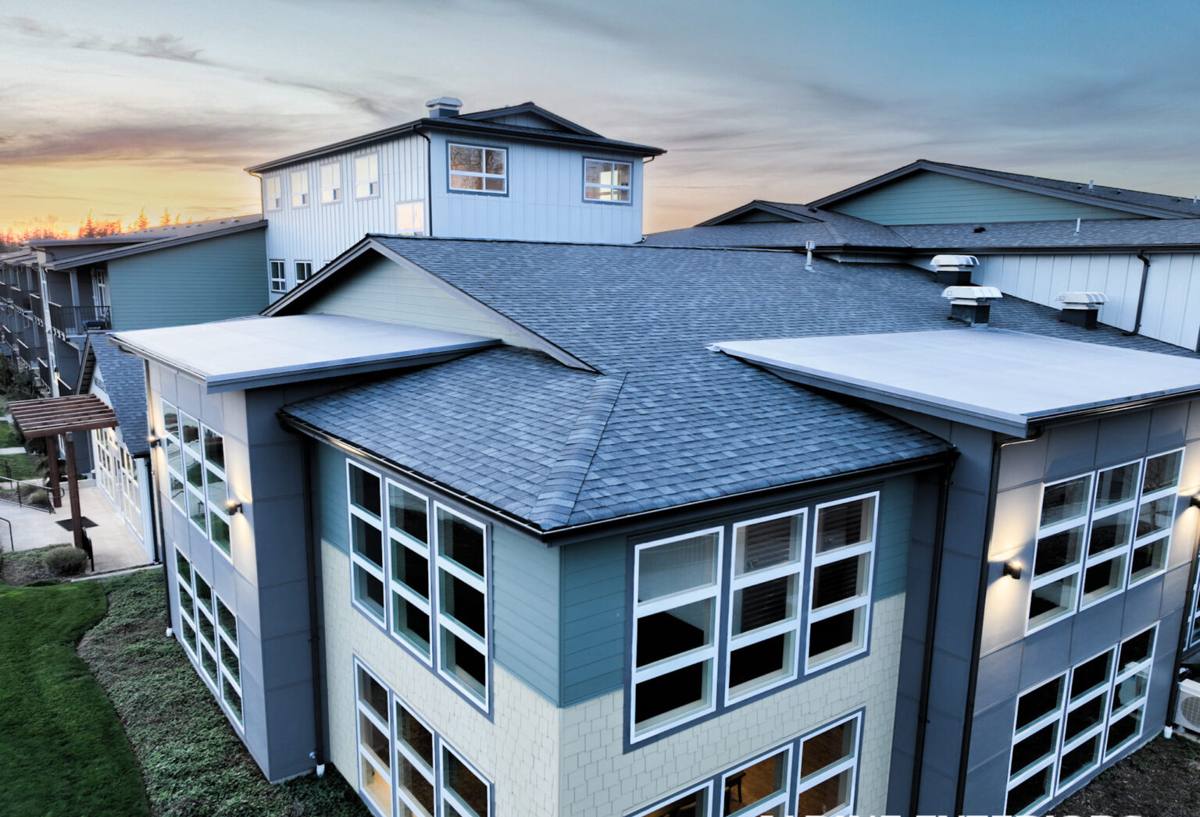
What Cap Sante's Climate Actually Does to This Profile
Board and batten works by covering the vertical seams between wide panels with narrower strips of trim. That design choice is exactly why the climate here matters more for this profile than for a lap siding job.
Salt air and fasteners
Homes near Cap Sante Marina sit close enough to saltwater that airborne salt reaches the exterior wall on a regular basis. Salt accelerates corrosion in exposed metal — fasteners, flashing, and any hardware at the batten seams. A batten system has more vertical joints per square foot of wall than a lap siding job, and every one of those joints is a place where a corroded or poorly seated fastener can let water in behind the cladding.
Driving rain off the water
Wind off Guemes Channel and the surrounding waterways doesn't just drop rain straight down — it pushes it sideways into gable ends and west- and north-facing walls. Board and batten doesn't shed water the way overlapping lap siding does; it depends entirely on the seams, flashing, and drainage plane behind the panels being built correctly the first time. There's no natural overlap to bail out a shortcut.
A long moss season
Anacortes gets an extended stretch of damp, shaded weather every year, and moss doesn't need much encouragement. Every horizontal edge on a batten — the top of each strip, corner boards, window trim returns — is a small ledge where organic debris and moisture can sit. On shaded north walls that never fully dry out, that buildup can hold moisture against the cladding for weeks at a time.
Why We Only Build This Out of James Hardie Fiber Cement
We don't install board and batten in wood, vinyl, or engineered wood products like LP SmartSide. That's a standing policy, not a sales pitch, and here's the reasoning as it applies specifically to this profile in this location.
Traditional wood board and batten is real wood, which means it moves with moisture and needs repainting on a cycle that only gets shorter in a marine climate. Vinyl board and batten is thin, flexes in wind, and its seams and battens are typically snap-together plastic details rather than a fastened, flashed assembly — fine in a mild climate, less convincing on a bluff that takes direct wind off the water. LP SmartSide and similar engineered wood panels resist moisture better than solid lumber but are still wood-based, meaning cut edges and fastener penetrations need to stay sealed indefinitely or the product is vulnerable to the exact moisture exposure this location provides in volume.
James Hardie's fiber cement is non-combustible, doesn't expand and contract with humidity the way wood does, and carries a factory-applied ColorPlus finish instead of a field-applied paint job. For board and batten specifically, we build the look using HardiePanel vertical siding with Hardie trim battens — an engineered panel-and-batten assembly, not dimensional lumber strips nailed over plywood. That matters because the panel and the battens are both fiber cement, both finished at the factory to the same standard, and both installed to Hardie's published fastening and clearance specifications rather than a job-site judgment call.
What a Correct Installation Involves
Board and batten hides a lot of the work that actually protects the house. From the street, a well-built system and a shortcut version can look identical for the first year or two — the difference shows up behind the panel, where you can't see it, and in how the wall performs during the next atmospheric river event off the Pacific.
- A continuous weather-resistive barrier behind the panels, lapped correctly at every seam and penetration
- Proper flashing at window and door heads, and at any horizontal trim or transition
- Correct starter strip at the base of the wall so the bottom panel edge doesn't wick water
- Fastening at the stud locations Hardie specifies, with the correct fastener type for a marine environment
- Battens placed and fastened over the panel seams — not just decorative, but functional cover for the joint
- Sealant only where Hardie's install guide calls for it, not as a substitute for proper flashing
- Correct clearance at grade, decks, and roof lines so the bottom of the siding isn't sitting in standing water or snow load
Skip any one of these and the failure usually doesn't show up as a visible defect right away — it shows up two or three winters later as a soft spot, a stain, or a section that needs to be opened up and redone. On a bluff-exposed or near-marina wall, that timeline compresses.
Board & Batten: How the Options Compare for This Location
| Factor | Wood Board & Batten | Vinyl Board & Batten | James Hardie Fiber Cement |
|---|---|---|---|
| Salt air / corrosion resistance | Moderate — depends on paint upkeep | Good, but fasteners and trim clips still corrode | Strong — factory finish, standard-spec fastening |
| Driving rain / seam performance | Only as good as caulking and flashing detail | Relies on snap-fit seams flexing correctly | Engineered panel-and-batten system, flashed to spec |
| Moss / organic buildup | Holds moisture, feeds moss and rot | Doesn't rot, but growth still stains the surface | Doesn't rot; factory finish resists staining better |
| Repainting cycle | Every 4-7 years in this climate | Never repainted, but can't be refreshed either | ColorPlus finish holds years longer before repaint is needed |
| Impact resistance (wind-blown debris) | Dents, splits | Cracks in cold, can warp in sun | Rigid, non-combustible, holds up to impact |
Our Process, Start to Finish
- On-site assessment — we look at the existing wall assembly, note any current moisture damage, check corner and window details, and evaluate the wall's actual sun/shade/wind exposure rather than assuming.
- Scope and estimate — a written plan covering tear-off (if needed), WRB, flashing, panel and batten layout, and finish color, with an honest range rather than a placeholder number.
- Prep and weather barrier — old cladding removed where required, sheathing checked, WRB installed and lapped correctly, flashing set at every opening.
- Panel and batten install — HardiePanel set to Hardie's fastening schedule, battens placed over every seam and at consistent spacing, all penetrations sealed per spec.
- Trim, caulking, and detail work — corners, window and door trim, and any transition points finished so water has a clear path off the wall, not into it.
- Final walkthrough — we go over the finished work with you before calling the job done, not after.
Why It Matters That We Already Work This Area
A crew that's done board and batten on homes near Cap Sante Marina already knows which walls take the worst of the wind, which sides need extra attention to flashing because of shade and moisture retention, and how the City of Anacortes permitting process typically runs for exterior work in this part of town. That's not something you can fully substitute with a generic crew working from a national install manual alone — the manual gets you the baseline spec, but knowing how this specific stretch of Skagit County weather behaves is what keeps a board and batten wall performing ten and fifteen years out, not just at the final walkthrough.
Maintenance That Actually Matters Here
Fiber cement board and batten is low-maintenance, not no-maintenance. In this location, the two things worth doing on a regular basis are rinsing off accumulated salt residue and organic debris (especially on shaded walls where moss gets a foothold) and doing a quick visual check of caulking at trim joints and penetrations once a year, since sealant is the one part of the system that wears out on a schedule and is cheap to refresh before it fails. Everything else — the panel, the finish, the batten material itself — is built to hold up with minimal attention when it was installed correctly to begin with.
If you're weighing board and batten for a home in Cap Sante, we're glad to walk the property with you, look at your specific exposure, and put together a straightforward, no-pressure estimate — no obligation, just an honest read on what your walls actually need.