 Anacortes Exterior
 Building Decks for Cap Sante's Marine Climate
Cap Sante sits above Anacortes with some of the best water views in Skagit County — and some of the toughest conditions for an outdoor structure. Homes on and around the hill catch salt-laden air off Rosario Strait and the marina below, take on driving rain funneled in off the water, and sit shaded enough in spots to grow a steady crop of moss for much of the year. A deck built here has to handle all three at once, season after season, without the fasteners rusting, the boards cupping, or the surface turning into a slip hazard by December.
We build custom decks specifically with this exposure in mind. That means different fastener choices, different framing details, and different maintenance expectations than you'd plan for a deck twenty miles inland. This page walks through what actually matters for a Cap Sante deck project — not generic deck-building advice, but the specifics that come from working this hillside and this climate.
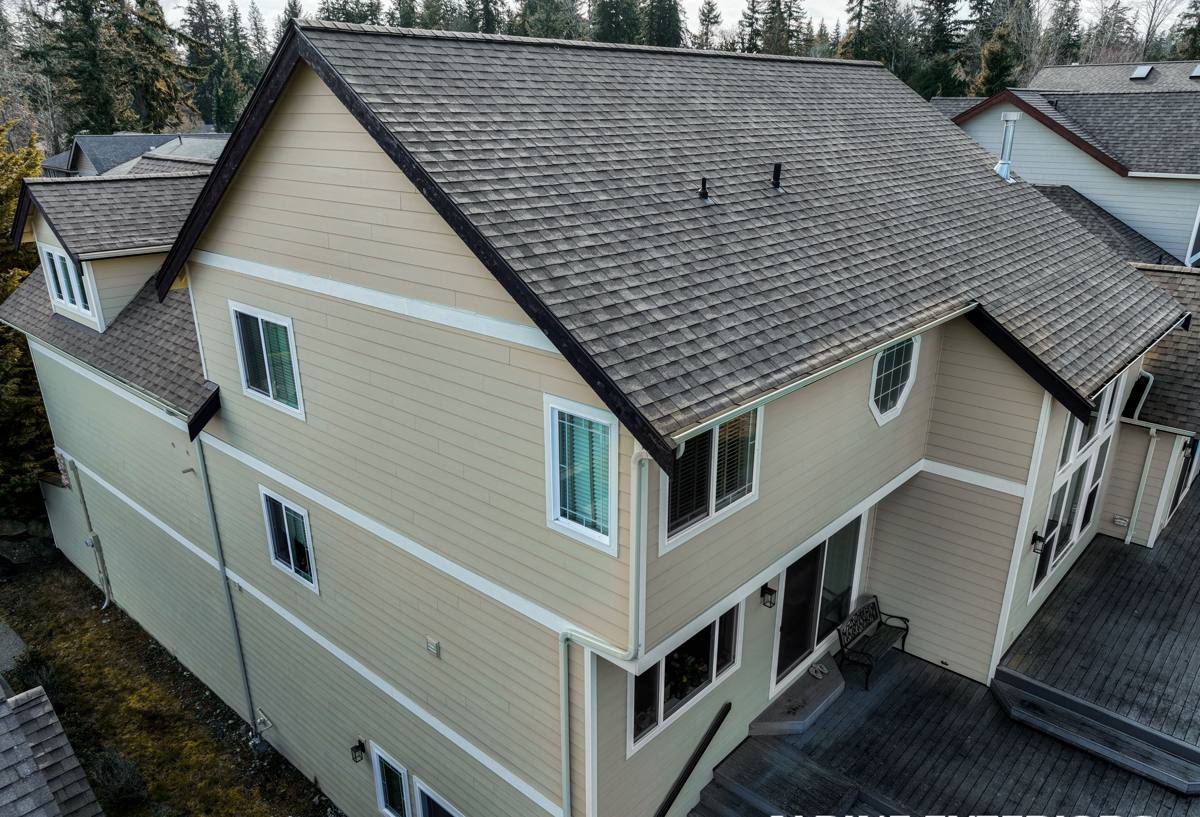
What Cap Sante's Sites Actually Demand
Wind and Salt Exposure
Elevated lots near Cap Sante often get more direct wind than homes closer to sea level in town, and that wind carries salt spray further onto exposed wood and metal than most homeowners expect. Standard deck screws and joist hangers that would be fine in a sheltered yard can start showing corrosion within a couple of seasons up here. We spec stainless steel or heavy-duty coated fasteners rated for coastal exposure on every Cap Sante project, not just the ones facing the water directly — wind carries salt around corners.
Slopes and Elevation Changes
A lot of Cap Sante lots aren't flat. View decks are frequently built out from a hillside or over a walkout basement, which means footings, beam spans, and guardrail height all have to account for grade changes that a flat-lot deck never deals with. That's a structural planning issue, not just a finish carpentry one, and it needs to be worked out before any lumber gets ordered.
Shade and Moss Pressure
Depending on tree cover and which side of the hill a house sits on, some Cap Sante decks stay damp and shaded for long stretches of fall and winter. That's exactly the environment moss and algae need to take hold on decking surfaces, and it's also where slip risk climbs fastest. Surface texture, gap spacing, and drainage design all matter more on a shaded deck than a sun-exposed one.
Choosing the Right Decking Material
There's no single "best" decking product — the right call depends on how exposed the site is, how much upkeep the homeowner wants to do, and budget. Here's how the common options actually perform in Anacortes's salt-air, high-rain climate:
| Material | Salt Air / Moisture Behavior | Moss & Algae Resistance | Maintenance |
|---|---|---|---|
| Pressure-treated wood | Handles moisture well when properly sealed; fasteners are the weak point without coastal-rated hardware | Needs regular cleaning and treatment to resist growth in shaded spots | Annual cleaning, periodic re-staining or sealing |
| Cedar | Naturally moisture-resistant, ages gracefully in coastal air | Better natural resistance than PT wood but still needs upkeep in shade | Regular cleaning, occasional oiling to keep color |
| Composite decking | Doesn't absorb moisture or rot, handles salt exposure well | Textured boards resist growth but can still get mossy in deep shade without cleaning | Periodic washing, no staining or sealing needed |
| PVC decking | Fully moisture-proof, best option for very exposed or shaded sites | Smooth, low-porosity surface is hardest for moss to grip | Occasional washing only |
We don't push one product on every job. A sun-exposed view deck with good airflow can do fine in cedar with a homeowner willing to maintain it. A shaded deck tucked against the hillside is usually a better fit for composite or PVC, simply because it cuts down how often someone has to be out there scrubbing moss off the boards. We'll walk through the honest trade-offs — cost, look, upkeep — for your specific site rather than defaulting to whatever's easiest to install.
Fasteners and Hardware
Whatever decking material you choose, the hardware underneath matters just as much on a Cap Sante project. We use stainless steel or coastal-rated coated fasteners, hot-dip galvanized or stainless structural hardware, and connectors rated for the moisture exposure the site actually sees — not just code-minimum. Cutting corners here is the single most common reason decks in salt-air zones fail early, usually at the ledger board or joist hangers, well before the decking itself wears out.
Framing and Structural Details That Matter Here
Ledger Attachment and Flashing
Where the deck ties into the house is the single most important detail on any deck build, and it's even more critical with the rain volume Anacortes and Skagit County see through fall and winter. Proper ledger flashing keeps water from working its way behind the siding and into the house framing — a slow, hidden problem that can go unnoticed for years if it's done wrong the first time.
Footings on Sloped or Hillside Lots
Footing depth and placement on a graded Cap Sante lot need to account for soil conditions and drainage, not just span tables. We size footings and beams for the actual load and grade of your site, and we pull permits through the City of Anacortes so the finished structure is inspected and documented — that matters for resale and for insurance down the road.
Guardrails and Stairs
Elevated decks on sloped lots often need taller guardrails and longer stair runs than a standard ground-level deck, and code requirements around height, baluster spacing, and stair geometry apply regardless of how great the view is. We build these to code from the start rather than treating them as an afterthought.
Drainage and Moss Prevention Built In
A lot of moss and algae problems on Skagit County decks aren't really a cleaning problem — they're a design problem. If water sits on a deck surface or in the gaps between boards because of poor slope or clogged drainage, moss will keep coming back no matter how often it gets scrubbed off. We build in a slight slope away from the house, proper board spacing for airflow and drainage, and where the deck sits over living space below, a drainage system that actually moves water off the deck instead of trapping it against the framing.
For shaded, low-airflow sites, we'll also talk through practical options like selective nearby branch trimming (coordinated with the homeowner, never something we do unilaterally) to cut down how much standing shade the deck sits in — it's often a bigger factor in moss growth than the decking material itself.
Our Process for a Cap Sante Deck Project
- Site walk and design consultation — we look at grade, sun/shade exposure, wind direction, and how the deck ties into the house before recommending materials.
- Material and layout planning — honest trade-offs on decking material, framing approach, and structural needs specific to your lot.
- Permitting — we handle the City of Anacortes permit process so the finished deck is inspected and on record.
- Framing and structural work — footings, ledger flashing, beams, and joists built to the load and moisture exposure of your specific site.
- Decking, rail, and stair installation — finished to the material specification agreed on up front.
- Final walkthrough — we cover maintenance expectations so there are no surprises the first wet winter.
Maintaining a Deck Through an Anacortes Winter
Whatever material you choose, a little seasonal attention goes a long way in this climate. A basic homeowner checklist we hand over on every project:
- Sweep debris and standing leaves off the deck surface regularly through fall — trapped organic matter is what feeds moss growth
- Rinse or scrub shaded areas periodically through winter, especially board gaps and corners where water sits longest
- Check that drainage gaps and any under-deck drainage system stay clear of debris
- Inspect fasteners and hardware annually for early signs of corrosion, especially on decks with direct water exposure
- Re-seal or re-stain wood decking on the schedule appropriate to the product — don't wait until it's visibly gray and worn
- Check guardrails and stair connections annually for looseness, particularly after a hard winter storm season
Why a Local Crew Matters for This Job
Deck-building advice that works for a dry inland climate doesn't automatically hold up on a salt-exposed, rain-heavy hillside like Cap Sante. Fastener selection, drainage design, and material choice all shift once you're building this close to the water. We work Anacortes and Skagit County regularly, which means we've seen how decks built here actually hold up over time — where moss takes hold first, which hardware corrodes early, and which framing details matter most given the wind and rain this area gets. That's the kind of judgment that only comes from building in this specific climate, not from a general contractor's playbook.
If you're planning a new deck or replacing one that's showing its age on Cap Sante, we're happy to walk the site with you and talk through what makes sense for your specific exposure and budget. Reach out for a free, no-pressure estimate using the form below.