 Anacortes Exterior
 Cap Sante's Exposure Is Different Than Inland Anacortes
Cap Sante sits close to the water, with homes catching salt-laden wind, driving rain off the Sound, and long stretches of shade and dampness that keep moss and moisture active for much of the year. That combination is harder on exterior siding than what a house a few miles inland in Skagit County deals with. Salt air accelerates corrosion on fasteners and trim metal. Wind-driven rain finds gaps that would stay dry on a more sheltered lot. And a mossy, humid microclimate keeps wood-based and wood-look products wet longer, which is exactly the condition that shortens their life.
None of this means Cap Sante is a bad place to own a home — it means the siding system and the installation details matter more here than they do in a lot of other neighborhoods. A product and a crew that cut corners on flashing, fastening, or water management will show it faster on a bluff-side or marina-facing lot than almost anywhere else in Anacortes.
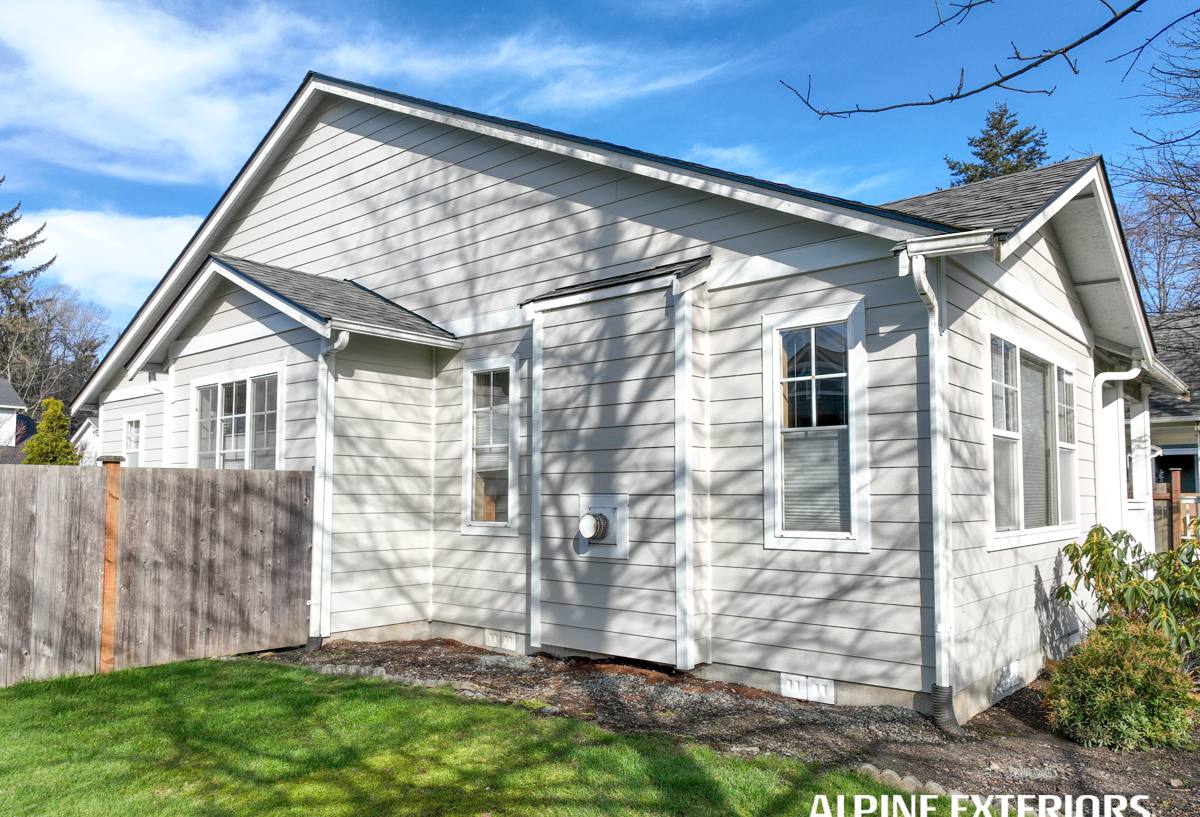
What Cap Sante Homes Actually Need From Their Siding
Resistance to Salt and Moisture, Not Just Weather
Standard weatherproofing assumptions don't fully account for salt air. Metal fasteners, trim, and flashing need to be corrosion-resistant, not just galvanized. Siding material itself needs to hold paint and caulk adhesion in salty, humid conditions without swelling, cupping, or losing its factory finish.
A Drainage Plane That Actually Works
Driving rain off the water doesn't fall straight down — it hits the wall at an angle and gets pushed into laps, seams, and penetrations. A correctly built wall needs a continuous water-resistive barrier, properly lapped and taped, with siding acting as the first line of defense rather than the only line of defense.
A Surface That Doesn't Feed Moss and Mildew
Wherever shade and moisture combine — north-facing walls, areas under trees, spots that stay damp longer after a storm — moss, algae, and mildew get a foothold. The siding surface and finish matter here: some materials and coatings resist biological growth and clean up easily; others absorb moisture and give moss something to hold onto.
Why We Install Only James Hardie Fiber Cement Siding
We standardized on James Hardie fiber cement for every siding job we take on, including in Cap Sante, and we don't install vinyl, LP SmartSide, or wood-based products. That's a deliberate professional standard, not a sales pitch, and it's rooted in how those materials perform in exactly the conditions Cap Sante deals with:
- Fiber cement is non-combustible and doesn't feed a fire the way some wood-based and engineered-wood products can.
- Hardie's ColorPlus factory-applied finish is baked on and warranted, so it resists fading and holds up to salt air and UV better than field-applied paint on wood substrates.
- James Hardie's HZ5 product line is engineered specifically for cold, wet, coastal climates like ours, with moisture and freeze-thaw performance built into the formulation.
- Fiber cement doesn't swell, rot, or delaminate the way wood-based sidings can when they take on repeated moisture — which matters on a site that stays damp longer than most.
- Hardie backs the product with a strong transferable limited warranty, which carries real weight on coastal homes where material stress is higher over the life of the siding.
Vinyl can crack and warp in cold snaps and doesn't hold up structurally the way fiber cement does. Wood-based products like LP SmartSide depend heavily on maintained paint film and sealed edges to keep moisture out — miss a maintenance cycle in a damp, salty environment and the material is exposed to exactly what it's least equipped to handle. We'd rather install one product correctly, on every home, than install several products and manage the trade-offs of each.
What Correct Siding Installation Involves
The siding itself is only part of the system. Most siding failures we see — anywhere in Anacortes, not just Cap Sante — trace back to installation shortcuts, not the material. A correct install includes:
- A water-resistive barrier installed and lapped correctly, shingle-style, so water sheds down and out rather than behind the barrier.
- Properly integrated flashing at every window, door, and penetration, tied into the drainage plane rather than just caulked over.
- Correct fastener type, spacing, and depth per James Hardie's published installation instructions — this is what keeps the warranty valid and the siding performing.
- Proper clearance at grade, decks, and roof lines so siding never sits in standing water or against soil.
- Correct joint treatment and caulking at butt joints and trim, using products rated for the exposure.
- Ventilation behind the cladding where the wall assembly calls for it, so moisture that does get in can dry out.
Skip any one of these and you can have the best siding material on the market and still get moisture intrusion, premature failure, or a voided warranty. This is where the installer matters as much as the product.
Our Installation Process for Cap Sante Homes
Assessment and Site Read
We start by walking the exterior and reading the site: which walls take the most direct wind and rain, where moss and staining are already showing up, where the existing water-resistive barrier and flashing are failing, and what condition the sheathing is in underneath the current siding.
Removal and Substrate Check
Old siding comes off and we inspect the sheathing and framing for rot or water damage before anything new goes on. Covering up a wet or compromised substrate is one of the most common ways a siding job fails early, and it's not something we skip past.
Water Management Layer
We install a continuous water-resistive barrier and flash every window, door, and penetration before siding goes up — this is the layer that actually keeps water out of the wall, and it's the part that's invisible once the job is finished.
James Hardie Installation to Spec
Siding, trim, and fasteners go in following James Hardie's installation guidelines exactly — spacing, fastener type, clearances, and caulking — so the finished wall performs as engineered and the warranty is intact.
Final Walkthrough
We walk the finished exterior with the homeowner, check caulking and trim lines, and make sure everything is sealed and clean before calling the job done.
Choosing a James Hardie Product Line for a Cap Sante Home
James Hardie offers several profiles, and the right one depends on the home's style and exposure as much as looks:
| Product Line | Best Suited For | Notes for Cap Sante Exposure |
|---|---|---|
| HardiePlank Lap Siding | Traditional and craftsman-style homes | Most common choice; wide range of profiles and ColorPlus finishes for a salt-air environment |
| HardiePanel Vertical Siding | Modern builds, accent walls, gable ends | Clean lines; pairs well with board-and-batten detailing on wind-exposed walls |
| HardieShingle Siding | Cottage and Pacific Northwest style homes | Gives a traditional shingle look without the moisture vulnerability of real wood shingles |
| HardieTrim Boards | Window, door, and corner trim on any style | Matches expansion and moisture behavior of the field siding, reducing joint failure |
All of these are available in Hardie's HZ5 formulation and ColorPlus factory finishes, which is what we spec for this climate rather than field-painted options.
What Siding Installation Costs Depend On
We don't publish flat prices because every home is different, but the real cost drivers on a Cap Sante siding job are consistent:
| Factor | Why It Matters |
|---|---|
| Home size and wall complexity | More corners, gables, and trim detail mean more labor and material |
| Substrate condition | Rot or water damage found during tear-off adds repair scope before new siding goes on |
| Product line and profile | Lap, panel, shingle, and trim combinations price differently |
| Site access | Tight lots, slopes, and water-adjacent access can affect staging and labor time |
| Existing water management | Homes needing a full new drainage plane cost more than those with a sound existing barrier |
A firm number only comes from an in-person look at the home — we'll walk you through what's driving the estimate, not just hand you a total.
Signs a Cap Sante Home May Need New Siding
- Moss or algae staining that keeps returning even after cleaning
- Soft, spongy, or bubbling spots on siding or trim
- Visible warping, cupping, or gaps opening up between boards
- Paint that's peeling or failing faster than a normal repaint cycle would suggest
- Musty smells or discoloration on interior walls near exterior corners
- Fasteners that are rusting, bleeding, or backing out
- Caulking that's cracked, shrunk, or missing at joints and trim
Any one of these on its own might just need attention. Several together, especially on the walls that face the water and wind directly, usually point to a siding system that's no longer doing its job.
Why a Crew That Already Works in Cap Sante Matters
Siding installation isn't identical from neighborhood to neighborhood. A crew that already works this part of Anacortes knows which walls typically take the worst weather, where moss problems tend to concentrate, and what water-management details actually hold up here versus on paper. That local pattern recognition — combined with installing one product system correctly, every time, rather than juggling several — is what keeps a siding job performing for decades instead of needing attention again in a few years.
If you're weighing a siding project on a Cap Sante home, we're glad to take a look, walk the exterior with you, and give you a straight read on condition and options. Reach out for a free, no-pressure estimate using the form below.