 Anacortes Exterior
 Flounder Bay Sits Right Where Salt Air Meets Siding
Homes near Flounder Bay face a harder version of the same weather that hits the rest of Anacortes: salt-laden air off the water, wind-driven rain that comes in sideways off Rosario Strait, and long stretches of gray, damp weather that never quite let siding dry out completely. Add in the shade from mature evergreens that many Skagit County lots are known for, and you've got a recipe for moss and algae growth that outpaces what homeowners see further inland. Siding here doesn't fail because it's old — it fails because moisture and salt exploit small gaps faster than they would in a drier climate.
That's the lens we use on every repair call in this neighborhood. A crack or a soft spot that would be cosmetic in Wenatchee can be a moisture pathway in Flounder Bay, and treating it like a cosmetic issue is how a $400 repair turns into a $4,000 wall rebuild two years later.
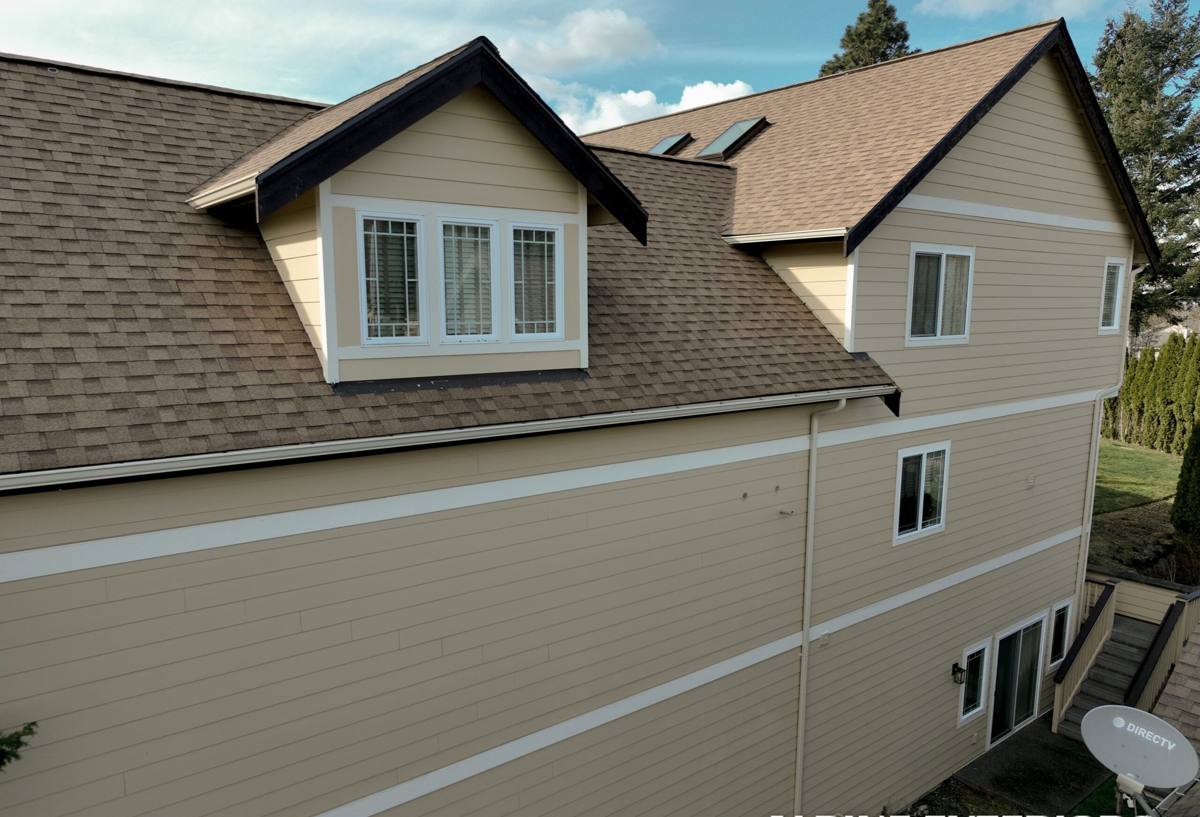
Signs Your Siding Needs Attention Now, Not Later
Most siding repair calls we get in this area start with something small the homeowner noticed months earlier and hoped would resolve itself. It doesn't. Here's what we tell Flounder Bay homeowners to watch for:
- Soft, spongy, or bulging spots when you press on the siding, especially near the bottom courses or under windows
- Visible cracks at panel edges, corners, or where siding meets trim
- Persistent dark streaking or green-black moss growth that comes back within weeks of cleaning
- Paint or ColorPlus finish that's peeling, bubbling, or chalking unevenly in patches rather than uniformly across the wall
- Gaps opening up around window and door trim, or caulk that's cracked and pulling away
- A musty smell in an adjacent interior room, or visible staining on interior drywall near an exterior wall
- Rust streaks below fasteners or trim, which usually points to corroding fasteners rather than a siding problem itself
Any one of these on its own might be minor. Two or three together, especially on a wall that faces the water or sits in shade most of the day, usually means moisture has already worked past the surface.
What's Actually Driving Siding Damage Near the Bay
Salt air and corrosion
Salt in the air doesn't just sit on the surface — it works into fasteners, flashing, and any exposed metal trim. Once fasteners start corroding, they lose their grip, siding starts to loosen, and water finds a way in around the loosened panel. This is one of the more common root causes we find behind repairs that look, at first glance, like simple impact damage.
Wind-driven rain
Rain that falls straight down mostly runs off siding the way it's designed to. Rain that's being pushed sideways by wind off the water behaves differently — it gets forced up under laps, into butt joints, and behind trim that isn't sealed and flashed correctly. A lot of the repair work we do in this part of Anacortes is really flashing and joint work disguised as a "siding problem."
Moss, algae, and prolonged moisture
Shaded, north-facing walls near tree lines hold moisture longer, and that moisture feeds moss and algae growth. Left alone, that growth holds even more water against the siding surface and accelerates whatever damage is already starting underneath.
Repair or Replace? How We Make That Call
Not every damaged section needs full replacement, but not every repair is worth doing either. We look at scope, moisture history, and how much of the wall is actually affected before recommending either path.
| Factor | Points Toward Repair | Points Toward Replacement |
|---|---|---|
| Extent of damage | Isolated to a few panels or one section of wall | Spread across multiple walls or the whole elevation |
| Moisture intrusion | Surface-level, caught early, sheathing still dry | Sheathing or framing shows rot or sustained water damage |
| Age of existing siding | Newer material, isolated failure point | Original siding is decades old and failing broadly |
| Color/material match | Matching material or finish is available | Discontinued material makes patch repairs visually obvious |
| Underlying cause | One-time event (impact, isolated flashing failure) | Systemic issue (bad original install, chronic moisture path) |
Where it's close, we'll say so plainly. We're not going to talk a homeowner into a full re-side when a targeted repair will hold up, and we're not going to patch over a problem that's clearly going to resurface within a year or two.
What a Correct Repair Actually Involves
Diagnosis before demolition
Before we pull a single panel, we check what's happening behind it — moisture readings on the sheathing, a look at the house wrap or building paper condition, and an honest look at whether the original flashing detail was done correctly in the first place. Repairing the visible siding without addressing what let water in behind it just resets the clock on the same failure.
Matching material and finish
Patchwork siding repair stands out fast if the new material doesn't match the existing panels in profile, exposure, and finish. We work to match both the physical product and the factory finish color as closely as possible, and we're upfront when an exact match isn't realistic due to fading or discontinued colors.
Flashing and fastening done right
This is where most repair quality gets decided. Correct head flashing above windows and trim, proper lap sequencing, and fasteners rated for coastal exposure all matter more here than in drier parts of the state. We don't just caulk a gap and call it fixed — caulk is a backup to good flashing, not a substitute for it.
Finishing the job clean
Repaired sections get properly caulked, primed where needed, and finished so the repair blends into the surrounding wall rather than standing out as an obvious patch.
Why We Repair With — and Recommend — James Hardie Fiber Cement
We only install James Hardie siding, and that includes repair work. Hardie's fiber cement doesn't absorb moisture and swell the way wood-based products can, and it doesn't feed the moss and mildew growth that's so persistent in this climate the way some other siding materials do. The ColorPlus factory finish also holds up better against the fading and chalking that salt air and UV exposure cause over time, which makes color-matching repairs to existing Hardie siding far more realistic years down the line.
For homes that don't currently have Hardie siding, we'll still do honest repair work on what's there. But when a repair area is large enough, or the existing material is failing broadly enough that a partial re-side makes more sense, we'll walk through why Hardie's HZ5 product line — engineered for wetter, more humid climates like ours — holds up differently than the vinyl, LP SmartSide, or cedar it might be replacing.
How We Handle Repair Jobs in Flounder Bay
1. On-site inspection
We walk the affected areas, check moisture levels, and look at the broader wall — not just the spot the homeowner called about — since damage near the water often extends further than what's visible from the ground.
2. Clear scope and pricing
You get a written explanation of what we found, what we recommend, and why — including if we think a repair is genuinely sufficient rather than upselling a bigger job.
3. The repair itself
We remove only what needs to come off, address the underlying cause (flashing, fasteners, moisture path), and install matched material correctly the first time.
4. Cleanup and follow-up
Site is cleaned up, and we'll flag any other areas worth keeping an eye on so small issues don't turn into the next repair call.
Why Local Experience in This Neighborhood Matters
A contractor who mostly works drier, inland parts of Skagit County can still do competent siding work, but they may not immediately clock why a repair near the water needs different fastener specs, tighter flashing tolerances, or a different maintenance conversation than the same repair fifty miles inland. Crews who regularly work Flounder Bay and the surrounding Anacortes waterfront know which walls take the worst of the wind-driven rain, which shaded corners grow moss fastest, and how salt air shortens the service life of standard fasteners and trim. That local pattern recognition is what separates a repair that lasts from one you're calling about again next winter.
If you're seeing cracked, soft, or moss-covered siding on your Flounder Bay home, we're happy to take a look and give you a straight answer on what it needs. Fill out the form below for a free, no-pressure estimate.