 Anacortes Exterior
 Flounder Bay Roofs Work Harder Than Most
Flounder Bay sits close enough to the water that homes here take a different kind of beating than a roof ten miles inland in Skagit County. Salt-laden air moves through the marina and up into the neighborhood on a regular basis, wind off Rosario Strait and the surrounding waterways drives rain sideways instead of straight down, and the tree cover that makes the area beautiful also means shade, moisture, and moss season that runs longer than most homeowners expect. A roof that would hold up fine in a dry inland subdivision can fail early here if it wasn't designed and installed with those specific conditions in mind.
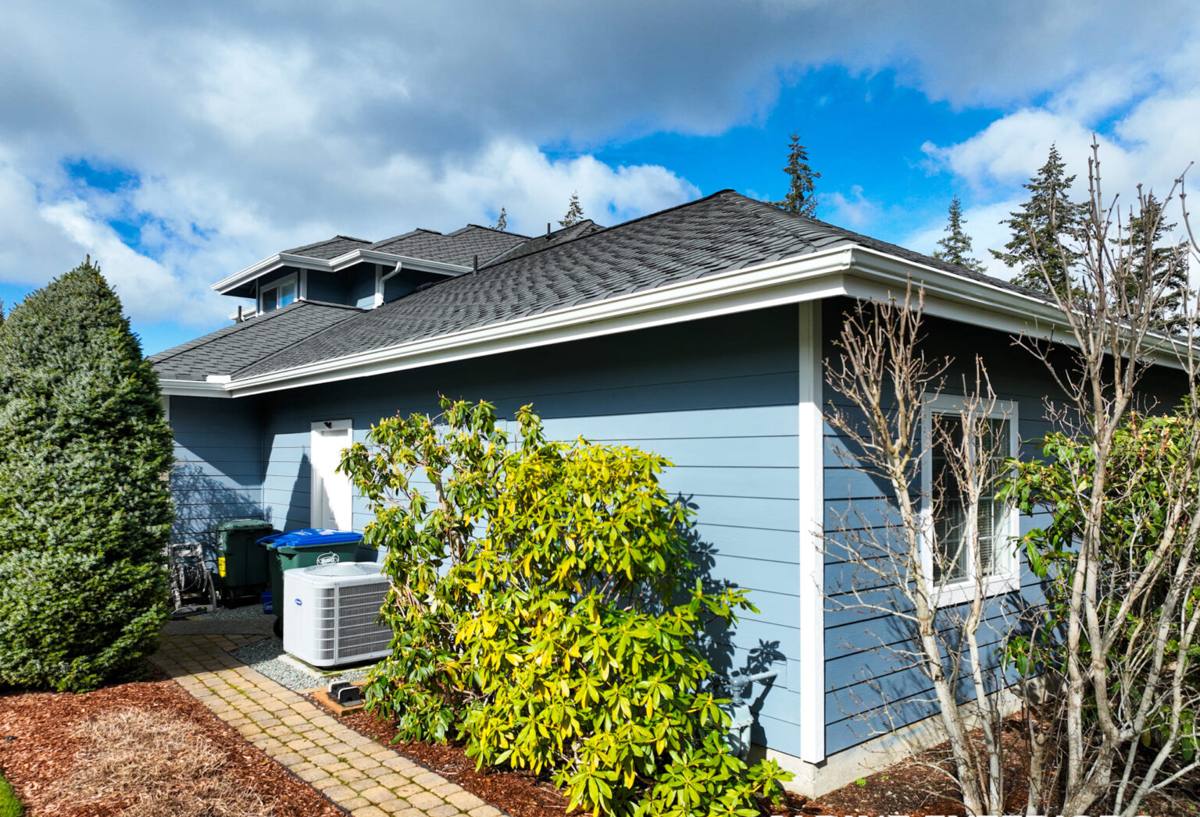
This page is about one job, done right, in one place: a full new roof installation for a Flounder Bay home. Not a general overview of roofing — the specific decisions that matter when the house is a few blocks from saltwater and under a canopy of Pacific Northwest evergreens.
What the Local Climate Actually Does to a Roof
Salt Air and Metal Fasteners
Salt in the air accelerates corrosion on anything metal — nail heads, flashing, gutter hangers, even the fastener heads on some shingle lines if the wrong grade is used. On a standard job away from the water, a contractor can get away with standard galvanized fasteners for decades. Close to Flounder Bay, that same hardware can start showing rust streaks and weakening within a handful of years. We spec corrosion-resistant fasteners and flashing on every coastal-adjacent job — it costs a little more up front and saves a full tear-off later.
Wind-Driven Rain
Rain that comes in sideways doesn't behave like rain falling straight down. It gets pushed under shingle tabs, into valleys, and around penetrations that would stay dry in calmer conditions. This is why underlayment selection and flashing detail work matter more here than the shingle brand printed on the wrapper. A roof can look identical to one across town and perform completely differently in a wind event because of what's underneath it.
Moss and Algae Season
Anacortes gets a long wet season, and Flounder Bay's tree cover keeps roof surfaces shaded and damp longer after a storm than a home in open sun. Moss doesn't just look bad — it lifts shingle edges as it grows, holds moisture against the roof deck, and works its way into laps and valleys. Left unchecked over a few seasons, moss growth can shorten the useful life of an otherwise sound roof by years.
What a Correct New Roof Installation Actually Involves
"New roof" gets used loosely. A correct installation for this area includes several layers of decision-making most homeowners never see once the shingles are down:
- Full tear-off, not an overlay. Installing new shingles over old ones traps moisture and hides deck problems — not something we recommend on a home exposed to this much wind-driven rain.
- Deck inspection and repair. Once the old roofing is off, we check the sheathing for soft spots, delamination, or rot, especially around valleys and eaves where moisture tends to collect over time. Any bad sections get replaced before anything new goes down.
- Ice-and-water shield at vulnerable points. Eaves, valleys, and roof-to-wall transitions get self-adhering waterproof membrane, not just felt. This is the single biggest defense against wind-driven rain finding its way in.
- Synthetic underlayment across the field. More tear-resistant and more consistently waterproof than old-style felt, and it holds up better if weather moves in mid-project.
- Corrosion-resistant flashing and fasteners. Especially at chimneys, skylights, and any metal-to-metal contact points, given the salt air exposure this close to the water.
- Balanced attic ventilation. Intake at the eaves, exhaust at the ridge, sized to the attic volume — this controls moisture from the inside as much as the roofing controls it from the outside.
- Proper drip edge and starter course. Small details that determine whether wind can get a grip on the roof's edge in a storm.
Comparing Roofing Materials for a Coastal-Adjacent Home
There isn't one right material for every home — it depends on budget, roof pitch, exposure, and how long you plan to own the house. Here's how the common options stack up for a Flounder Bay property specifically:
| Material | Salt Air / Wind Performance | Moss Resistance | Typical Lifespan Locally |
|---|---|---|---|
| Architectural asphalt shingle (algae-resistant, high wind rating) | Good with proper fasteners and flashing | Better with zinc/copper strips; needs periodic cleaning | 20–30 years |
| Standing seam metal | Very good if finish and fasteners are marine-rated | Very good — sheds moss and debris well | 40–50+ years |
| Synthetic composite shake/slate | Good, lightweight, holds up to wind | Good, low water absorption | 30–50 years |
| Basic 3-tab asphalt (economy grade) | Weaker wind rating, more vulnerable to lifting | Fair — moss takes hold faster on lower-grade granules | 15–20 years |
For most Flounder Bay homes we recommend an algae-resistant architectural shingle rated for higher wind speeds, or standing seam metal for homeowners planning to stay long-term and wanting the lowest long-run maintenance. We steer clients away from economy-grade 3-tab shingles on this stretch of coastline — not because the product is defective, but because its lighter wind rating and thinner granule coat are a poor match for what this specific location puts a roof through.
Cost Factors Homeowners Should Actually Weigh
| Factor | Why It Matters Here |
|---|---|
| Roof pitch and complexity | Steeper roofs and multiple valleys mean more labor and more flashing detail — both add cost but also add protection against wind-driven rain. |
| Deck condition | Moisture-damaged sheathing found during tear-off adds cost but is far cheaper to fix now than after a leak reaches the interior. |
| Material grade | Marine-grade fasteners and flashing cost more than standard hardware but matter more this close to saltwater. |
| Ventilation upgrades | Older Flounder Bay homes are sometimes under-ventilated for the roof area — bringing intake/exhaust up to spec adds a modest cost and extends roof life. |
| Access and tree cover | Mature trees common in this neighborhood can mean extra care (and sometimes extra time) for material staging and debris removal. |
We give a broad honest range during the estimate walk-through once we've seen the roof in person — pitch, square footage, deck condition, and material choice all move the number, and we'd rather show up and measure than guess over the phone.
How Our Process Works
1. On-Site Inspection and Estimate
We walk the roof (or use a drone where pitch or access makes that safer), check the attic for ventilation and moisture signs, and note anything specific to the property — tree exposure, valley layout, chimney or skylight flashing condition. You get a written estimate with material options, not a single take-it-or-leave-it number.
2. Permitting
Reroofing in the City of Anacortes typically requires a permit, and we handle that paperwork as part of the job so you're not chasing it down yourself.
3. Tear-Off and Deck Repair
Old roofing comes off down to the deck, damaged sheathing gets identified and replaced, and the deck is prepped for underlayment. We keep the property protected during this stage — driveways, landscaping, and anything below the work area.
4. Installation
Ice-and-water membrane at vulnerable areas, synthetic underlayment across the field, new flashing, then the roofing material itself installed to manufacturer spec and local wind requirements. Ventilation components go in as part of this stage, not as an afterthought.
5. Cleanup and Walkthrough
We run a magnetic sweep for stray nails, haul away all debris, and walk the finished roof with you before calling the job done.
Why a Crew That Already Works Flounder Bay Matters
A roofer who mainly works dry, inland neighborhoods and occasionally takes a coastal job is going to default to standard practices — because that's what works where they usually build. A crew that regularly works Flounder Bay and similar Anacortes waterfront-adjacent areas already knows to spec corrosion-resistant hardware without being asked, already accounts for wind-driven rain in the flashing detail, and already understands how the local moss season affects material choice and long-term maintenance. That local pattern recognition is the difference between a roof that looks right on installation day and one that's actually built for what this specific stretch of Skagit County throws at it year after year.
Maintenance That Actually Extends Roof Life Here
A correctly installed roof still needs a small amount of ongoing attention in this climate. What we recommend to Flounder Bay homeowners:
- Clear needles, leaves, and debris from valleys and gutters at least twice a year — more often under heavy tree cover.
- Have moss growth treated or removed before it spreads across a full slope, not after.
- Check attic ventilation isn't blocked by insulation or debris, especially after any attic work.
- Have flashing around chimneys, skylights, and vent pipes inspected every few years — this is where most coastal leaks start.
- Watch for granule loss in gutters after big wind events, a sign shingles are aging faster than expected.
Signs Your Current Roof May Need Replacement, Not Repair
- Shingles curling, cracking, or losing granules across large areas rather than one isolated spot.
- Daylight visible through the roof deck from inside the attic.
- Repeated leaks in different locations after prior patch repairs.
- Heavy, persistent moss growth that keeps returning after cleaning.
- Visible sagging in the roofline, which can indicate deck or structural issues underneath.
If you're seeing more than one of these, it's usually more cost-effective to plan for a full replacement than to keep patching a roof that's past the point of spot repair.
If you're weighing a new roof for a Flounder Bay property, we're glad to come take a look and walk you through honest options — no pressure, no hard sell. Use the form below to request a free estimate.