 Anacortes Exterior
 Windows Built for Flounder Bay's Waterfront Exposure
Flounder Bay sits close enough to the water that its homes take a different kind of weathering than houses a few miles inland. Salt-laden air off the strait, wind-driven rain that finds its way sideways under eaves, and a shaded, wet season that runs long into the year all put extra stress on window frames, seals, and glazing. A window that performs fine in a dry inland climate can fail early here — not because it was a bad window, but because it wasn't installed or specified with this exposure in mind.
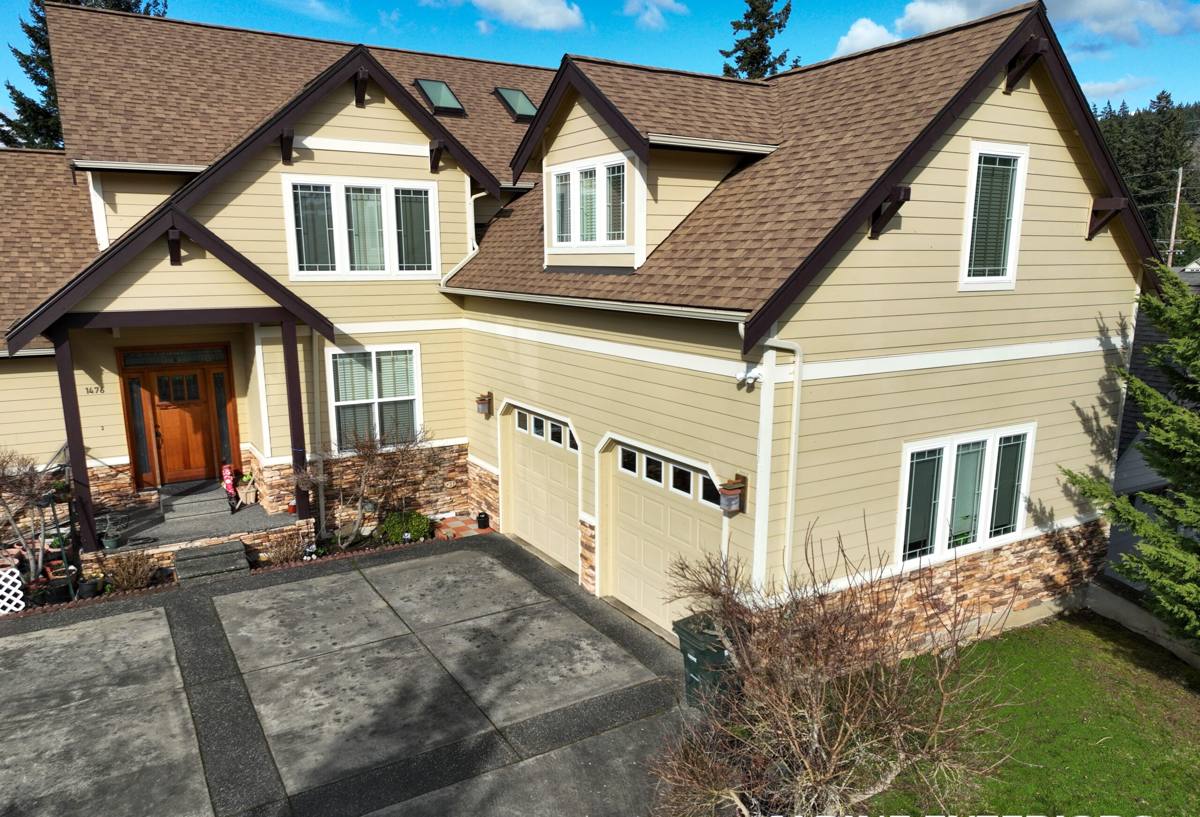
This page is about one job done right in one place: replacing or upgrading energy-efficient windows for homes in and around Flounder Bay. Anacortes and the rest of Skagit County share a marine climate, but waterfront-adjacent properties like this one see more direct salt exposure and wind loading than homes set back from the shoreline, and that changes what "correct" actually looks like.
What the Local Climate Does to Windows Over Time
Before talking about product specs, it helps to understand what's actually working against a window here year after year.
Salt Air and Corrosion
Airborne salt accelerates corrosion on hardware, fasteners, and unprotected metal components. Over years, this shows up as pitted or seized locks and cranks, discoloration on aluminum trim, and premature failure of screws and anchors that weren't rated for a marine environment.
Driving Rain and Wind Pressure
Homes near open water catch more direct, wind-driven rain than sheltered inland lots. Water doesn't just fall on a window here — it gets pushed into gaps, sills, and flashing laps under pressure. A window can be well-built and still leak if the flashing detail and sealant work around it weren't done for that kind of load.
A Long, Wet Moss Season
Shaded lots, mature evergreens, and a wet season that stretches across much of the year create ideal conditions for moss and algae growth on window sills, tracks, and exterior trim. Beyond the cosmetic issue, trapped moisture behind moss buildup on sills and trim can lead to slow rot and finish failure if it's not addressed.
Temperature Swings and Condensation
Cool, damp air combined with warm interior heating creates ideal conditions for interior condensation on underperforming glass. Persistent moisture on the inside of a window is often the first visible sign that a window's insulating performance has dropped below what the home needs.
What "Energy-Efficient" Actually Means Here
"Energy-efficient windows" gets used as a marketing phrase a lot. In practical terms for a home like this, it comes down to a handful of measurable factors working together — not just double glass.
| Factor | What It Does | Why It Matters at Flounder Bay |
|---|---|---|
| U-factor | Measures how well the window resists heat loss | Lower U-factor keeps rooms warmer with less heating load through our cool, damp winters |
| SHGC (solar heat gain coefficient) | Measures how much solar heat passes through the glass | Matters most on south- and west-facing water-view windows that get direct afternoon sun |
| Air infiltration rating | Measures how much air leaks around the sash and frame | Directly tied to draft complaints and how hard wind-driven rain can push moisture in |
| Low-E coating | A microscopically thin coating that reflects heat while letting light through | Improves comfort and cuts UV fading on interior furnishings without darkening the glass |
| Gas fill (argon/krypton) | Inert gas between panes that slows heat transfer | Adds insulating value without adding bulk to the sash |
The right combination depends on which direction a window faces, how exposed it is to wind and rain, and whether it's a fixed picture window or an operable unit that needs to seal tightly when closed. We spec each opening rather than applying one blanket answer to the whole house.
Frame Material: What Holds Up in a Marine Environment
Frame choice matters as much as the glass package when a home sits this close to salt water. Here's how the common options generally compare for coastal exposure.
| Frame Material | Coastal Performance | Maintenance |
|---|---|---|
| Vinyl | Won't corrode or rust; performs well against salt air; can expand/contract with big temperature swings | Low — occasional cleaning, no painting |
| Fiberglass | Very stable dimensionally, strong resistance to weathering and corrosion | Low — durable finish, minimal upkeep |
| Aluminum | Strong and rigid but conducts heat and cold and is more prone to corrosion near salt water unless properly coated | Moderate — coatings can wear over time in salt air |
| Wood / wood-clad | Attractive but more sensitive to moisture, rot, and finish maintenance in a wet, shaded climate | Higher — periodic refinishing and moisture checks needed |
We're not against wood or aluminum windows as a category — they have a place, and some homeowners want the look wood provides. Our standard for waterfront-adjacent homes leans toward vinyl or fiberglass because they hold up with less ongoing maintenance in this specific exposure. If you already have wood windows and want to keep that look, we'll talk through what upkeep that choice requires here rather than talk you out of it.
What a Correct Installation Actually Involves
The window unit itself is maybe half the job. The other half is how it's flashed, sealed, and integrated into the wall assembly — and that's where most premature leaks and energy loss actually originate, not in the glass.
- Remove old unit and inspect the rough opening framing and sheathing for hidden rot or moisture damage before anything new goes in
- Install or repair a proper sill pan to direct any water that gets past the window back out, not into the wall
- Flash the opening in the correct shingle-lap order so water sheds outward at every layer, especially important against Flounder Bay's driving rain
- Use fasteners and hardware rated for coastal/marine exposure to resist corrosion
- Set the window plumb, level, and square, then shim correctly so it operates smoothly for years, not just on install day
- Seal and insulate the gap between frame and rough opening properly — not overpacked with foam, which can bow the frame
- Apply exterior trim and sealant beads sized and placed to handle wind-driven rain, not just standard-exposure caulking
- Test operable sashes for smooth function and a tight seal when latched
Skipping or rushing any one of these steps is usually why a homeowner ends up with a "good window" that still leaks, fogs, or drafts within a few years.
Our Process for Flounder Bay Homes
1. On-Site Assessment
We look at each window opening individually — orientation, exposure to wind and rain, existing framing condition, and any signs of past moisture intrusion or moss/algae buildup on sills and trim.
2. Product Recommendation
Based on that assessment, we recommend frame material and glass package per opening, not a one-size answer for the whole house. A sheltered north-facing window and an exposed water-facing picture window rarely need the identical spec.
3. Precise Measurement and Ordering
Accurate measurements matter more on older homes where openings have settled or shifted slightly over time. We measure for the actual opening, not the nominal size.
4. Installation
Old units come out, the opening gets inspected and repaired if needed, and new windows go in following the flashing and sealing sequence above — done for this climate, not a generic checklist.
5. Cleanup and Walkthrough
We clean up debris and old materials, walk through operation of each new window with you, and note anything you should keep an eye on going forward.
Why a Crew That Already Works This Area Matters
Window replacement done by a contractor unfamiliar with marine exposure often looks fine on install day and shows problems two or three winters later — corroded hardware, sealant that never bonded well against constant dampness, or trim that traps moisture instead of shedding it. A crew that regularly works waterfront-adjacent Anacortes properties has already seen how salt air, driving rain, and the long moss season affect window installations specifically, and builds the job around that rather than treating it like standard interior siding work.
We're also familiar with the general permitting expectations that apply to exterior work in Skagit County and the City of Anacortes, and we handle window replacement projects that size appropriately from the start, so there are no surprises partway through the job.
Keeping New Windows Performing Long-Term
Even a correctly installed, well-specified window benefits from a little seasonal attention in this climate:
- Rinse sills and tracks periodically to prevent moss and algae buildup from taking hold
- Wipe down hardware occasionally to keep salt residue from accelerating corrosion
- Check exterior sealant beads yearly, especially after a hard winter, for cracking or separation
- Keep nearby vegetation trimmed back to reduce shading and moisture retention around window trim
- Address any interior condensation early — it's often the first sign worth investigating, not ignoring
None of this is heavy maintenance, but skipping it in a climate like ours shortens the life of even a good installation.
Get a Straightforward Estimate
If you're weighing whether to replace aging windows or want a second opinion on drafts, condensation, or moss buildup around your sills, we're glad to take a look. Fill out the form below for a free, no-pressure estimate on energy-efficient windows for your Flounder Bay home — we'll walk the openings with you and give you a straight answer on what actually needs doing.