 Anacortes Exterior
 Why Flounder Bay Roofs Take More Punishment Than Most
Flounder Bay sits close enough to the water that homes here deal with a different set of conditions than a roof a few miles inland in Skagit County. Salt-laden air moves off the bay and settles on every exposed surface, driving rain comes in sideways during winter storms, and the tree cover that makes this stretch of Anacortes so pleasant also means shade, moisture, and moss have a long season to work on a roof. None of that is unusual for the area, but it does change what "correct" looks like when it comes to a metal roof install.
A roof that would be perfectly fine in a drier, more open part of the county can fail early here if the fasteners, flashing details, or panel coatings weren't chosen with salt exposure in mind. We've worked enough roofs in this pocket of Anacortes to know which corners cause problems five years down the road, not just which ones look fine on installation day.
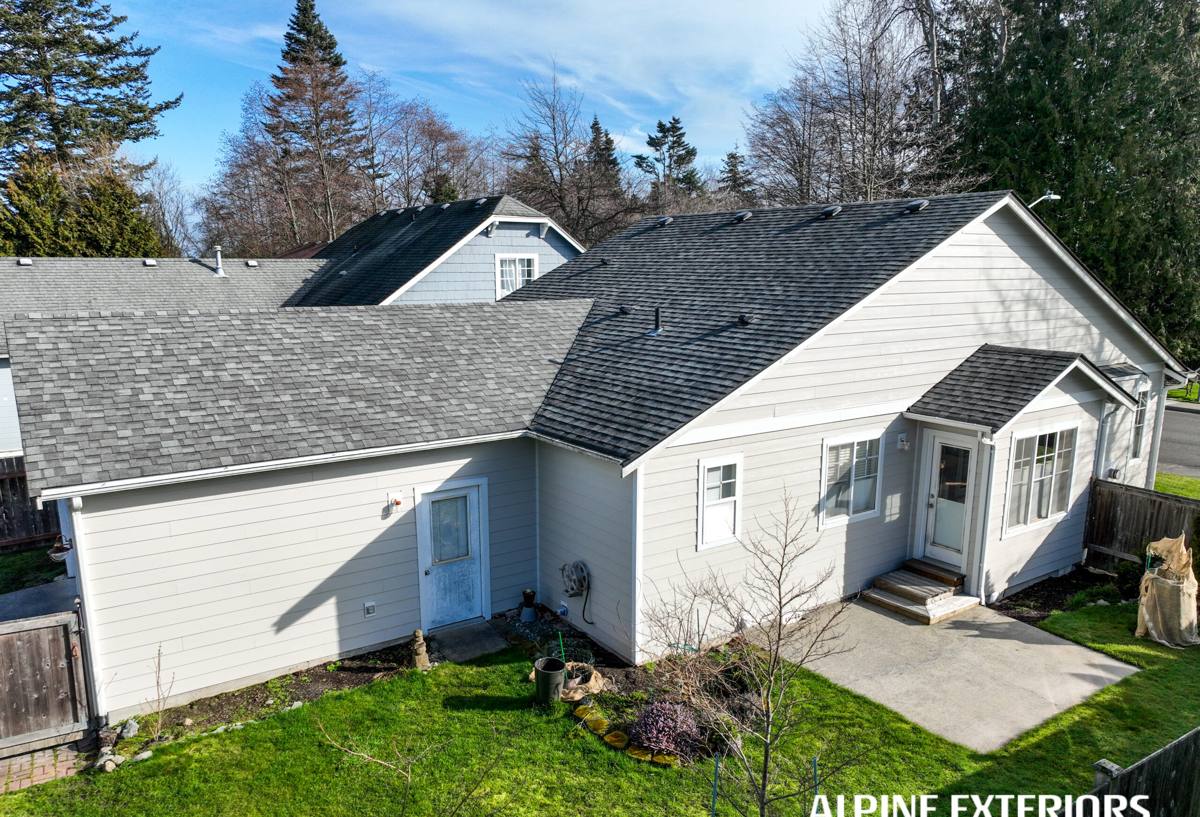
What Salt Air Actually Does to a Roof
Salt air is corrosive, and it doesn't need to be a stone's throw from the water to matter — Flounder Bay's proximity to the bay means airborne salt reaches roof surfaces regularly, even on days without a storm. The practical effects show up over time:
- Uncoated or poorly coated fasteners corrode faster, which loosens panels and opens the door to leaks at the screw penetrations first.
- Dissimilar metals in contact with each other (say, the wrong flashing paired with the wrong panel) can set up galvanic corrosion that eats away at one of the two metals.
- Cut edges and scratches in a panel's coating become entry points for corrosion if they're not sealed or touched up during installation.
- Standard fastener coatings that hold up fine inland can wear through years sooner in a marine environment.
None of this means metal roofing is a bad choice near the water — it's actually one of the better choices, since a properly finished metal panel resists moisture and rot in ways that other materials don't. It means the installation has to account for the environment rather than following a generic spec sheet.
What Driving Rain and a Long Moss Season Add to the Job
Anacortes winters bring rain that doesn't fall straight down — wind off the water pushes it sideways and up under laps, ridge caps, and anywhere a panel edge isn't properly sealed. That's a different problem than volume of rainfall; it's about wind-driven water finding gaps that would never see moisture in a calmer climate. Flashing detail at valleys, wall transitions, and penetrations matters more here than in a lot of other parts of the state.
Moss is the other half of the equation. Overhanging trees, shaded slopes, and the Pacific Northwest's damp stretch of the year give moss and algae plenty of time to establish themselves. Metal roofing resists moss far better than shingles or wood, since there's no porous surface for spores to root into — but debris still collects in valleys and against any horizontal trim, and standing organic matter holds moisture against the panel finish longer than it should. A metal roof still needs to be kept clear to get the lifespan it's capable of.
How This Changes the Install, Not Just the Maintenance
We plan drainage paths, valley width, and panel overlap with this climate in mind — not the minimum code requirement, but what actually sheds wind-driven rain and lets debris move instead of pile up. That's a design decision made before the first panel goes up, not something fixed later with sealant.
Choosing the Right Metal System for This Location
"Metal roofing" covers a range of products, and the right one depends on the home's roof pitch, exposure to salt air, and budget. We walk homeowners through the real trade-offs rather than pushing one system for every job.
| Panel Type | Best Fit | Coastal Considerations |
|---|---|---|
| Standing seam steel | Most Flounder Bay homes, especially higher-visibility roofs | Concealed fasteners reduce corrosion points; premium finish holds up well in salt air |
| Exposed-fastener steel panels | Outbuildings, shops, budget-conscious projects | More fastener penetrations to maintain; needs a marine-grade fastener package near the water |
| Aluminum panels | Homes with heavier salt exposure or existing corrosion concerns | Naturally corrosion-resistant, doesn't rust; typically a higher material cost |
| Stone-coated steel | Homes wanting a more traditional shingle profile | Good durability, but more seams and granule surfaces to keep clear of moss and debris |
For most homes in this area, a quality standing seam system with concealed fasteners and a marine-rated finish is the best balance of long-term performance and appearance. We'll still walk your specific roof and give you a straight answer if a different system fits your situation or budget better.
How We Install Metal Roofing for This Climate
The process itself follows the same basic sequence as any professional metal roof install, but several steps get extra attention because of where the home sits.
- Tear-off and deck inspection. We check the roof deck for soft spots, moisture damage, or rot before anything new goes down — a metal roof is only as good as what it's fastened to.
- Underlayment selection. We use a high-temperature, self-adhering underlayment in valleys and at eaves, and a synthetic underlayment across the field, matched to how much wind-driven moisture this location typically sees.
- Compatible metal selection. Flashing, trim, fasteners, and panels are matched so dissimilar metals aren't in direct contact with each other, which prevents galvanic corrosion.
- Panel installation. Panels are run, cut, and fastened to manufacturer spec, with cut edges sealed and any exposed raw metal treated before it's covered.
- Flashing and detail work. Valleys, wall transitions, chimneys, and vents get the most careful attention on any roof — and it's where a rushed job shows up first as a leak.
- Final walk-through. We go over the finished roof with the homeowner, point out anything worth knowing for maintenance, and answer questions before we consider the job done.
Fasteners and Flashing: Where Coastal Jobs Actually Fail or Succeed
Most metal roof problems we get called out to inspect near the water trace back to two things: the wrong fastener coating or the wrong flashing detail, not the panel itself. We spec fasteners rated for marine or coastal exposure and take the extra time on flashing laps and sealant placement that a drier-climate job might not require. It's a small percentage of the total labor but it's the difference between a roof that's still tight in twenty years and one that starts leaking at year seven.
Keeping a Metal Roof Performing Once It's On
Metal roofing is genuinely low-maintenance compared to other materials, but "low-maintenance" isn't "no-maintenance," especially with a long moss season and salt air in the mix. A little attention goes a long way toward getting the full lifespan out of the system.
- Clear leaves, needles, and debris out of valleys and off any low-slope sections a couple of times a year.
- Trim back overhanging branches so shaded areas of the roof get more light and dry out faster.
- Rinse off any moss or algae growth before it establishes, rather than letting it sit against the finish.
- Have gutters and downspouts checked so water isn't backing up against roof edges or fascia.
- Get an occasional visual check of flashing and sealant points, particularly after a hard winter storm.
We're happy to walk a homeowner through what to watch for, or handle periodic checks directly if that's easier than climbing up there yourself.
Why It Matters That We Already Work This Area
A crew that's worked roofs around Flounder Bay and the rest of Anacortes knows the local exposure, the typical wind direction in winter storms, and which parts of a given street tend to sit in shade long enough to grow moss. That's not something you get from a spec sheet — it's from having done the work here, seen how roofs age in this specific environment, and adjusted the approach accordingly. It also means we're not guessing at permitting, local inspection expectations, or how a particular roof pitch behaves against Skagit County's weather patterns.
Hiring locally also means accountability. If something needs a follow-up visit, we're not driving in from out of the area to handle it.
What Affects Cost and Timeline
Every roof is different, and we won't give a number without seeing the job, but these are the factors that generally move the price and schedule on a metal roof install in this area.
| Factor | Why It Matters |
|---|---|
| Roof size and pitch | More surface area and steeper pitches increase labor time and safety requirements |
| Panel and metal choice | Standing seam steel, aluminum, and stone-coated systems carry different material costs |
| Existing roof condition | Deck repairs or rot found during tear-off add time and material |
| Roof complexity | Valleys, dormers, and multiple penetrations require more flashing and detail work |
| Access and site conditions | Tree cover, driveway access, and staging space affect how efficiently we can work |
Broadly, a metal roof costs more upfront than an asphalt shingle roof, but it typically outlasts shingles by decades and needs less frequent attention — which matters in a climate that's hard on roofing materials year-round.
Let's Look at Your Roof
If you're weighing a metal roof for a home near Flounder Bay, we're glad to come take a look, walk you through what your specific roof needs, and give you a straightforward, no-pressure estimate. There's a form below — reach out and we'll get a time on the calendar.