 Anacortes Exterior
 Roofing in Flounder Bay: A Different Set of Conditions
Flounder Bay sits close enough to the water that homes here take on a different kind of wear than roofs a few miles inland. Salt-laden air moves in off Rosario Strait and the marina, driving rain comes in sideways during winter storms, and the shade from mature evergreens keeps roof surfaces damp long after a storm has passed. None of that is unusual for this part of Skagit County, but it does mean a roof built to a generic spec often underperforms here. A roof that's right for Flounder Bay is chosen and installed with those specific stresses in mind, not just picked off a shelf.
Asphalt shingle roofing remains one of the most practical choices for this neighborhood when it's specified and installed correctly. It's not about the cheapest shingle available — it's about matching the shingle line, the underlayment system, and the ventilation to what this bay actually does to a roof over twenty or thirty years.
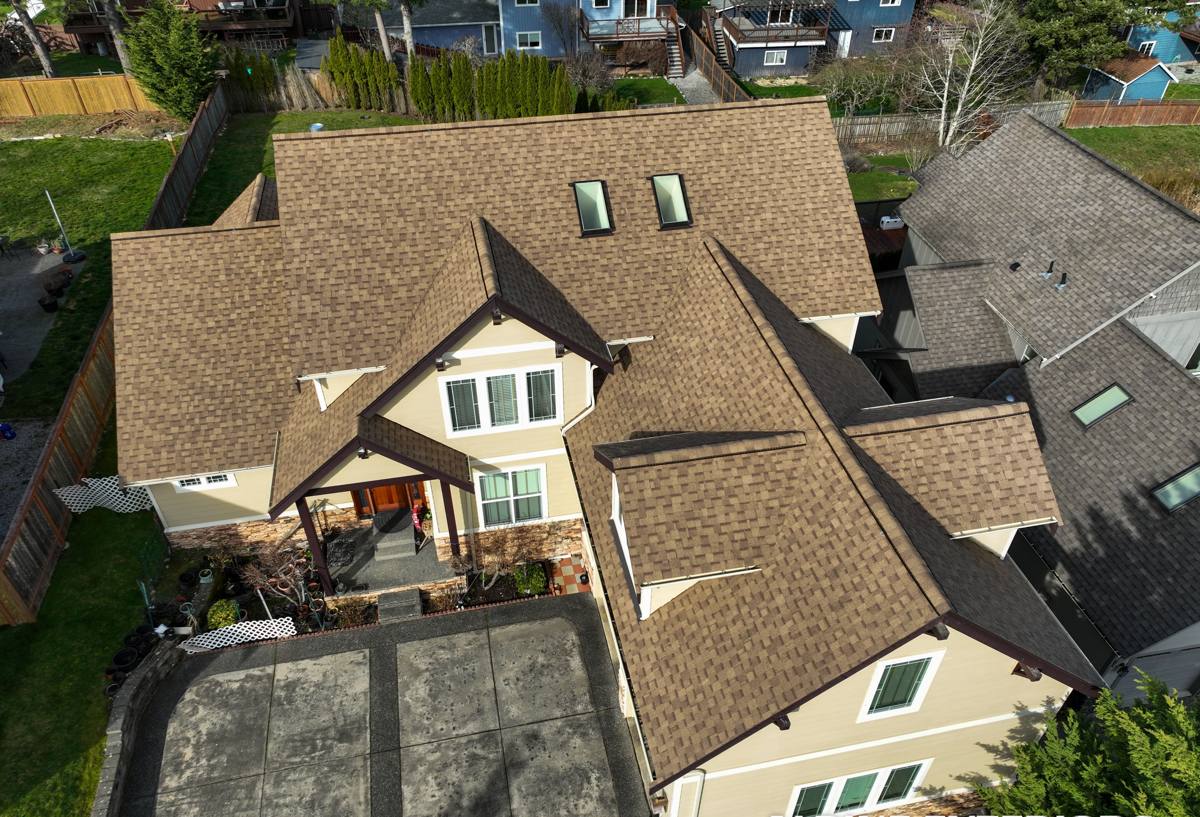
What Salt Air, Rain, and Moss Actually Do to a Roof
Salt Air and Metal Fasteners
Salt-carrying air accelerates corrosion on exposed metal — nail heads, flashing, vent stacks, and drip edge. On a lot of roofs, this shows up first as rust streaking below flashing points or fastener heads that back out over time as corrosion weakens their grip. The fix isn't complicated: use corrosion-resistant fasteners and flashing metals from the start, and make sure flashing details are sealed properly rather than just tucked and hoped for.
Driving Rain and Wind-Driven Water
Storms off the strait don't always fall straight down. Wind pushes rain sideways and up under shingle tabs, into valleys, and around penetrations like plumbing vents and chimneys. A roof that only relies on shingles to shed water — without a properly lapped underlayment and correctly detailed valleys and penetrations — will eventually leak, usually in exactly the spots you'd expect: valleys, low-slope transitions, and anywhere two roof planes meet.
Moss and Prolonged Moisture
Anacortes has a long moss season, and Flounder Bay's tree cover makes it worse in shaded, north-facing sections of a roof. Moss holds moisture against the shingle surface, lifts shingle edges as it grows, and works its way under tabs over time. Left unchecked for a few seasons, it shortens the life of an otherwise sound roof significantly.
What a Correctly Built Asphalt Shingle Roof Includes Here
A roof built for this location isn't a different product line — it's the same asphalt shingle system most homeowners already know, assembled with attention to the details that matter most in a marine, high-moss climate.
- Synthetic underlayment with proper overlap, rather than the bare minimum required by code
- Ice-and-water shield or equivalent membrane at valleys, eaves, and around all penetrations
- Corrosion-resistant flashing and fasteners suited to salt-air exposure
- Balanced intake and exhaust ventilation so the attic and roof deck can dry out between storms
- Shingles rated for algae and moss resistance where the roof gets significant shade
- Careful valley and penetration detailing, since these are where most leaks actually start
Skip any one of these and the roof will still look fine on installation day — the problems show up two, five, or ten years later, usually as a leak that's more expensive to trace than it would have been to prevent.
Signs a Flounder Bay Roof Needs Attention
Because of the shade and salt exposure, roofs in this neighborhood tend to show wear in specific, recognizable ways before they show up as an active leak inside the house.
- Dark streaking or green-black growth on north-facing or shaded slopes
- Granules collecting in gutters or downspouts, which signals shingle surface breakdown
- Rust staining below flashing, vent stacks, or nail lines
- Lifted or curling shingle tabs, often where moss has taken hold
- Soft spots or sagging near valleys, chimneys, or plumbing vents
- Daylight visible through the roof deck from inside an unfinished attic
Catching these early is almost always cheaper than waiting. A roof with early moss growth and a few lifted tabs is a maintenance job. The same roof left another two or three winters is often a full leak repair, or a section of deck replacement.
Our Process for a Flounder Bay Roofing Project
1. Inspection and Honest Assessment
We start by getting on the roof, not just looking at it from the ground. We check the deck condition, ventilation setup, flashing details, and how the existing roof has held up to this specific exposure. If a repair genuinely makes more sense than a full replacement, we'll tell you that.
2. A Straightforward Proposal
You get a clear scope: shingle line, underlayment system, flashing plan, ventilation changes if needed, and a timeline. No pressure tactics, no artificial deadlines on pricing.
3. Deck Prep Done Right
Old roofing comes off, the deck gets inspected for soft or water-damaged sections, and any bad plywood gets replaced before a single new shingle goes down. This step gets skipped by crews trying to move fast — it's the one that determines how the roof performs in year eight, not year one.
4. Installation with Marine-Climate Detailing
Underlayment, ice-and-water membrane at vulnerable points, corrosion-resistant metal, and manufacturer-spec fastening. Valleys and penetrations get the extra attention this bay's weather demands.
5. Ventilation Check
We confirm intake and exhaust are balanced. Good ventilation is one of the most overlooked factors in shingle roof lifespan, especially on homes with mature tree cover keeping the roof shaded and damp.
6. Final Walkthrough
We walk the finished roof with you, cover what maintenance it'll need going forward, and make sure you know what a properly installed roof should look like.
Comparing Shingle Options for This Location
| Shingle Type | How It Handles This Climate | Typical Lifespan | Best Fit |
|---|---|---|---|
| 3-Tab Standard | Adequate wind rating but less resistant to moss and salt-air wear over time | 15-20 years | Budget-focused projects, secondary structures |
| Architectural (Laminate) | Thicker profile handles driving rain and wind better; more surface for algae-resistant granules | 25-30 years | Most Flounder Bay homes |
| Algae/Moss-Resistant Architectural | Copper- or zinc-infused granules actively resist moss and algae growth in shaded areas | 25-30 years | North-facing or heavily shaded roof sections |
| Impact-Resistant Architectural | Added durability against debris in wind events; still needs proper flashing detail for rain | 30+ years | Homes wanting extra durability, higher upfront cost |
What Drives Cost on a Project Like This
| Factor | Why It Matters Here |
|---|---|
| Roof deck condition | Moisture from moss and driving rain can cause hidden deck damage that only shows once old shingles come off |
| Number and complexity of valleys/penetrations | Each one needs individual flashing and membrane detail — more of them means more labor |
| Shingle line chosen | Algae-resistant and impact-resistant lines cost more per square than standard architectural |
| Ventilation upgrades | Adding or correcting intake/exhaust vents adds labor but pays off in roof lifespan |
| Access and roof pitch | Steeper pitches and limited access near the water add time and safety measures |
| Tree cover and moss removal | Heavily mossed roofs may need extra cleaning and treatment before or during the project |
We give real numbers during the estimate once we've seen the roof — broad national averages rarely reflect what a specific Flounder Bay home actually needs.
Maintenance Checklist for Shingle Roofs in This Neighborhood
- Clear moss growth before it lifts shingle tabs, using methods that don't damage the granule surface
- Keep gutters and downspouts clear so water isn't backing up under the roof edge
- Trim back overhanging branches to reduce shade and debris buildup
- Check flashing and fasteners for rust or corrosion every couple of years
- Have the attic checked periodically for proper airflow and signs of trapped moisture
- Address small leaks or lifted shingles right away rather than waiting for the next dry season
Why Local Experience Matters for This Job
A roofing crew that only occasionally works near the water treats this as a standard install and moves on. A crew that regularly works Flounder Bay and the surrounding Anacortes shoreline already knows which valleys tend to collect debris, which shaded slopes need moss-resistant shingles, and which flashing details actually hold up against salt air over a decade of Skagit County winters. That knowledge doesn't show up on a spec sheet — it shows up in fewer callbacks and a roof that's still performing well long after the installation crew is gone.
If you're planning a new roof, dealing with an aging one, or just want an honest read on how much life is left in what you've got, we're glad to take a look. Reach out for a free, no-pressure estimate using the form below.