 Anacortes Exterior
 Window Installation Built for Flounder Bay's Marine Climate
Flounder Bay sits close enough to the water that its homes take a different kind of weather beating than houses even a few miles inland in Skagit County. Salt-laden air off the bay, wind-driven rain that comes in sideways during winter storms, and a moss season that seems to stretch longer every year all work on window frames, seals, and trim in ways that generic installation advice doesn't account for. A window that performs fine in a dry, sheltered lot elsewhere in Anacortes can fail early here if it wasn't installed with this specific exposure in mind.
This page covers what window installation actually requires for a Flounder Bay home — the material choices, the flashing and sealing details, and the process — so you know what to look for whether you hire us or someone else.
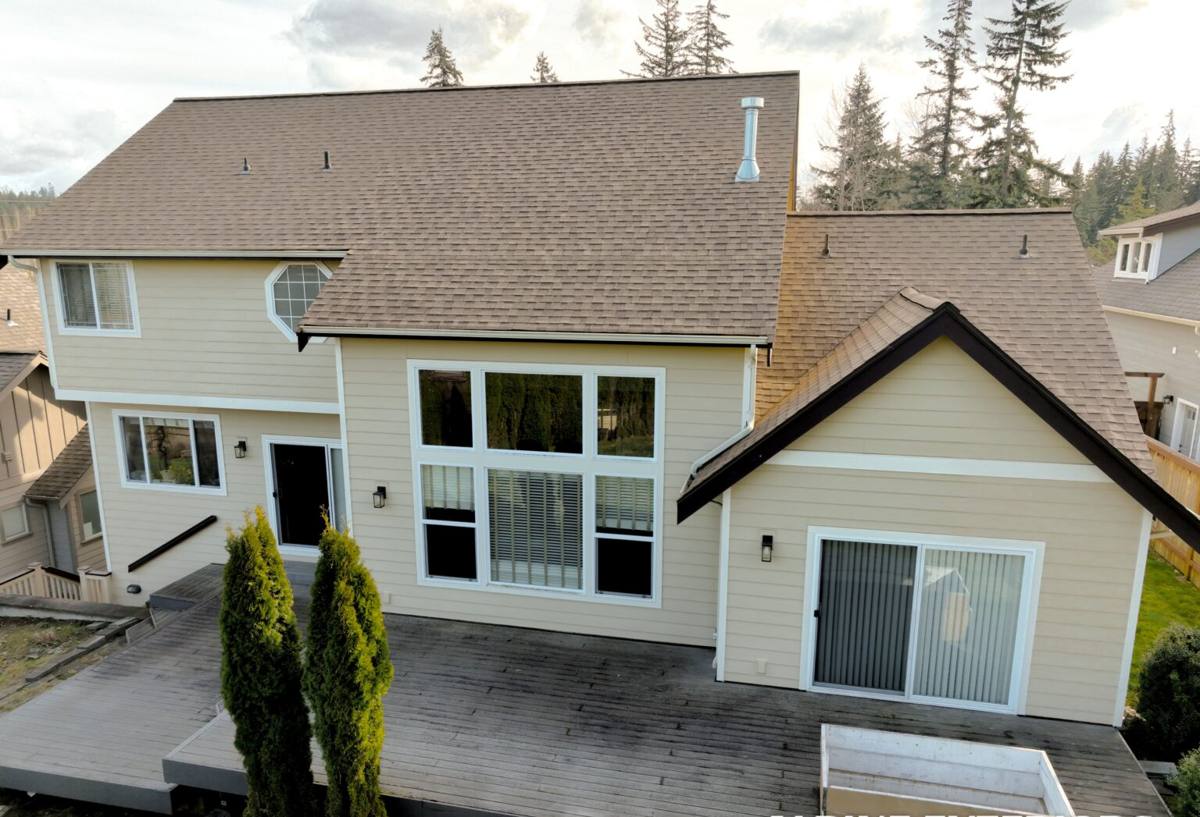
What Salt Air, Rain, and Moss Actually Do to Windows
Salt Air and Corrosion
Airborne salt from the bay settles on everything nearby, including window hardware. Over years, it accelerates corrosion on fasteners, hinges, and low-grade aluminum components. It also breaks down some sealants and finishes faster than a standard product warranty assumes, which is why the hardware and finish specification on a window matters more here than it would on a home fifteen miles inland.
Driving Rain and Wind-Driven Water
Anacortes gets weather systems that push rain horizontally, not just straight down. A window opening that relies only on caulk at the exterior face — instead of proper flashing that directs water back out and down — will eventually let moisture behind the trim. That moisture doesn't show up right away. It shows up months or years later as soft sheathing, stained interior sills, or a musty smell in the wall cavity below the window.
Moss, Shade, and Prolonged Dampness
Many Flounder Bay lots have mature trees and enough shade that surfaces stay damp longer after a storm than they would in full sun. That extended dampness is exactly what moss needs to establish on trim, sills, and siding around a window opening. Once moss takes hold near a window, it holds moisture against the wood or trim continuously, which is a slower but steady path to rot if it isn't addressed.
Signs a Flounder Bay Home Needs New Windows
Not every window problem means a full replacement, but these are the signs worth taking seriously in this climate:
- Visible gaps, soft spots, or discoloration in the wood trim or sill around the frame
- Condensation forming between the panes of a double-pane window (a sign the seal has failed)
- Persistent drafts near the window even with it fully latched
- Difficulty opening, closing, or locking the window smoothly
- Moss or dark staining building up on the sill or exterior trim year after year
- A noticeable rise in heating costs without any other explanation
- Frame corners that look slightly separated or caulk that's cracked and pulling away
If you're seeing more than one of these, it's worth having someone look at the whole opening, not just the glass — the window unit is only part of the story.
What a Correct Window Installation Actually Involves
It's Not Just the Window — It's the Opening
A lot of window problems trace back to how the rough opening was prepared, not the window product itself. Correct installation means checking that the opening is square, that the sheathing underneath is sound (not soft or water-damaged), and that any existing damage is repaired before a new window goes in — not covered over.
Flashing Comes First
Proper flashing — sill pan flashing at the bottom, side flashing, and head flashing integrated with the house wrap or building paper above the window — is what actually keeps wind-driven rain out over the long run. Caulk is a backup, not the primary defense. This detail matters more in Flounder Bay's exposure than almost anywhere else in Anacortes, and it's the single most common thing we find missing or done poorly on older installations we're asked to fix.
Sealing and Insulating the Gap
The gap between the window frame and the rough opening needs to be sealed and insulated correctly — not stuffed with excess spray foam (which can bow the frame and cause the window to bind) and not left with gaps that let air and moisture through. Low-expansion foam or backer rod and sealant, applied correctly, keeps the unit performing the way it's rated to.
Level, Plumb, and Properly Shimmed
A window that isn't shimmed level and plumb will operate poorly from day one — sashes that stick, locks that don't line up, or a unit that sags over time under its own weight. This is a basic step, but it's rushed often enough on lower-bid jobs that it's worth confirming with any contractor you hire.
Choosing Window Materials for a Bay-Adjacent Home
Frame material is a bigger decision here than in a sheltered inland location, because salt air and sustained moisture exposure affect materials differently over time.
| Material | How It Handles This Climate | Maintenance |
|---|---|---|
| Vinyl | Doesn't corrode from salt air; performs well against moisture; can discolor faster in direct sun over many years | Low — occasional cleaning |
| Fiberglass | Very stable in temperature swings and moisture; strong resistance to the corrosive effects of salt air | Low |
| Wood (unclad) | Classic look but the most vulnerable to rot and moss if exterior finish isn't maintained regularly in this exposure | High — needs regular refinishing |
| Aluminum-clad wood | Wood interior warmth with a protective exterior shell; clad finish needs to be a marine-grade or corrosion-resistant spec near the bay | Moderate |
| Bare aluminum | Prone to corrosion and pitting in salt air over time unless specifically treated for coastal exposure | Moderate to high |
We don't push one brand or material on every job. The right call depends on your home's exposure, your budget, and how much upkeep you actually want to do. What we won't do is install a frame material into a heavily shaded, damp, salt-exposed opening without being upfront about the maintenance that choice will require down the road.
How Our Process Works
- On-site assessment. We look at each window opening individually — sun exposure, shade, proximity to the bay, and the current condition of the sill and sheathing.
- Honest scope and options. You get a written estimate that spells out material options and why we're recommending what we're recommending for that specific opening.
- Opening prep. Any soft or damaged sheathing is repaired before the new window goes in — we don't install over a compromised opening.
- Flashing and sealing. Sill pan, side, and head flashing installed correctly, integrated with the existing water-resistive barrier.
- Setting the window. Leveled, plumbed, shimmed, and fastened per manufacturer specs.
- Insulating and finishing. Gap sealed and insulated properly, interior and exterior trim finished to match the home.
- Final walkthrough. We test operation, locks, and seals with you before we call the job done.
Cost Factors for Window Installation in Flounder Bay
Every home and opening is different, so we won't quote a number without seeing the job, but these are the main factors that move the price up or down:
| Factor | Why It Matters |
|---|---|
| Frame material | Vinyl is typically the most budget-friendly; fiberglass and clad-wood options cost more upfront but often less in long-term maintenance |
| Condition of the existing opening | Rot or water damage found during removal adds repair work before the new window can go in |
| Window size and style | Larger units, custom shapes, or operable styles (casement vs. slider) vary in both material and labor cost |
| Number of windows | Doing multiple openings in one visit is usually more cost-efficient per window than one-off replacements |
| Access and exposure | Upper-floor or hard-to-access openings on a sloped or view lot take more time and equipment |
| Trim and finish work | Matching existing interior or exterior trim adds finish carpentry time |
Why It Matters to Hire a Crew That Already Works Flounder Bay
A contractor who mostly works drier, more sheltered parts of Skagit County can still do a technically fine window install and still get it wrong for this location — because the failure points here are specific to bay exposure. Knowing to spec corrosion-resistant hardware, to prioritize flashing detail over caulk, and to recognize which openings are prone to moss buildup because of shade and moisture patterns isn't generic knowledge — it's learned from working these conditions repeatedly. That's the difference between a window that looks right on install day and one that's still performing correctly in ten years of Anacortes winters.
After Installation: Keeping Windows Performing in This Climate
A correct installation is most of the battle, but a little upkeep extends the life of any window here:
- Rinse salt residue off frames and glass periodically, especially after storms
- Keep gutters and downspouts clear so water isn't overflowing near window trim
- Trim back vegetation that's keeping a window opening shaded and damp
- Check exterior caulking annually and touch up before gaps widen
- Address any moss on nearby trim or siding promptly rather than letting it spread
None of this replaces a correct installation — it just protects the investment once the hard part is done right.
Get a Free, No-Pressure Estimate
If you're weighing new windows for a Flounder Bay home, we're happy to take a look, tell you honestly what your openings need, and give you a straightforward estimate — no pressure, no upsell. Use the form below to get started.