 Anacortes Exterior
 Board & Batten Siding Built for Flounder Bay
Flounder Bay sits close enough to the water that homes here deal with a different set of conditions than siding a few miles inland in Anacortes. Salt-laden air, wind-driven rain off the Strait, and the long gray stretch of moss season all put steady pressure on exterior surfaces. Board and batten siding — with its vertical lines and strong shadow lines — is a popular choice out here because it fits the coastal, craftsman, and cabin-style architecture common around Skagit County waterfront neighborhoods. But popular doesn't mean simple. Board and batten has more seams, more fastening points, and more places for water to find a way in than a standard lap profile, which means the installation details matter more here than almost anywhere else in the region.
This page covers what board and batten siding needs to hold up in Flounder Bay specifically, what a correct installation actually involves, and why we install it in James Hardie fiber cement only.
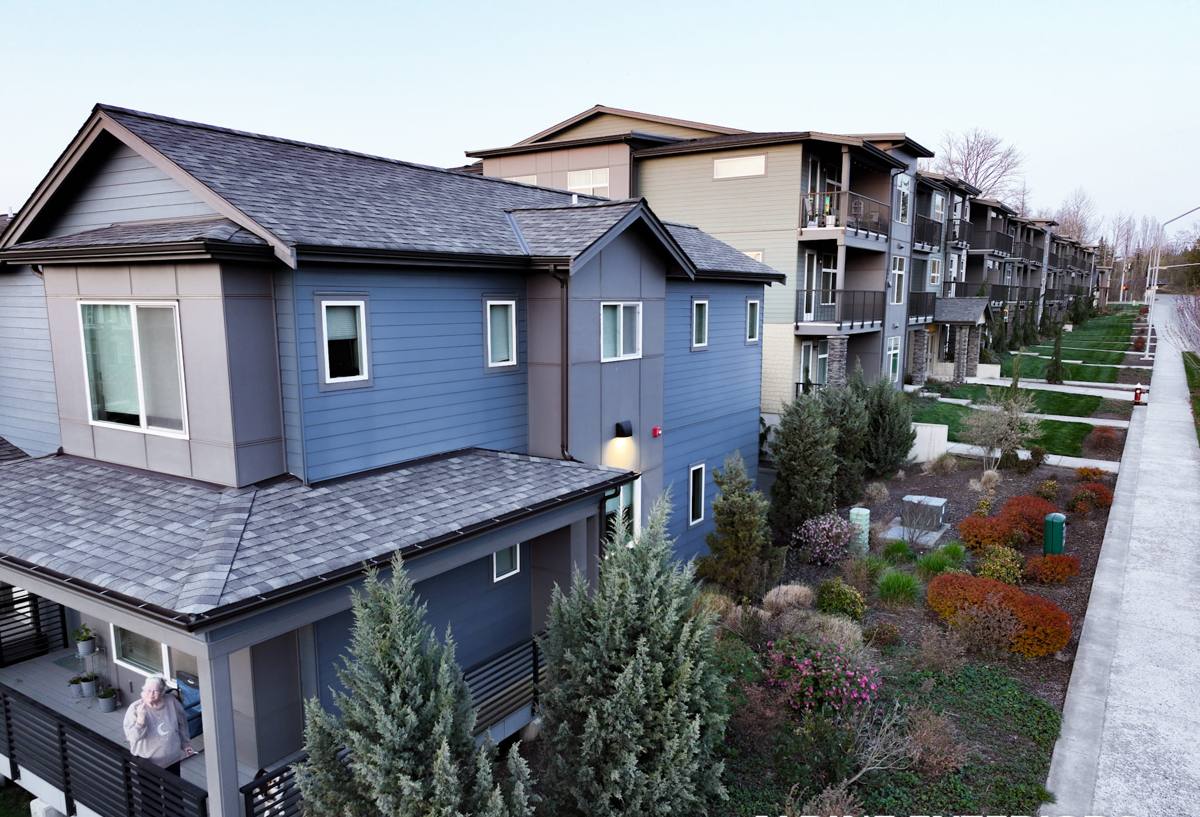
What Flounder Bay's Climate Does to Siding
Three things define the exterior environment out here, and all three work against siding that isn't built or installed correctly.
Salt Air
Proximity to Puget Sound means airborne salt settles on every exterior surface, not just the parts facing the water. Salt accelerates corrosion on fasteners, trim flashing, and any metal components in a siding system. It also degrades cheap paint finishes faster than inland exposure would, which is why factory-applied, baked-on finishes matter more here than in a drier or less coastal part of the state.
Driving Rain
Anacortes gets weather that comes in sideways off the water more often than straight down. Wind-driven rain doesn't just run down a wall — it gets pushed up under laps, into seams, and behind poorly sealed trim. Board and batten's vertical seams (where the batten strip covers the joint between boards or panels) are a common water-entry point if they aren't detailed correctly.
Moss Season
Western Washington's long wet season, shaded lots, and tree cover around many Flounder Bay properties create ideal conditions for moss and algae growth on north-facing and shaded siding. Moss holds moisture against the wall assembly and can work into any gap or seam that isn't sealed tight, which is another reason the quality of the underlying installation matters as much as the surface material.
Why Board and Batten Fits This Area — and What It Demands
The vertical board and batten profile is a natural fit for the waterfront and craftsman-style homes common in Flounder Bay and along much of the Anacortes shoreline. Done right, it sheds rain efficiently along the vertical lines and gives a home a clean, substantial look that lap siding doesn't quite match. The tradeoff is that board and batten has roughly double the vertical seams of a standard lap profile, and every one of those seams is a potential water path if the fastening, spacing, and flashing aren't handled to spec. This is a siding style where the installer matters as much as the material.
What a Correct Board and Batten Installation Involves
Drainage Plane and Rainscreen Gap
Behind the siding, a correctly built wall assembly includes a water-resistive barrier and, ideally, a rainscreen gap that lets any moisture that does get behind the cladding drain and dry out instead of sitting against the sheathing. In a driving-rain, high-moisture environment like Flounder Bay, this drainage layer is not optional — it's the difference between siding that sheds an occasional leak harmlessly and siding that traps water against wood framing.
Fastener Placement and Spacing
Board and batten panels and boards need to be fastened according to the manufacturer's engineered pattern — correct nail or screw type, correct spacing, correct distance from panel edges. Panels fastened too tight, too loose, or with the wrong fastener spacing are more likely to crack, buckle, or work loose under the wind loads this area sees.
Flashing at Every Penetration
Windows, doors, hose bibs, light fixtures, and any other wall penetration need proper flashing integrated with the water-resistive barrier before siding goes on. This is the step that gets rushed on low-bid jobs, and it's usually the first place a driving-rain climate finds the failure.
Batten Strip Placement Over Joints
The batten strips have to land squarely over the seams between boards or panels, with consistent reveal and gap sizing so the assembly can move slightly with temperature and moisture changes without opening up the seam underneath.
The James Hardie Board and Batten System
We install James Hardie's engineered fiber cement board and batten system — vertical panels or individual boards paired with battens, all part of Hardie's HZ5 product line, which is engineered specifically for the Pacific Northwest's wet, humid climate rather than a generic national spec. A few reasons this matters for a Flounder Bay home:
- Fiber cement is non-combustible and doesn't provide the moss and algae a food source the way untreated wood substrates can
- ColorPlus factory-applied finish is baked on under controlled conditions, which holds up better against salt air and UV exposure than field-applied paint
- The material dimensionally resists the swelling, cupping, and splitting that solid wood board and batten is prone to in a consistently wet climate
- James Hardie backs the product with a strong transferable limited warranty, and the ColorPlus finish carries its own separate finish warranty
We do not install vinyl vertical siding, engineered wood board and batten, or primed wood boards. Each of those has a legitimate place in the market, but none of them hold up to salt air, sustained moisture, and moss exposure as consistently as Hardie's fiber cement system, which is why we standardized on it rather than offering multiple options with different long-term outcomes.
Comparing Board and Batten Material Options
| Material | Moisture Resistance | Maintenance | Coastal / Salt Air Suitability |
|---|---|---|---|
| James Hardie fiber cement | High — non-combustible, dimensionally stable when installed to spec | Occasional wash; factory finish holds color | Engineered HZ5 line built for wet coastal climates |
| Solid wood boards | Moderate — prone to swelling, cupping, splitting over time | Regular repainting/staining and moisture monitoring | Vulnerable to moss, rot at seams without diligent upkeep |
| Engineered wood (OSB-based) | Moderate — resin-treated, but edge and seam exposure is a known failure point | Manufacturer-specified caulking and paint maintenance | Performance depends heavily on installer following spec exactly |
| Vinyl vertical panel | Sheds surface water but not a true rigid, sealed assembly at seams | Low, but can crack or fade with UV and temperature swings | Can become brittle in cold snaps; seams can allow wind-driven rain intrusion |
Our Process
We walk the property first and look at sun exposure, tree cover, wind exposure, and how close the home sits to the water — all of which affect how the siding assembly should be detailed. From there:
- Remove existing siding and inspect sheathing for hidden moisture damage before anything new goes on
- Repair or replace any compromised sheathing or framing found during tear-off
- Install the water-resistive barrier and rainscreen drainage gap
- Flash all windows, doors, and penetrations before siding installation begins
- Install James Hardie board and batten panels or boards to manufacturer fastening specifications
- Install and align batten strips over every seam with consistent spacing
- Caulk and finish trim details, then walk the job with the homeowner before we consider it complete
Maintenance in a Salt Air and Moss Environment
Board and batten installed correctly with Hardie fiber cement is low-maintenance, but "low" isn't "none," especially this close to the water. A simple annual routine keeps it performing the way it's designed to:
- Rinse the exterior yearly with a garden hose and soft brush to remove salt residue and surface grime — avoid high-pressure washing directly into seams
- Check shaded and north-facing walls for early moss or algae growth and treat it before it spreads
- Keep gutters clear so overflow doesn't run down and pool against siding or trim
- Trim back vegetation that keeps siding shaded and damp for extended periods
- Inspect caulk lines at trim and penetrations every couple of years and recaulk where it's cracked or pulled away
- Have any impact damage or loose battens repaired promptly rather than waiting — small gaps are how water problems start
Why Hiring a Crew That Already Works Flounder Bay Matters
A contractor who regularly works this specific stretch of Anacortes coastline already knows how much rainscreen detail a given exposure needs, which walls take the worst of the wind-driven rain, and how aggressive the moss growth gets on shaded elevations near the water. That local pattern recognition shows up in better flashing decisions, better fastener choices, and fewer callbacks — not because the manufacturer spec changes, but because judgment calls on site benefit from having seen how this exact climate treats a wall assembly over time. Skagit County's coastal exposure isn't uniform, and a crew that treats every Anacortes address the same way misses that.
If you're planning a siding project for a Flounder Bay home, we're happy to take a look and walk you through what your specific exposure needs. Reach out for a free, no-pressure estimate using the form below.