 Anacortes Exterior
 Flounder Bay Sits Right at the Edge of What Siding Has to Survive
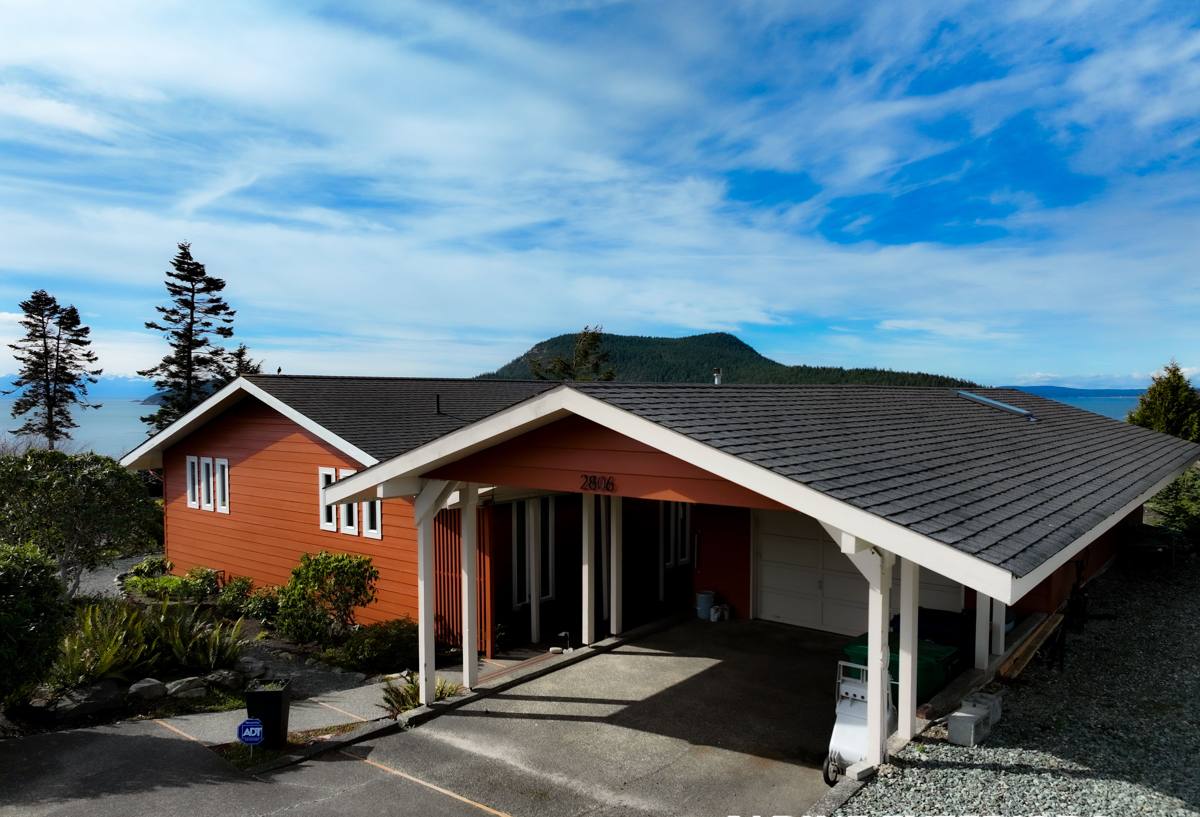
Flounder Bay is a waterfront community on Fidalgo Island, and homes here take on a different kind of weathering than a house set back in town. The bay puts siding in near-constant contact with salt-laden marine air, wind-driven rain coming straight off the water, and long stretches of shade and dampness under evergreen cover that never really dries out between fall and spring. Add in Skagit County's mild, wet winters and you get one of the more demanding coastal exposures in the Anacortes area — not hurricane-force weather, just relentless, low-grade moisture and salt that never let up.
That combination is hard on wood, hard on vinyl, and hard on anything with seams, coatings, or joints that weren't detailed correctly. It's also exactly the environment James Hardie fiber cement was engineered to handle. This page is about what that means specifically for a Flounder Bay home — not siding in general, but the choices, details, and process that matter on this particular stretch of coastline.
Why We Only Install James Hardie on Homes Like These
Anacortes Exterior Co installs James Hardie fiber cement siding exclusively. We don't offer vinyl, LP SmartSide, Cemplank, Allura, primed spruce, or cedar as alternatives, and Flounder Bay is a good example of why. Every one of those other materials has a real weakness that shows up faster in a salt-air, high-moisture bay environment than it would on a dry inland lot:
- Vinyl expands and contracts with temperature swings, can warp or bow when trapped moisture builds up behind it, and its color is baked into a thin surface layer that fades with sun and salt exposure over time.
- Wood species like cedar look good on day one but need ongoing refinishing to resist rot, and a bay-facing wall that stays damp longer than a sheltered one will push that maintenance schedule harder every year.
- Primed spruce and LP SmartSide are engineered wood products — better than raw lumber, but still wood-based, meaning they're more sensitive to sustained moisture exposure at cut edges, seams, and fastener points than a cement-based product.
- Other fiber cement brands (Cemplank, Allura) are a closer comparison to Hardie, but we've standardized on Hardie for its ColorPlus factory finish, its climate-specific HZ engineering, and the depth of its installer network and warranty backing in this region.
James Hardie fiber cement is non-combustible, doesn't absorb water the way wood does, and holds its factory finish far longer in salt and UV exposure than a field-applied paint job. That's the baseline we build every Flounder Bay quote around.
What "Correct" Actually Means for a Bay-Facing Installation
Fiber cement siding is only as good as its installation. Hardie's own technical bulletins are specific about clearances and moisture management, and those details matter more on a bay lot than almost anywhere else in Anacortes.
Ground and roof clearance
Hardie specifies minimum clearances from siding to grade, roofing, and decks — typically several inches, depending on the assembly. On a waterfront lot where landscaping, retaining walls, or grade changes have crept up over the years, we check and correct these clearances rather than siding over an existing violation. Splash-back off a low deck or a planting bed pushed up against the wall is one of the most common causes of premature siding failure we see, bay-facing or not.
Flashing at every penetration
Windows, doors, hose bibs, vents, and any deck ledger connection are places where water finds a way in if flashing is missing, undersized, or installed in the wrong order relative to the water-resistive barrier. On a home absorbing driving rain off the water regularly, a flashing shortcut that might go unnoticed for a decade inland can show up as rot or staining within a few wet seasons here.
Fastener pattern and joint treatment
Hardie panels and lap siding require specific fastener spacing, and butt joints need to be flashed or sealed per the manufacturer's detail — not just caulked and painted over. We follow Hardie's published fastening schedules rather than a generic "close enough" pattern, because a loose or under-fastened board is what lets wind-driven bay weather work a joint open over time.
Caulking and paint-grade sealants rated for marine exposure
Not every sealant on the shelf is meant for sustained salt and moisture contact. We use products rated for the exposure, at the joints and terminations where Hardie's install guide calls for sealant — not everywhere, since over-caulking a fiber cement assembly can trap moisture instead of shedding it.
Salt Air, Rain, and Moss: What Flounder Bay Siding Faces Every Year
It's worth being specific about what "coastal wear" actually does over a typical year in this location, because it's different from general Pacific Northwest weather:
| Condition | What it does to siding | How Hardie holds up |
|---|---|---|
| Salt-laden marine air | Accelerates fading and breakdown of surface coatings; can corrode unprotected metal fasteners and trim over years | ColorPlus factory finish is baked on and warranted against fading; we pair it with corrosion-resistant fasteners and flashing |
| Wind-driven rain | Forces water into joints, laps, and penetrations that aren't properly flashed or fastened | Fiber cement doesn't swell or wick water the way wood does, and correct lap/flash detailing sheds it before it penetrates |
| Shade and slow-drying walls (tree cover, north/water-facing exposures) | Extends how long a wall stays damp after rain, which is what feeds moss and mildew growth | Cement board doesn't feed mold growth the way organic wood fiber can, though any surface can host surface growth if never rinsed |
| Long wet winters | Repeated freeze-thaw and saturation cycles stress caulk joints and coatings | Factory finish and cement substrate resist the swelling/shrinking cycle that cracks paint on wood siding |
None of this means Hardie siding is maintenance-free at Flounder Bay — nothing is, in this exposure. It means the maintenance is realistic: periodic rinsing to keep salt film and moss spores from building up, keeping gutters and downspouts clear so water isn't sheeting down a wall, and an occasional inspection of caulk lines and trim. That's a fundamentally lighter maintenance load than repainting wood or worrying about vinyl warping.
ColorPlus Finish: Why It Matters More on the Water
James Hardie's ColorPlus finish is applied and cured in a factory setting under controlled conditions, which produces a more consistent, more durable bond than paint applied on-site after installation. In a marine environment, that difference compounds: field-applied paint on wood or fiber cement has to fight UV, salt, and moisture from day one, while ColorPlus arrives already cured and backed by its own finish warranty, separate from the product warranty on the siding itself. For a Flounder Bay home, that means color retention and finish integrity that isn't riding entirely on how well a painting crew's coating holds up to salt spray.
We also weigh color and sheen choice against sun exposure and wall orientation on the specific lot — a water-facing wall gets more direct light reflection off the bay than a shaded, tree-covered elevation, and that's a conversation we have on-site, not something we guess at from a swatch.
How We Run a Flounder Bay Siding Project
- On-site assessment — we walk the whole exterior, check clearances, existing flashing, moisture damage, and note any grade or landscaping issues that need correcting before new siding goes on.
- Tear-off and substrate check — old siding comes off and we inspect sheathing underneath for rot or hidden water damage, which is common on bay-facing walls that have been holding moisture longer than the old siding let on.
- Water-resistive barrier repair or replacement — any compromised house wrap or building paper gets corrected before a single new panel goes up; siding is only as good as what's behind it.
- Flashing and trim installation — windows, doors, and penetrations get flashed to Hardie's specification before siding closes them in.
- Hardie panel or lap installation — fastened per manufacturer schedule, with correct clearances maintained at grade, roofline, and deck connections.
- Joint and termination sealing — marine-rated sealant at the specific joints Hardie's install guide calls for.
- Final walkthrough — we go over the finished work with the homeowner and cover the realistic maintenance schedule for this specific lot and exposure.
What Drives Cost on a Flounder Bay Job
Every bay-front home is different, but the factors that move a quote up or down are consistent enough to lay out honestly:
| Factor | Why it matters here |
|---|---|
| Condition of existing sheathing | Water-facing walls with a history of moisture intrusion sometimes need substrate repair before siding can go on |
| Amount of trim, window, and penetration detail | More flashing points mean more labor to detail correctly — this is where corners get cut on lower-quality jobs |
| Access and site conditions | Waterfront lots can have tighter access, retaining walls, or grade challenges that affect staging and clearance corrections |
| Panel vs. lap siding profile | Different Hardie profiles have different material and labor costs; we help match the profile to the home's style and exposure |
| ColorPlus color and accent trim choices | Factory-finished color and trim combinations vary in material cost but not in installation quality |
We don't quote off square footage alone — the clearance corrections and flashing work described above are real line items, and we'd rather explain them upfront than have a homeowner wonder why one bid is lower because it skipped them.
What to Ask Before You Hire Anyone for a Flounder Bay Siding Project
Whoever you hire, these are the questions worth asking before signing anything — they separate a crew that understands this exposure from one that's just hanging panels:
- Will you check and correct grade, deck, and roofline clearances, or side over what's already there?
- What's your flashing detail at windows, doors, and deck ledgers — and can you walk me through it?
- Are you inspecting the sheathing and water-resistive barrier before new siding goes on, not just after a problem shows up later?
- What fastener and sealant products are you using, and are they rated for marine/coastal exposure?
- Is the manufacturer's product warranty and finish warranty transferable, and what voids them?
- Do you have experience with bay-front or waterfront homes specifically, not just siding in general?
Why a Crew That Already Works Flounder Bay Matters
A contractor who's worked this stretch of Fidalgo Island's coastline has already seen what happens when clearances get ignored, when flashing gets rushed, or when a cheaper material gets chosen for a bay-front exposure it wasn't built for. That's not something you can fully substitute with a spec sheet — it comes from having stood on ladders in this specific wind and rain pattern and dealt with the moss, the salt film, and the slow-drying shaded walls that Flounder Bay produces. We install James Hardie the same way across Anacortes and Skagit County, but the judgment calls on clearance corrections, flashing sequencing, and finish selection are sharper when they're informed by this exact bay.
If you're planning a siding project on a Flounder Bay home, we're happy to walk the exterior with you, point out what the current siding and clearances are actually doing, and put together a straightforward, no-pressure estimate for a James Hardie installation built for this specific exposure. There's a form below to get that conversation started.