 Anacortes Exterior
 Roof Repair Built for Flounder Bay's Conditions
Flounder Bay sits close enough to the water that homes here deal with a different set of roofing problems than houses further inland in Skagit County. Salt-laden air moves off the water and settles on everything, driving rain comes in sideways during winter storms, and the shaded, damp tree cover common in this part of Anacortes keeps roofs wet longer than they'd like to be. That combination shortens the life of some repairs and accelerates others if they're not done with the local environment in mind. A patch that would hold up fine in a drier inland climate can fail here in a fraction of the time.
We repair roofs in Flounder Bay regularly, which means we're not guessing at how a fix will perform once it's exposed to another wet Pacific Northwest winter. This page covers what actually goes into a correct roof repair in this specific area, what we look for, and how we decide between a repair and something more involved.
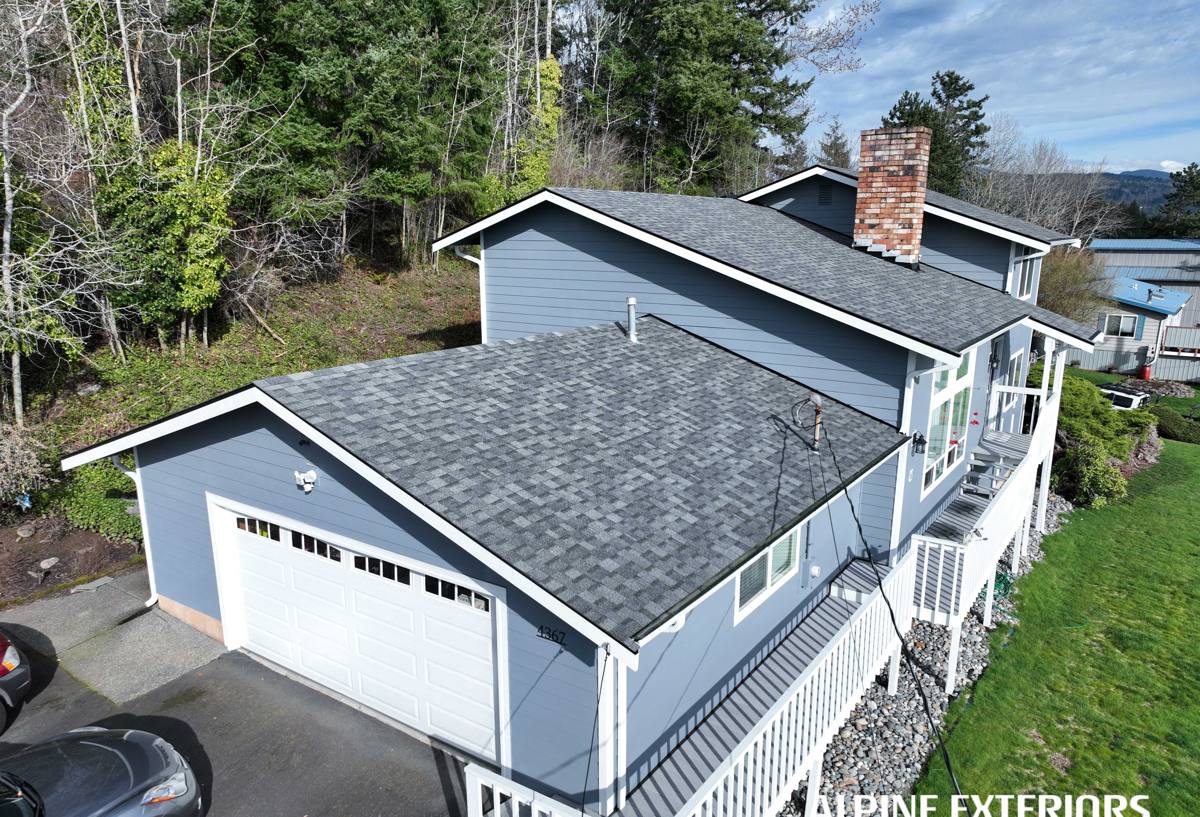
Why Flounder Bay Roofs Wear Differently
Salt Air and Metal
Any exposed metal on a roof — flashing, fasteners, vent caps, drip edge — is at higher risk of corrosion this close to saltwater. Galvanized fasteners that would last for decades inland can start to weaken years earlier out here, especially if they were never rated for a marine or coastal environment. When we repair flashing or replace fasteners on a Flounder Bay roof, we use materials chosen for that exposure, not whatever happens to be standard stock.
Driving Rain
Anacortes gets wind-driven rain off the water, and wind-driven rain doesn't behave like a straight-down downpour. It gets pushed sideways and upward under shingle edges, around poorly sealed flashing, and into laps that would otherwise shed water fine in calmer weather. Repairs that only address the visible leak point, without accounting for how water travels under wind pressure, tend to come back.
Moss and Shade
A long moss season is one of the more predictable problems in this part of Skagit County. Moss holds moisture against the roofing material, lifts shingle edges as it grows, and works its way into any gap it can find. Left alone, it doesn't just look bad — it actively creates the conditions for leaks, especially in north-facing slopes and shaded valleys that don't get much direct sun to dry out between rains.
Signs a Flounder Bay Roof Needs Repair
Most roof problems don't announce themselves as a dramatic leak on day one. They show up as smaller signs first. Homeowners who catch these early usually end up with a simpler, less expensive repair.
- Moss buildup along ridges, valleys, or the shaded side of the roof
- Granules collecting in gutters or at the base of downspouts
- Shingles that look curled, lifted at the edges, or cupped
- Rust streaking or discoloration around metal flashing or vent boots
- Soft or discolored spots on ceilings, especially after a windy rainstorm
- Daylight visible through the roof deck from inside the attic
- Cracked or missing pipe boots and seals around roof penetrations
- Gutters pulling away from the fascia or overflowing during heavy rain
If you're seeing more than one or two of these, it's worth having someone look before the next storm system rolls through rather than after.
Common Repair Issues We Find in Flounder Bay
Flashing Failures
Flashing around chimneys, skylights, dormers, and roof-to-wall transitions is one of the most common repair points on any roof, and it's especially common on homes with the kind of varied rooflines you see around Flounder Bay. Old caulk-and-patch fixes tend to fail again within a season or two out here because the salt air and constant damp break down sealants faster than in a drier climate.
Valley Leaks
Roof valleys collect more water than any other part of the roof, and they're often where moss takes hold first because they hold moisture longest. A valley repair that doesn't account for proper underlayment and metal detailing underneath is treating the symptom, not the cause.
Fastener and Metal Corrosion
On older roofs, especially those with any exposed galvanized metal, we sometimes find corrosion that's loosened fasteners or thinned flashing to the point it's no longer doing its job, even though the shingles above it still look fine. This is easy to miss from the ground.
Gutter and Drainage Problems
A roof can be in decent shape and still leak if water isn't being carried away properly. Undersized, clogged, or poorly pitched gutters push water back under the roof edge, which shows up looking like a roofing problem even when the roofing material itself is sound.
What a Correct Roof Repair Actually Involves
A repair done right starts with finding the actual source of the problem, not just the spot where water is showing up inside the house. Water can travel several feet from where it enters the roof before it shows up as a stain on a ceiling, so an accurate diagnosis matters more than speed.
- Inspect the roof surface, flashing, and penetrations, and cross-reference with the attic or ceiling if there's an active leak
- Identify the actual entry point, not just the visible damage
- Remove and replace damaged materials down to sound decking where needed
- Install new underlayment and flashing rated for the exposure the area gets
- Match repair materials to the existing roof as closely as possible
- Confirm proper water shedding at valleys, laps, and transitions before closing up the work
Skipping steps in that sequence is how a repair ends up being redone a year later.
Repair vs. Replacement: How We Decide
Not every roof problem in Flounder Bay needs a full replacement, and we don't default to recommending one. The table below outlines the factors we actually weigh.
| Factor | Leans Toward Repair | Leans Toward Replacement |
|---|---|---|
| Roof age | Under 15-20 years, depending on material | At or past expected material lifespan |
| Extent of damage | Isolated to one area (a valley, a flashing point) | Widespread across multiple slopes |
| Underlying deck | Solid, no rot found | Soft or rotted decking discovered |
| Moss/algae history | Recent, surface-level growth | Long-term growth with granule loss underneath |
| Number of past repairs | First or second repair in the area | Repeated repairs to the same spot |
We'll walk you through where your roof falls on this before recommending anything, and we're upfront if a repair is the honest answer rather than a bigger sale.
Materials We Use for Coastal Repairs
Where a roof faces direct exposure to salt air and driving rain, we choose repair materials accordingly rather than defaulting to whatever's cheapest or fastest to source. That generally means corrosion-resistant fasteners and flashing metals suited to a marine-influenced environment, self-adhered underlayment in valleys and other high-water areas for a more reliable seal than felt alone, and sealants chosen for their track record in wet, salt-exposed conditions rather than general-purpose products that break down faster out here. The goal is a repair that's still doing its job in ten years, not one that looks fine on move-out day.
Why a Crew That Already Works Flounder Bay Matters
Roofing crews that mostly work drier inland areas of Skagit County don't always account for the extra corrosion resistance or moisture detailing that waterfront and near-waterfront homes need. A crew that regularly works in and around Flounder Bay has already seen how roofs in this specific setting age, what fails first, and which shortcuts don't hold up once winter storms roll in off the water. That local pattern recognition is part of what separates a repair that lasts from one that's back on the schedule next year.
It also means fewer surprises with permitting, roof access on tighter waterfront lots, and scheduling around the wetter months when repairs are often more time-sensitive.
Maintenance That Extends a Repair's Life
A good repair lasts longer with a small amount of upkeep in between. A few habits make a real difference in this climate:
- Keep gutters and downspouts clear, especially heading into fall
- Have moss treated before it spreads across a full slope, not after
- Trim back overhanging branches that keep sections of roof shaded and damp
- Get a quick visual check after any major windstorm
- Address small flashing or sealant issues early rather than waiting for a leak
If you're seeing signs of trouble on a Flounder Bay roof, or just want an honest read on whether it's a repair or something bigger, we're happy to come take a look. Use the form below to request a free, no-pressure estimate.