 Anacortes Exterior
 Building Decks for Flounder Bay's Waterfront Conditions
Flounder Bay sits close enough to the water that a deck here lives a different life than one built a few miles inland. Salt-laden air, wind-driven rain off the Salish Sea, and long stretches of gray, damp weather all work on wood, fasteners, and finishes at a faster rate than most homeowners expect. We build and repair custom decks for homes in this part of Anacortes, and the design and material choices we make are shaped directly by that exposure — not by what looks good in a showroom.
This page covers what actually matters for a deck built in Flounder Bay: the materials that hold up, the framing details that keep water and moss from taking over, and the process we follow from first look to final walkthrough.
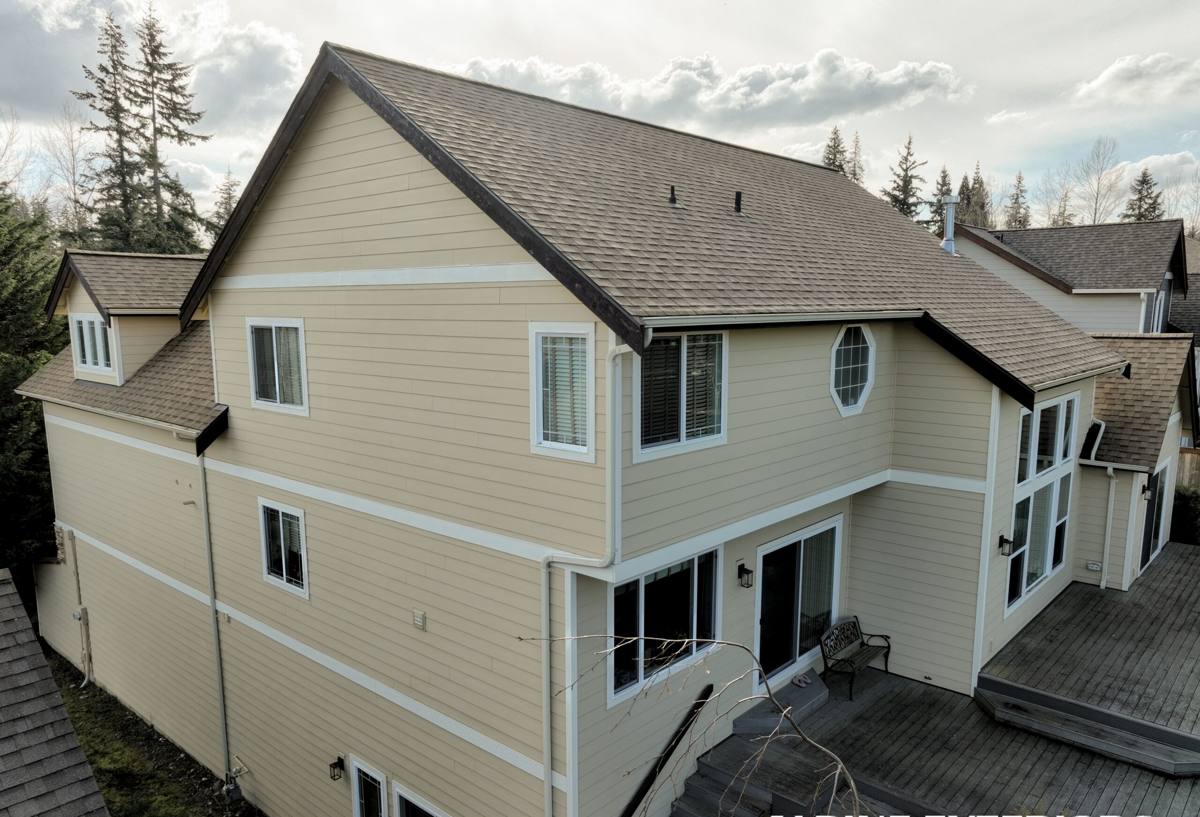
What Salt Air, Rain, and Moss Actually Do to a Deck
Homeowners in Skagit County are used to rain, but a bay-facing deck deals with a specific combination of stresses that inland decks don't see as often:
- Salt air accelerates corrosion. Airborne salt settles on any exposed metal — nails, screws, joist hangers, railing hardware — and speeds up rust and pitting compared to the same hardware installed further from the water.
- Driving rain gets under things. Wind-blown rain doesn't just fall straight down; it pushes water sideways into ledger connections, under railing posts, and into any gap that isn't properly flashed or sealed.
- Long moss season means constant moisture retention. Anacortes has extended stretches of overcast, damp weather each year. Anywhere a deck holds shade and moisture — under railings, in board gaps, on north-facing sections — moss and algae get a foothold and stay there.
- UV and salt combine on finishes. Stains and sealants near the water break down faster from the one-two punch of salt exposure and sun, even with fewer sunny days than other regions.
None of this means a deck can't last in Flounder Bay — it means the build has to account for these conditions from the framing up, not just at the surface.
Choosing Decking Material for a Bay-Facing Site
There's no single "best" decking material for every home — it depends on budget, how the deck will be used, and how much upkeep the owner wants to take on. Here's how the common options actually perform in this specific climate:
| Material | Salt air / moisture behavior | Moss & algae resistance | Maintenance |
|---|---|---|---|
| Pressure-treated fir/pine | Absorbs moisture readily; needs sealing to slow it down | Low — porous surface holds moisture and organic growth | Annual cleaning and re-sealing recommended |
| Cedar | Naturally moisture- and rot-resistant, but still needs finish upkeep near salt air | Moderate — better than treated lumber but still needs cleaning | Periodic cleaning and refinishing |
| Capped composite | Doesn't absorb moisture; unaffected by salt exposure | Higher — smooth cap sheds algae more easily, though shaded areas still need washing | Occasional washing, no sealing or staining |
| PVC decking | Fully moisture-proof; no absorption or swelling | Highest — least hospitable surface for moss and mildew | Lowest — washing only |
For a straight-up waterfront deck that gets shaded or north-facing sections, we usually steer homeowners toward capped composite or PVC for the field of the deck, with wood reserved for framing or for owners who specifically want the look of real cedar and are willing to keep up with it. That's a trade-off conversation, not a sales pitch — real wood has a look composite can't fully match, but it asks more of the owner every year it's near this bay.
What We Don't Recommend Here, and Why
We generally steer away from uncapped composite decking (the older style without a protective outer shell) on bay-facing builds. Uncapped boards can absorb moisture at cut ends and fastener holes, and once moisture gets in, mold and staining are hard to reverse. It's not that the product is unusable everywhere — it's that this particular site's moisture load makes it a poor match for our standards on durability.
Framing and Substructure: The Part No One Sees
The decking surface gets all the attention, but the framing underneath determines whether a deck lasts 10 years or 30 in this environment. For Flounder Bay projects we pay particular attention to:
Footings and Posts
Footings need to be sized and set below frost depth and clear of standing water, with post bases that keep wood posts off the concrete entirely — a wet post base sitting flush on concrete is one of the most common rot starting points we find on older decks in this area.
Ledger Attachment and Flashing
Where a deck attaches to the house, proper flashing is what keeps driving rain from tracking behind the siding and into the wall structure. This is one of the most failure-prone details on any deck, and it's not a place to cut corners on a bay-facing home.
Fasteners and Hardware
We use fasteners and structural hardware rated for exterior and coastal exposure — stainless steel or heavy hot-dip galvanized coatings, not the lighter coatings sold for general-purpose use. The price difference is small; the difference in how long joist hangers and structural screws last near salt air is not.
Railings, Gaps, and Drainage Details That Prevent Moss
Most of the moss and black staining we get called about isn't a materials problem — it's a design and detailing problem. A few things we build into every custom deck here:
- Consistent board spacing that allows water to drain through rather than pool on the surface
- Proper slope away from the house so water sheds instead of collecting near the ledger
- Railing post bases and baluster connections that don't trap water against the decking
- Adequate ventilation underneath low decks so the substructure can dry out between rain events
- Metal or composite trim in shaded, low-airflow areas where wood trim would stay damp longest
Get these details right during the build and moss becomes a surface-cleaning issue instead of a structural one.
Our Process for a Flounder Bay Deck Project
- Site visit and assessment. We look at sun and wind exposure, existing drainage patterns, soil conditions, and how close the build is to the water, since that affects material and hardware recommendations.
- Design and material selection. We walk through the trade-offs above in plain terms — budget, maintenance appetite, and how the space will actually be used — and land on a decking and railing package that fits.
- Permitting. Anacortes and Skagit County have their own permitting requirements depending on deck size, height, and proximity to setbacks or shoreline regulations; we handle that paperwork as part of the project.
- Framing and structural work. Footings, posts, ledger flashing, and joist framing go in first, using coastal-rated hardware throughout.
- Decking, railings, and finish work. Surface material and railing systems are installed with attention to the spacing and drainage details above.
- Final walkthrough. We go over basic care with the homeowner before we consider the job done — what to clean, how often, and what to watch for as the seasons change.
Maintenance Checklist for Bay-Facing Decks
A well-built deck still needs some seasonal attention in this climate. Here's what we recommend to homeowners in Flounder Bay regardless of decking material:
- Rinse or sweep debris out of board gaps before it composts into moss food, especially heading into fall
- Wash the deck surface at least once a year — more often on shaded or north-facing sections
- Check railing hardware and fasteners annually for early rust or loosening, since salt air corrosion shows up first at connection points
- Keep gutters and downspouts near the deck clear so roof runoff isn't adding to the deck's moisture load
- Re-seal or re-stain wood decking on the manufacturer's recommended schedule — don't wait for visible graying or cracking
- Trim back vegetation that shades the deck and slows drying after rain
Why Local Experience on This Bay Matters
A deck built to a generic spec sheet can still fail early in Flounder Bay if it doesn't account for what this specific location does to materials and hardware. A crew that already works this stretch of Anacortes knows which fastener grades hold up, which decking products handle salt air without complaint, and which framing details actually matter here versus a drier, inland site. That's the difference between a deck that needs real attention at year eight and one that's still solid at year twenty-five.
We're not interested in overselling material upgrades homeowners don't need, and we're not going to cut corners on the ones that matter for this environment. If you're planning a new deck, or looking at repairing or replacing an existing one in Flounder Bay, we're happy to come take a look and walk through your options honestly. Reach out for a free, no-pressure estimate using the form below.