 Anacortes Exterior
 Deck Replacement for Flounder Bay Homes
Flounder Bay sits close enough to the water that the air itself becomes part of your deck's maintenance schedule. Salt-laden moisture off the bay, combined with Skagit County's long wet season and the shade that many waterfront and tree-lined lots create, means decks here age differently than decks fifteen miles inland. A deck that would last two decades in a dry, sunny climate can start failing structurally in half that time if it wasn't built — or isn't being replaced — with this specific environment in mind.
This page covers what deck replacement actually involves for a Flounder Bay property: what the climate does to decking materials and framing, what a correct rebuild looks like from the ground up, and why a crew that already works this stretch of Anacortes tends to catch problems that a general contractor from out of the area might miss.
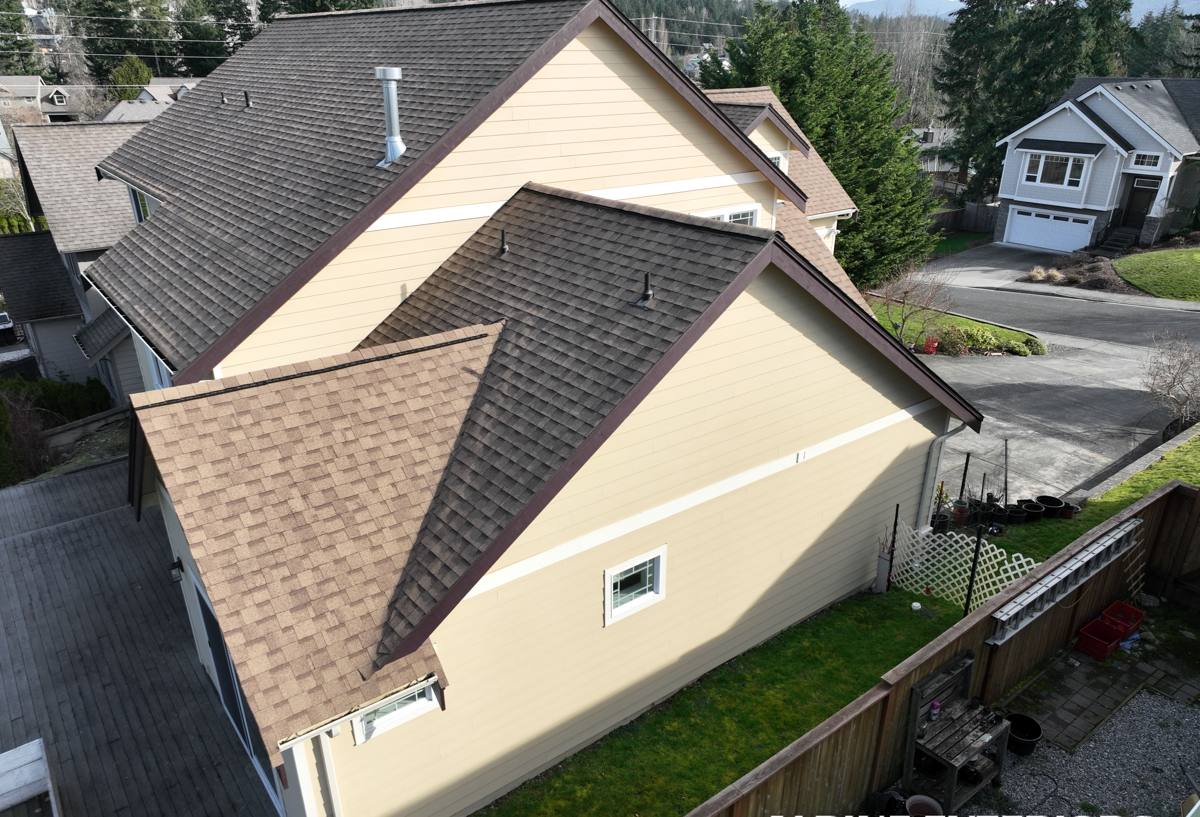
What Salt Air, Rain, and Moss Actually Do to a Deck
It's worth understanding the mechanism, not just the symptom, because it changes what "replacement" should mean.
Salt Air and Fasteners
Airborne salt accelerates corrosion on any exposed metal — nails, screws, joist hangers, post bases. Once a fastener starts to rust, it loses holding strength long before it looks obviously bad. On older decks near the water, we regularly find hardware that's structurally compromised while the visible decking boards still look serviceable. That mismatch is exactly why a full replacement, done right, focuses as much on what you don't see as what you do.
Driving Rain and Water Intrusion
Anacortes gets sustained wet weather for months at a stretch, and wind off the water often drives rain sideways instead of straight down. That matters for ledger boards (where the deck attaches to the house), stair stringers, and any horizontal surface where water can pool instead of shed. Flashing details that would be adequate in a drier climate aren't always enough here.
Moss and Surface Moisture
Shaded and north-facing decks in this region grow moss on a predictable cycle. Moss holds moisture against the wood surface long after the rain stops, which keeps boards damp far longer than they'd otherwise stay. On wood decking, that constant damp-dry cycling is a major driver of rot, cupping, and splintering. On composite decking, moss is mostly a slip and appearance issue rather than a structural one — one of several reasons material choice matters more here than in drier parts of the state.
Signs a Deck Needs Replacement, Not Just Repair
Not every tired-looking deck needs to come out. But there's a point where patching individual boards stops making sense. Common signs we look for:
- Soft or spongy spots underfoot, especially near the house or stairs
- Rust streaking below joist hangers or fastener heads
- A ledger board that's separating slightly from the house or shows dark staining
- Posts or footings that have shifted, or a deck that feels less rigid than it used to
- Widespread cupping, splitting, or rot across multiple boards rather than isolated spots
- A structure built before current code, with undersized framing or missing hardware by today's standard
If the framing and connections underneath are sound, sometimes a resurface (new decking over existing structure) is a reasonable option. If the substructure shows the wear above, resurfacing just hides a problem that will resurface — often as a safety issue, not just a cosmetic one.
What a Correct Deck Replacement Involves
A deck replacement is a structural project first and a finish project second. Doing it correctly in a marine climate means paying attention to a few things that are easy to shortcut:
Ledger and Flashing
The connection to the house is the single most common failure point on decks in wet climates. A correct replacement includes proper flashing between the ledger and the house sheathing, with the flashing lapped so water is directed out and away rather than trapped behind the board.
Framing and Fasteners
Given the corrosion pressure from salt air, we use fasteners and structural hardware rated for exterior and coastal exposure — not standard interior-grade hardware. Joist hangers, post bases, and structural screws all matter more here than they would on an inland deck.
Footings and Posts
Footings need to sit below frost depth and bear on undisturbed soil, and posts need proper standoff bases so wood doesn't sit directly in standing water. On sloped or waterfront lots this sometimes takes more excavation and engineering judgment than a flat inland yard would.
Decking Surface and Drainage
Board spacing, ventilation underneath the deck, and slope away from the house all affect how fast the structure dries out after a storm. A deck that can't shed water and air it out will always underperform, regardless of what material sits on top.
Choosing a Decking Material for This Climate
There's no single "best" decking material — there's a best fit for your budget, maintenance appetite, and exposure. Here's how the common options stack up specifically against salt air, rain, and moss:
| Material | Moisture / Salt Air Performance | Moss Handling | Maintenance |
|---|---|---|---|
| Pressure-treated wood | Good if properly sealed; treatment resists rot but fasteners still need coastal-rated hardware | Needs regular cleaning to prevent moss buildup | Annual cleaning and periodic sealing/staining |
| Cedar | Naturally rot-resistant, but softer surface weathers faster in driving rain | Prone to moss in shaded, damp spots | Regular sealing to maintain appearance and resistance |
| Composite decking | Excellent — doesn't absorb moisture or rot | Can still grow surface moss/algae in deep shade; cleans off easily | Occasional washing, no sealing or staining |
| PVC decking | Excellent — fully moisture resistant | Same as composite; smooth surfaces shed moss faster | Low — mainly periodic washing |
For shaded, water-adjacent lots like much of Flounder Bay, we often steer clients toward composite or PVC decking simply because the maintenance math works out better — moss and moisture are a constant here, not an occasional nuisance. That said, plenty of homeowners prefer the look and feel of real wood and are willing to keep up with sealing; that's a legitimate choice as long as it's made with eyes open about the upkeep.
Our Deck Replacement Process
- On-site assessment — we inspect the existing deck's framing, ledger connection, footings, and hardware, not just the visible boards, to determine what's actually salvageable
- Scope and material discussion — we walk through material options and cost trade-offs based on your lot's sun/shade exposure and how close you are to the water
- Permit handling — we pull the necessary permits and confirm the design meets current code, including guardrail height, stair geometry, and structural sizing
- Demolition — full removal of the old deck, with inspection of the house band board and framing behind the ledger once it's exposed
- Framing and flashing — new footings, posts, joists, and ledger flashing installed to current code and coastal-hardware standards
- Decking, railing, and stairs — installation of the chosen material with attention to board spacing and drainage
- Final walkthrough — we go over the finished deck with you, including what maintenance (if any) the material requires going forward
Permits and Code Considerations
Deck replacement in Anacortes and unincorporated Skagit County generally requires a building permit, particularly when the deck is attached to the house or elevated above a certain height. Permitting also triggers a review of guardrail and stair requirements against current code, which is often stricter than what was in place when an older deck was originally built. We handle the permit process as part of the job rather than leaving it to the homeowner, and we build to current code even in cases where the old structure was grandfathered in.
Maintaining Your New Deck in a Marine Climate
Whatever material you choose, a little seasonal attention goes a long way in this climate. A simple maintenance routine for Flounder Bay conditions:
- Sweep debris off the deck regularly, especially in fall when leaves and needles trap moisture
- Rinse off salt residue after storms, particularly on metal railings or hardware
- Treat moss growth early with a deck-safe cleaner rather than letting it establish
- Check for standing water after heavy rain — pooling usually points to a drainage issue worth addressing
- For wood decking, plan on sealing or staining on a regular cycle rather than waiting until it looks worn
- Inspect fasteners and railings once a year for early signs of corrosion
Why Local Experience Matters for This Job
A deck built to a generic spec sheet will meet code on paper and still underperform on a lot exposed to bay winds and prolonged damp shade. Crews who work Flounder Bay and the surrounding Anacortes waterfront regularly know which corners of a property tend to trap moisture, which hardware actually holds up to years of salt air rather than just resisting it on a data sheet, and how the county's permitting and inspection process tends to run. That familiarity shows up less in the sales pitch and more in the parts of the deck you'll never see once it's finished — the flashing, the fasteners, and the framing doing their job quietly for the next twenty years.
If your deck is showing its age, we're happy to take a look and give you a straightforward assessment — no pressure, no upsell, just what we'd actually recommend for your property. Reach out using the form below to schedule a free estimate.