 Anacortes Exterior
 Similk Beach sits close enough to the water that its roofs live a harder life than the same house would have twenty miles inland. Salt-laden air off the bay corrodes fasteners and flashing faster than a dry-climate roof ever sees. Wind-driven rain gets pushed sideways under shingle tabs and around vents. And the long Pacific Northwest wet season — often eight or nine months of intermittent moisture in Skagit County — keeps moss and algae growing on north-facing slopes and shaded valleys almost year-round. None of this means a roof is doomed. It means repairs here have to account for causes that don't show up on a dry inland roof, or the same leak comes back in a year.
Why Similk Beach Roofs Wear Differently
Three things drive most of the repair calls we get in this part of Anacortes:
- Salt air corrosion — nails, staples, and exposed metal flashing lose their galvanized coating faster near open water, leading to rust streaks, loosened shingles, and pinhole leaks at fastener heads years before a manufacturer's rated lifespan.
- Wind-driven rain — storms coming off the water don't just fall straight down; they drive moisture horizontally under shingle edges, around chimney flashing, and through poorly sealed roof penetrations.
- Moss and organic growth — shaded, north-facing roof sections stay damp long after the rest of the roof has dried, giving moss a foothold that lifts shingles and holds water against the roof deck.
A repair that only patches the visible symptom — a missing shingle, a stained ceiling spot — without addressing which of these three is actually driving the damage tends to fail again within a season or two.
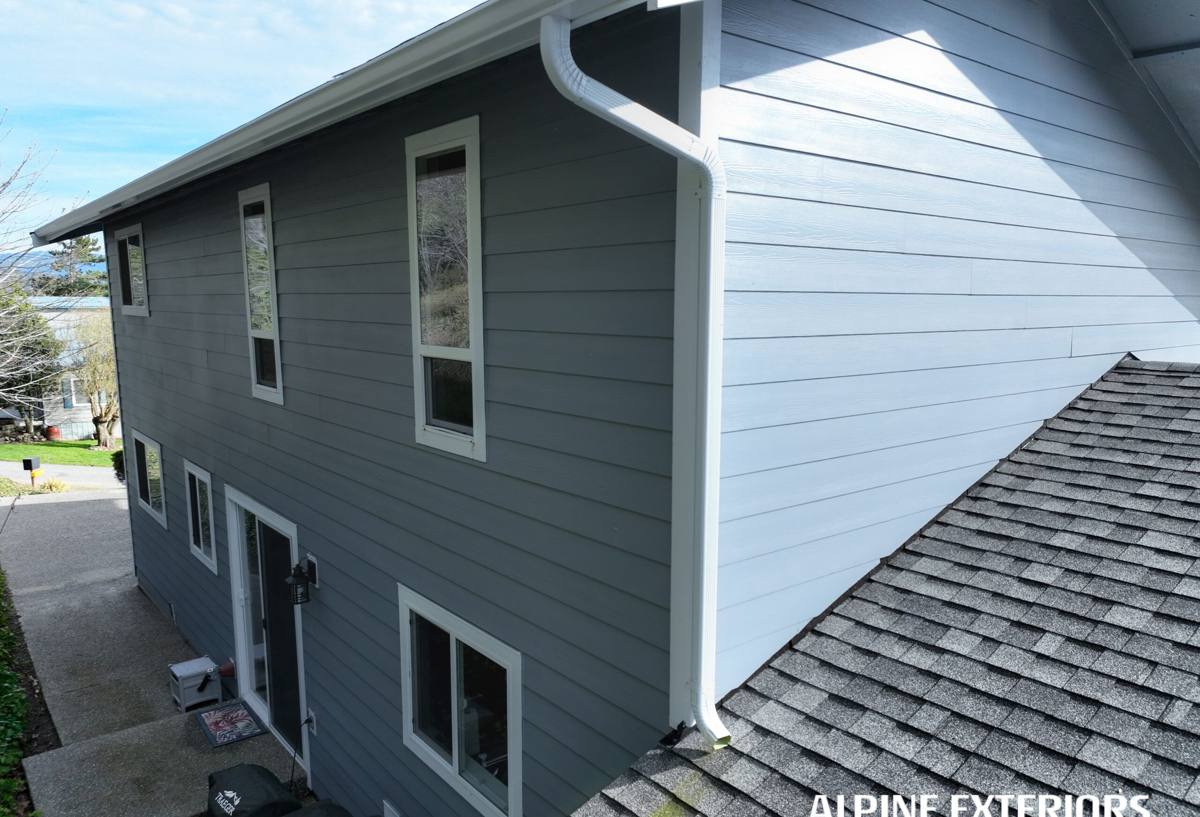
Signs a Similk Beach Roof Needs Repair, Not Replacement
Most roofs don't need a full tear-off. They need targeted work in the areas actually failing. Common repair triggers we see on calls in this area include:
Interior signs
- Ceiling stains that appear or darken after a windy rainstorm, but not during calm rain
- Musty odor in an attic or upper closet during the wet months
- Visible daylight around a chimney or vent pipe when viewed from the attic
Exterior signs
- Curling, cracked, or missing shingles concentrated on one slope or edge, rather than the whole roof
- Rust streaking below metal flashing or exposed fasteners
- Thick moss mats along ridges, valleys, or shaded eaves
- Granule buildup in gutters, which signals shingle wear near end-of-life in that section
If the damage is isolated to a slope, a flashing detail, or a section under a tree canopy, targeted repair is usually the honest recommendation. Full replacement makes sense when the underlying decking is soft in multiple areas, or the shingle field itself is uniformly past its service life.
What a Correct Repair Actually Involves
A roof repair done right isn't just swapping a shingle. On a coastal Skagit County home, a proper repair typically includes:
- Diagnosis at the source — tracing the leak path from the interior stain back to its actual entry point, which is often several feet away from where water shows up inside.
- Removing affected material — pulling damaged shingles, felt, or flashing back far enough to expose sound decking, not just covering over the visible spot.
- Checking the decking — soft or delaminated plywood gets replaced before anything goes back down; patching over a wet deck just traps moisture.
- Correcting the detail that failed — re-flashing a chimney or vent properly, re-sealing a valley, or re-nailing a wind-lifted section with corrosion-resistant fasteners suited to salt air exposure.
- Matching materials — using shingles and flashing compatible with what's already on the roof, so the repair blends in and doesn't create a mismatched wear pattern.
- Clearing growth and debris — removing moss and organic buildup from the repair area and nearby valleys so it doesn't undermine the new work within a season.
Roofing Materials Common in the Area — Repair Approach for Each
| Material | Typical failure point near the water | Repair approach |
|---|---|---|
| Composition (asphalt) shingle | Granule loss, curling from UV and wind uplift, nail corrosion | Replace affected shingles and fasteners, check underlayment condition below |
| Cedar shake | Moss retention, splitting from repeated wet-dry cycles | Remove and replace split or moss-damaged shakes, treat surrounding area, improve airflow if possible |
| Metal roofing | Fastener backing out, sealant failure at seams and penetrations | Re-seat or replace fasteners with corrosion-rated hardware, reseal penetrations and seams |
| Low-slope / torch-down or membrane | Seam separation, ponding water near flashing details | Reseal or patch seams, correct drainage at the failure point rather than just topical patching |
Whatever the material, the goal of a repair is the same: stop water at its actual entry point using materials and fasteners that will hold up to the salt air and driving rain this location sees, not just a generic patch.
Repair vs. Replacement — Weighing the Decision
| Factor | Favors repair | Favors replacement |
|---|---|---|
| Age of roof | Well within expected service life | At or near the end of its rated lifespan |
| Extent of damage | Isolated to one slope, flashing detail, or penetration | Spread across multiple slopes or the whole field |
| Decking condition | Sound, dry plywood under the affected shingles | Soft, delaminated, or repeatedly wet decking in several areas |
| Moss/organic history | First occurrence, cleared and treated | Chronic buildup that's degraded shingles over multiple seasons |
| Budget timing | Buys years of additional service life at lower upfront cost | Avoids paying for repeated repairs on a roof that's already failing broadly |
We'll tell you honestly which side of that table your roof falls on. There's no benefit to us in talking a homeowner into a full replacement that a targeted repair would have solved, and no benefit to patching a roof that genuinely needs to be replaced.
Our Process for Similk Beach Calls
- Phone or on-site conversation — you describe what you're seeing (stain location, timing, any known history), which helps us come prepared.
- Roof and attic inspection — we check both the exterior surface and, where accessible, the attic side, since leak entry points and interior stains often don't line up directly.
- Written assessment — what's actually wrong, what caused it, and what fixing it correctly involves — in plain language, not a sales pitch.
- The repair itself — using materials matched to your existing roof and fasteners rated for coastal exposure.
- Follow-up recommendations — if we spot early signs of trouble elsewhere on the roof (thinning granules, minor moss starting in a shaded valley), we'll flag it so you can plan ahead rather than get surprised next winter.
What to have ready before we come out
- Rough idea of when you first noticed the issue (which storm, which season)
- Whether the stain or leak gets worse with wind, or just with heavy rain
- Any history of prior roof repairs or replacement, if you know it
- Attic access, if there is any, so we can check from both sides
Maintenance Between Repairs
A repair holds up longer when the roof gets basic seasonal attention in between. For homes in this part of Anacortes, that generally means:
- Clearing gutters and valleys before the heavy fall rains arrive
- Removing moss buildup on shaded slopes before it thickens and lifts shingles
- Trimming back overhanging branches that keep sections of roof shaded and damp longer than the rest
- Checking chimney, vent, and skylight flashing yearly for sealant that's cracked or pulled away
- Watching fastener heads and metal flashing for early rust, especially on roofs facing open water
None of this replaces a proper repair when something's actually failed, but it slows down the three things — salt air, wind-driven rain, and moss — that cause most of the damage in the first place.
Why a Crew That Already Works This Area Matters
A roofer who mostly works inland jobs isn't wrong about roofing in general, but they may not default to corrosion-rated fasteners, may not think to check for wind-driven entry points around chimneys facing the water, or may underestimate how fast moss reestablishes on a shaded slope near the bay. Crews who regularly work Similk Beach and the surrounding Anacortes waterfront see these patterns often enough to diagnose them quickly instead of guessing. That familiarity usually means a faster, more accurate first visit and a repair that's built for the conditions this specific location sees, not generic conditions.
If you're dealing with a leak, missing shingles, or moss buildup on a Similk Beach roof, we're glad to take a look and give you a straight answer on what it needs. The estimate is free, there's no pressure to sign anything on the spot, and if a simple repair is the right call, that's exactly what we'll recommend.