 Anacortes Exterior
 Roofing Built for the Oak Harbor Climate
Oak Harbor sits out on Whidbey Island, a short run from Anacortes across the Deception Pass Bridge, and it takes the same weather pattern that defines roofing work all along this stretch of the Salish Sea: salt-laden air off the water, wind-driven rain that comes in sideways during winter storms, and a moss season that can run nine or ten months out of the year on shaded, north-facing slopes. A roof here isn't just shedding water — it's fighting corrosion, biological growth, and constant moisture cycling at the same time. That combination is why a new roof installation in Oak Harbor needs to be planned differently than one going on a house forty miles inland.
What Salt Air, Wind, and Rain Actually Do to a Roof
Salt air accelerates corrosion on exposed metal — nail heads, flashing, gutter fasteners, even the metal components inside some shingles. Once corrosion starts at a fastener, it loosens its grip and creates a small path for water. Wind-driven rain doesn't behave like a normal downpour; it gets pushed sideways and upward under shingle tabs and around flashing details that would be perfectly fine in calmer weather. And moss doesn't just sit on top of a roof looking unattractive — its root structure works into the granule surface and shingle laps, holding moisture against the roof deck long after the rain has stopped and slowly lifting shingle edges over several seasons.
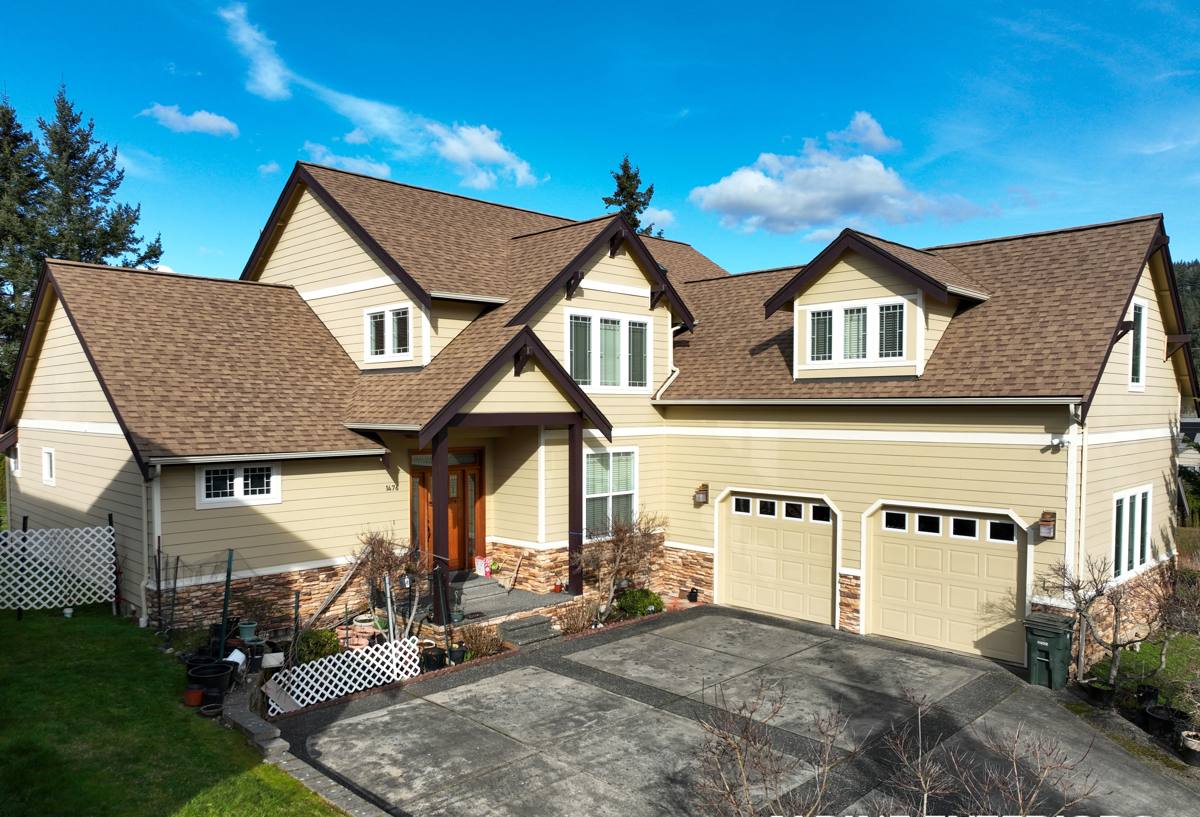
Signs a New Roof Makes More Sense Than Another Repair
Skagit and Island County homeowners often call us for a repair and end up learning the roof has reached the point where patching is throwing money at a system that's already failing underneath. A few honest signs to watch for:
- Granule loss heavy enough that you're finding grit in gutters and downspouts every time it rains
- Shingles that are curling, cupping, or cracking across large sections rather than one isolated spot
- Moss or dark algae staining that comes back within a season or two of cleaning
- Soft or spongy spots underfoot on the roof deck, or sagging visible from the ground
- Daylight visible through the attic roof boards, or musty attic smells after rain
- Multiple past repairs in different areas within the last few years
- A roof that's 20+ years old on asphalt, or showing wear well before its expected service life
One or two of these on their own might still be repairable. Several at once, especially combined with age, usually means the underlayment and decking are compromised in more places than are visible from a ladder inspection alone.
Choosing a Roofing Material for This Climate
There's no single "best" roofing material — there's a best fit for your home, your budget, and how much maintenance you're willing to keep up with in a marine environment. Here's how the common options compare for a house exposed to salt air, wind, and moss pressure:
| Material | Moisture & Moss Behavior | Wind Performance | Maintenance |
|---|---|---|---|
| Architectural (laminate) asphalt shingles | Good with proper ventilation; algae-resistant granule options help | Strong wind ratings when installed with correct nailing pattern | Periodic moss/debris removal, gutter checks |
| Standing seam metal | Sheds moss and moisture very well; minimal organic growth | Excellent, especially in exposed coastal spots | Low; occasional fastener and sealant check on cut edges |
| Synthetic/composite shingle | Resists moisture absorption well; won't rot | Good when rated for the local wind zone | Low to moderate |
| Cedar shake/shingle | Attractive but needs disciplined upkeep — this climate's near-constant moisture and moss pressure shorten its practical service life unless maintained closely | Moderate; depends heavily on installation detail | High — regular treatment and moss control required |
We're not against any product on this list — we just believe in being straight with homeowners about maintenance burden before they buy. A material that looks great on day one but demands constant upkeep in wind-driven rain and long moss seasons isn't doing you any favors five years in. We'll walk through what fits your roof pitch, sun exposure, and budget honestly, rather than steering you toward whatever's easiest to install.
What a Correct New Roof Installation Actually Involves
A new roof is more than shingles nailed to a deck. In a climate this wet, the layers underneath the visible surface do most of the actual work.
Tear-Off and Deck Inspection
We remove the old roofing down to the deck rather than layering over it — that's the only way to actually see the plywood or plank sheathing underneath. Any deck sections that are soft, delaminated, or water-damaged get replaced before anything new goes down. Skipping this step is the single most common shortcut that leads to problems a few years later.
Underlayment and Ice/Water Protection
Over the bare deck goes a synthetic or felt underlayment, with self-adhered ice-and-water membrane at the vulnerable spots — eaves, valleys, around chimneys and skylights, and along any low-slope transitions. In a wind-driven-rain climate, this layer is what keeps a roof dry even if wind manages to push water past the shingle surface itself.
Flashing at Every Penetration
Chimneys, vent pipes, skylights, and wall-to-roof transitions are where the vast majority of roof leaks actually originate — not the open field of shingles. Correct flashing means new metal, properly lapped with the underlayment and shingle courses (not just caulked over old flashing), at every single penetration and transition.
Ventilation Built Into the System
Ridge and soffit ventilation keep attic moisture moving instead of condensing against the underside of the deck. In a marine climate with high ambient humidity for much of the year, a roof that isn't ventilated correctly can trap moisture that shortens the life of the decking and the shingles from underneath, even if the top surface looks fine.
Our Installation Process, Step by Step
- On-site inspection and estimate. We walk the roof and attic, note the deck condition, ventilation setup, flashing points, and any problem areas, and give you a clear written estimate — no pressure, no gimmicks.
- Material selection. We go over the options that make sense for your roof pitch, sun/shade exposure, and budget, with honest trade-offs for each.
- Scheduling around the weather. Roofing in this region means working around rain windows. We plan the tear-off day for the best available weather stretch so your home isn't exposed longer than necessary.
- Tear-off and deck repair. Old roofing comes off, the deck gets inspected board by board, and any damaged sections are replaced.
- Underlayment, ice-and-water membrane, and flashing installation. Every valley, eave, and penetration gets treated correctly before a single shingle or panel goes on.
- Roofing material installation. Installed to manufacturer specification and the correct nailing or fastening pattern for local wind exposure.
- Ventilation and cleanup. Ridge and soffit vents are set, the site is cleaned with a magnetic sweep for stray fasteners, and gutters are checked and cleared.
- Final walkthrough. We go over the finished roof with you, explain the warranty coverage, and answer any questions before we call the job done.
Cost Factors for a New Roof in Oak Harbor
Every roof is priced on its own specifics, but these are the factors that move the number up or down the most:
| Factor | Why It Matters |
|---|---|
| Roof size and number of facets | More squares and more complex geometry (hips, valleys, dormers) mean more material and labor time |
| Roof pitch and access | Steep or hard-to-access roofs require more safety setup and slower, more careful work |
| Deck condition | Rotten or water-damaged sheathing found during tear-off adds replacement cost that can't always be predicted before the old roof comes off |
| Material choice | Asphalt, metal, and composite options carry different material and installation costs, as shown in the comparison above |
| Flashing and penetration count | Chimneys, skylights, and multiple vent pipes each add flashing work |
| Ventilation upgrades | Adding or correcting ridge/soffit ventilation on an older home is worth doing during a re-roof rather than after |
| Tear-off layers | Removing multiple existing layers of roofing takes more labor than a single-layer tear-off |
We'd rather give you a real number after seeing the roof in person than a rough figure over the phone that doesn't hold up once we're actually up there.
Why Hiring a Crew That Already Works This Area Matters
A roofing crew that mainly works dry, inland climates can still do competent work — but they're often making judgment calls on the fly about how much ice-and-water membrane to use, how to detail a valley for wind-driven rain, or how aggressively to spec ventilation for a house sitting close to the water. A crew that's already worked roofs in Oak Harbor and around Anacortes has already made those calls, repeatedly, on homes dealing with the same salt exposure, the same storm patterns off the water, and the same moss pressure your roof deals with every year. That translates into fewer surprises during the job and a roof that's actually built for the conditions it's going to face, not a generic install adapted after the fact.
It also matters for the practical side of the job — knowing which weather windows are reliable enough to start a tear-off, understanding how sun and shade patterns on a given lot affect moss regrowth, and being available locally if something needs a follow-up look after the first real storm season.
Keeping Your New Roof Performing for the Long Haul
A correctly installed roof still benefits from basic upkeep in this climate. A short annual routine goes a long way:
- Clear gutters and downspouts at least twice a year, more often under overhanging trees
- Remove moss and debris buildup before it has a chance to establish root growth
- Check flashing around chimneys, skylights, and vent pipes for any sealant wear
- Trim back branches that keep sections of the roof shaded and damp
- Have the attic checked periodically for proper airflow and any signs of moisture
- Address small issues — a lifted shingle, a loose flashing edge — before the next storm season rather than after
None of this requires much time, but skipping it is how a well-installed roof ends up needing avoidable repairs years before it should.
If you're weighing a repair against a full replacement, or just want an honest look at where your roof stands, we're happy to come out, walk the roof, and give you a straightforward, no-pressure estimate — use the form below to get started.