 Anacortes Exterior
 Why March Point Roofs Age Differently
March Point sits out on the water, and that location shapes everything about how a roof up here wears. Homes get a steady dose of salt-laden air off the bay, wind that doesn't have much to slow it down before it hits a roofline, and long stretches of damp weather that keep shingles wet far longer than they'd stay wet a few miles inland. Add in Skagit County's mild, wet winters and the moss season that comes with them, and you get roofs that can look fine from the driveway while quietly failing where it counts — at the flashing, the valleys, and the edges.
We're not describing a generic Pacific Northwest roof problem here. Roofs in more sheltered parts of Anacortes, tucked behind trees or hills, simply don't take the same beating as roofs sitting exposed on March Point. That's the reason a repair that would hold up fine somewhere else can fail here within a season or two if it's not done with this specific exposure in mind.
Where Repairs Usually Start
Shingle Fields
Wind off the water works shingle tabs loose over time, especially on older composition roofs where the adhesive strip has weakened from years of heat-cool cycling. Once a tab lifts, driving rain gets underneath it, and what starts as a small leak point can spread moisture across the underlayment before it ever shows up as a stain on the ceiling below.
Flashing and Penetrations
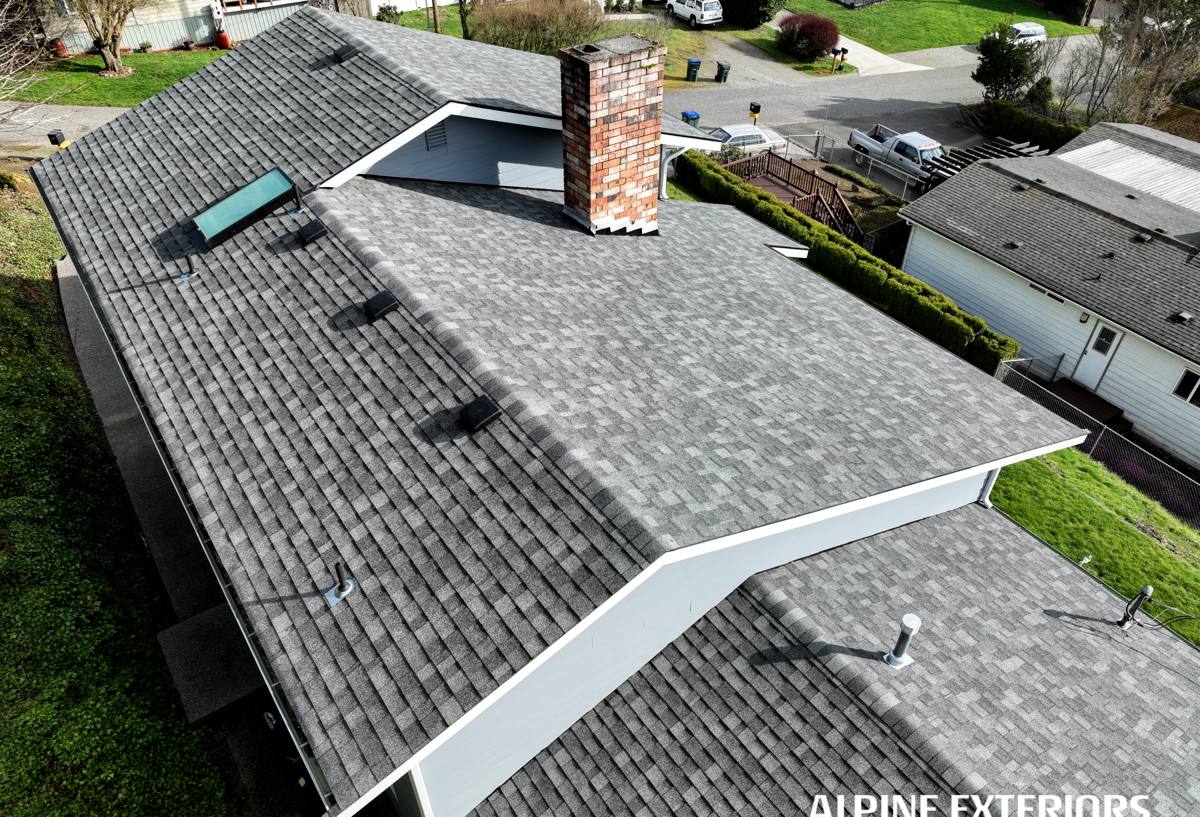
Chimneys, vent stacks, skylights, and roof-to-wall junctions are where most leaks actually originate — not out in the open shingle field. Salt air accelerates corrosion on lower-grade metal flashing, and once flashing starts to pit or separate from the roof deck, water finds its way in even though the shingles around it look perfectly intact.
Moss and Organic Growth
Moss doesn't just sit on top of a roof looking bad. It holds moisture against the shingle surface, works its way under tab edges and into valleys, and lifts materials as it grows — which is exactly how small leaks get started in spots that would otherwise have shed water just fine.
Gutters and Roof Edges
Wind-driven rain in this area doesn't always fall straight down — it comes in at an angle, which means drip edges, gutter aprons, and eave flashing take on more of the workload than they would in a calmer location. When these details are missing, undersized, or damaged, water backs up under the shingle edge instead of running off.
What a Correct Repair Actually Involves
A repair done right starts with figuring out where water is actually entering — not just patching the spot where a stain showed up inside the house. Interior leaks often travel along rafters or sheathing before they drip somewhere visible, so the visible damage and the actual entry point can be several feet apart.
Once we've traced the source, a proper repair means pulling back the surrounding roofing material, not just applying a bead of sealant on top of it. That lets us check the condition of the decking underneath, replace any damaged underlayment, and install new flashing or shingles that are properly integrated with the surrounding roof — lapped and fastened the way the manufacturer's instructions call for, not just stuck down and hoped for.
Matching materials matters too. A patch using the wrong shingle profile, weight, or color stands out and can also create a slightly different water-shedding path than the surrounding roof was designed for. When an exact match isn't available because a roof has aged past what's currently manufactured, we'll tell you that up front and talk through the best realistic option rather than pretending it's a perfect match.
Common Issues We Find on March Point Homes
| Issue | Likely Cause | What the Repair Involves |
|---|---|---|
| Moss buildup in valleys and on north-facing slopes | Shade, moisture retention, long damp season | Careful removal, treatment, inspection of decking underneath for soft spots |
| Granule loss and bald patches on shingles | Age, UV and wind exposure, prior foot traffic | Section replacement matched to existing shingle line where possible |
| Lifted or corroded flashing at chimneys/vents | Salt air corrosion, wind uplift, age | Removal and replacement with corrosion-resistant flashing, re-sealed and integrated properly |
| Soft spots or staining near skylights | Failed flashing seal or cracked skylight seam | Flashing rebuild, deck repair if rot is present, skylight seal inspection |
| Wind-lifted or missing shingle tabs | Weakened adhesive strip, storm exposure | Replacement of affected tabs and inspection of surrounding fasteners |
Our Repair Process
- Inspection. We get on the roof (not just a look from the ground) and check the whole system — shingles, flashing, valleys, gutters, and attic ventilation where accessible.
- Diagnosis and documentation. We identify the actual entry point(s), not just the symptom, and explain what we found in plain language.
- Written estimate. You get a clear scope of work and price before anything happens — no verbal-only quotes.
- Repair. We do the work to code, using materials suited to the exposure this roof actually faces.
- Cleanup and haul-off. Old materials and debris leave with us — nothing left in the yard or gutters.
- Follow-up. If a repair was meant to buy time before a larger project, we'll tell you honestly what to watch for and when to expect the next step.
Repair or Replace? How We Help You Decide
Not every roof problem calls for a full replacement, and not every roof is a good candidate for another round of patching. We walk through this with you honestly rather than defaulting to whichever job is bigger.
| Factor | Repair Often Makes Sense | Replacement Often Makes Sense |
|---|---|---|
| Roof age | Well within expected lifespan for the material | At or past the end of its expected service life |
| Extent of damage | Isolated to one area or one system (e.g., one flashing detail) | Spread across multiple slopes or recurring in different spots |
| Repair history | First or second repair on this roof | Third or later repair, or repairs that keep recurring nearby |
| Decking condition | Solid, dry sheathing under the damaged area | Soft, delaminated, or rotted decking found during inspection |
Materials and Workmanship Standards We Hold To
Given how much salt air and moisture this roof line deals with, we lean toward corrosion-resistant flashing metals and fastener types over the cheapest available option, even on a repair. It costs a little more up front and pays for itself by not needing to be redone in a few years.
We also avoid the shortcut of heavy roof cement or tar smeared over a problem area as a stand-alone fix. It can look like a repair was done, but it doesn't shed water the way properly lapped and fastened roofing materials do, and it tends to fail again — often making the eventual real repair more involved because it has to be cleaned off first. If a section of underlayment has been compromised by moss or standing moisture, we replace it rather than roofing back over it, since underlayment is the roof's actual backup layer against wind-driven rain.
Where it makes sense, we'll also point out ventilation or moisture issues we notice in the attic space, since a roof's surface materials can only do so much if trapped moisture underneath is working against them.
Between-Repair Maintenance: A Homeowner Checklist
- Clean gutters and downspouts at least twice a year, more often if there are overhanging trees
- Have moss growth treated before it spreads across a full slope, not after
- Trim back branches that keep a section of roof shaded and damp longer than the rest
- Check attic ventilation isn't blocked by insulation or debris
- Walk the exterior after any significant windstorm and look for lifted or missing shingles
- Have flashing around chimneys, vents, and skylights checked every few years, not just when a leak appears
Why Hire a Crew That Already Works March Point
A roofer who mostly works sheltered neighborhoods inland doesn't necessarily think about which roof face takes the brunt of wind off the water, or how much faster moss and moisture build up out here compared to a few miles away. Crews who already do repair work in and around Anacortes and the rest of Skagit County know to check the exposed slopes first, use flashing and fasteners rated for the salt air, and not assume a repair method that works fine elsewhere will hold up the same way on this stretch of coastline.
That familiarity also means fewer surprises during the job itself — knowing what to expect from the local permitting process, what roofing profiles are common on homes in this area for matching purposes, and what this particular exposure tends to do to a roof over time.
If you've got a leak, a soft spot, moss that's gotten out of hand, or you just want a straight answer on whether your roof needs a repair or something bigger, we're glad to take a look. Use the form below for a free, no-pressure estimate — we'll tell you what we actually find, not just what's easiest to sell.