 Anacortes Exterior
 Storm Damage Roof Repair Built for March Point's Exposure
A roof on March Point takes a different kind of hit during a storm than a roof tucked into a sheltered neighborhood a few miles inland. The peninsula sits between Fidalgo Bay and Padilla Bay, which means wind and rain reach these homes from more than one direction of open water, often at the same time. When a storm moves through, that translates into wind-driven rain forced sideways and upward under shingle edges, gusts strong enough to lift or crease roofing material, and debris carried farther and harder than it would travel on a more protected lot. This page is about what happens after that kind of storm — how to tell what's actually damaged, what a correct repair looks like, and how we handle the job from the first call to the final walkthrough.
Storm damage repair is a different discipline than a routine reroof. It starts with urgency — water intrusion doesn't wait for a convenient scheduling window — and it requires an eye for damage that isn't always obvious from the ground or even from a quick look in the attic. Getting it right the first time matters more here than almost anywhere else in Skagit County, because a roof that's already been weakened by wind or impact is far more vulnerable to the next storm than a roof that was never touched.
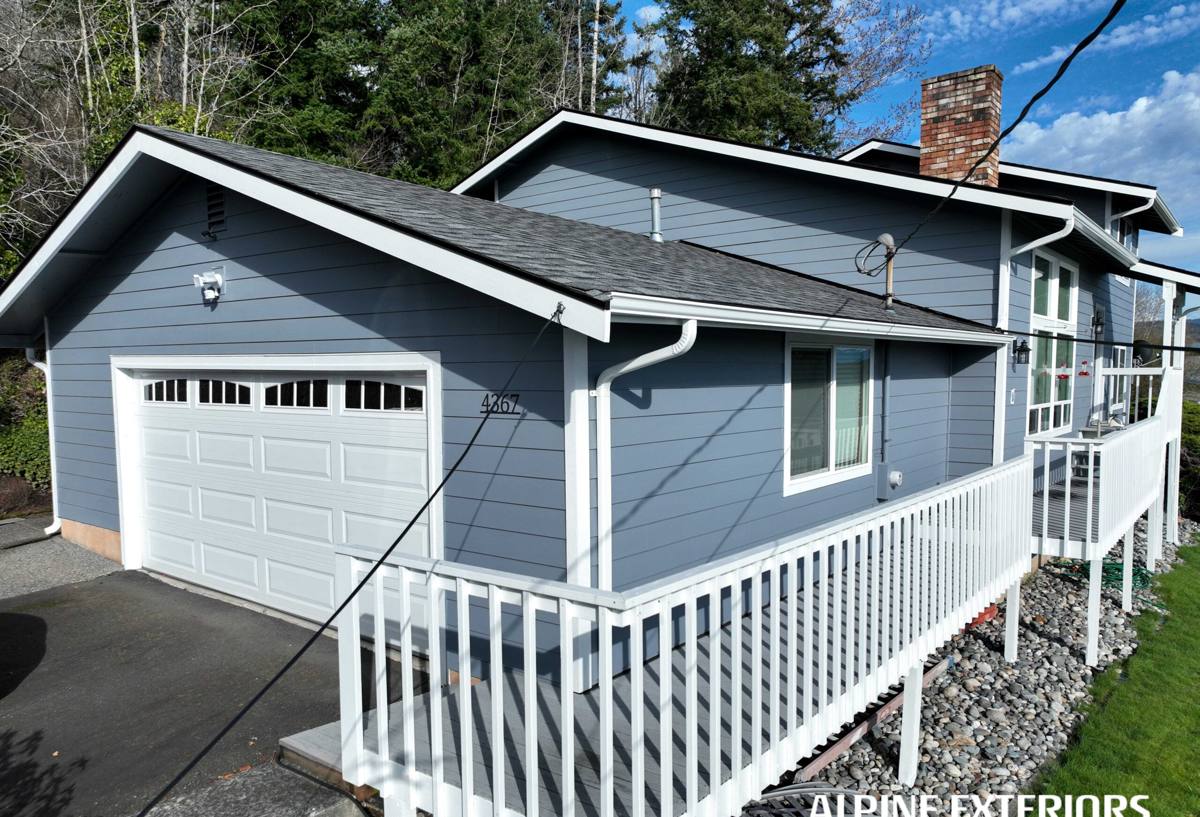
What Actually Counts as Storm Damage
Not every roof problem that shows up after a storm was caused by that storm, and not every real storm injury is visible right away. Wind can lift a shingle just enough to break its seal without tearing it off entirely, which leaves the roof looking intact from the street while it's actually lost its wind resistance at that spot. Driving rain can force water under flashing at a valley or chimney without leaving any obvious sign on the surface, and that water can travel a surprising distance along the underlayment or decking before it ever shows up as a stain on a ceiling. Impact damage from windborne debris — branches, gravel, loose material off a neighboring structure — can bruise shingles or crack ridge caps without punching an obvious hole.
Because of that, a legitimate storm damage assessment has to go past a visual scan from the ground. It means walking the roof, checking the attic for fresh moisture or light coming through where it shouldn't, and looking specifically at the areas most exposed to wind and driven rain on that particular house — not just wherever damage happens to be easiest to see.
Why March Point Storms Hit Roofs Differently
Wind From More Than One Direction
Because the peninsula is surrounded by water on multiple sides, storm wind on March Point doesn't reliably come from one prevailing direction the way it might on a more sheltered inland lot. That matters for repair because a roof plane that's rarely stressed on a typical property can take a direct hit here, and a patch job that only reinforces the "usual" weak points can leave a real vulnerability untouched.
Salt Air and Accelerated Corrosion
Salt-laden air moving off Fidalgo Bay and Padilla Bay speeds up corrosion on exposed fasteners, flashing metal, and any hardware that isn't rated for coastal exposure. A storm repair that goes back in with standard-grade nails or unprotected flashing can look fine at completion and still be the source of a leak within a few years, once the metal starts to break down faster than it would a few miles inland.
Moss Season and Post-Storm Vulnerability
Skagit County's long moss season means many roofs already carry some moss and organic growth by the time a storm hits, especially on shaded or north-facing slopes. Moss holds moisture against the roofing surface and can work its way under shingle tabs that a storm has already loosened, turning a minor wind lift into a slower, ongoing leak if it isn't addressed as part of the repair rather than left for later.
What a Correct Storm Damage Repair Involves
Emergency Tarping and Stabilization
When a roof has active or likely water intrusion, the first job is stopping the bleeding, not scheduling the full repair for next week. That means a proper tarp-down — secured well beyond the damaged area, not just draped over it — to keep water out while the rest of the assessment and repair plan comes together. A rushed or undersized tarp job is one of the more common reasons storm damage gets worse between the initial call and the actual repair.
Full Roof and Attic Inspection
Before any repair work starts, the roof and attic both get a real inspection, not a guess based on what's visible from the driveway. That includes checking the decking for soft spots or moisture staining, looking at insulation for signs it's already wet, and identifying every point where wind or water actually got in — which is sometimes a different spot than where the visible damage shows up.
Matching Materials to What's Already There
Storm repairs on an otherwise sound roof should match the existing shingle profile, color, and where possible manufacturer as closely as the market allows, so the repair doesn't stand out as a patch or create a weak seam between old and new material. When an exact match isn't available because a shingle line has been discontinued or the existing roof has weathered significantly, we'll say so directly rather than installing a mismatch and hoping it blends in.
Flashing and Valley Repair
Storms are hard on flashing specifically, because flashing is where two roof planes or a roof and a vertical surface meet, and that's exactly where wind-driven rain concentrates. Valley flashing, step flashing along walls and chimneys, and any flashing around vents or skylights all get checked and re-secured or replaced as part of a proper storm repair, not left in place just because the surrounding shingles look fine.
Repair vs. Replace: How We Make the Call
Not every storm-damaged roof needs to come off. The right call depends on how much of the roof is affected, how old the existing roofing already is, and whether the damage is isolated or spread across multiple planes.
| Situation | Repair Usually Makes Sense | Replacement Usually Makes Sense |
|---|---|---|
| Extent of damage | Isolated to one slope, valley, or a handful of shingles | Spread across multiple roof planes or a large percentage of the surface |
| Age of existing roof | Roof is well within its expected service life | Roof was already near the end of its life before the storm |
| Underlying deck condition | Decking is dry and sound where inspected | Decking shows rot or moisture damage in multiple areas |
| Material availability | A close match to existing shingles is available | Existing shingle line is discontinued or too weathered to match well |
| Insurance scope | Adjuster's scope aligns with a targeted repair | Adjuster's scope or damage extent supports full replacement |
We'll walk you through where your roof falls on that spectrum honestly. If a targeted repair is the right call, that's what we'll recommend — we're not going to push a full replacement on a roof that doesn't need one.
Insurance Claims and Documentation
Most storm damage repair on March Point involves a homeowner's insurance claim at some point, and the quality of documentation early on has a real effect on how smoothly that claim goes. We photograph and document damage before any repair work begins, note the likely cause (wind, impact, or water intrusion) as specifically as we can, and provide a written scope that an adjuster can compare against their own assessment. We're not a public adjuster and won't represent that we are, but a clear, well-documented repair estimate makes it easier for you to have an informed conversation with your insurer rather than relying entirely on the adjuster's first walk-through.
- Photograph visible damage from the ground and, once it's safe, from the roof itself before anything is repaired
- Note the date and general nature of the storm event (high wind, heavy rain, hail, falling debris)
- Keep receipts and documentation for any emergency tarping, since many policies cover reasonable mitigation costs
- Request a written, itemized repair scope rather than a verbal estimate for insurance purposes
- Avoid full cleanup or disposal of damaged material until your adjuster or contractor has had a chance to see it
Our Storm Damage Repair Process
- Initial call and triage: We find out whether there's active water intrusion and prioritize emergency tarping accordingly.
- On-site inspection: We walk the roof and attic in person to identify the actual extent and cause of the damage, not just the most visible symptom.
- Written scope and estimate: You get a clear, itemized breakdown of what's damaged, what needs to be done, and how it fits a repair-versus-replace decision.
- Insurance documentation: If a claim is involved, we provide photos and a scope you can share directly with your adjuster.
- Repair work: Matching materials go in with attention to flashing, underlayment, and fastening appropriate to a coastal, wind-exposed property.
- Final walkthrough: We review the completed repair with you and do a full site cleanup, including a magnetic sweep for stray fasteners.
Signs Your March Point Roof May Have Storm Damage
Some storm damage is obvious the morning after a bad night of wind. Other damage stays quiet for weeks or months before it shows up as an interior problem. It's worth checking for both kinds after any significant storm.
- Shingles that are missing, cracked, curled, or visibly lifted at the edges
- Granules collecting in gutters or at downspout outlets after a storm, beyond normal wear
- Dented or creased metal flashing, vents, or ridge caps
- New water staining on interior ceilings or attic framing, especially near valleys or penetrations
- Daylight visible through the roof deck when checked from inside the attic
- Debris, branches, or gravel accumulation that suggests impact in a specific area
If any of these show up after a storm, it's worth getting the roof looked at promptly. A repair that happens within days of a storm is almost always simpler and less costly than one that waits until the next round of rain has made the damage worse.
Why Hiring a Crew That Already Works March Point Matters
March Point doesn't see the same volume of roofing traffic as the denser parts of Anacortes, and after a significant storm, homeowners here sometimes end up working with whoever answers the phone first rather than a crew that actually knows the area. A contractor unfamiliar with the peninsula's exposure may treat a storm repair the same way they'd treat one on a sheltered inland roof — standard fasteners, a quick patch, no particular attention to which slope actually took the worst of the wind. A crew that regularly works this stretch of Skagit County knows that a repair here has to account for salt air corrosion, wind from more than one direction, and a moss season that doesn't give a damaged roof much of a break. That knowledge shows up in decisions that aren't visible in a photo — which fasteners get used, how flashing gets lapped, and which areas get extra attention even when they weren't the obvious point of failure.
It also matters that the company doing the repair is still reachable a year or two later if a question comes up, rather than a name that only shows up in the area right after a big storm and then disappears.
If a recent storm has left your March Point roof with damage — or you're just not sure whether what you're seeing needs attention — we're happy to take a look. Reach out using the form below for a free, no-pressure estimate; we'll walk the roof, tell you honestly what we find, and lay out your options.