 Anacortes Exterior
 Metal Roofing in a Salt-Air, High-Moisture Neighborhood
Similk Beach sits close enough to the water that salt air is just part of daily life, and that changes what a roof has to survive. Add the driving rain that comes off Similk Bay during winter storms, the deep shade from mature evergreens on many lots, and a moss season that can run most of the year, and you have a roofing environment that punishes anything less than a correctly installed, well-suited system. We install metal roofing for homes throughout the Anacortes area, and Similk Beach is one of the neighborhoods where we see the clearest case for it.
This page is about metal roofing specifically for Similk Beach homes — not a general overview of metal roofing everywhere. The material choices, flashing details, and maintenance habits that work in a drier inland climate aren't automatically the right call this close to the water.
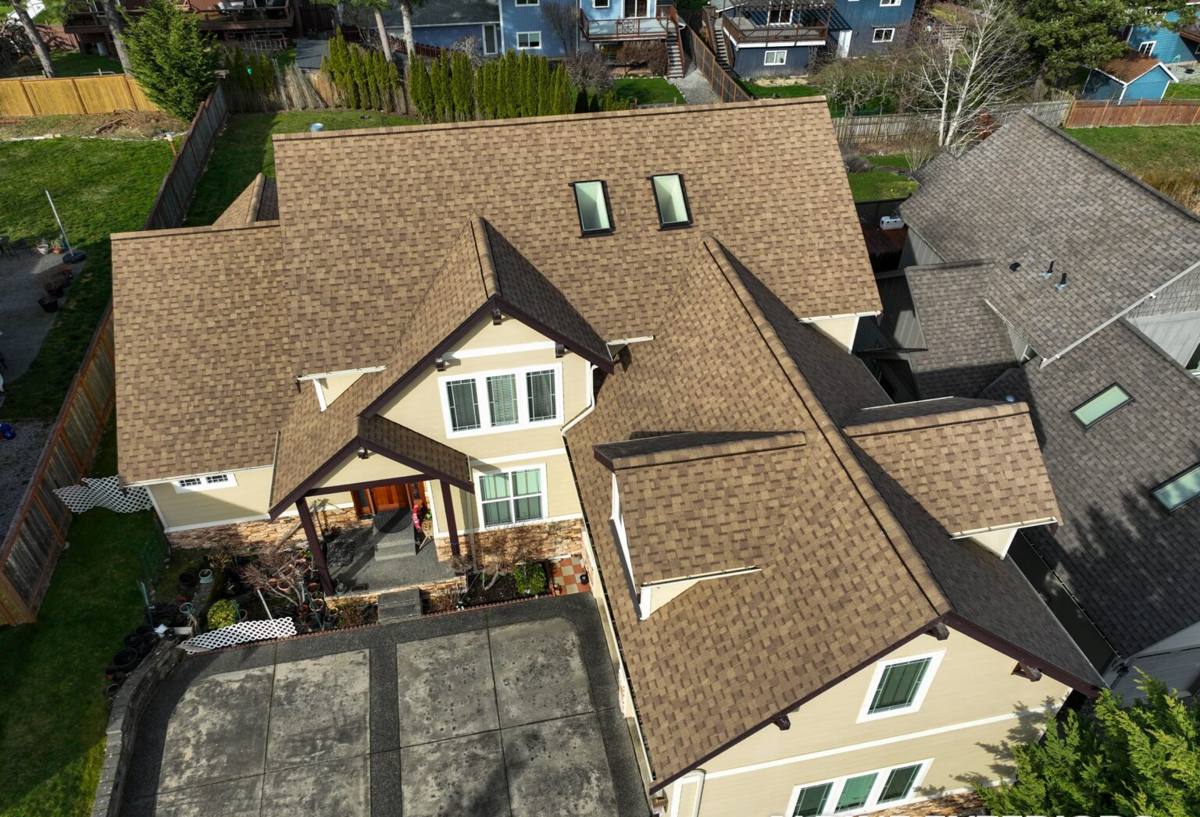
What Similk Beach Roofs Are Actually Up Against
Salt Air and Corrosion
Airborne salt from Puget Sound and the surrounding bays accelerates corrosion on any metal component that isn't rated or coated for it — fasteners, flashing, gutters, and the panels themselves. This isn't a dramatic, fast process; it's slow and cumulative, which is exactly why it gets overlooked until a homeowner notices rust streaking or pitting years after installation. The fix isn't complicated, but it has to be planned for from the start of the job, not patched in later.
Driving Rain
Storms coming off the water often bring rain sideways, not just straight down. That matters for a roof because wind-driven rain finds weaknesses that vertical rain never would — lap seams, fastener penetrations, valley details, and anywhere flashing meets a wall or chimney. A roof that's watertight in calm conditions can still leak during a Similk Beach windstorm if those details weren't built for lateral water pressure.
Moss and Shade
Tree cover keeps a lot of Similk Beach roofs shaded and damp for long stretches of the year, which is exactly what moss needs to establish. On asphalt shingles, moss roots into the granule surface and lifts it over time. Metal doesn't give moss the same foothold, but it isn't immune — moss and organic debris can still build up in valleys, at panel laps, and around penetrations if a roof isn't designed and maintained with drainage in mind.
Why Metal Roofing Fits This Climate
Metal roofing isn't the right answer for every home or every budget, and we'll tell you that plainly during an estimate. But for the conditions Similk Beach deals with, it has real, specific advantages:
- Smooth, hard panel surfaces give moss and lichen far less to grip onto compared to shingle granules
- Properly coated steel or aluminum panels resist the corrosive effects of salt air far better than exposed fasteners or untreated metal components
- Standing seam profiles shed wind-driven rain more reliably than lapped materials with more exposed seams
- A correctly installed metal roof typically outlasts asphalt shingles by decades, which matters when factoring in the labor cost of re-roofing a shaded, hard-to-access property
- Metal handles the freeze-thaw swings and heavy winter rain loads of Skagit County without the granule loss and curling that shingles experience over time
Choosing the Right Metal Roofing System
Not all metal roofing is built the same way, and the differences matter more here than in a drier climate. Here's how the common options compare for a coastal Anacortes-area home:
| Panel Type | Best For | Coastal Durability | Relative Cost |
|---|---|---|---|
| Standing seam (concealed fastener) | Homes wanting maximum weathertightness and longevity | Excellent — no exposed fasteners to corrode or work loose | Higher |
| Exposed-fastener panels | Budget-conscious projects, outbuildings, some rooflines | Fair — depends heavily on fastener quality and maintenance | Lower to moderate |
| Stone-coated steel (shake or tile profile) | Homeowners wanting a traditional look with metal's durability | Good — coating protects the steel core if installed correctly | Moderate to higher |
| Aluminum standing seam | Waterfront or heavy salt-exposure lots | Excellent — naturally corrosion-resistant, doesn't rely on coating alone | Higher |
For homes closest to the water with the heaviest salt exposure, we often steer the conversation toward aluminum or a premium coated steel standing seam system rather than exposed-fastener panels — not because exposed-fastener metal is a bad product, but because the long-term maintenance burden of monitoring dozens of exposed fasteners on a salt-exposed roof isn't something most homeowners want to sign up for.
What a Correct Metal Roof Installation Involves
Deck and Underlayment
Before any metal goes down, the roof deck needs to be sound, and the underlayment needs to be matched to metal roofing specifically — not a generic felt meant for shingles. In a high-moisture, moss-prone area like Similk Beach, we pay close attention to ice-and-water shield at eaves, valleys, and any low-slope transitions where water is most likely to sit or back up.
Fasteners and Flashing
This is where a lot of corrosion problems start on lesser installations. Fasteners, flashing, and trim need to be compatible metals with the panel system — mixing incompatible metals (steel fasteners on aluminum panels, for example) sets up galvanic corrosion that can eat through hardware years before the panels themselves would ever fail. We match fastener and flashing metallurgy to the panel system on every job, which is a detail that's easy to skip and hard to notice until it's already a problem.
Ventilation
Metal roofs still need proper attic and roof ventilation underneath them. Trapped moisture under the panels — common in shaded, damp lots like much of Similk Beach — can lead to condensation issues on the underside of the deck even when the roof surface itself is performing perfectly.
Panel Seams and Wind Uplift
Given how exposed some Similk Beach lots are to wind off the water, seam type and fastening pattern need to account for wind uplift, not just water shedding. This is a spec-level detail we account for based on the specific roofline and exposure of the home, not a one-size-fits-all approach.
Our Process for Similk Beach Metal Roofing Projects
- On-site assessment — we look at the existing roof, deck condition, ventilation, tree cover, and water exposure specific to your lot before recommending a system.
- Honest system recommendation — we'll tell you where a mid-range panel makes sense and where the water and salt exposure justifies spending more, without upselling a system your home doesn't need.
- Tear-off or overlay decision — most metal roof installations over an aging shingle roof are done as a full tear-off so we can inspect and repair the deck; we'll explain if your situation is an exception.
- Installation — deck prep, underlayment, flashing, panels, and trim, with attention to the fastener and flashing compatibility details described above.
- Site cleanup and walkthrough — including magnetic sweep for stray fasteners and a final review of the finished roof with you.
Maintaining a Metal Roof in This Climate
One of metal roofing's real advantages is how little maintenance it needs compared to shingles — but "little" isn't "none," especially this close to the water. A short annual routine goes a long way:
- Clear needles, leaves, and debris out of valleys and around penetrations before they trap moisture
- Rinse off accumulated salt residue if your lot has direct water exposure and heavy wind
- Check gutters and downspouts for the same debris buildup that affects the roof
- Look for any signs of scratched or worn coating where a tree limb or debris may have made contact, and have it touched up before bare metal is exposed to salt air
- Have fastener and flashing points checked periodically if your roof uses an exposed-fastener system
None of this requires a specialist visit every few months — it's the kind of thing a homeowner can largely stay on top of, with a periodic professional check-in for anything at height or hard to access.
Why Local Experience Matters for This Job
Metal roofing done wrong doesn't usually fail on day one — it fails quietly, three, five, or ten years in, when the wrong fastener metal has been corroding under a panel the whole time, or when a flashing detail wasn't built for wind-driven rain and finally gets tested by the right storm. A crew that's worked roofs in Similk Beach and the surrounding Anacortes area already knows what this specific stretch of Skagit County throws at a roof, and builds for it from the first fastener rather than learning the hard way.
We're also familiar with the permitting expectations that apply to re-roofing work in this area, whether a property falls inside Anacortes city limits or unincorporated Skagit County, and we handle that coordination as part of the job rather than leaving it to the homeowner to sort out.
Is Metal Roofing Right for Your Similk Beach Home?
Metal roofing is a strong fit for most homes in this area, but it's not automatically the right call for every roofline, budget, or timeline. Steep, complex rooflines, strict HOA or neighborhood aesthetic expectations, and upfront budget all factor into whether metal or a well-installed shingle system makes more sense for your specific house. We'd rather walk you through that honestly than push one product on every roof.
If you're weighing a metal roof for your Similk Beach home, we're happy to take a look and give you a straightforward assessment — no pressure, no hard sell. Fill out the form below to schedule a free estimate.