 Anacortes Exterior
 Siding on Similk Beach Has to Work Harder Than Siding Inland
Homes along Similk Beach sit close enough to saltwater that siding takes a different kind of beating than a house ten miles inland in Skagit County. Salt-laden air corrodes exposed metal fasteners and trim over time, wind-driven rain gets pushed sideways into laps and joints that would stay dry on a calmer site, and the shaded, damp stretches of the year here give moss and algae a long runway to take hold on north-facing walls and anything under tree cover. None of that is unique to one house — it's the baseline condition for this stretch of the Anacortes shoreline, and it should shape every decision about what goes on the wall and how it's installed.
A siding job that would hold up fine in a dry inland climate can fail early here if it's installed the same way. That's the case for treating Similk Beach as its own installation environment, not just another Anacortes address.
Why We Only Install James Hardie Fiber Cement
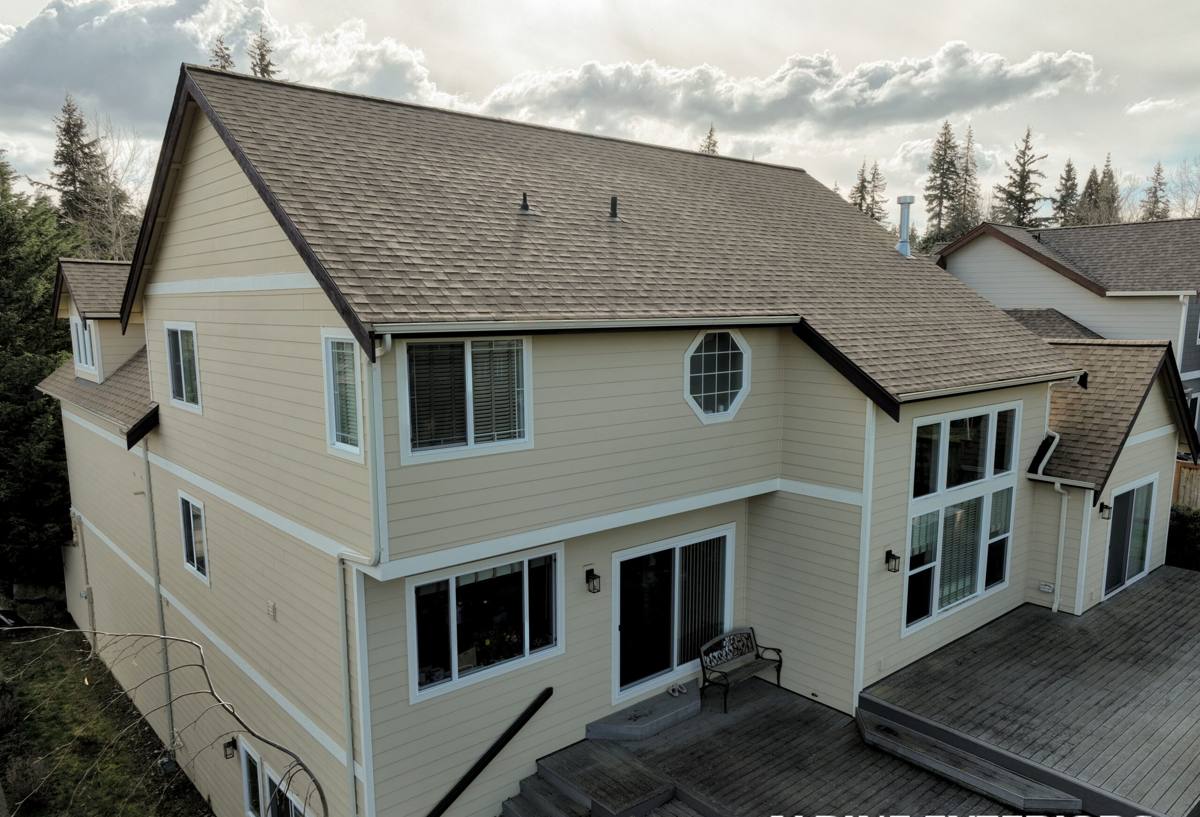
We standardized on James Hardie fiber cement siding for every home we work on, including Similk Beach, and we don't install vinyl, LP SmartSide, Cemplank, Allura, primed spruce, or bare cedar. That's not a marketing line — it's a decision based on how those products actually perform in a salt-air, high-moisture environment over the long run.
- Vinyl expands and contracts with temperature swings and can crack or warp in cold snaps; it also doesn't stand up to salt spray discoloration the way a factory-finished fiber cement product does.
- LP SmartSide and other engineered wood products use wood strand cores. Even with treated surfaces, any breach in the coating or a poorly sealed cut edge gives moisture a path into the wood substrate — a real risk in a climate that stays damp for months at a time.
- Primed spruce and cedar are natural wood. They can look great, but they require ongoing paint and sealant maintenance to keep water out, and salt air accelerates the breakdown of that protective layer faster than it would inland.
- Other fiber cement brands (Cemplank, Allura) are legitimate products, but we've chosen to standardize on one manufacturer so our crews install one system correctly, every time, rather than switching techniques and warranty paperwork between brands.
James Hardie fiber cement is non-combustible, holds a factory-applied ColorPlus finish that resists fading and doesn't rely on a field-painted coat for its color life, and is engineered in specific product lines (HZ5 and HZ10) for different climate zones. Installed correctly, it's the product we're willing to put our name behind on a shoreline home.
What Correct Installation Looks Like Near Saltwater
Fiber cement siding is only as good as the installation behind it. Near Similk Beach, a few details matter more than they would on a drier, more sheltered lot:
Rain Screen and Drainage Gap
A drainage gap behind the siding lets any moisture that does get past the cladding drain and dry out instead of sitting against the sheathing. On a site that gets regular wind-driven rain off the water, this gap is what keeps incidental moisture from becoming a rot problem years later.
Flashing at Every Penetration
Windows, doors, hose bibs, light fixtures, and vents are the places water finds its way in. Correct flashing — installed in the right order, lapped the right direction, and sealed with a compatible product — is non-negotiable on a home exposed to driving rain off Similk Bay.
Fastener Choice
Salt air corrodes the wrong fasteners faster than most homeowners expect. We use corrosion-resistant fasteners sized and spaced to Hardie's published fastening schedule, not whatever is fastest to run through a nail gun.
Caulking and Joint Treatment
Butt joints, trim intersections, and penetrations get sealed with a high-quality, paintable sealant rated for exterior exposure. Skipping this step — or using a cheap caulk that shrinks and cracks within a couple of seasons — is one of the most common ways a fiber cement job fails early in a wet climate.
Proper Clearance and Grade
Siding installed too close to grade, a deck, or a roofline wicks moisture and stays damp longer than it should. We hold Hardie's minimum clearances even when it means adjusting trim details on an existing home.
Our Process for a Similk Beach Home
- On-site assessment — we look at wall exposure, existing moisture damage, trim condition, and how the house sits relative to wind and rain direction off the water.
- Removal and sheathing check — old siding comes off and we inspect the sheathing underneath for rot or soft spots before anything new goes up. Any damaged sheathing gets addressed, not covered over.
- Weather barrier and drainage plane — a code-compliant water-resistive barrier goes on first, with the drainage gap detail built in.
- Flashing and trim — all openings and penetrations are flashed before siding installation starts.
- Hardie siding installation — installed to manufacturer fastening and clearance specifications, in the product line appropriate for this climate zone.
- Caulking, paint touch-up, and cleanup — joints sealed, any field-cut edges treated per Hardie's guidelines, and the site cleaned up before we leave.
Comparing Siding Materials for a Salt-Air, High-Moisture Site
| Material | Salt Air Resistance | Moisture Behavior | Maintenance Burden |
|---|---|---|---|
| James Hardie Fiber Cement | Strong — factory finish resists corrosion and fading | Non-combustible, dimensionally stable, doesn't rot | Low — periodic rinse, no repainting for color life of finish |
| Vinyl | Moderate — can chalk and discolor over time | Doesn't rot, but can warp with temperature swings | Low, but limited repair options if damaged |
| LP SmartSide / Engineered Wood | Moderate — coating can wear at cut edges and seams | Wood-strand core vulnerable if coating is breached | Moderate — edge sealing and coating checks matter |
| Primed Spruce / Cedar | Lower — natural wood exposed to salt and UV | Absorbent; relies entirely on paint/sealant integrity | High — repainting and caulk maintenance on a regular cycle |
Cost Factors Specific to This Area
| Factor | Why It Affects Cost Here |
|---|---|
| Existing sheathing condition | Homes with prior moisture intrusion near the shoreline sometimes need sheathing repair before new siding goes on |
| Wall exposure and access | Waterfront-facing walls and tighter lots can affect scaffolding and staging needs |
| Trim and detail complexity | Older homes often have more window and trim detail to flash and fit around |
| Product line selection | HZ5 versus HZ10 Hardie products are priced differently based on climate engineering |
| Removal and disposal | Tear-off of old cedar, vinyl, or engineered wood siding adds labor and disposal cost |
These are the variables that move a quote up or down — we walk through them on-site rather than quoting blind from a square-footage number alone.
Living With Fiber Cement Siding in a Moss and Salt Environment
Fiber cement holds up well here, but "low maintenance" doesn't mean "no maintenance." A little seasonal attention keeps it performing the way it's designed to:
- Rinse siding periodically, especially shaded or north-facing walls where moss and algae are more likely to take hold
- Keep gutters clear so overflow doesn't run down the face of the siding repeatedly
- Trim back vegetation and tree limbs that keep a wall shaded and damp longer than the rest of the house
- Inspect caulked joints every year or two and re-caulk if you see cracking or gaps
- Check flashing at windows, doors, and penetrations after major storms for any signs of displacement
- Address any paint chips or dings promptly using a Hardie-compatible touch-up product
Why a Crew That Already Works This Area Matters
Siding installation on a shoreline property in Skagit County isn't identical to siding installation on a dry inland lot, and a crew that already works Similk Beach and the surrounding Anacortes area has already worked out the details that matter here — how much clearance to hold given the moisture load, which walls need extra attention to drainage and flashing, and how the local permitting process runs for exterior work. That's knowledge you don't want to pay to have relearned on your house. It also means faster, more accurate estimates, because we're not guessing at conditions we've never seen before — we've been on wall types like yours up and down this stretch of Anacortes.
Get a Straightforward Estimate
If your Similk Beach home needs new siding, or you want a second opinion on how your current siding is holding up against the salt air and rain, we're happy to take a look and walk you through what we find — no pressure, no obligation. Fill out the form below to schedule a free estimate.