 Anacortes Exterior
 Why Similk Beach Homes Wear Out Siding Faster
Similk Beach sits close enough to the water that salt-laden air is simply part of daily life. That air carries moisture and fine salt particles that settle on exterior surfaces, and over time it accelerates the breakdown of paint films, corrodes fasteners, and works its way into any gap in the siding system. Combine that with the driving rain that comes off the Salish Sea during fall and winter storms, and you have a house that's under near-constant moisture pressure for much of the year.
Then there's moss. Anacortes and the rest of Skagit County get a long, damp season where shaded and north-facing walls stay wet for extended stretches. Moss and algae take hold on siding that can't dry out between rain events, and once established, they hold moisture against the wall surface, which is exactly what you don't want happening behind or on top of your siding for months at a time.
None of this means a Similk Beach home is doomed to constant siding problems. It means the siding material, the installation details, and the water-management system behind the cladding all matter more here than they would on a home fifty miles inland. A product or installation approach that's "good enough" in a drier climate can fall short on a lot this close to the water.
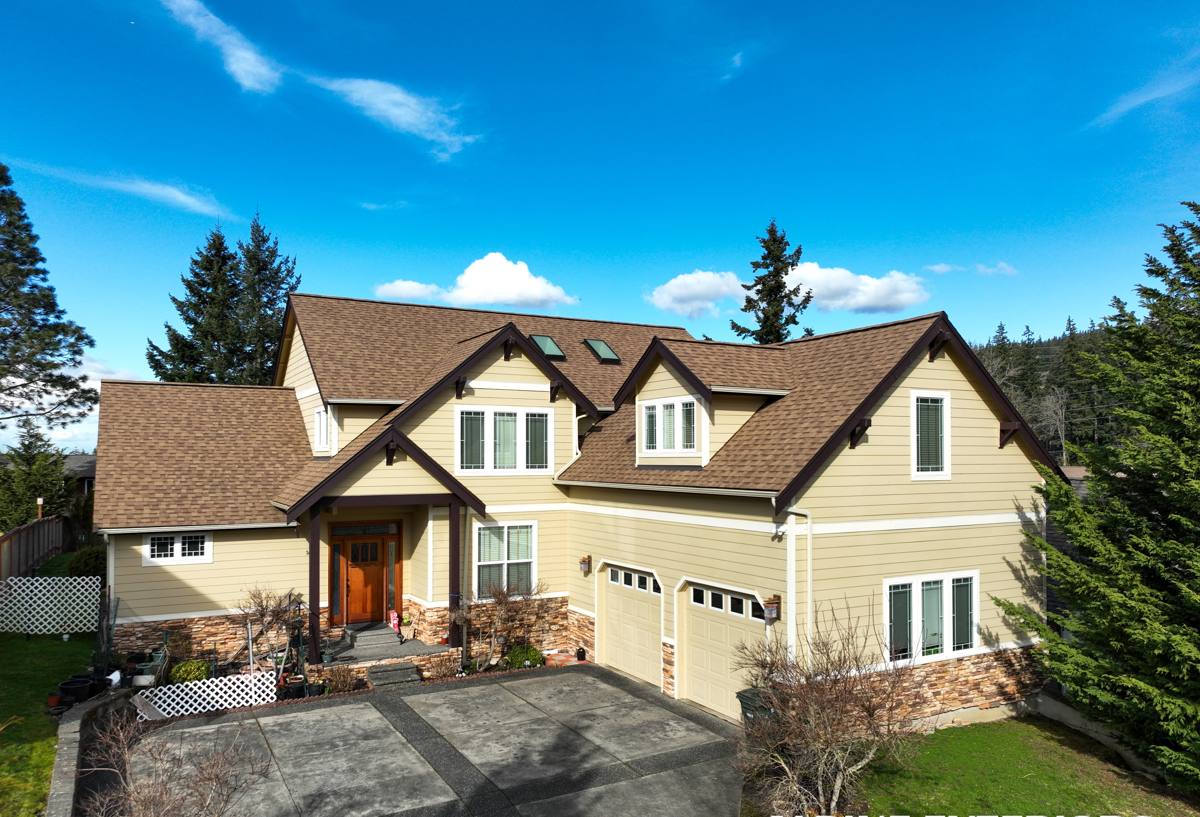
Signs a Similk Beach Home Needs Siding Replacement
Siding failure rarely happens all at once. It shows up gradually, and by the time it's obvious from the street, there's often already moisture damage happening underneath. Homeowners in this area should watch for:
- Paint that's peeling, bubbling, or chalking faster than the repaint cycle should require
- Soft or spongy spots when you press on the siding, especially near the bottom courses and around windows
- Persistent moss, algae, or dark staining that comes back soon after cleaning
- Visible cupping, warping, or delamination on wood-based or engineered wood products
- Gaps opening at seams, corners, or trim boards where caulk has failed
- A musty smell or visible staining on interior walls that share an exterior with problem siding
Any one of these on its own might just mean a repair. Several at once, especially on a home over 15-20 years old, usually means the siding system as a whole has reached the end of its useful service life and a full replacement is the more honest recommendation than patchwork repair.
What a Correct Siding Replacement Actually Involves
It's Not Just the Panels
The visible siding is the last layer installed, not the first line of defense. A proper replacement starts with what's underneath: a water-resistive barrier (house wrap) installed with correct overlaps and taped seams, properly flashed windows and doors, and drainage details at the bottom of the wall so any moisture that does get behind the cladding has somewhere to go. In a coastal, high-moisture environment like Similk Beach, skipping or rushing this layer is where most long-term siding failures actually start — the siding itself often gets blamed for a problem that began with the water management behind it.
Fastening and Clearances Matter
Fiber cement siding has specific fastening patterns, nail types, and clearance requirements from the ground, roofline, and other surfaces — these aren't optional details, they're what keeps the manufacturer's warranty valid and what keeps water from wicking into the material over time. Correct clearance at the bottom of the wall is especially important on lots near water, where splash-back and grade moisture are more of a factor.
Caulking and Trim Details
Butt joints, corners, and penetrations (hose bibs, vents, light fixtures) are where most siding leaks actually originate. Using the right sealant, in the right joints, installed correctly, is a small line item that has an outsized effect on how the whole system performs over the next 20-30 years.
Why We Install Only James Hardie Fiber Cement Siding
We made a deliberate decision to standardize on James Hardie fiber cement and not install vinyl, LP SmartSide, or other engineered wood products. Fiber cement is non-combustible, doesn't absorb moisture the way wood-based products can, and holds its shape and finish in wet, salt-air conditions better than the alternatives we used to install. For a home like one at Similk Beach, that resistance to moisture intrusion isn't a marketing point — it's the actual reason the siding will still look and perform well a decade or two from now.
Hardie's ColorPlus factory finish is baked on under controlled conditions rather than field-applied, which gives a more consistent, longer-lasting coating than jobsite painting, particularly useful in an area where UV, salt, and rain all work against paint film over time. Hardie also builds region-specific HZ product lines engineered for different climate zones, and offers a strong transferable warranty that follows the house if it's sold. When we stand behind a siding job, we want to be standing behind a product we're confident will still be doing its job in twenty years — that's the whole reason we don't install anything else.
Our Siding Replacement Process
- On-site assessment — We look at the existing siding, the wall assembly where visible, problem areas (moss, staining, soft spots), and any trim, window, or roofline details that affect the install.
- Scope and estimate — You get a clear, written estimate that spells out the siding line, colors, trim, and any repair work to sheathing or framing found along the way.
- Tear-off and inspection — Old siding comes off and we inspect the sheathing and framing underneath for rot or moisture damage before anything new goes up.
- Water-resistive barrier and flashing — House wrap, window and door flashing, and drainage details are installed correctly the first time, since this layer is what actually keeps water out.
- Hardie installation — Panels or lap siding installed to manufacturer fastening, clearance, and joint specifications.
- Trim, caulking, and cleanup — Final trim work, sealant at joints and penetrations, and a full site cleanup.
- Walkthrough — We go over the finished job with you before calling it done.
Cost Factors for Similk Beach Siding Replacement
Every home is different, but the same handful of factors drive most of the variation in siding replacement cost. This table lays out what tends to move the number up or down, without pretending to give you a fake precise figure that won't hold up once we've actually seen your house.
| Factor | Why It Matters |
|---|---|
| Home size and wall complexity | More square footage and more corners, gables, and dormers mean more material and labor |
| Condition of existing sheathing | Rot or moisture damage found during tear-off requires repair before new siding goes up |
| Siding profile chosen | Lap siding, shingle-style panels, and board-and-batten differ in material and install time |
| Trim and detail work | Window and door trim, corner boards, and fascia detailing add labor |
| Site access | Waterfront lots, slopes, or tight setbacks can affect staging and equipment access |
| Existing water damage | Homes with a history of moisture intrusion may need more extensive sheathing or framing repair |
Why a Crew That Knows Similk Beach Makes a Difference
A siding job installed to spec in a dry, inland neighborhood can get away with details that simply won't hold up on a lot exposed to salt air and driving rain off the water. A crew that's worked homes in and around Similk Beach and the greater Anacortes waterfront already knows to pay closer attention to flashing at window heads, to fastener corrosion resistance, to bottom-of-wall clearance, and to how moss establishes itself on shaded walls in this specific microclimate. That's not something you can fully learn from a manual — it comes from having actually done the work on homes exposed to the same conditions yours faces every winter.
It also matters for follow-up. A local, Skagit County-based crew is the one that's still around in five or ten years if a warranty question comes up, not a company that moved on to the next region.
Maintaining Your New Siding
Correctly installed Hardie siding is low-maintenance, not no-maintenance. A little seasonal attention keeps it performing the way it's designed to:
- Rinse off salt residue and grime a couple of times a year, especially after storms
- Keep gutters clear so water isn't overflowing down the wall face
- Trim back vegetation and tree cover that keeps shaded walls from drying out, which slows moss growth
- Inspect caulking at joints and trim annually and re-seal if it's cracking or pulling away
- Address any soft spots, staining, or unusual moisture signs promptly rather than waiting
If you're seeing signs of wear on your Similk Beach home's siding, or you're just planning ahead, we're happy to take a look and give you a straightforward, no-pressure estimate. Use the form below to get started.