 Anacortes Exterior
 Siding Repair in Bow: A Different Kind of Wear
Bow sits in a stretch of Skagit County where open farmland meets tidal water, and that combination creates a specific kind of stress on exterior siding. Homes here deal with salt-laden air rolling in off the bay, driving rain that comes in sideways during winter storms, and a moss and algae season that can stretch nearly nine months out of the year. None of that is unique to any one house — it's the baseline condition every home in this part of Skagit County has to withstand, year after year.
Siding repair in Bow isn't just about patching a crack or replacing a broken board. It's about understanding why that damage happened in the first place, because the same conditions that caused it will be back next season. A repair that doesn't account for moisture intrusion, wind-driven rain, or organic growth is a repair that fails again within a year or two.
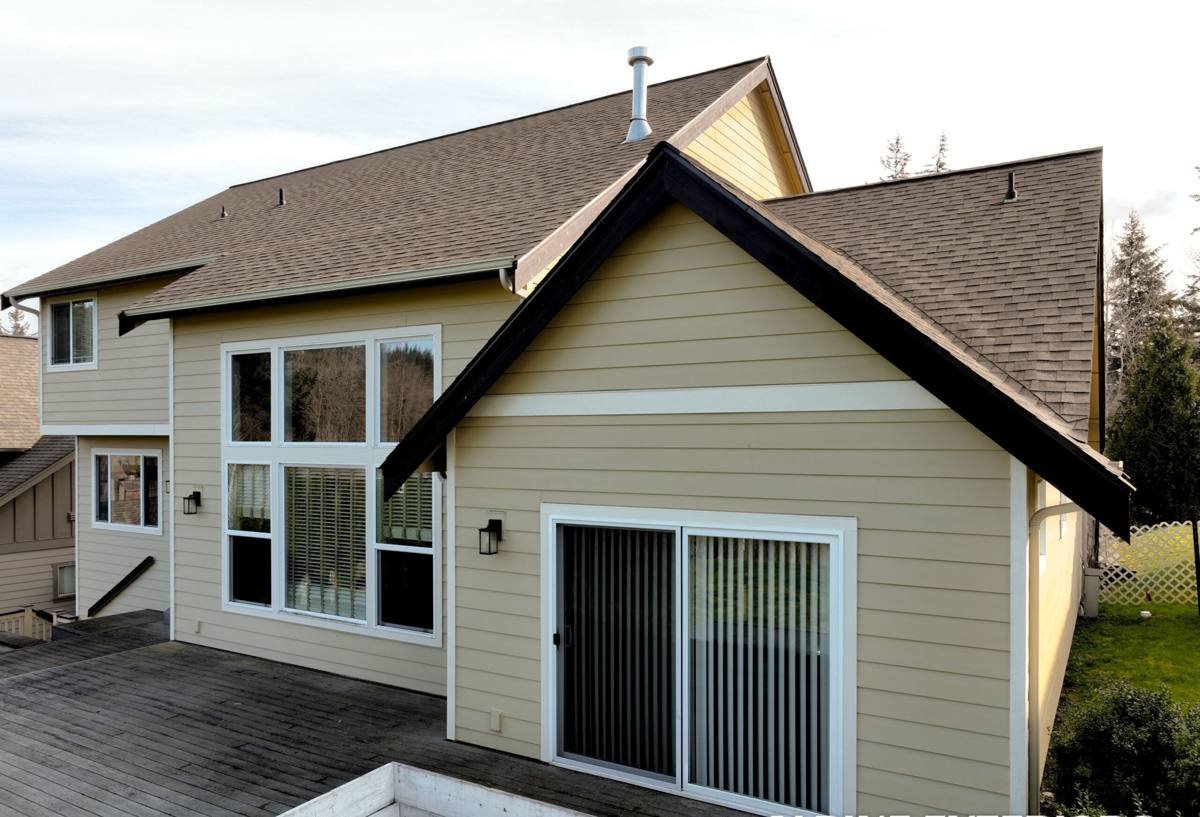
What the Climate Around Bow Does to Siding
The Anacortes and Skagit County area sees a marine climate that's milder in temperature than most of the country but far wetter and damper for longer stretches. For siding, that means:
- Salt air corrosion: Metal fasteners, flashing, and trim can corrode faster near open water, which weakens the connection points holding siding in place.
- Driving rain intrusion: Wind-driven rain doesn't just fall — it pushes sideways into seams, laps, and butt joints, finding any gap in caulking or flashing.
- Extended moss and algae growth: Shaded, damp surfaces around Bow's tree lines and low-lying areas stay wet longer, giving moss and algae time to establish and hold moisture against the siding surface.
- Freeze-thaw cycling: Even mild winter cold snaps can freeze trapped moisture inside compromised siding, expanding cracks that started small.
Each of these shows up differently depending on which side of the house takes the weather, how much tree cover surrounds the property, and how close the home sits to open water or low, damp ground.
Common Repair Issues We See in the Bow Area
Moisture Damage at Seams and Penetrations
Most siding failures don't start in the middle of a wall — they start at a seam, a window trim joint, a hose bib penetration, or wherever flashing was installed incorrectly or has failed over time. Water finds the smallest gap and works its way behind the siding, where it can sit against sheathing and framing long before any damage is visible from outside.
Cracked, Warped, or Delaminating Boards
Older wood-based or composite siding products are especially prone to swelling, cracking, and delaminating once moisture gets into the material itself. This is one of the clearest signs that a product wasn't built for a climate like Skagit County's sustained dampness.
Persistent Moss and Algae Staining
Surface growth isn't just cosmetic. Moss holds moisture against the siding face for extended periods, and on porous or damaged materials that constant dampness accelerates rot and paint failure underneath the growth.
Failed Caulking and Sealant Joints
Caulking has a service life, and in a climate with this much rain exposure, it degrades faster than most homeowners expect. Once it cracks or pulls away, it stops doing its job and becomes an entry point instead of a barrier.
Nail Pops and Loose Panels
Fastener corrosion, wood movement, and wind exposure can work siding fasteners loose over time. Loose panels flex in the wind, which widens gaps and accelerates water intrusion at every cycle.
What a Correct Siding Repair Actually Involves
A repair that lasts starts with diagnosis, not patching. Before any board is replaced, the underlying cause needs to be identified — otherwise the same failure just repeats.
- Moisture and damage assessment: Checking not just the visible damage but what's happening behind the siding — sheathing condition, insulation, and framing near the failure point.
- Root cause identification: Determining whether the issue is flashing failure, caulking breakdown, poor original installation, or material failure, since the fix differs for each.
- Matching materials correctly: Replacement siding needs to match existing profile, reveal, and finish as closely as possible, or the repair will stand out and potentially create new water paths at the transition.
- Correcting the underlying flashing and drainage: If water got in because flashing was missing or installed wrong, the repair has to fix that detail — not just cover it back up.
- Proper fastening and sealing: Using fasteners and sealants rated for the exposure the repair area actually sees, especially in salt-air conditions closer to the water.
Skipping any of these steps is how a "repair" turns into a recurring service call.
Repair or Replace? How We Evaluate It
Not every damaged section needs a full re-side, and not every "small" repair should stay small. The right call depends on how far the damage has spread and what's causing it.
| Factor | Favors Targeted Repair | Favors Broader Replacement |
|---|---|---|
| Extent of damage | Isolated to one or two sections | Spread across multiple walls or elevations |
| Underlying material | Sound, non-degraded siding elsewhere | Widespread warping, delamination, or rot |
| Cause of failure | Single identifiable event (impact, one bad joint) | Systemic issue (original product, chronic moisture) |
| Age of existing siding | Newer, still within expected service life | Nearing or past the material's realistic lifespan |
| Match availability | Profile and finish still available to match | Discontinued product, visible mismatch likely |
We'll walk the property with you and give an honest read on which side of that line your home falls on — including telling you when a repair is genuinely the right call and a full replacement isn't necessary.
Our Process for Siding Repair Jobs in Bow
- On-site inspection: We look at the damaged area and check surrounding sections and penetrations, since visible damage is rarely isolated from its cause.
- Clear explanation before work starts: You'll know what caused the damage, what the repair involves, and what to expect going forward — no surprises mid-job.
- Correct removal: Damaged siding and any compromised flashing or sealant is removed cleanly, without disturbing sound material around it.
- Proper detailing: Flashing, house wrap, and seams are corrected before new siding goes back on — this is the step that actually prevents a repeat failure.
- Finish match: New material is fitted and finished to blend with the surrounding siding as closely as the existing product allows.
- Final check: We walk the repair with you before calling it done.
Why We Repair With — and Recommend — James Hardie Fiber Cement
When a repair calls for new siding material, we install James Hardie fiber cement exclusively. It's a deliberate standard, not a default. Hardie's fiber cement doesn't absorb and swell the way wood-based or composite products can, which matters enormously in a climate where Bow homes stay damp for long stretches of the year. It's also non-combustible, holds a factory-applied ColorPlus finish that resists the fading and touch-up mismatch that plagues field-painted repairs, and is engineered in climate-specific HZ product lines built for exactly this kind of Pacific Northwest moisture exposure.
We don't install vinyl, LP SmartSide, Cemplank, Allura, or primed wood siding, including for repair work. Each of those products has legitimate uses elsewhere, but we've made a professional call that Hardie gives Bow homeowners the best combination of moisture resistance, finish durability, and long-term warranty backing for this specific climate. When we patch in new material next to existing Hardie siding, it performs identically to what's already there — no mismatched expansion rates or weathering patterns down the line.
Why Local Experience on Siding Repair Matters
A contractor who works Bow and the surrounding Skagit County area regularly already understands how this specific stretch of coastline behaves — which elevations take the worst wind-driven rain, how aggressively moss establishes on shaded walls near the water, and what flashing details actually hold up here versus what looks fine on paper. That local pattern recognition shortens the diagnosis phase and reduces the chance of a repair that looks right but misses the real cause.
It also means straightforward accountability. A crew based in the area and familiar with Anacortes-area homes isn't disappearing after the invoice clears — they're around if a repair needs a follow-up look.
Signs Your Bow Home May Need Siding Repair
- Visible cracking, splitting, or warping in one or more siding boards
- Soft or spongy spots when pressed near the base of walls or under windows
- Persistent moss or algae that returns quickly after cleaning
- Peeling or bubbling paint, especially on wood-based or composite siding
- Cracked or missing caulking at trim, corners, and window edges
- Nail pops, loose panels, or boards that flex when pushed
- Musty odors or discoloration on interior walls that share an exterior wall with visible siding damage
Catching these early is almost always cheaper than waiting — small moisture problems in this climate don't stay small for long.
Get an Honest Look at Your Siding
If you're seeing any of these signs on a home in Bow or elsewhere around Anacortes and Skagit County, we're happy to take a look and give you a straight answer on what's going on and what it'll take to fix it right. There's no pressure and no cost to get our read on it — just fill out the form below and we'll set up a time to come out.