 Anacortes Exterior
 Old Town Anacortes Puts Siding Through a Different Kind of Test
Old Town Anacortes sits close enough to the water that salt air is part of daily life, not an occasional weather event. Combine that salt exposure with the long, wet stretch of driving rain that rolls through Skagit County every fall and winter, and you get a set of conditions that punishes siding faster than almost anywhere else in the region. Add the shaded lots, mature trees, and damp ground cover common in this older part of Anacortes, and you've also got a genuine moss season that can run several months out of the year.
None of this means siding is a lost cause here. It means the material and the installation both have to be matched to the actual conditions, not just picked off a showroom sample board. A siding job that looks fine on day one but wasn't built for salt, moisture, and moss will start showing problems within a few years — peeling paint, soft spots at the bottom courses, dark streaking, and trim that swells and separates at the joints.
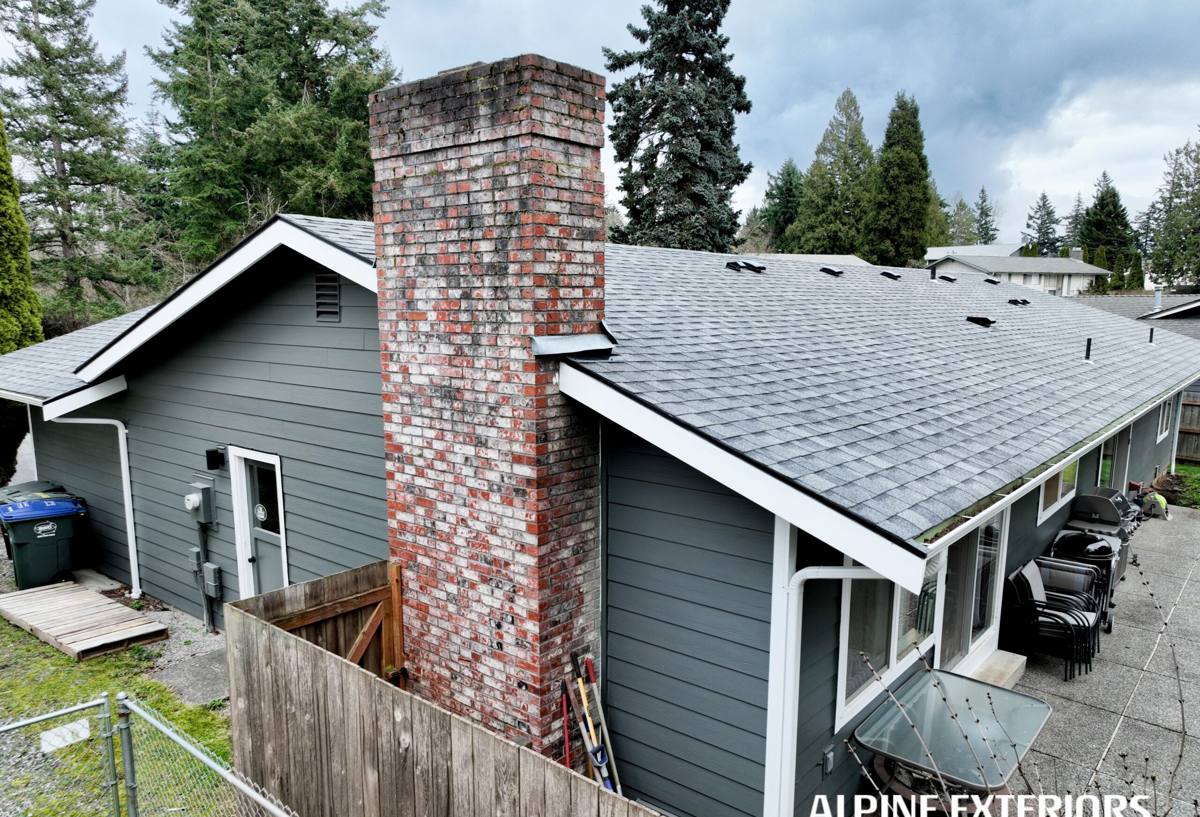
What Old Town Anacortes Homes Actually Need From Their Siding
Resistance to Salt Air
Airborne salt accelerates the breakdown of paint films and speeds up moisture absorption in porous or wood-based siding. Over time it also contributes to fastener corrosion if the wrong nails or screws were used. Siding in this neighborhood needs a factory finish that's engineered to hold up under salt exposure, not a field-applied coating that starts chalking and fading within a few seasons.
Real Drainage, Not Just a Water-Resistant Face
Driving rain doesn't just wet the surface of a wall — wind-driven rain gets forced sideways and upward under laps, around trim, and into any gap that isn't properly flashed. A correct installation assumes some water will get behind the siding and gives it a path to drain and dry out, rather than assuming the siding face alone will keep the wall dry.
A Surface That Doesn't Feed Moss and Mildew
Moss and mildew need moisture and a surface they can grip. Shaded, damp walls in Old Town Anacortes are exactly the environment moss favors. Siding material, installed with the right gap off the wall for airflow, dries out faster between rain events and gives moss and algae far less to hold onto.
Why We Install Only James Hardie Fiber Cement
We made the decision years ago to stop installing vinyl, LP SmartSide, primed wood, and other fiber cement brands, and to install James Hardie exclusively. That's not a marketing position — it's a response to what we actually see on siding tear-offs across Skagit County. Vinyl can warp and gap over time and gives moisture an easy path behind it at seams. Wood-based and OEM primed products depend heavily on paint film integrity to keep water out, and salt air and driving rain are hard on paint film. Hardie's fiber cement core doesn't rot, doesn't support combustion, and its ColorPlus factory finish is baked on under controlled conditions rather than applied on a jobsite wall in variable weather.
Hardie also builds its HZ5 product line specifically for regions with more moisture exposure, which describes the Pacific Northwest coast well. That's the version we spec for Old Town Anacortes homes. We're not saying every other product fails immediately — we're saying that after years of doing this work in this specific climate, Hardie fiber cement installed correctly gives homeowners the best long-term outcome for the money, and we'd rather stand behind one product we trust completely than offer several we have reservations about.
What a Correct Installation Actually Involves
The siding itself is only part of the job. Most premature siding failures we get called out to inspect trace back to installation shortcuts, not the product. A correct install includes:
- A continuous water-resistive barrier (WRB) installed shingle-style so every seam sheds water downward
- Properly flashed windows, doors, and any wall penetrations before siding goes up
- A rain screen gap or drainage plane behind the siding so trapped moisture can drain and the wall can dry
- Correct fastener type, spacing, and placement per the manufacturer's requirements — not shortcuts that void the warranty
- Proper clearance at grade, decks, and roof lines so siding never sits in standing water or constant splash-back
- Factory-cut and factory-primed edges wherever field cuts are made, sealed per spec
- Caulking and sealants used only where the manufacturer calls for them — not as a substitute for proper flashing
Skip any one of these steps and you can end up with siding that looks correct for a year or two before problems start at the seams, corners, or bottom courses.
Our Process for a Siding Installation in Old Town Anacortes
1. On-Site Assessment
We start by walking the property, checking the current siding and sheathing condition, looking at drainage around the foundation, and noting anything specific to the lot — shade, tree cover, proximity to the water, existing moss or moisture issues.
2. Removal and Sheathing Check
Old siding comes off and we inspect the sheathing underneath. Any soft, rotted, or water-damaged sheathing gets addressed before anything new goes on the wall — covering over damaged sheathing just locks the problem inside the wall.
3. Weather Barrier and Flashing
We install the WRB and flash every window, door, and penetration before siding starts. This is the step that determines whether the wall stays dry for the next 30-plus years, and it's the step that's easiest to shortcut when a crew is trying to move fast.
4. Siding Installation
James Hardie panels or lap siding go up per manufacturer spec — correct fastener pattern, correct gaps, correct clearances at grade and trim. We use the HZ5 product line suited to our moisture exposure.
5. Trim, Caulking, and Final Detailing
Trim, corners, and any transitions get finished and sealed according to Hardie's requirements, and we do a final walk-through before we consider the job complete.
Cost Factors for a Siding Installation Project
Every home is different, and we'd rather give you a real number from an on-site estimate than a generic figure that doesn't apply to your house. In general, the following factors move the price up or down:
| Factor | Why It Matters |
|---|---|
| Extent of sheathing repair needed | Rot or water damage found during tear-off adds material and labor before new siding can go up |
| Home size and wall complexity | More corners, gables, and trim details mean more cutting, flashing, and labor time |
| Siding profile chosen | Lap siding, panel siding, and shingle-style Hardie products differ in material and install time |
| Access and site conditions | Tight lots, mature landscaping, or limited staging space in older neighborhoods can slow the work |
| Trim and accessory work | Fascia, soffit, and window trim replacement done alongside siding affects total scope |
Why Hiring a Crew That Already Works Old Town Anacortes Matters
Siding crews that mostly work drier, inland areas don't always plan for the specific combination of salt air, wind-driven rain, and moss that Old Town Anacortes deals with. A crew that regularly works this neighborhood already knows which details need extra attention — drainage at grade, flashing at older window openings, and clearance where landscaping crowds the wall. That local familiarity shows up in fewer callbacks and siding that actually performs the way it's supposed to for its full service life.
Questions Worth Asking Any Siding Contractor
- Do you install a rain screen gap or drainage plane behind the siding, or just the siding face itself?
- What happens if you find damaged sheathing during tear-off — is it included or a change order?
- Which Hardie product line are you specifying, and is it rated for coastal moisture exposure?
- Are your installers factory-trained on the manufacturer's fastening and clearance requirements?
- Does the warranty require a specific paint or maintenance schedule to stay valid?
Living With Your Siding After Installation
Correctly installed Hardie siding needs very little upkeep, but Old Town Anacortes' moss season means it's worth an occasional visual check on shaded, north-facing walls and anywhere landscaping keeps a wall damp. A soft wash with plain water is usually all that's needed — no pressure washing directly into laps or seams, and no harsh chemical treatments that can affect the factory finish. Keeping gutters clear and vegetation trimmed back from the walls goes a long way toward keeping moss from getting a foothold in the first place.
If your Old Town Anacortes home needs new siding or you're planning ahead for a project, we're happy to walk the property, look at what your walls are actually dealing with, and give you a straightforward, no-pressure estimate. Use the form below to get started.