 Anacortes Exterior
 Old Town Anacortes Roofs Work Harder Than Most
Old Town Anacortes sits close to the water, which means every roof up here deals with a combination most inland Skagit County homes don't: salt-laden air off the surrounding channels, wind that funnels hard during winter storms, and a wet season that stretches long enough to grow a healthy crop of moss on anything north-facing. None of that is a design flaw in your house — it's just the environment. But it does mean storm damage here rarely shows up the same way it would in a drier, more sheltered part of the county, and repairs that don't account for the salt air and moisture cycle tend to fail early.
We work on roofs in this neighborhood regularly, which matters more than it sounds. A crew that only sees Old Town Anacortes once a year is guessing at what's normal wear versus what's storm-caused. We're not guessing.
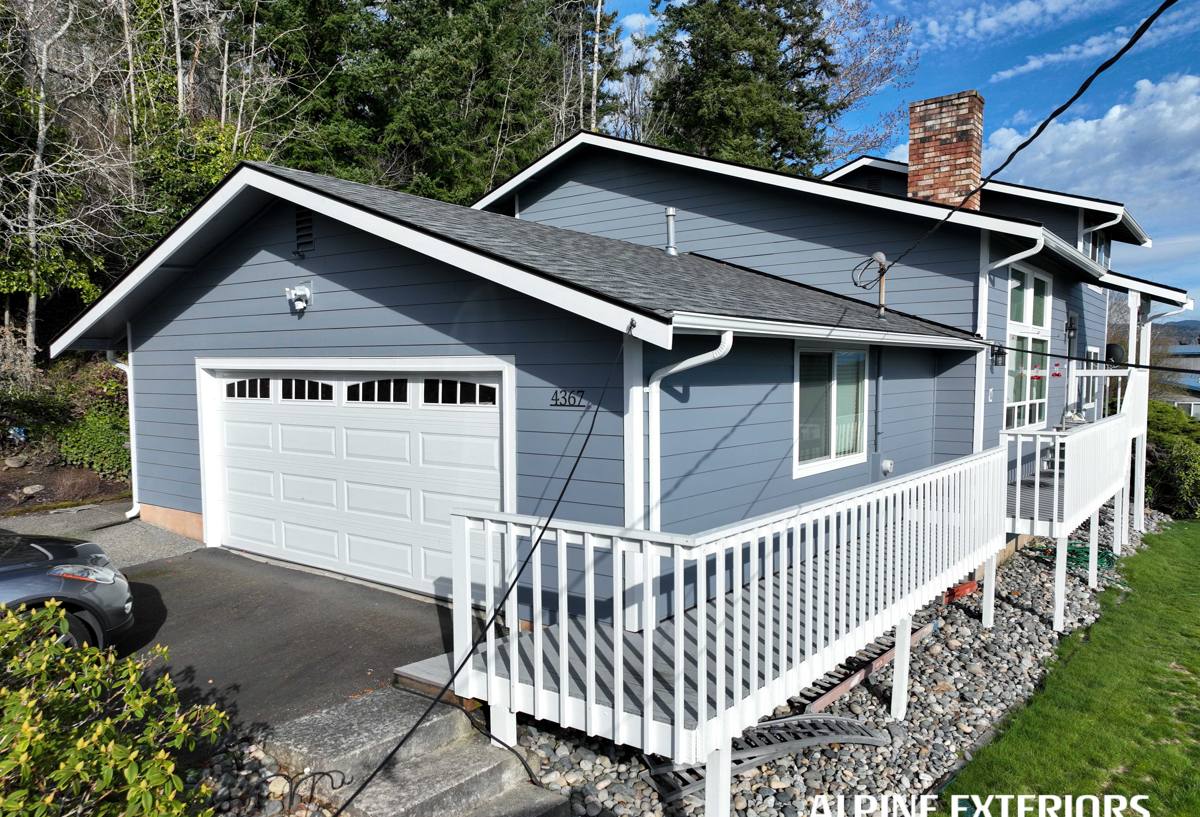
What Storm Damage Actually Looks Like Here
After a wind event or a heavy rain system moves through, the damage isn't always obvious from the ground. Here's what we're actually looking for when we inspect a roof after a storm:
- Shingles or shakes lifted, cracked, or blown off entirely, especially on the windward side of the roof
- Granule loss on asphalt shingles from wind-driven rain, which accelerates aging even if nothing is visibly missing
- Flashing pulled loose around chimneys, vents, and skylights — often the first thing to fail in a gust
- Water staining in the attic or on ceilings that shows up days after the storm, once enough rain has worked through a small opening
- Tree limb strikes, which are common on lots with mature trees and can crack decking without breaking through the roofing material
- Gutter and downspout damage that redirects water somewhere it shouldn't go
The tricky part is that a roof can look fine from the driveway and still have a compromised seal somewhere. That's why a proper storm inspection means getting on the roof, not just scanning it with binoculars.
Why Older Homes in This Neighborhood Need a Different Eye
Old Town is one of the older residential pockets in Anacortes, and the housing stock reflects that — roofs that have been re-covered once or twice over the decades, additions with a different roofline tied into the original structure, and in some cases layers of roofing material stacked on top of each other rather than torn off. None of that is unusual for a house this age, but it changes how storm damage should be assessed and repaired.
A tie-in point between an old roofline and a newer addition is a common weak spot in wind events — it's already a seam, and seams are where water finds its way in. Multiple layers of old roofing can also hide the true condition of the decking underneath until you actually pull material back. We factor all of that in before we ever talk about a repair plan, because patching over a hidden problem just means you're back to square one after the next storm.
Salt Air's Slow, Quiet Damage
Salt air doesn't blow shingles off a roof, but it does accelerate corrosion on every piece of exposed metal — nail heads, flashing, gutter fasteners, vent caps. A storm can be the event that finally pushes an already-corroding flashing seam past its breaking point. When we repair storm damage on a home this close to the water, we're also checking the metal components nearby, because replacing shingles next to corroded flashing is a short-term fix.
Moss and the Moisture It Traps
Skagit County's wet season gives moss plenty of time to establish itself, particularly on shaded, north-facing slopes common in this tree-lined neighborhood. Moss holds moisture directly against the roofing surface far longer than open air would, which softens shingles, degrades cedar shakes, and can work its way under tab edges that a storm has already loosened. If we find storm damage sitting next to an established moss colony, we address both — repairing the damage without dealing with the moss just sets up a repeat problem next wet season.
What a Correct Storm Damage Repair Actually Involves
A proper repair isn't just swapping out the shingles that are obviously missing. Here's what we check and do on every storm damage call:
- Full roof inspection, not just the damaged section — storms rarely damage only one spot
- Decking check underneath removed shingles, since cracked or soft decking won't hold a repair properly
- Flashing inspection around every penetration — chimneys, vents, skylights, wall-to-roof transitions
- Underlayment check where shingles were lifted, since wind can tear underlayment even when the shingles themselves are salvageable
- Material matching, so the repair blends with the existing roof rather than creating an obvious patch
- Gutter and drainage check, since storm damage often includes displaced or clogged gutters that need to be sorted before the repair is finished
Skipping any of these steps is how a "quick fix" ends up needing a second repair call within a year or two.
Our Process, Start to Finish
When you call us after a storm, here's what happens:
- Inspection first. We get on the roof and document what we find, including photos of any damage and any pre-existing conditions we notice.
- Honest assessment. We tell you what's storm damage, what's ordinary wear, and what's a repair versus what should be replaced. We don't inflate the scope to make a job bigger than it is.
- Written estimate. You get a clear scope of work and price range before anything is touched.
- Repair. We match materials as closely as possible, address flashing and decking issues found along the way, and clean up thoroughly — nail and debris cleanup matters on a property with landscaping and walkways.
- Follow-up. If you're dealing with an insurance claim, we can provide documentation of the damage and the repair for your adjuster.
Repair or Replace? What Actually Decides It
Not every storm-damaged roof needs full replacement, and not every repair is worth doing if the roof is near the end of its life anyway. Here's how we think through it:
| Factor | Leans toward repair | Leans toward replacement |
|---|---|---|
| Roof age | Under 15–20 years, materials still in good shape overall | Nearing or past expected lifespan for the material |
| Extent of damage | Isolated to one section or slope | Widespread across multiple slopes |
| Decking condition | Solid, dry decking under the damaged area | Soft, rotted, or delaminated decking found in multiple spots |
| Existing moss/salt corrosion | Minor, manageable with treatment | Widespread moss damage or corroded flashing throughout |
| Layers of old roofing | Single layer, straightforward tie-in | Multiple old layers hiding unknown decking condition |
We'll always tell you honestly which side of this table your roof falls on. There's no benefit to us talking you into a replacement your roof doesn't need, and no benefit to patching a roof that's genuinely done.
Working With Your Insurance Claim
Wind and storm damage is often covered under homeowner's insurance, but adjusters need clear documentation to process a claim fairly. We photograph damage before and after repair, note the likely cause (wind, impact, water intrusion), and can walk through our findings with your adjuster if needed. We're not a public adjuster and won't promise a claim outcome, but we make sure the documentation on the roofing side is solid.
Protecting the Roof Between Storms
Storm damage repair is more effective long-term when it's paired with basic upkeep that fits this neighborhood's specific conditions. A short seasonal checklist:
- Have gutters cleared before the fall rains start, so water isn't backing up under roofing edges during the next storm
- Check for moss buildup each spring and treat it before it spreads, rather than after shingles are already softened
- Inspect flashing and metal fasteners periodically for early corrosion, especially on the sides of the roof facing prevailing wind and salt air
- Trim back tree limbs that overhang the roof, reducing both debris buildup and impact risk during wind events
- Address minor shingle lifting promptly — a small repair now is cheaper than water damage discovered later
Why It Matters That We Already Work This Neighborhood
Old Town Anacortes has its own quirks — the mix of roof ages, the proximity to the water, the tree cover that creates shaded, moss-prone slopes on certain lots. A crew that works here regularly recognizes these patterns immediately instead of treating every house like a blank slate. That familiarity means faster, more accurate assessments after a storm and repairs that are built to hold up against the specific conditions this part of Anacortes deals with year-round, not generic conditions from somewhere drier or more sheltered.
If a recent storm left your roof looking questionable — or if you're just not sure whether what you're seeing is storm damage or ordinary wear — we're glad to take a look. Reach out for a free, no-pressure estimate using the form below, and we'll give you a straight answer about what your roof actually needs.