 Anacortes Exterior
 Old Town Anacortes is one of the older parts of the city, and its housing stock reflects that — a mix of vintages and siding types, many of them within a few blocks of the water. Homes here take on weather differently than newer construction farther inland does, and siding repair in this neighborhood isn't a one-size-fits-all job. Getting it right means understanding what this specific stretch of Skagit County throws at a wall assembly year after year, and repairing it in a way that actually holds up to the next wet season instead of just covering up the current problem.
Why Old Town Anacortes Siding Takes a Harder Hit
Anacortes sits surrounded by water, and Old Town's proximity to the shoreline means homes there are squarely in the path of salt-laden air. Salt doesn't just sit on a surface — it accelerates corrosion of fasteners and trim, breaks down caulk and sealants faster than inland exposure would, and works its way into any gap in a siding system that isn't detailed correctly. Add driving rain that comes in sideways off the water during winter storms, and siding here has to shed water horizontally, not just vertically, which puts extra stress on laps, seams, and butt joints.
Then there's moss. The combination of marine humidity, mature tree cover common in older neighborhoods, and Skagit County's long wet season means moss and algae can establish on siding and stay there for months at a time if nothing interrupts it. Moss holds moisture directly against the siding surface, which is a slow but steady path to trapped water, paint failure, and eventually rot — especially on north-facing walls and sections shaded by trees or neighboring structures that never fully dry out between rain events.
Older homes in this part of Anacortes were also built to the standards and materials common to their era, which often means original siding, older repair patches, or a retrofit at some point over the decades. Any of those can be hiding moisture damage that isn't visible from the ground, which is exactly why a proper repair starts with more than a glance at the obviously damaged board.
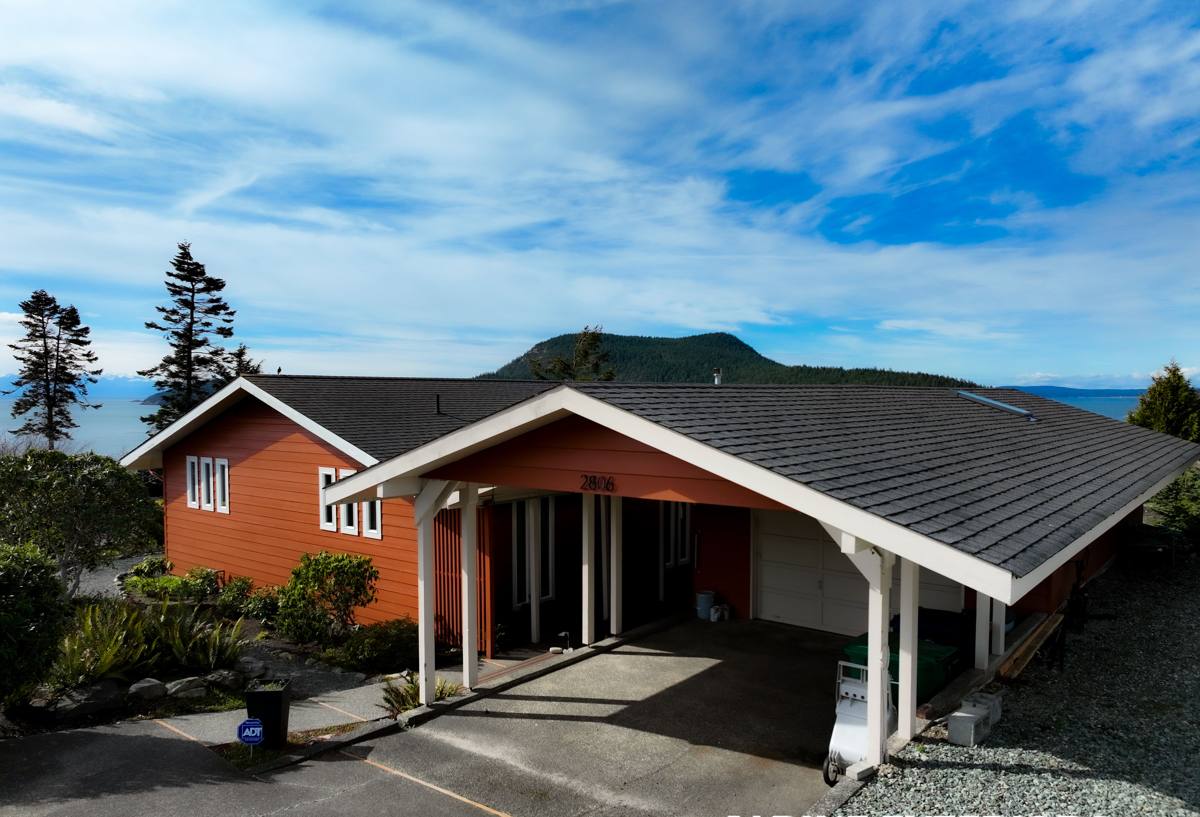
Signs Your Siding Needs Repair, Not Just Paint
A fresh coat of paint can make failing siding look fine for a season or two while the underlying problem keeps getting worse. Watch for these signs that the issue is deeper than the surface:
- Siding that feels soft, spongy, or gives slightly when you press on it — a strong sign of moisture damage underneath
- Paint that keeps failing in the same spot no matter how many times it's repainted
- Dark streaking or staining below seams, nail heads, or butt joints
- Visible gaps opening up at corners, trim, or where siding pieces meet
- Persistent moss or algae growth that keeps returning even after cleaning
- Cracking, checking, or splitting, especially on sun-exposed or wind-exposed walls
- Small holes, soft trim, or insect activity near the base of a wall — often a sign moisture has been present long enough to attract pests
Any one of these on its own might be minor. Several together, or any of them recurring after a previous repair, usually means the underlying moisture management — flashing, sealant, or the barrier behind the siding — has failed somewhere and needs to be addressed, not just covered.
What a Correct Siding Repair Actually Involves
Diagnosing the Real Problem
The visible damage is rarely the whole story. A proper repair starts by checking beyond the obviously bad board — probing adjacent siding for softness, checking moisture levels with a meter where damage is suspected, and looking at what's behind the siding once it's opened up: the water-resistive barrier, the flashing at windows and penetrations, and the condition of the sheathing underneath. Repairing a board without understanding why it failed just resets the clock on the same problem.
Finding the Water's Path
Water doesn't usually fail siding by soaking straight through a solid panel. It gets in at a weak point — a cracked caulk joint, a flashing detail that was never installed correctly, a grade or drainage issue at the base of a wall, or a gap where two materials meet. Old Town's exposure to driving rain off the water means these weak points get tested harder and more often than they would on a more sheltered inland lot. A repair that doesn't correct the entry point will fail again, often in the same spot.
Matching Material and Integrating the Repair
Once the cause is addressed, the repair itself needs to tie back into the existing wall correctly — matching the reveal and profile of the surrounding siding, restoring the water-resistive barrier and flashing at the repair zone before it's closed back up, and finishing the patch so it sheds water the same way the rest of the wall does. A repair that looks fine from the street but wasn't integrated correctly behind the surface is a repair that's just waiting to fail again in a few years.
Repair or Replace? Weighing the Real Factors
Not every problem calls for a full re-side, and not every problem should be patched. The right call depends on a few honest factors:
| Factor | Favors Repair | Favors Replacement |
|---|---|---|
| Extent of damage | Isolated to one or two sections | Spread across multiple walls or elevations |
| Age of existing siding | Relatively recent, still performing elsewhere | Original or long past its expected service life |
| Repair history | First repair in this area | Same spot has been repaired before and failed again |
| Underlying moisture | Limited to the visible damage | Found at multiple points behind the siding |
| Material availability | Matching material and profile can be sourced | Original product is discontinued or won't match |
An honest contractor will tell you when a repair makes sense and when it's really just delaying a replacement you'll end up paying for anyway. That call should come from what's actually found during the assessment, not from which answer is easier to sell.
Why the Material Behind the Repair Matters
We install one siding product — James Hardie fiber cement — and that standard shapes how we think about repairs too. Hardie's HZ product lines are engineered specifically for climates with sustained moisture exposure, its ColorPlus factory finish holds color and resists the fading that plain paint doesn't, and as a non-combustible material it doesn't carry the impact or brittleness concerns of some claddings. When we're repairing a wall, matching in Hardie product gives us a consistent, well-documented material to work with and a manufacturer warranty that stays intact.
It's a different conversation on homes with vinyl, LP SmartSide, cedar, or older fiber cement products already installed. Vinyl fades unevenly and color runs get discontinued, so matching an older panel is often close to impossible. LP SmartSide is an engineered wood product, and if the repair area has already seen moisture intrusion, the surrounding OSB-based material may have absorbed water in ways that aren't obvious until it's opened up. Cedar can often be patched successfully, but it comes with an ongoing refinishing commitment that doesn't go away just because the immediate repair is done. None of that makes those products wrong for every home — it's why, when a repair turns into a larger conversation about the wall's long-term performance, we're going to recommend Hardie fiber cement as what goes back up.
Our Siding Repair Process
- Free on-site assessment — we look at the visible damage, probe surrounding areas, and check moisture levels where failure is suspected
- Honest, written scope — what's a straightforward repair, what needs a larger section replaced, and why, laid out before any work starts
- Source the right material — matching Hardie profile and exposure, or identifying where a broader repair makes more sense than a patch
- Fix the root cause first — flashing, sealant, and drainage details get corrected before the wall is closed back up
- Repair and finish — factory-finished or field-painted to blend with the surrounding siding, not just bolted on and left mismatched
- Final walkthrough — we review the completed work with you and handle any punch-list items before calling the job done
Why a Crew That Already Works Old Town Anacortes Matters
Siding repair in a neighborhood like this benefits from knowing the area, not just the trade in general. A crew that's already worked in Old Town Anacortes has a feel for how the older housing stock in this part of town was typically built, which wall assemblies tend to show up, and where moisture problems most often start given the neighborhood's proximity to the water and its mix of mature landscaping. That local pattern recognition speeds up an accurate diagnosis and avoids guesswork on a home with a repair history or an older assembly behind the siding.
There's also a practical side to it — a contractor already working in the area can typically get to an assessment faster, understands the City of Anacortes' general permitting expectations for exterior repair work, and isn't learning the neighborhood's weather patterns for the first time on your house.
Maintenance That Extends the Life of a Repair
A correctly done repair still benefits from some upkeep, especially this close to the water. A few habits go a long way:
- Rinse siding periodically to clear salt film buildup, particularly on walls facing the water or prevailing wind
- Keep gutters and downspouts clear so water isn't overflowing onto siding below
- Trim back vegetation that's shading siding and keeping it from drying out between rain events
- Check caulk lines at trim, windows, and penetrations annually, since salt air and UV break down sealants faster here
- Address new staining or soft spots quickly — the earlier a new problem is caught, the smaller the eventual repair
None of this replaces a professional assessment when something looks or feels wrong, but it does stretch the time between repairs and helps a repaired section perform the way it should.
If you're seeing signs of trouble on your siding in Old Town Anacortes — or you just want an honest opinion on whether it's a repair or something bigger — we're glad to take a look. Reach out for a free, no-pressure estimate and we'll tell you straight what we find.