 Anacortes Exterior
 Why Roof Repair Looks Different in Old Town Anacortes
Old Town Anacortes is one of the city's older, close-in neighborhoods, and a lot of the roofs here have been through more decades of Skagit County weather than roofs on newer builds elsewhere in town. Salt-tinged air off the water works on exposed metal and fasteners year after year. Wind-driven rain doesn't just fall on a roof here — it gets pushed sideways and up under shingle edges and flashing laps that a calmer climate would never test. And a long, damp moss season settles into shaded, north-facing slopes and stays there for months at a stretch. On an older roof, all of that has had more time to compound.
Repairing a roof correctly in this neighborhood isn't just patching whatever's visibly wrong. It means understanding how decades of that specific combination — salt, wind-driven rain, and moss — have aged the roof underneath the surface, and whether what you're looking at is a simple fix or a symptom of something further along. This page covers what actually causes roof damage in Old Town Anacortes, what a correct repair addresses versus what it just covers up, how we decide between repair and replacement, and why hiring a crew that already works this neighborhood makes a real difference.
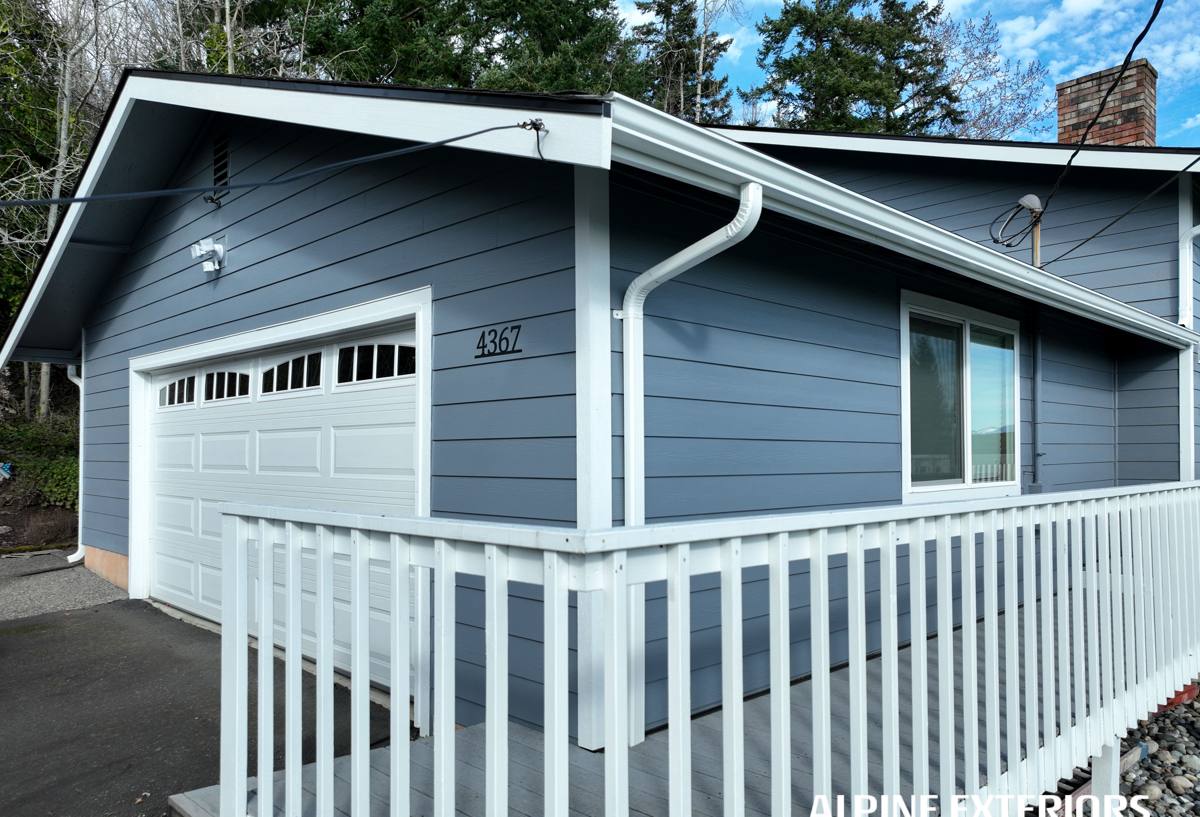
What Actually Causes Roof Damage in This Neighborhood
Salt Air and Corroding Metal
Anacortes sits surrounded by water, and salt-laden air settles onto roofing metal continuously, not just during storms. That accelerates corrosion in flashing, fasteners, gutters, and any exposed hardware well before it's visible from the ground. A nail that's lost holding strength to rust doesn't announce itself — it shows up later as a lifted shingle tab or a slow leak that seems to come from nowhere.
Wind-Driven Rain
Rain here often doesn't fall straight down. Wind pushes it sideways and up, forcing water into laps, valleys, and flashing details that were only ever designed to shed water moving downhill. Older roofs, especially ones with flashing installed to an earlier standard, are more likely to have gaps that a heavier, more directional rain event finds and exploits.
A Long Moss Season
Skagit County's wet season runs long, and shaded or north-facing roof slopes in Old Town Anacortes — especially where mature trees shade part of the roof — hold moisture for months rather than days. That's exactly the environment moss and algae need to take hold, and once established, moss holds even more moisture against the shingle surface, which speeds up granule loss and, eventually, deck-level rot.
Age and Roofing History
Many homes in this neighborhood have been reroofed at least once already, and not always with a full tear-off. A layover — new shingles installed over an old layer — can hide deck damage that never got addressed the first time. Additions, skylights, or vents installed over the years sometimes weren't flashed to match the original roofing, which leaves a weak point that's easy to miss until it starts leaking.
Signs a Roof in This Neighborhood Needs a Closer Look
- Granules collecting in gutters or at the base of downspouts, a sign shingles are wearing thinner than they should
- Curling, cracking, or lifted shingle edges, especially on wind-exposed or west-facing slopes
- Dark streaking or visible moss growth on shaded or north-facing roof planes
- Water staining on interior ceilings, in the attic, or around chimneys and skylights
- Rust staining running down from flashing or exposed fasteners
- Soft spots noticeable when walking the roof, or sagging visible along the roofline
How We Diagnose a Roof Before Recommending Anything
A repair estimate that's actually useful starts with a real inspection, not a guess from the driveway. That typically includes:
- Walking the roof itself where it's safe to do so, not just viewing it from the ground or a photo
- Checking the attic from underneath for staining, damp insulation, or daylight coming through at penetrations
- Inspecting flashing at valleys, chimneys, skylights, and wall intersections, since that's where most leaks in this climate actually start
- Looking for signs of a prior layover and, where relevant, what that means for what's hidden underneath
- Assessing moss and algae coverage and whether it's cosmetic or has already started degrading the shingle surface
- Checking attic ventilation, since poor airflow accelerates almost every other issue on this list
We'll walk you through what we find honestly — what needs attention now, what can be monitored, and what's purely cosmetic — before recommending a scope of work.
Repair or Replace: How We Make That Call
Not every roof problem in Old Town Anacortes calls for the same response, and telling the difference correctly is the real job of an honest estimate.
| Symptom | Usually a Repair | Often Points to Replacement |
|---|---|---|
| A handful of cracked or missing shingles | Yes — targeted replacement of the affected area | Only if the surrounding field is also brittle or worn thin |
| Isolated leak at a chimney, skylight, or valley | Yes — reflash the specific detail | Rarely, unless deck rot has spread from the leak point |
| Moss coverage on part of the roof | Yes — removal, treatment, and prevention measures | Only if moss has been present long enough to cause granule or deck damage underneath |
| Granule loss across most of the roof | Sometimes, if isolated | Usually — widespread granule loss signals the shingles are near the end of their service life |
| Multiple layers from a prior layover | Case by case | Often — a second layover typically isn't a sound option, and hidden deck issues may only surface at tear-off |
| Soft decking or visible sagging | No | Yes — structural deck damage needs to be addressed properly, which usually means a larger scope |
The honest factors that actually drive this decision: how much of the roof's remaining service life is left, whether the damage is isolated or spread across multiple slopes, whether a prior layover is hiding unknown deck condition, and whether the original flashing and ventilation details were done to a standard worth building on. We'll give you a straight answer on which category your roof falls into, including when repair is genuinely the smarter option rather than defaulting to the bigger job.
What a Correct Roof Repair Involves
Matching Materials to What's Already There
A repair that blends in means matching shingle profile and, where possible, color to what's already on the roof. On older roofs where the original product has been discontinued, an exact match isn't always possible, and we'll say so upfront rather than after the work is done.
Flashing Done Right, Not Just Caulked Over
The fastest way to make a leak come back is to caulk over a flashing problem instead of correcting it. A proper repair re-laps and integrates flashing at the failure point — valley, chimney, skylight, or wall — so water sheds the way it's supposed to, rather than relying on sealant to hold back rain it was never designed to stop.
Upgrading Hardware Where It Matters
When we replace corroded fasteners or flashing metal, we use corrosion-resistant, coastal-rated material suited to salt air exposure, not a like-for-like swap with standard-grade hardware on the same failure timeline. This is one of the places a repair either holds for years or needs redoing sooner than it should.
Addressing the Cause, Not Just the Symptom
A stained ceiling is a symptom. A gap in step flashing, a saturated valley, or moss holding moisture against the deck is usually the cause. A repair that patches the visible damage without correcting what caused it tends to fail again in the same spot — often faster the second time, since the underlying problem was never fixed.
Moss and Algae: Part of the Repair, Not an Afterthought
Given how long the moss season runs in Skagit County, moss removal and prevention come up on nearly every older roof we look at in this neighborhood. Removing it correctly means clearing growth without tearing at the shingle surface underneath, since aggressive scraping does its own damage. From there, we can talk through options like zinc or copper strips near the ridge, which discourage regrowth as rain washes trace metal down the slope over time. The real long-term fix, though, is usually a combination of that kind of prevention and making sure attic ventilation is doing its job — a roof deck that can't breathe holds moisture longer from underneath, which feeds moss growth from below just as much as shade and rain do from above.
Cost Factors Worth Understanding
Repair bids for what sounds like the same job can vary quite a bit, and the difference usually comes down to real scope, not one contractor simply charging more for the same work.
| Factor | What It Affects |
|---|---|
| Extent of the damage | Whether the fix is a targeted section or a larger area needing attention |
| Flashing scope | Whether the repair reflashes the failure point properly or just seals over it |
| Hardware grade | How long the repair holds up against continued salt air exposure |
| Access and roof pitch | Labor time, staging, and safety requirements on the specific roof |
| Prior layover condition | Whether hidden deck issues turn up once the repair area is opened up |
| Moss and algae treatment | Whether removal and prevention measures are part of the scope or a separate visit |
A written estimate that itemizes these components tells you far more than a single lump-sum number, and it's worth asking any contractor to walk through exactly what's included before comparing prices.
Why a Crew That Already Works Old Town Anacortes Matters
A roofer who mostly works newer subdivisions can still do competent repair work, but an older Anacortes roof has variables that come up more often here than elsewhere in Skagit County — corrosion patterns tied to sustained salt exposure, flashing details from an earlier era that don't match current best practice, and roof framing or venting quirks from original construction that a crew unfamiliar with older local homes might not expect to find. Working this neighborhood repeatedly means we're not guessing at any of that or learning it mid-project.
It also means a more accurate first estimate, with less back-and-forth once the work is underway, because the inspection accounted for how a roof this age in this specific location actually behaves rather than applying a generic checklist built for a newer home.
What to Expect From an Estimate
- An in-person inspection of the roof and attic, not a guess from a photo or a drive-by
- An honest read on what's failing from age versus what's failing from a flashing or ventilation issue that can be corrected
- A clear explanation of repair versus replacement, including when repair is genuinely the right call
- A written, itemized estimate with no pressure to sign on the spot
If you own a home in Old Town Anacortes and you're noticing granules in the gutters, moss creeping across a shaded slope, a stain on the ceiling, or flashing that just doesn't look right anymore, we're happy to take a look. Reach out below for a free, no-pressure estimate — we'll give you a straight answer about what your roof actually needs and why.