 Anacortes Exterior
 Deck Repair Built for Old Town Anacortes
Old Town Anacortes sits close enough to the water that the air itself works against your deck. Salt-laden moisture drifts in off the water, settles into wood grain and metal fasteners, and starts a slow process of corrosion and decay that homeowners further inland simply don't deal with in the same way. Add in Skagit County's long wet season, near-constant humidity, and the deep shade many Old Town lots get from mature trees and tight lot lines, and you've got a near-perfect setup for moss growth, soft spots, and hardware failure. We repair decks in this neighborhood regularly, and the patterns are consistent enough that we can usually tell you what we'll find before we even climb the stairs.
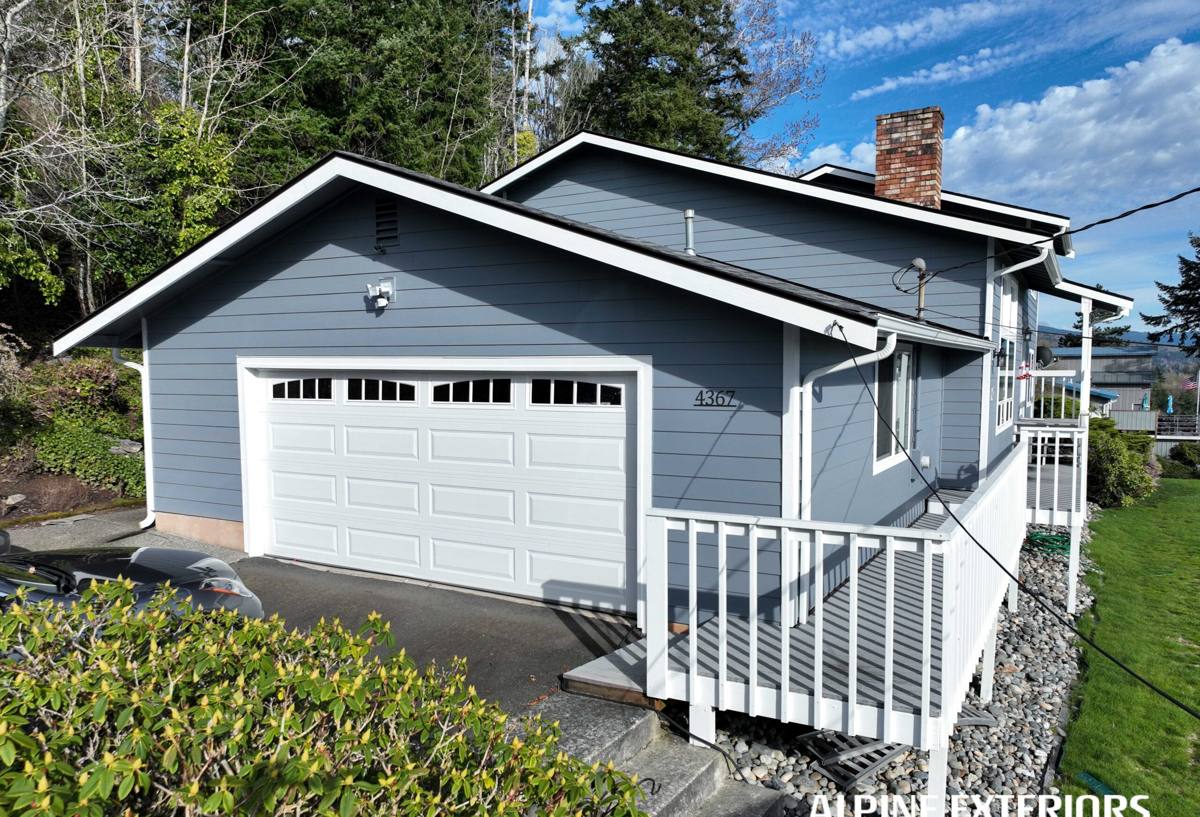
Why This Climate Is Hard on Decks
A deck in a dry inland climate mostly has to survive sun exposure and occasional rain. A deck in Old Town Anacortes has to survive all of that plus sustained dampness, salt exposure, and reduced sun exposure that never quite dries the structure out between storms. That combination shows up in a few specific ways:
Moss and Organic Growth
Moss doesn't just look bad — it holds moisture directly against wood fibers and fastener heads for weeks at a time. On shaded decks, especially north-facing ones or those tucked under overhangs, moss can establish itself within a single wet season and start trapping water against boards that would otherwise dry out fine.
Salt Air and Corrosion
Fasteners, joist hangers, and railing hardware take the brunt of salt exposure. Even galvanized coatings break down over years of salt-laden air, and once corrosion starts on a nail or screw head, it weakens the connection long before the surrounding wood shows any visible damage.
Driving Rain and Wind-Driven Moisture
Rain that comes in sideways gets pushed into places a vertical rain never reaches — under railings, behind fascia boards, into end-grain cuts that weren't sealed properly during the original build. This is one of the most common reasons we find rot starting at board ends and ledger connections rather than in the open field of the deck.
Signs Your Deck Needs Repair — Not Just a Wash
Pressure washing and re-staining have their place, but they don't fix structural issues, and in some cases they can hide a problem long enough for it to get worse. Here's how we tell the difference:
Surface-Level Wear (Usually Repairable Cosmetically)
Graying wood, faded stain, light surface mildew, and small surface cracks in individual boards are typically cosmetic. These affect appearance and, if ignored long enough, protection — but they don't mean the deck is unsafe.
Structural Red Flags (Needs a Real Repair)
- Boards that flex, bounce, or feel spongy underfoot
- Visible gaps or separation where the deck attaches to the house (the ledger board)
- Rust streaks running down from screw heads or joist hangers
- Railings that wiggle or shift when you lean on them
- Soft or discolored wood you can press a screwdriver into with light pressure
- Persistent moss or dark staining in the same spot year after year
- Visible daylight or gaps between structural framing members
Any one of these on its own might be minor. Several together, especially near the ledger board or stair stringers, usually means it's time for a real inspection rather than a surface fix.
What a Correct Deck Repair Actually Involves
A repair that only replaces what's visible from the top often misses the cause of the damage. In Old Town Anacortes specifically, we pay close attention to a few areas that get overlooked elsewhere:
The Ledger Board Connection
This is where the deck attaches to the house, and it's the single most important structural connection on the whole deck. Flashing that was installed incorrectly — or that has failed after years of driving rain — lets water track behind the siding and into the house framing, not just the deck. We check this connection on every repair, even when the reported problem is somewhere else.
Framing and Joists
Rot rarely stays contained to one board. If a joist has soft spots, we check the joists on either side and the hardware connecting them, since moisture tends to travel along a framing member before it shows up as visible damage on the surface.
Fasteners and Hardware
Corroded screws, nails, and joist hangers get replaced with hardware rated for the exposure — this matters more here than in drier parts of the state, because standard hardware corrodes faster in salt air.
Decking Boards and Railings
Individual board replacement, railing tightening or rebuilding, and stair repairs round out most jobs. We match materials as closely as possible so a repair doesn't look like an obvious patch.
Repair or Replace? A Practical Comparison
| Factor | Repair Usually Makes Sense | Replacement Usually Makes Sense |
|---|---|---|
| Framing condition | Solid, with isolated soft spots | Widespread rot in joists or the ledger |
| Decking boards | A handful of damaged boards | Most boards graying, cracking, or cupping |
| Age of deck | Under 12–15 years, built to a reasonable standard | Original construction is old or was never built to current standards |
| Railings and stairs | Loose but structurally sound | Wobbly, undersized, or missing proper attachment |
| Your goals | Extend the deck's life a decade or so | Want a different layout, size, or material long-term |
Most of the time, a deck that's fundamentally sound but showing localized damage is a good repair candidate. We'll tell you honestly if we think repair is just delaying an inevitable full replacement — that's not a sale we're interested in making twice.
Material Choices for This Climate
What you rebuild with matters as much as the workmanship. In a salt-air, high-moisture environment like Old Town Anacortes, we lean toward materials that handle sustained dampness well rather than ones that simply look good on day one.
- Pressure-treated lumber — a solid, cost-effective choice for framing and structural repairs, provided fasteners and hardware are rated to avoid the corrosion that can occur when certain treated-wood chemicals contact standard metal.
- Cedar — naturally rot-resistant and a good fit for visible decking or railings, though it still needs periodic sealing to perform well through a wet Skagit County winter.
- Composite decking — low-maintenance and resistant to rot, though it comes with a real trade-off: it can still support surface mold or moss growth in shaded, damp spots if it isn't cleaned periodically, and repairs to composite boards are less forgiving than a simple wood patch.
We'll walk you through the maintenance reality of each option rather than just pushing whatever's easiest to install — the right choice depends on how much upkeep you actually want to do.
Our Deck Repair Process
- On-site inspection. We check framing, the ledger connection, fasteners, and decking — not just the spot you called about.
- Honest scope and options. You get a clear explanation of what's damaged, why, and whether repair or partial replacement makes more sense.
- Repair or replacement of the damaged sections. We match materials and finish as closely as possible so the repair blends in.
- Hardware upgrade where needed. Corroded fasteners get replaced with hardware suited to salt-air exposure, not just whatever matches the original.
- Final walkthrough. We check railings, stairs, and board fastening for solidness before calling the job done.
Maintenance Checklist for Old Town Anacortes Decks
Between visits, a little regular upkeep goes a long way toward avoiding another repair call in a few years:
- Sweep debris and standing leaves off the deck surface regularly, especially in fall
- Scrub visible moss growth off boards and railings before it spreads
- Check that gaps between deck boards aren't clogged, so water can drain through instead of pooling
- Look at fastener heads once or twice a year for early rust staining
- Inspect the area where the deck meets the house for gaps, soft trim, or peeling paint
- Reseal or restain wood decking on the schedule the product calls for — don't stretch it out in this climate
- Make sure gutters and downspouts near the deck aren't dumping extra water onto it
Why a Crew That Already Works Old Town Anacortes Matters
Deck repair in this neighborhood isn't quite the same job as deck repair somewhere dry and sunny. A crew that hasn't dealt with salt air, sustained shade, and a genuine moss season can miss the early signs of a problem that's already well underway underneath. We've spent enough time on decks throughout Anacortes and the surrounding Skagit County area to know where damage tends to start on homes like these, what hardware actually holds up, and which repairs are worth doing versus which ones are just cosmetic band-aids. That local pattern recognition saves you time, and it usually saves you money too, since we're not guessing at what a coastal Washington deck needs.
If your deck in Old Town Anacortes has soft spots, loose railings, moss that won't quit, or you just want a second opinion before spending money on it, we're happy to take a look. Estimates are free and there's no pressure to move forward — use the form below to get started.