 Anacortes Exterior
 Why Oak Harbor Windows Wear Out Faster Than Inland Homes
Homes in Oak Harbor sit close to the water, and that proximity changes what a window has to survive year after year. Salt-laden air off the Salish Sea works its way into metal hardware, vinyl glazing beads, and exposed fasteners, accelerating corrosion in ways that inland manufacturers rarely design for. Add in wind-driven rain that hits windows at an angle instead of falling straight down, and you have a climate that tests every seal, every flashing detail, and every sill pan a window depends on to stay watertight.
Then there's the long wet season. Overcast skies, high humidity, and shaded lots with mature trees create ideal conditions for moss and algae to colonize window sills, trim, and the caulk lines around a frame. Once organic growth gets a foothold in a joint that's supposed to be sealed, it holds moisture against wood and vinyl for months at a time. That's a slow, steady failure mode — not dramatic, just relentless.
None of this means Oak Harbor homes need exotic products. It means the installation details that get glossed over in a drier climate — flashing sequence, sill pan drainage, sealant selection, fastener material — matter more here and get punished faster when they're done wrong.
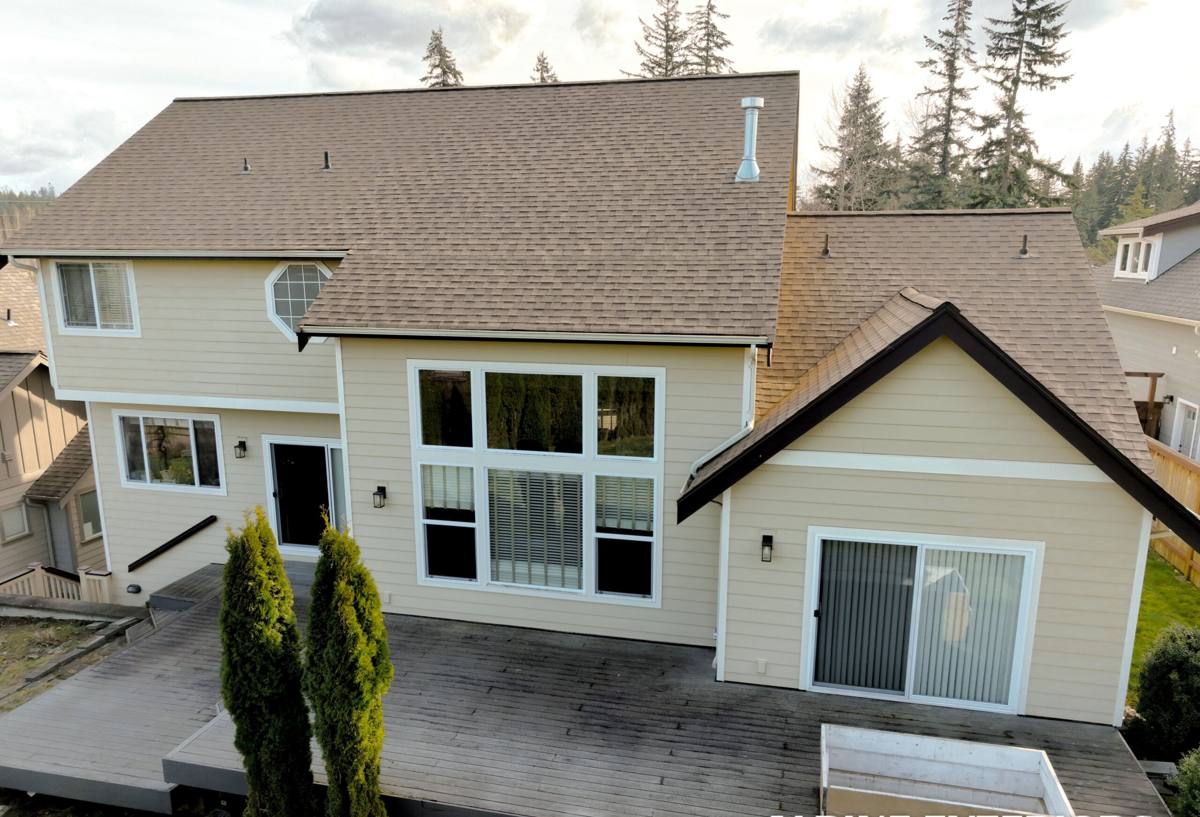
What a Correct Window Installation Actually Involves
Window installation gets treated like a simple swap-and-caulk job more often than it should. In a marine climate, the parts nobody sees are the parts that determine whether the window lasts fifteen years or thirty.
Flashing and Water Management
Every window opening needs a drainage path built in before the window ever goes in — a sloped sill pan, properly lapped flashing tape that sheds water down and out rather than trapping it, and a weather-resistive barrier that ties into the existing wall system correctly. Skipping or shortcutting this step is the single most common reason a "new" window starts leaking within a few wet seasons.
Sealant Selection
Not every exterior sealant is rated for constant salt air and UV exposure. We use sealants chosen for their flexibility and adhesion in coastal conditions, applied at the right points in the assembly — not just a bead around the outside trim, which is the part homeowners can see but the least important part of keeping water out.
Fastener and Hardware Choices
Standard fasteners can corrode faster near saltwater. We use hardware rated to resist that corrosion, particularly at the header and sill where water is most likely to sit briefly during a hard rain.
Choosing Window Materials for a Salt-Air, High-Moisture Climate
Every window frame material handles this environment differently. There's no single "best" choice for every home — it depends on your budget, your home's style, and how much upkeep you want to take on.
| Frame Material | Salt Air Resistance | Moisture Behavior | Maintenance | Typical Lifespan |
|---|---|---|---|---|
| Vinyl | Good — won't corrode or rot | Handles moisture well; no paint to fail | Low — occasional washing | 20–30 years |
| Fiberglass | Very good — dimensionally stable | Excellent; resists warping and swelling | Low | 30+ years |
| Wood-clad | Fair — depends on cladding integrity | Vulnerable if cladding or sealant fails | Higher — watch seams and finish | 20–25 years with upkeep |
| Aluminum | Fair — can corrode without coating | Prone to condensation without thermal break | Moderate | 20+ years |
For most Oak Harbor homes we're steering people toward vinyl or fiberglass, simply because they hold up with the least maintenance in a climate that's damp more months than not. Wood-clad windows can still be the right call for a specific architectural look, but we're honest with homeowners up front that any breach in the cladding or sealant becomes a bigger problem here than it would inland — it's a trade-off worth knowing before you commit, not a reason to avoid the product entirely.
Signs Your Windows Are Already Losing the Fight
Window failure in this climate is usually gradual. Homeowners often live with small problems for a year or two before realizing they've added up.
- Fogging or a hazy film between panes of a double-pane window — the seal has failed and the gas fill is gone
- Soft, spongy, or discolored trim and sill boards around the window opening
- Windows that stick, won't stay open, or take real effort to latch
- Visible daylight or a noticeable draft along the frame edges
- Moss, algae, or black staining building up in the sill corners or lower sash
- Peeling paint or bubbling finish on the interior sill, which often points to moisture getting in from outside
- A musty smell near the window that wasn't there before
Any one of these is worth a look. Several at once usually means the window's water management has already broken down, even if it doesn't look dramatic yet.
Our Installation Process
1. On-Site Assessment
We start by looking at the actual condition of each opening — the sheathing, the existing flashing, and any signs of past water intrusion — before recommending anything. A window quote that skips this step is guessing.
2. Product Selection
We walk through frame material, glass package, and hardware options based on your home's exposure. A window on the weather side of the house facing open water has different needs than one tucked under an eave on a sheltered wall.
3. Removal and Opening Prep
Old windows come out carefully, and we inspect the framing underneath. Any rot, soft wood, or failed flashing gets addressed before the new window goes in — installing a new window into a compromised opening just delays the same failure.
4. Installation and Flashing
Sill pan, flashing, weather barrier integration, air sealing, and the window itself, installed plumb, level, and square with fasteners and sealants matched to the exposure.
5. Interior and Exterior Finish
Trim, caulking, and touch-up work finished cleanly on both sides, with attention to the exterior joints most exposed to wind-driven rain.
6. Final Walkthrough
We check operation, seal integrity, and finish quality with you before considering the job done.
Energy Efficiency and Comfort, Not Just Water Protection
A properly installed window with a modern glass package does more than stop leaks. Low-E coatings reduce heat loss through the glass, tighter seals cut drafts, and better insulating glass reduces the cold-radiating-off-the-glass feeling that makes rooms near old windows uncomfortable even when the furnace is running. In a climate where heating season runs long, that difference shows up on utility bills and in day-to-day comfort, not just in a drier sill.
What Costs Actually Depend On
Window installation pricing varies by home, and broad ranges only go so far — but a few factors consistently move the number more than others.
| Cost Factor | Why It Matters |
|---|---|
| Frame material | Fiberglass generally costs more upfront than vinyl; wood-clad more still |
| Window size and style | Larger units, custom shapes, or operable specialty windows cost more than standard double-hungs |
| Condition of the existing opening | Hidden rot or past water damage adds repair work before installation can start |
| Number of windows | Whole-house replacements typically bring a better per-window cost than one-off swaps |
| Glass package | Upgraded Low-E coatings or additional panes add cost but improve comfort and efficiency |
We'd rather walk your home and give you real numbers than throw out a price that doesn't hold up once we see the actual openings.
Why a Crew That Already Works Oak Harbor Matters
A contractor who mostly works drier, inland jobs can still install a window correctly on paper and still get water intrusion wrong for this specific environment — because the failure points here aren't obvious until you've seen them repeat across enough coastal homes. We've installed and repaired windows across this stretch of the Salish Sea coastline, which means we already know which details get skipped on lower-quality jobs and where salt air and driving rain tend to find the weak point first. That's not a marketing line — it's the reason our flashing sequence, sealant choices, and material recommendations are built around this specific climate instead of a generic install spec.
We're also a phone call away if something needs a look after the job is done, rather than a crew that installed your windows once and moved on to the next region.
Maintaining Your Windows After Installation
Even a well-installed window benefits from basic upkeep in this climate. Rinse salt residue off frames and hardware periodically, especially on homes with more direct water exposure. Keep sills clear of moss and organic debris before it holds moisture against the frame. Check caulk lines once a year for cracking or separation, particularly after a hard winter. None of this is complicated, but skipping it is how a well-installed window ages faster than it should.
If you're dealing with drafts, fogged glass, sticking sashes, or windows that just feel past their prime, we're happy to take a look and give you a straightforward assessment — no pressure, no upsell. Reach out for a free estimate using the form below.