 Anacortes Exterior
 Why Oak Harbor Roofs Take a Different Kind of Beating
Oak Harbor sits right on the water, and that changes what a roof has to survive year after year. Salt-laden air drifts in off the water and settles on every exposed surface, including your shingles, flashing, and fasteners. Combine that with long stretches of driving rain off the Strait and a moss season that can run most of the year in shaded, north-facing sections of roof, and you have a climate that ages roofing materials faster than it would fifty miles inland. A roof that would coast to twenty-five years in a drier climate can show real wear in half that time out here if it wasn't built for the exposure in the first place.
We're based in Anacortes, just across Deception Pass, and we've replaced enough roofs on this stretch of coastline to know which failure patterns are climate-driven and which are just poor installation catching up with a homeowner. Both show up constantly on Oak Harbor homes, and knowing the difference matters when you're deciding whether to repair or replace.
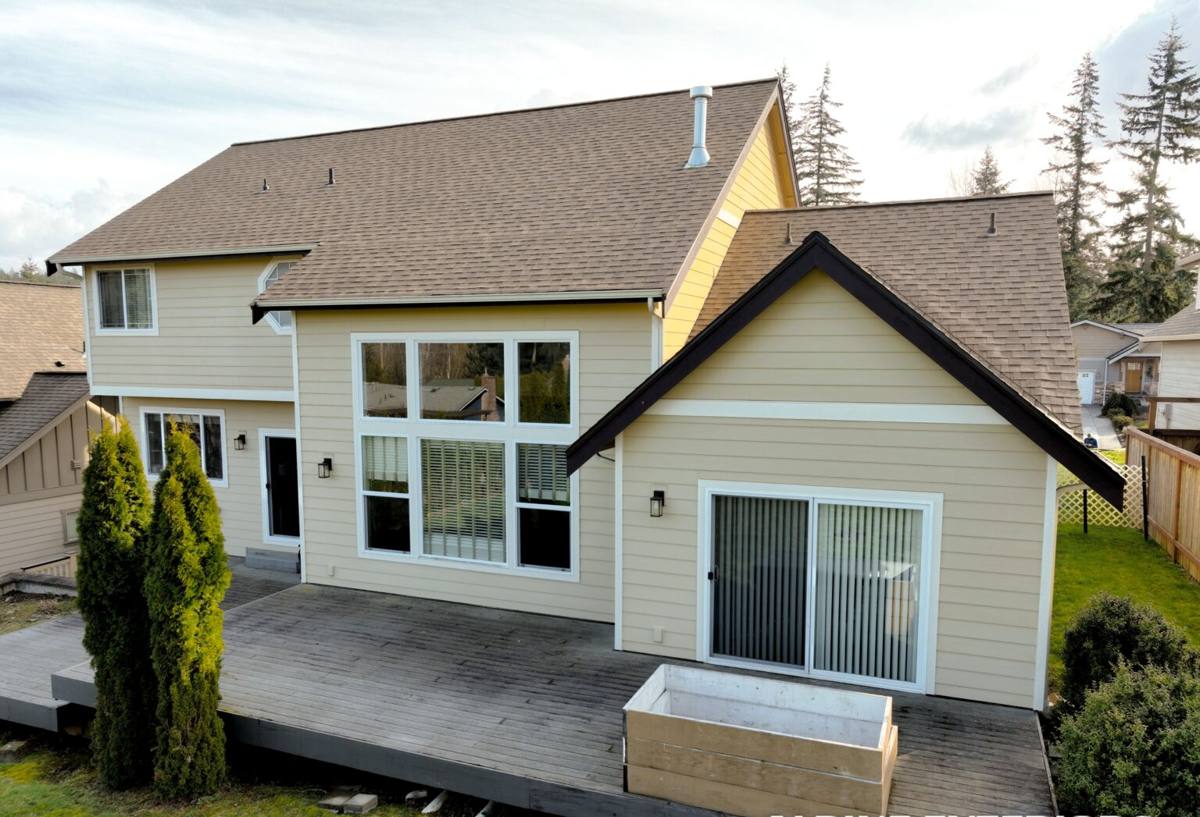
Signs an Oak Harbor Roof Has Reached Replacement, Not Repair
Repair makes sense when the damage is isolated — a cracked pipe boot, a section of lifted shingles from wind, a flashing leak around a chimney. Replacement is the right call when the roofing system itself, not just a component, has started failing. On homes in this area, the pattern usually looks like this:
- Granule loss heavy enough that you can see bare, shiny patches on south- and west-facing slopes exposed to sun and salt spray
- Moss that keeps returning within a season or two of cleaning, especially on north-facing planes that stay damp longer
- Shingle edges curling or cupping, which is often accelerated by salt air breaking down the asphalt binders faster than a normal weathering timeline
- Rusted or corroded flashing, nail heads, or metal valleys — a strong indicator that the roof's metal components weren't rated for coastal exposure
- Soft spots in the decking found during an inspection, usually from years of slow moisture intrusion under aging shingles
- Multiple leak calls in different areas of the same roof in the same year
If you're only seeing one of these in one spot, a repair is probably the honest answer, and we'll tell you that. Replacement gets recommended when the underlying system is compromised, not just the surface.
What a Correct Roof Replacement Actually Involves Here
Full Tear-Off, Not a Layover
We remove the existing roofing down to the deck rather than installing over old layers. Covering an aging roof hides exactly the problems — soft decking, trapped moisture, old flashing — that matter most in a wet, salt-exposed climate. A tear-off also lets us actually see the condition of the plywood or plank decking underneath, which is the part of the roof most homeowners never get to inspect.
Deck Inspection and Repair
Any decking that's soft, delaminated, or water-stained gets replaced before new roofing goes down. Skipping this step is one of the most common shortcuts in the trade, and it's also one of the most expensive mistakes to discover later, because by then it means tearing off a roof that's only a few years old.
Moisture Barrier and Underlayment
Given how much driving rain this area sees, underlayment isn't a place to cut corners. We use synthetic underlayment across the full roof and self-adhering ice-and-water membrane at the vulnerable points — eaves, valleys, around penetrations, and along any low-slope transitions — where wind-driven rain is most likely to find its way underneath the shingle layer.
Ventilation
A roof that can't breathe traps moisture in the attic, which speeds up decking rot and helps moss and mildew get established from underneath as well as from above. We check intake and exhaust balance as part of every replacement and correct it when the existing setup is inadequate, which is common on older homes in this area that were built before current ventilation standards.
Flashing and Metal Components
Standard galvanized flashing corrodes faster in salt air than most homeowners expect. We use flashing and fasteners rated for coastal exposure at chimneys, valleys, skylights, and wall intersections, since these are the points where a cheap component failing means a leak somewhere inside the house, not just a cosmetic issue on the roof.
Material Choices That Make Sense for This Climate
There's no single "best" roofing material — the right choice depends on your budget, the roof's slope and exposure, and how much long-term maintenance you're willing to take on. Here's how the common options stack up for a home dealing with salt air, rain, and moss:
| Material | Salt Air & Moisture Behavior | Moss Resistance | Relative Cost |
|---|---|---|---|
| Standard asphalt composition shingle | Good with proper flashing and ventilation; granule loss accelerates with age near salt spray | Moderate; needs periodic cleaning on shaded slopes | Lower to mid |
| Algae/moss-resistant composition shingle | Same base durability as standard asphalt, with copper or zinc granules built in to slow moss growth | Better; noticeably slower regrowth on north-facing sections | Mid |
| Standing seam metal | Excellent when specified with a coastal-rated coating; sheds water fast and dries quickly | Very good; smooth surface gives moss little to grip | Higher |
| Cedar shake | Requires ongoing maintenance in wet, salt-exposed climates; more sensitive to moisture cycling | Poor without regular treatment and cleaning | Higher |
Our default recommendation for most Oak Harbor homes is a moss-resistant composition shingle rated for high-wind coastal use, or a standing seam metal roof where the budget and roofline suit it. We'll walk through the honest trade-offs for your specific roof rather than pushing one product across every job — a steep, heavily shaded roof needs different moss protection than an open, sun-exposed one.
Our Process, Start to Finish
- On-site inspection. We walk the roof, check the attic when accessible, and look at decking condition, ventilation, and flashing — not just the shingles.
- Written estimate. You get a clear scope of work and price, including what material we're recommending and why, before anything is scheduled.
- Material order and scheduling. We plan the job around a realistic weather window rather than rushing it into a forecast that's likely to shift.
- Tear-off and deck inspection. Old roofing comes off, decking is checked, and any needed repairs are handled and photographed for your records.
- Underlayment, flashing, and ventilation work. The parts of the job that don't show once it's finished, but determine how long the roof actually lasts.
- New roofing installation. Installed to manufacturer specification, which is what keeps the material warranty valid.
- Cleanup and final walkthrough. Magnetic sweep for stray fasteners, debris hauled off, and a walkthrough so you know exactly what was done.
Timing the Job Around Local Weather
Roofing can be done for most of the year here, but a rushed install during an unstable weather stretch is how corners get cut on underlayment and drying time. We track the forecast closely and sequence tear-off and dry-in so that exposed decking isn't left open to rain overnight. If weather shifts mid-project, the schedule adjusts — a delayed roof is inconvenient, but a roof installed over wet decking causes problems that show up months later as trapped moisture and premature failure.
Why a Crew That Already Works Oak Harbor Roofs Matters
Roofing crews that mostly work inland don't always account for coastal-grade fastener corrosion, moss patterns tied to specific roof orientations, or how quickly standard flashing degrades near the water. We work this stretch of coastline regularly, so the material specs and details above aren't generic best practices pulled from a manual — they're what we've seen actually hold up, and what we've seen fail, on roofs a short drive from our own shop. That local pattern recognition is often the difference between a roof that needs attention again in eight years and one that goes the full expected lifespan of its material.
Questions Worth Asking Before You Hire Anyone
Whoever you choose for a roof replacement in Oak Harbor, these are worth confirming up front:
- Are they licensed and insured in Washington, and can they provide proof without you having to chase it down?
- Does the estimate specify the exact shingle or metal product, including whether it's rated for coastal or high-wind exposure?
- Is a full tear-off included, or is the quote for a layover?
- Does the scope include decking inspection and repair as a line item, not an unpleasant surprise mid-job?
- Are underlayment type and ice-and-water shield locations specified, or just "standard underlayment"?
- Is ventilation being evaluated, or only the visible shingle layer?
- What's covered under workmanship warranty versus manufacturer warranty, and for how long?
A contractor who answers these plainly, without vague language or pressure to sign same-day, is usually one worth trusting with the job.
Get a Straight Answer About Your Roof
If your Oak Harbor roof is showing granule loss, recurring moss, or age that's starting to worry you, we're happy to take a look and give you an honest read on whether you're looking at repair or replacement — no pressure, no inflated scope. Use the form below to request a free estimate, and we'll walk the roof with you and explain exactly what we find.