 Anacortes Exterior
 Roofing in Bow: A Different Set of Demands
Bow sits in that stretch of Skagit County where farmland, tideflats, and Samish Bay all meet, and that mix creates a roofing environment that's tougher than it looks from the ground. Homes here take on salt-laden air off the water, long stretches of driving rain through fall and winter, and a moss season that can run eight months or more if a roof isn't built and maintained to shed it. A roof that would hold up fine in a drier inland climate can start failing early out here if it wasn't designed with these specific conditions in mind.
When we install a new roof in Bow, we're not just matching a product to a budget. We're accounting for wind-driven rain that finds its way under poorly lapped flashing, for salt air that accelerates corrosion on unprotected metal fasteners, and for moss and moisture that never fully dry out under tree cover or on north-facing slopes. Getting a new roof right here means building in margin for all of that from day one, not hoping the roof holds up despite it.
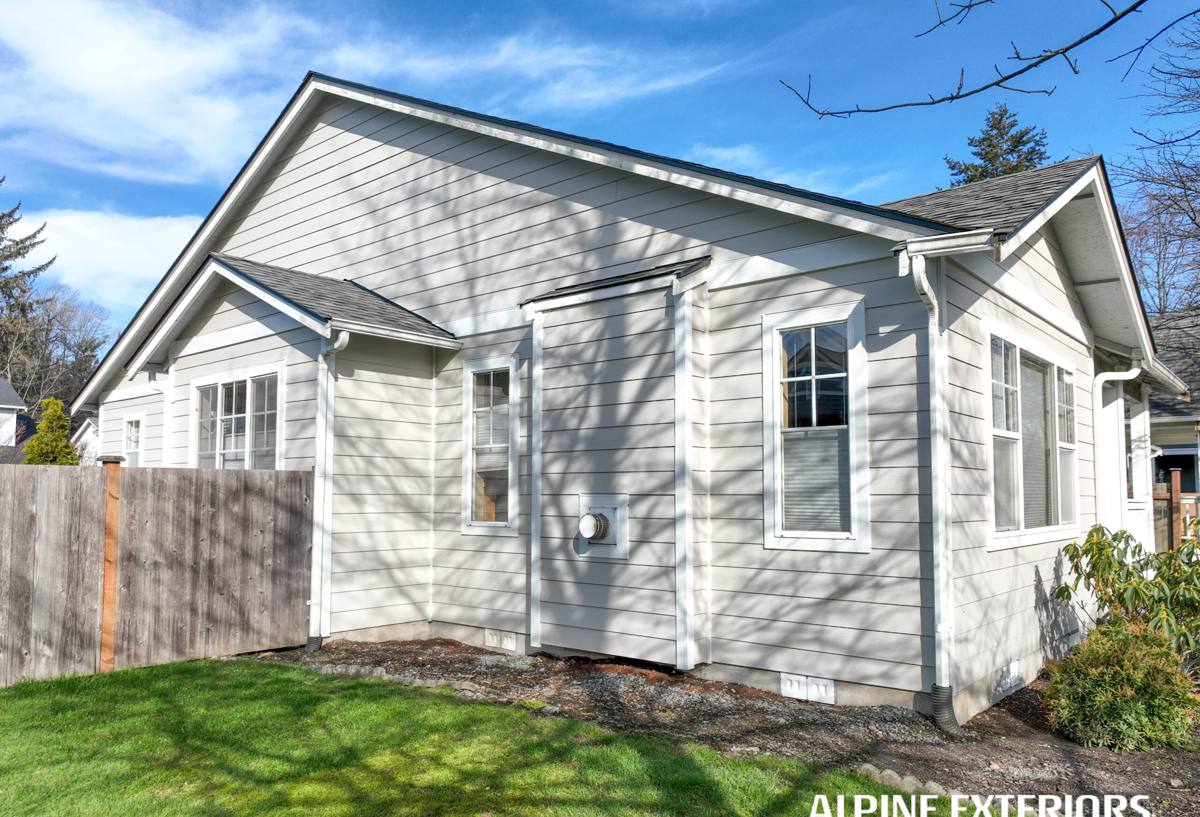
What Bow's Climate Actually Does to a Roof
Salt Air and Corrosion
Proximity to Samish Bay and the broader Salish Sea means airborne salt is a real factor for roofing hardware, not a coastal-town cliché. Standard steel fasteners, cheap flashing, and unprotected metal edging corrode faster near the water than they would ten or fifteen miles inland. Over years, corroded fasteners back out, flashing pinholes, and small leaks start showing up in places that never took direct storm damage — just slow salt exposure doing its work.
Driving Rain
Western Washington rain isn't usually the problem — it's the wind that comes with it. Storms off the water push rain sideways into roof edges, valleys, and wall-to-roof transitions where gravity alone won't carry water away fast enough. A roof that only performs well in straight-down rain will leak in Bow's weather. Every valley, sidewall, and penetration needs flashing detailed for wind-driven water, not just standard shingle overlap.
Moss and Sustained Moisture
Bow's tree cover, humidity, and mild temperatures are close to ideal moss-growing conditions for a big part of the year. Moss holds moisture against the roof surface, works its way under shingle tabs, and lifts edges as it grows — which is exactly how small leaks start. North-facing slopes and shaded sections are the usual first spots to show moss buildup, and once it takes hold, it accelerates its own growth by trapping even more moisture underneath it.
What a Correct Roof Installation Involves
A new roof is more than shingles on plywood. The parts that actually determine whether a roof performs in Bow's climate are mostly the ones you can't see once the job is finished.
- Deck inspection and repair: Every section of decking gets checked for soft spots, rot, and delamination before anything new goes down. Covering a compromised deck just hides a problem that will resurface as sagging or leaks later.
- Ice and water shield at vulnerable zones: Eaves, valleys, and roof-to-wall transitions get a self-adhering waterproof membrane underneath the primary roofing material — the section of the roof most exposed to wind-driven rain and ice damming during cold snaps.
- Synthetic underlayment across the field: A high-quality synthetic underlayment adds a second line of defense across the entire roof, not just the high-risk zones, and holds up better than old-style felt paper under prolonged damp conditions.
- Corrosion-resistant fasteners and flashing: Given the salt air off the bay, we don't cut corners on hardware. Fasteners and flashing get specified for coastal-grade corrosion resistance, not just whatever's cheapest at the yard.
- Properly detailed valleys and penetrations: Valleys, vent boots, chimney flashing, and skylight curbs are where the vast majority of roof leaks originate. Each one gets flashed and sealed as an individual detail, not rushed through with a one-size-fits-all approach.
- Balanced attic ventilation: Intake and exhaust venting need to work together to keep the underside of the deck dry and temperature-stable. Poor ventilation traps moisture, which shortens the life of the roofing material from underneath — a slower, less obvious failure mode than a storm leak, but just as damaging over time.
Choosing the Right Roofing Material for Bow
There isn't one universally "best" roofing material — the right choice depends on your home's exposure, roof pitch, budget, and how much long-term maintenance you're willing to take on. Here's how the common options stack up for a property in Bow's specific conditions.
| Material | Performance in Salt Air / Rain | Moss Resistance | Maintenance Level |
|---|---|---|---|
| Architectural asphalt shingle | Good with correct flashing and fasteners | Moderate — benefits from periodic cleaning | Low to moderate |
| Standing seam metal | Excellent when properly coated and fastened | High — sheds moss more easily due to smooth surface and pitch | Low |
| Composite / synthetic shake | Good, resists moisture absorption well | Moderate to high | Low |
| Cedar shake | Requires diligent maintenance in humid coastal air | Low without regular treatment | High |
We're straightforward with homeowners about trade-offs. Cedar shake can look great, but it demands a maintenance commitment — regular treatment and moss control — that not every homeowner wants to keep up with in a climate this favorable to moss growth. Metal roofing costs more upfront but tends to shed moss and handle driving rain with fewer long-term issues. Architectural asphalt shingle remains a solid, cost-effective choice for most Bow homes as long as the installation details — flashing, fasteners, ventilation — are done right.
How Our Process Works
1. On-Site Assessment
We start with a walk-through of your roof, attic, and the surrounding property — checking pitch, exposure, existing ventilation, decking condition where visible, and any specific trouble spots you've noticed like recurring leaks or heavy moss buildup.
2. Honest Scope and Estimate
You get a clear, written estimate that spells out material options, what the tear-off and deck repair allowance covers, and what's included versus what would be an added cost if we find deck damage once the old roofing comes off. No vague line items.
3. Tear-Off and Deck Repair
Old roofing comes off down to the deck so we can actually see what we're working with. Any soft, rotted, or delaminated sections get replaced before new underlayment goes down — this is the step that's easiest to shortcut and most important not to.
4. Underlayment, Flashing, and Installation
Ice and water shield goes in at the vulnerable zones, synthetic underlayment covers the field, and then the roofing material goes on with flashing detailed for each valley, penetration, and transition — built for Bow's wind-driven rain, not just average weather.
5. Final Walkthrough
We walk the completed roof and the property with you, cover care and maintenance specifics for the material installed, and make sure debris and old materials are fully cleared before we consider the job done.
Why a Crew That Already Works Bow Matters
Roofing crews that mostly work drier, inland areas can get away with lighter flashing details and standard fastener specs — those shortcuts just don't surface as problems where they work. Out here, the same shortcuts show up as leaks within a few wet seasons. Working regularly in Skagit County's coastal zones means we already know which details can't be skipped: corrosion-resistant hardware near the water, extra attention to valley flashing given the wind-driven rain pattern, and ventilation sized for a climate where moisture sits around longer than it does inland.
It also means we're realistic with homeowners about moss. We won't promise a moss-proof roof — nothing fully is in this climate — but we will spec materials and pitch-appropriate details that resist it better, and we'll tell you honestly what kind of periodic maintenance (moss treatment, gutter clearing, occasional inspection) will keep whatever roof you choose performing over the long run.
Signs Your Bow Home May Need a New Roof
- Shingles that are cupping, curling, or losing granules in visible patches
- Moss buildup that returns quickly after cleaning, especially on north-facing slopes
- Daylight visible through the roof deck from inside the attic
- Water stains on interior ceilings, especially near valleys or chimneys
- Soft or spongy spots when walking the roof, indicating deck rot underneath
- A roof approaching or past its expected service life for its material type
- Flashing that's visibly rusted, lifted, or separated from the roofline
Cost Factors Worth Understanding Upfront
Every roof is priced individually, but a few factors consistently move the number for Bow properties:
| Factor | Why It Matters |
|---|---|
| Roof pitch and complexity | Steeper pitches and multiple valleys/dormers take more labor and more flashing detail |
| Deck condition | Rot discovered during tear-off requires repair before new roofing can go down |
| Material choice | Asphalt shingle, metal, and composite carry different material and labor costs |
| Tear-off layers | Removing multiple existing layers of roofing adds labor and disposal cost |
| Access and site conditions | Tree cover, driveway access, and staging space affect crew efficiency |
We'd rather walk you through these factors on-site and give you real numbers than throw out a broad range that doesn't reflect your actual roof. That's the point of a free estimate — you get a number based on your home, not a guess.
Let's Take a Look at Your Roof
If your roof in Bow is showing its age, holding onto moss it shouldn't, or you just want an honest read on where it stands, we're glad to come take a look. The estimate is free, there's no pressure, and you'll walk away with a clear picture of your options and what they cost — use the form below to get started.