 Anacortes Exterior
 Why March Point Siding Wears Differently Than Siding Inland
March Point sits out on the water, exposed to wind and salt air coming off Fidalgo Bay and Padilla Bay in a way that homes just a few miles inland simply don't experience. That exposure changes how siding ages. Salt-laden air accelerates corrosion of fasteners and metal trim, driving rain gets pushed sideways into laps and joints instead of just running down the face of the wall, and the long, damp Skagit County shoulder seasons keep north- and shade-facing walls wet enough, long enough, for moss and algae to take hold and stay there for months at a time.
None of that means March Point homes need exotic materials or unusual construction. It means the ordinary vulnerabilities of siding — a cracked lap, a failed caulk joint, a soft spot where water has been sitting — show up sooner and do more damage once they start. A repair that would be a minor cosmetic fix in a drier, more sheltered part of Anacortes can turn into rot, sheathing damage, or interior moisture problems out on March Point if it sits unaddressed through a wet winter.
What We're Actually Looking At When We Inspect a Repair Call
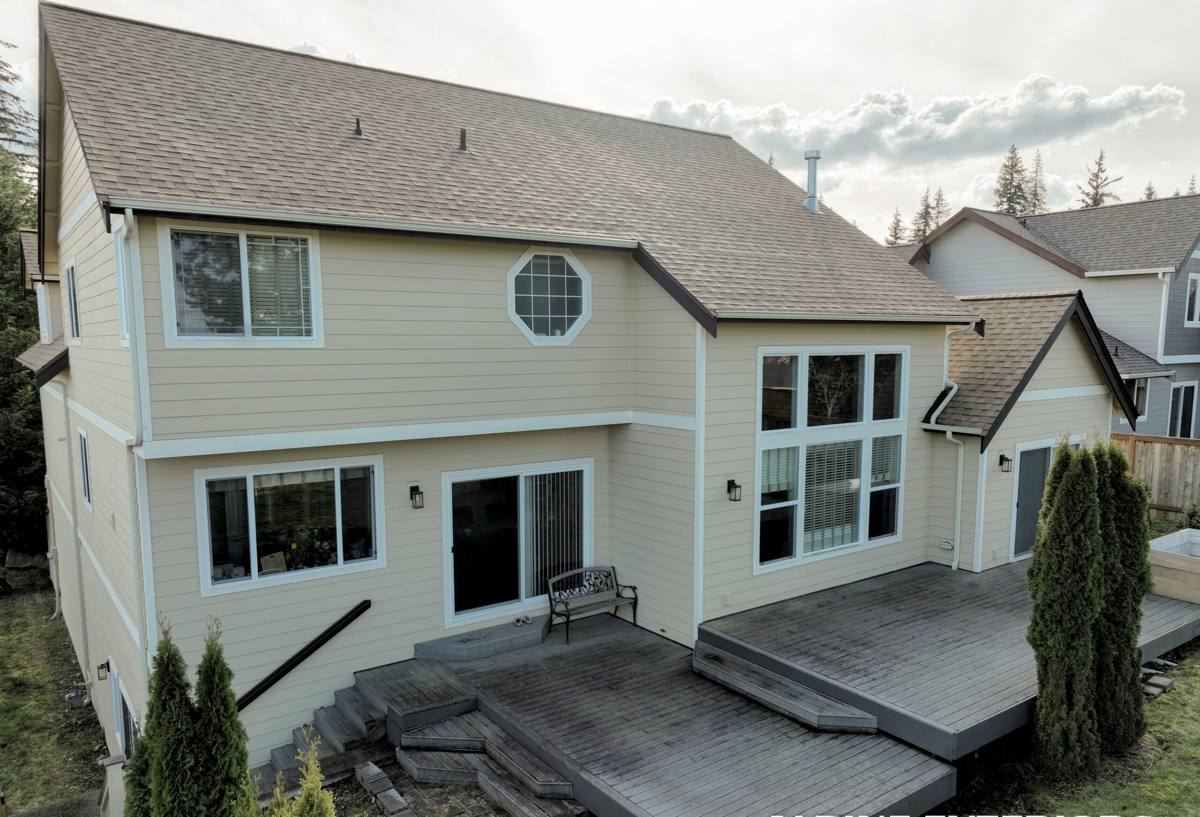
Every repair estimate on March Point starts the same way: we're not just looking at the spot the homeowner called about, we're looking at the whole wall system around it. A cracked board or a stained corner is often a symptom, not the problem itself. The real question is always where the water is getting in, how long it's been getting in, and what's behind the siding by the time we pull a board.
What we check beyond the visible damage
- Condition of the house wrap or building paper behind the damaged section
- Whether flashing above windows, doors, and trim is still doing its job
- Caulk and sealant condition at butt joints, corners, and penetrations
- Fastener condition — corroded or backed-out nails are common in salt-exposed areas
- Soft or spongy sheathing, which tells us the damage has gone past the siding itself
- Moss and algae growth patterns, which usually point to a wall that stays wet longer than it should
This matters because a fast, surface-level patch on salt-exposed siding tends to fail again within a season or two. A repair done right addresses the water path, not just the cosmetic gap.
Salt Air and Wind-Driven Rain: The Two Forces Doing Most of the Damage
Salt air is corrosive to fasteners, metal flashing, and any exposed steel trim components. Once fasteners start to corrode, they lose holding power, siding starts to loosen, and small gaps open up that wind-driven rain can exploit. On an exposed peninsula like March Point, rain rarely falls straight down — wind pushes it sideways and upward under laps and around trim in a way that standard lapped siding on a sheltered inland lot rarely deals with.
That combination — corroding fasteners plus wind-driven moisture intrusion — is the single most common root cause behind the repair calls we get from this part of Anacortes. It's also why we pay close attention to fastener material and flashing detail on every repair, not just the board that's visibly cracked or stained.
Moss, Algae, and the Long Skagit County Damp Season
Skagit County doesn't just get rain — it gets long stretches of overcast, damp weather where north-facing and shaded walls barely dry out between storms. On March Point, with the added moisture off the water, that damp season runs even longer. Moss and algae aren't just a cosmetic nuisance in that environment; they hold moisture directly against the siding surface, and over months that constant dampness breaks down caulk joints, degrades paint or factory finish, and eventually finds its way into seams and fastener holes.
Repairing siding without addressing the moisture retention that caused the moss to grow in the first place is a short-term fix. Part of doing this correctly is looking at why a particular wall stayed wet — poor sun exposure, a gutter dumping water against the wall, vegetation crowding the siding — and flagging it, even when it's outside the scope of the repair itself.
Signs a March Point Home Needs Siding Repair
Some of these are obvious from the ground; others take a closer look. If you're seeing more than one of these, it's worth getting an inspection before the next wet season sets in.
- Cracked, split, or warped boards, especially near corners and window trim
- Soft spots you can press in with a thumb — a strong sign of moisture behind the siding
- Bubbling, peeling, or chalking paint that keeps coming back after repainting
- Dark streaking or persistent moss/algae growth that returns after cleaning
- Visible gaps at butt joints, corners, or around windows and doors
- Fasteners that have backed out or show rust staining on the siding face
- Interior signs — musty smell, discoloration on interior walls near exterior corners
What a Correct Siding Repair Actually Involves
A correct repair isn't just swapping a damaged board for a new one. It includes checking and, where needed, replacing the underlying weather barrier, correcting flashing details that let water in, re-fastening with corrosion-resistant fasteners appropriate for a salt-exposed site, and sealing joints with products rated for the exposure the wall actually sees. Only after that groundwork is right does the visible patch go back on.
Repair vs. full replacement — how we think it through
| Factor | Favors Repair | Favors Full Replacement |
|---|---|---|
| Extent of damage | Isolated to one or two wall sections | Recurring damage across multiple walls |
| Sheathing condition | Solid, dry sheathing behind damaged area | Soft or rotted sheathing found in multiple spots |
| Siding material | Newer Hardie or sound fiber cement | Aging wood, LP, or vinyl nearing end of service life |
| Color/finish match | Repair area not highly visible or close match available | Fading makes any patch visually obvious |
| Age of overall siding | Siding is under 10-15 years old | Siding is original and decades old |
There's no universal answer — it comes down to what we actually find once boards come off, not just what's visible from the driveway.
Matching Repairs on James Hardie Siding
We install exclusively James Hardie fiber cement siding, and that has a direct benefit when it comes to repairs: Hardie's ColorPlus factory-finish system is manufactured to a consistent standard, which makes matching a repaired section to existing siding far more predictable than trying to match a faded, field-painted board or a discontinued vinyl profile. When a home already has Hardie siding, a well-executed repair can be genuinely difficult to spot once it's painted or matched to the ColorPlus finish.
For homes on March Point still sided in materials like older wood, LP SmartSide, or vinyl, we'll repair what's there when repair is the sensible call, but we'll also give you an honest read on how much longer that material has left given the exposure this location sees. Fiber cement doesn't absorb moisture the way wood-based sidings can, and it doesn't have the heat-sensitivity or seam behavior that makes vinyl a harder long-term fit for a wind-exposed waterfront lot. That's a large part of why we standardized on Hardie for full installs, even though we'll still repair whatever material is currently on your walls.
Our Process for a March Point Repair Job
- On-site inspection — we look at the damaged area and the surrounding wall system, not just the spot you called about
- Honest scope — we tell you plainly whether this is a targeted repair, a larger repair, or a sign the siding is due for replacement
- Root cause check — flashing, caulking, drainage, and moisture path get addressed, not just the visible board
- Material match — for Hardie siding, we match ColorPlus finish and profile; for other materials, we find the closest sound match available
- Correct fastening and sealing — corrosion-resistant fasteners and sealants rated for salt air and wind-driven rain exposure
- Final walk-through — we show you what we found, what we fixed, and flag anything else worth watching
Why Local Experience on March Point Matters
A crew that mostly works sheltered, inland lots around Anacortes and Skagit County can do fine work and still misjudge what a wind-exposed peninsula site needs — the wrong fastener, a caulk joint that isn't rated for the exposure, a flashing detail that works fine elsewhere but not here. Working this stretch of shoreline regularly means we already know which failure patterns show up on March Point specifically, and we build repairs to hold up against them rather than against a generic set of assumptions.
That local pattern-recognition is often the difference between a repair that lasts and one that reopens in a year or two. It's also why we're upfront when a "repair" isn't really the right call anymore — there's no benefit to either of us in patching a wall that's a season away from needing full replacement.
If you're seeing cracked boards, soft spots, stubborn moss, or paint that won't stop peeling on your March Point home, we're happy to take a look and give you a straight answer on what it needs. Reach out for a free, no-pressure estimate — no obligation, just an honest assessment of what your siding is telling you.