 Anacortes Exterior
 Roofing for a Corner of Anacortes That Takes a Real Beating
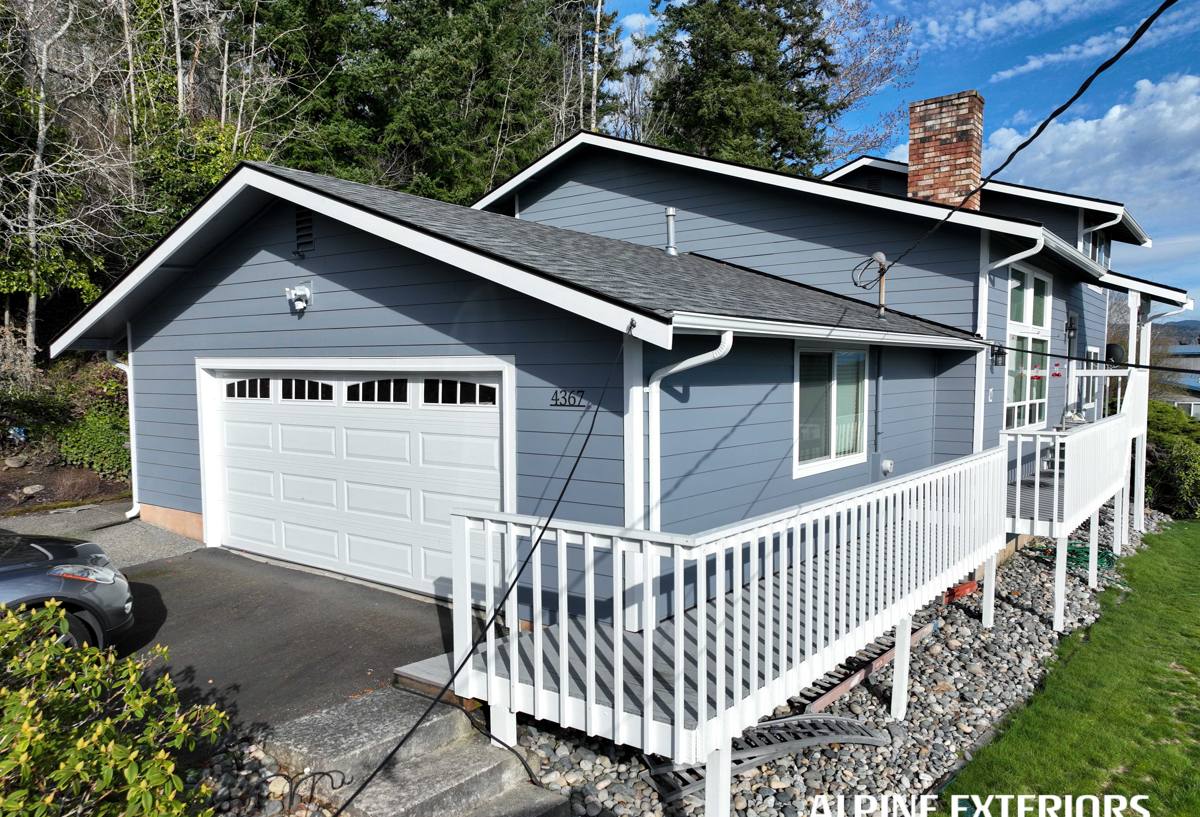
March Point sits close enough to open water that homes here deal with weather most inland Skagit County properties don't have to think about as much. Salt-laden air, wind-driven rain coming off the water, and long stretches of shade and dampness that keep moss growing nearly year-round all add up to faster wear on a roof than you'd see on a similar house twenty minutes inland. A new roof installation out here isn't just about swapping old shingles for new ones — it's about building an assembly that's matched to this specific exposure.
We install roofs across Anacortes and the surrounding Skagit County area, and March Point comes with its own pattern of problems we see over and over: fastener corrosion, moss working into shingle mats, and flashing that failed years before the shingles around it looked worn out. A correct installation here accounts for all of that from the start, rather than treating it like a generic re-roof.
What This Climate Actually Does to a Roof
Salt Air and Metal Components
Airborne salt accelerates corrosion on anything metal — nail heads, flashing, drip edge, vent stacks, and the fasteners holding it all together. On a roof that isn't detailed with corrosion-resistant materials, this shows up as rust streaking, pitted metal, and fasteners that lose their grip years before the manufacturer's stated lifespan. It's a slow process, which is exactly why it gets missed until a leak forces the issue.
Driving Rain and Wind Exposure
Homes with more open exposure to wind off the water see rain driven sideways under normal conditions, not just during storms. That puts real stress on every horizontal lap, every flashing detail, and every penetration point on the roof. A shingle or seam that would hold up fine in a sheltered, tree-lined lot can leak here if it wasn't installed with wind-driven water in mind.
Moss and Prolonged Dampness
Skagit County's marine climate means roofs stay damp for long stretches, especially on north-facing slopes or under tree cover. Moss doesn't just sit on top of shingles — it works its rhizoids under the shingle mat, lifts tabs, and holds moisture against the roof deck. Left unaddressed, moss growth shortens a roof's usable life significantly, regardless of the material underneath it.
Repair, Patch, or Full Replacement?
Not every roofing problem on a March Point home means a full tear-off, but a lot of homeowners wait too long trying to patch a roof that's already past the point where patching makes sense. A few honest signs that replacement is the right call rather than another round of repairs:
- Granule loss heavy enough that shingles look bald or patchy in multiple areas, not just one spot
- Repeated leaks in different locations rather than one recurring spot
- Soft or spongy decking felt underfoot in the attic, or daylight visible through the roof boards
- Shingles curling, cupping, or cracking across large sections rather than isolated tabs
- Flashing that's rusted through or separating at chimneys, valleys, and wall intersections
- The roof is 18-25+ years old (depending on material) and repairs are becoming frequent
If a roof is showing one or two of these in a small area, a targeted repair can still be the right, honest answer. We'll tell you that when it's true — a new roof is a major expense, and we're not going to recommend a full replacement when a repair will genuinely hold up.
What a Correct New Roof Installation Involves
Tear-Off and Deck Inspection
We remove the existing roofing down to the deck rather than layering over old material. That's the only way to actually see what's underneath — soft spots, old water staining, rotted sheathing near valleys and penetrations, or decking that was never properly nailed. Any damaged sheathing gets replaced before anything new goes down; installing new roofing over a compromised deck just hides the problem for a few more years.
Underlayment and Water Barrier Detail
Given how much wind-driven rain and prolonged dampness this area sees, underlayment choice and installation matter more here than in drier, more sheltered parts of the county. We use synthetic underlayment as the standard base layer, with self-adhered ice-and-water barrier at vulnerable spots — eaves, valleys, and around every penetration — to give the roof a real second line of defense if wind-driven water ever gets past the shingles themselves.
Flashing That's Actually Built to Last Here
Flashing failure is one of the most common causes of roof leaks, and it's rarely the shingles that fail first near the coast — it's the metal. We use corrosion-resistant flashing and fastener materials at chimneys, skylights, walls, and valleys, and we form and seal it correctly rather than relying on caulk to make up for a poor detail. Caulk is a maintenance item, not a waterproofing strategy.
Ventilation That Matches the Climate
Proper intake and exhaust ventilation keeps the attic and roof deck dry from the inside, which matters as much as keeping rain out from the outside. Poor ventilation traps moisture, accelerates deck rot, and can shorten shingle life from the underside — a problem that's easy to miss because it's invisible from the ground.
Choosing a Roofing Material for This Exposure
There's no single "best" roofing material for every March Point home — it depends on your home's design, your budget, and how much long-term maintenance you want to take on. Here's how the common options actually compare in this specific climate:
| Material | How It Handles Salt Air & Moisture | Moss Resistance | Typical Lifespan |
|---|---|---|---|
| Architectural asphalt shingle | Good, with corrosion-resistant fasteners and flashing | Moderate — benefits from algae-resistant granules | 25-30 years |
| Standing seam metal | Very good when properly coated and fastened | High — sheds moisture quickly, little for moss to grip | 40-50+ years |
| Synthetic/composite shingle | Good; won't rust or corrode itself | Moderate to high depending on product | 30-50 years |
| Cedar shake/shingle | Requires diligent maintenance in damp, salt-air climates | Low without regular treatment | 20-30 years with upkeep |
We're honest about trade-offs rather than pushing one product. Cedar can look excellent, but it demands more upkeep in a damp, moss-prone climate than most homeowners want to commit to. Metal costs more up front but asks the least of you over the decades that follow. Asphalt shingle remains the most common choice because it balances upfront cost, appearance, and performance well — provided the installation details around it are done right.
How Our Installation Process Works
- On-site assessment — we inspect the existing roof, decking condition (where accessible), ventilation, and any problem areas you've noticed, then measure and photograph the roof for an accurate estimate.
- Written estimate and material selection — you get a clear scope of work and pricing before anything is scheduled, with material options explained in plain terms.
- Permitting — we handle the permit process required for re-roofing in the City of Anacortes or unincorporated Skagit County, depending on the property's location.
- Protection of the property — landscaping, siding, and outdoor living areas are covered or protected before tear-off begins.
- Tear-off and deck inspection — old roofing is removed, the deck is inspected, and any needed sheathing repairs are addressed and documented.
- Underlayment, flashing, and ventilation installation — installed to the details described above, matched to your home's specific exposure.
- Roofing material installation — installed to manufacturer specifications, which is also what keeps material warranties valid.
- Cleanup and magnetic nail sweep — full debris removal and a sweep for stray fasteners around the property.
- Final walkthrough — we go over the finished roof with you before calling the job complete.
What Affects the Cost of a March Point Re-Roof
| Factor | Why It Matters |
|---|---|
| Roof size and pitch | More surface area and steeper pitches mean more material, labor time, and safety setup |
| Number of layers to remove | Tear-off of multiple existing layers adds labor and disposal cost |
| Deck repair needed | Rotted or soft sheathing found during tear-off adds material and labor not visible in advance |
| Material choice | Asphalt shingle, synthetic, and metal roofing carry different material and labor costs |
| Roof complexity | Valleys, dormers, skylights, and chimneys each add flashing work and time |
| Access and exposure | Wind-exposed or hard-to-access roofs near the water may require extra staging or safety measures |
Every one of these gets accounted for in a written estimate before work starts — we don't believe in surprise change orders for anything we could have identified up front. Deck repair is the one variable that sometimes can't be fully known until tear-off, and we'll always show you what we found and what it costs before proceeding.
Why a Crew That Already Works March Point Matters
Roofing crews who mainly work drier, more sheltered parts of the region don't always build in the corrosion-resistant hardware, extra flashing attention, or moss-focused ventilation planning that a March Point home benefits from — because they don't see the failure patterns caused by salt air and prolonged dampness as often. A crew that already works this stretch of Anacortes knows which details to upgrade as standard practice rather than as an afterthought, and knows the local permitting process for both the City of Anacortes and Skagit County without extra back-and-forth.
That local familiarity also shows up in smaller, practical ways — knowing how to stage material and protect landscaping on wind-exposed lots, understanding which roof orientations in this area tend to hold moss longest, and being realistic with you about maintenance expectations specific to this climate rather than repeating generic manufacturer talking points.
Keeping a New Roof Performing in This Climate
A well-installed roof still benefits from basic upkeep, especially in a climate this damp and moss-prone. A simple maintenance routine goes a long way toward protecting your investment:
- Have moss growth removed gently (not power-washed) as soon as it appears, rather than letting it establish
- Keep gutters clear so water isn't backing up under the roof edge, especially during fall and winter storms
- Trim back overhanging branches to reduce shade, debris buildup, and moss-friendly conditions
- Schedule a visual roof inspection every year or two, particularly after major windstorms
- Address small flashing or sealant issues promptly — they're inexpensive fixes early and expensive leaks later
None of this replaces a correct installation, but it does extend the life of one considerably in a climate that doesn't give a roof much of a break.
Get a Straightforward Estimate for Your March Point Roof
If your roof is showing its age, or you just want an honest read on where it stands, we're glad to take a look. We'll walk the roof, explain what we find in plain terms, and put together a written estimate with no pressure attached — whether that ends up being a repair, a full replacement, or simply confirmation that you've got some time left. Reach out below to schedule a free estimate.