 Anacortes Exterior
 Why March Point Windows Wear Differently Than Windows Inland
March Point sits out on the water, surrounded by Fidalgo Bay and Padilla Bay, which means homes here take a different kind of weather beating than a house twenty minutes inland in Mount Vernon or Sedro-Woolley. Wind comes off the water with salt in it. Rain doesn't fall so much as get driven sideways into west- and south-facing walls. And because the air stays damp and mild for most of the year, anything organic — moss, algae, mildew — gets a long runway to take hold on sills, tracks, and exterior trim. Windows are one of the first things to show the wear from all of that, usually years before a homeowner expects it.
We're not describing a hypothetical. It's the reason vinyl frames chalk and go brittle faster near the water, why hardware corrodes sooner, and why a window that was installed with a marginal seal will telegraph that flaw as a drafty room or a foggy pane within a few winters instead of a decade or two. A window that's a fine fit for a dry inland lot isn't automatically a fine fit for March Point.
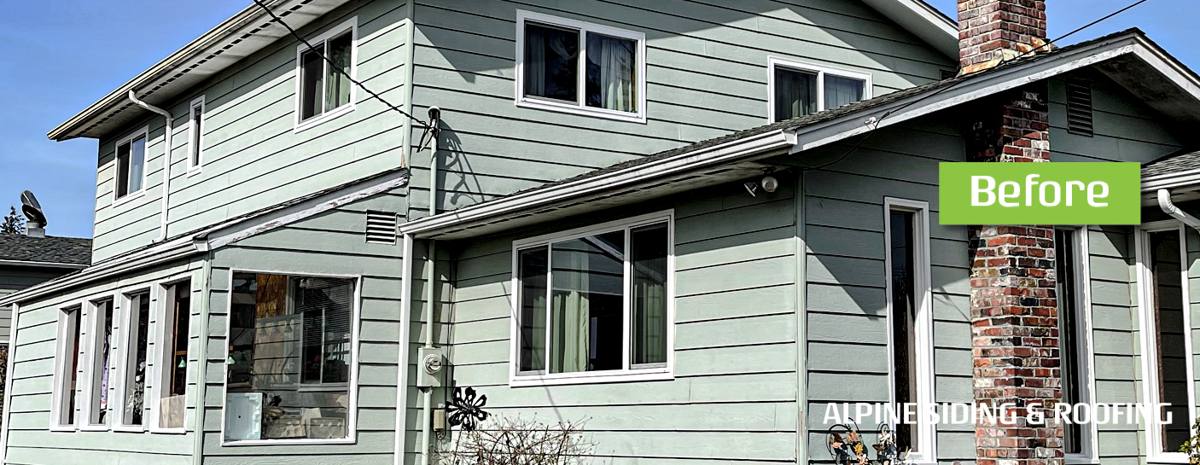
The Regional Climate Factors That Actually Drive Window Decisions
Salt Air
Airborne salt is corrosive to metal hardware — hinges, locks, balance systems, and lower-grade aluminum components. It also accelerates the breakdown of some sealants and finishes over time. This doesn't mean windows near the water are a bad idea; it means the hardware grade and finish matter more here than they would on a house set back from the shoreline.
Driving Rain
Wind-driven rain doesn't just sit against glass — it gets pushed up under sills and into any gap in the flashing or sealant. Skagit County building codes and good trade practice both assume this kind of exposure on waterfront and near-waterfront lots, which is why proper flashing detail and sill pan work matter more here than a quick caulk-and-go installation.
The Long Moss Season
Western Washington's damp stretch from fall through spring gives moss, algae, and mildew months to establish themselves on anything that stays wet — north-facing sills, window tracks, and trim that doesn't get much sun or airflow. Left alone, that buildup holds moisture against wood trim and frame joints, which is where rot problems usually start.
What "Energy-Efficient" Actually Means Here
Energy efficiency isn't just a sticker on the glass. In a marine climate like Anacortes and greater Skagit County, it's a combination of glass performance, frame material, and — most of all — installation quality. A high-performance window installed with a poor seal will still leak air and, eventually, water. A modest window installed correctly will often outperform it.
Glass and Frame Basics Worth Knowing
- Low-E coatings reduce heat loss in winter and heat gain in summer without noticeably changing how clear the glass looks.
- Double-pane with argon gas fill is the standard baseline for this region; triple-pane adds marginal efficiency but real cost, and mostly pays off on north- or west-facing walls with heavy wind exposure.
- Frame material affects both efficiency and how the window holds up to salt air and moisture — this is where we spend the most time with March Point homeowners.
| Frame Material | How It Handles Salt Air & Moisture | Maintenance |
|---|---|---|
| Vinyl (quality-grade) | Good — won't corrode; UV and salt exposure over many years can affect color and brittleness | Low |
| Fiberglass | Very good — dimensionally stable, resists warping and pitting near the water | Low |
| Wood (clad or unclad) | Weakest in this climate unless well-maintained — exposed wood is vulnerable to the moisture and moss issues described above | High |
| Aluminum (standard) | Poor without marine-grade hardware and finish — prone to corrosion and is a weak thermal performer | Moderate |
Signs Your March Point Home's Windows Are Underperforming
Most homeowners don't think about their windows until something goes wrong. Here's what actually indicates a problem worth addressing, versus what's just cosmetic:
- Fogging or a permanent haze between panes — this means the seal has failed and the insulating gas has escaped; it can't be cleaned away
- Visible daylight or a draft you can feel around the frame with the window closed and locked
- Soft, discolored, or spongy trim or sill wood — a sign moisture has been sitting there
- Moss or dark staining building up on sills or in tracks year after year despite cleaning
- Windows that are difficult to open, close, or lock — often a sign the frame has shifted or hardware has corroded
- A noticeable difference in room temperature near the window compared to the rest of the room
- Condensation forming on the inside of the glass regularly, even in normal humidity
What a Correct Installation Involves
The window itself is maybe half the equation. The other half is installation detail, and it's where a lot of the long-term problems we get called out to fix actually originate.
Removal and Inspection
We take the old window out carefully and actually look at what's behind it — sheathing, framing, and flashing condition. On a waterfront-adjacent property, this step matters more than usual, since hidden moisture damage is more common here than on a sheltered inland lot.
Flashing and Sill Pan Work
This is the step that determines whether driving rain stays outside the wall or works its way in over the following winters. A proper sill pan and correctly lapped flashing (water-shedding from top to bottom, every layer overlapping the one below it) is non-negotiable on a project like this, regardless of how good the window itself is.
Air Sealing and Insulation
The gap between the window frame and the rough opening gets sealed and insulated properly — not just caulked around the visible trim. This is one of the most common shortcuts in a rushed installation, and it's invisible until you notice the draft or the energy bill.
Exterior Trim and Finish
Trim gets finished and sealed in a way that sheds water and doesn't create a ledge for moss to establish itself. We also talk with homeowners about which sills and trim spots on their specific home are going to need occasional attention — usually the shaded, north-facing ones.
Choosing Materials Built for This Location
We steer March Point homeowners toward frame materials and hardware finishes that are proven to hold up in marine air rather than whatever is cheapest to stock. That's a professional standard we apply consistently, not a sales pitch for one brand over another — the honest trade-off is usually a modest upfront cost difference against a much longer service life and fewer callbacks for corroded hardware or degraded seals. We're glad to walk through the specific product lines we install and why, window by window, during an in-person estimate rather than make broad claims here.
Why a Crew That Already Works March Point Matters
A contractor who mostly works dry, inland lots can still do an adequate window install. But a crew that already works this specific stretch of Anacortes knows which wall orientations on a March Point home take the worst of the wind and rain, which sill details tend to fail first in this air, and how much slack (or none) to leave for material movement given the salt exposure. That's knowledge that comes from doing the work here repeatedly, not from a manufacturer's install manual. It's also why we don't treat every job as identical — a window on the sheltered east side of a house gets a different level of attention than one facing open water.
Cost Factors to Expect
Exact pricing depends on window size, frame material, glass package, and how much flashing or trim repair is needed once the old window comes out — we won't quote a number sight unseen. In general, expect the total to scale with these factors:
| Factor | Effect on Cost |
|---|---|
| Frame material (vinyl vs. fiberglass vs. wood-clad) | Fiberglass and clad options typically cost more upfront than standard vinyl |
| Glass package (double-pane vs. triple-pane, coatings) | Triple-pane and upgraded coatings add cost per window |
| Hidden moisture or framing damage found on removal | Can add repair scope not visible before the old window comes out |
| Number of windows and whether trim/siding is disturbed | Larger scopes typically bring a lower per-window cost |
Getting Started
If your March Point home has windows that feel drafty, fog between the panes, or just look tired from years of salt air and driving rain, we're happy to come take a look and give you a straight assessment — no pressure, no inflated urgency. Use the form below to request a free estimate, and we'll walk the property with you and talk through what actually needs doing.