 Anacortes Exterior
 Why Decks Near Similk Beach Wear Out Faster Than Inland Decks
A deck built three miles inland and a deck built along the Similk Beach shoreline are not the same project, even if the blueprints look identical. Homes near the water in this part of Skagit County deal with salt-laden air, near-constant humidity, and a moss and algae season that can run eight or nine months out of the year. That combination attacks a deck from every direction at once: salt air accelerates corrosion in fasteners and hardware, driving rain works its way into end grain and joints, and shade from evergreens plus persistent damp keeps moss and algae established on horizontal surfaces long after a drier neighborhood's deck has dried out.
None of this means a deck near Similk Beach can't last. It means the deck has to be built and replaced with those specific conditions in mind, not with generic lumberyard specs that assume a drier, less corrosive environment. When we replace a deck in this area, every material decision — framing, fasteners, decking, flashing — gets filtered through what actually holds up a few hundred yards from saltwater.
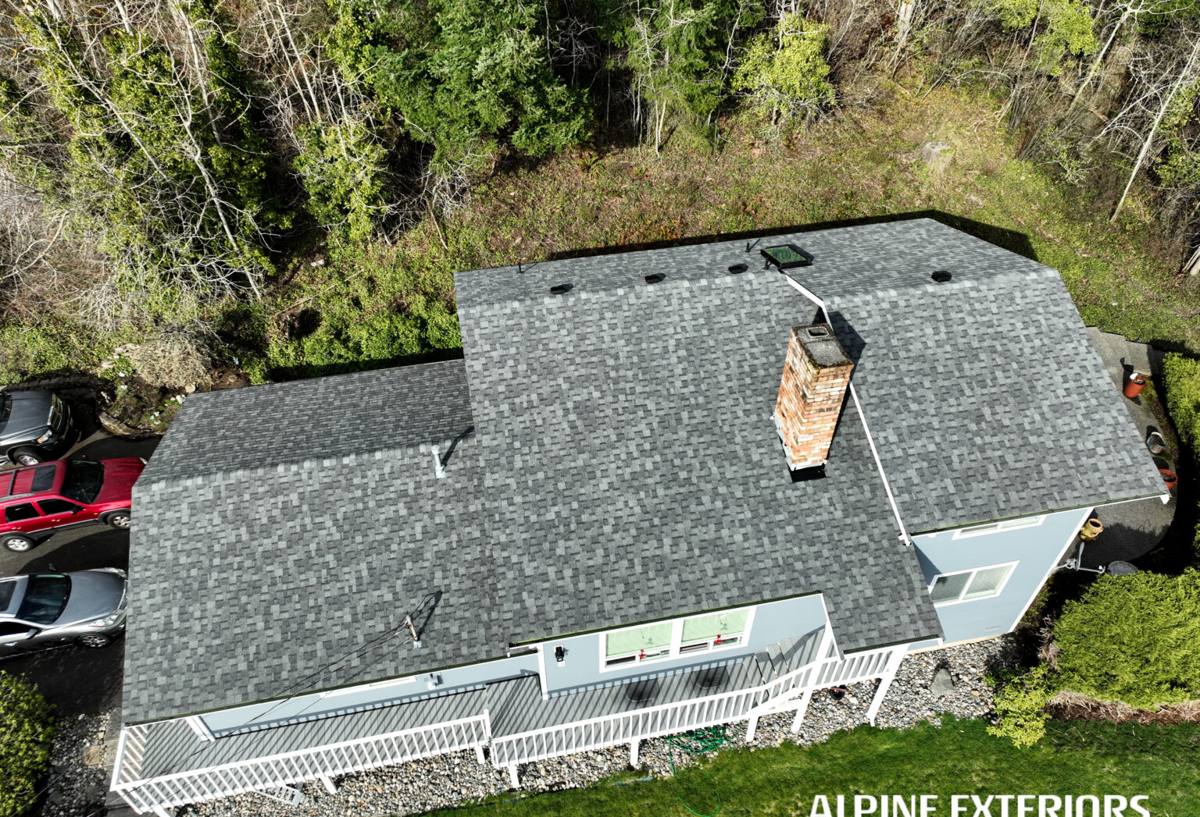
Signs a Deck Needs Replacement, Not Another Repair
We get a lot of calls asking whether a deck can be patched instead of replaced. Sometimes yes. But there's a point where repair stops being cost-effective and starts being a way to delay an inevitable full rebuild. Here's how we tell the difference on site:
- Soft or spongy decking in multiple areas, not just one board — usually means moisture has gotten under the surface coating and into the wood fibers broadly, not locally.
- Rust staining or corrosion streaks around fasteners, especially on a deck more than 12-15 years old — a sign the original hardware wasn't rated for this environment and is failing from the inside out.
- Ledger board separation or soft framing where the deck attaches to the house — this is a structural safety issue, not cosmetic, and it's one of the most common failure points we find on older decks near the water.
- Persistent moss or dark staining that returns within weeks of cleaning — usually means the wood has lost its ability to shed moisture and is holding water at the surface.
- Visible sag, bounce, or movement when walking across the deck or near the stairs — framing or footing failure, not something a surface repair fixes.
If a deck shows one or two of these, targeted repair can sometimes buy a few more years. If it shows several at once, a full replacement is usually the more honest recommendation — and cheaper in the long run than a string of patch jobs.
What a Correct Deck Replacement Actually Involves
A deck replacement done right is not just pulling up old boards and screwing down new ones. In a shoreline-adjacent environment like Similk Beach, the parts you don't see matter more than the decking surface itself.
Framing and Structure
We inspect and typically replace ledger boards, joists, beams, and posts as part of a full replacement, not just where they look obviously damaged — hidden rot at joist ends and ledger connections is common in humid coastal air and often isn't visible until the old decking is off. Framing lumber gets sized and spaced to current structural standards, which are frequently more conservative than what was used on older decks built decades ago.
Flashing and Water Management
The ledger-to-house connection is the single most important water management detail on any deck, and it's the spot most likely to fail on older builds. Correct flashing directs water away from the house band joist instead of letting it wick behind the siding, which is exactly the kind of slow, invisible damage that shows up as rot years later. In a rain-heavy climate this detail alone determines whether a deck protects the house or slowly damages it.
Fasteners and Hardware
This is where salt air does the most damage over time, and it's the detail most often under-specified on older or budget builds. Standard galvanized fasteners can corrode faster near saltwater than their rated lifespan would suggest inland. We use stainless steel or coastal-rated hardware for structural connections, hangers, and ties on jobs in this area — it costs more upfront and pays for itself by not needing to be replaced along with the deck a second time.
Footings
Soil near shoreline properties can behave differently than soil further inland — more moisture retention, sometimes sandier or less stable composition. Footings get sized and set to current frost depth and bearing requirements for the site conditions, not just copied from whatever the original builder used.
Choosing Decking Material for a Salt Air, High-Moisture Climate
There's no single "right" decking material for every home — it depends on budget, maintenance appetite, and how close the deck sits to the water and prevailing weather. Here's how the common options actually perform in this specific climate:
| Material | Upfront Cost | Maintenance Needed | Behavior in Salt Air & Moisture |
|---|---|---|---|
| Pressure-treated wood | Lowest | Annual cleaning, periodic sealing/staining | Performs well if sealed regularly; neglect leads to moss, graying, and surface checking faster than inland |
| Cedar | Moderate | Regular sealing to maintain color and moisture resistance | Naturally decay-resistant but still needs upkeep in constant damp; will gray without maintenance |
| Composite decking | Higher | Occasional washing, no sealing/staining | Resists rot and doesn't need sealing, but can still host surface mold/algae in shaded, damp spots — needs periodic cleaning |
| PVC decking | Highest | Occasional washing | Fully moisture-resistant material, generally the least maintenance in a wet, salt-air environment |
Our default recommendation for homes right along the water is composite or PVC decking specifically because it removes the sealing/staining maintenance cycle that's easy to fall behind on in a climate where dry, workable weekends are limited. That said, plenty of homeowners prefer real wood for the look and are willing to keep up with maintenance — that's a reasonable choice too, as long as it's an informed one going in.
Substructure Materials Matter Too
Whatever decking material you choose on top, the framing underneath should use appropriately rated lumber and connectors for a moist, salt-influenced environment — this is not the place to save money, since it's the part that's expensive and disruptive to fix later once decking is installed over it.
Permits and Shoreline Considerations Near Similk Beach
Properties near Similk Beach and other Skagit County shoreline areas can fall under additional review beyond a standard building permit, particularly for decks close to the water, on steep banks, or within a shoreline management jurisdiction. Setback requirements, height limits, and sometimes environmental review can apply depending on exactly where a property sits relative to the water and any critical areas designation.
We pull the required permits and handle this coordination as part of the job. If your lot has any shoreline, bluff, or critical-area overlay, it's worth confirming what applies before demolition starts rather than after — a deck rebuilt without the right permit can create real headaches at resale or refinancing.
Our Deck Replacement Process
The steps don't change much from job to job, but the details within each step are where a coastal rebuild differs from an inland one.
- On-site assessment — we inspect the existing deck, ledger connection, framing, and footings, and check for signs of the moisture and corrosion patterns common in this area.
- Scope and material discussion — we walk through decking material options, hardware upgrades, and any structural changes needed, with honest pros and cons for each.
- Permitting — we confirm what's required for the property and file accordingly, including any shoreline-related review if applicable.
- Demolition — full removal of the old deck surface and, where needed, framing and footings, with an eye out for hidden rot at the ledger and joist ends.
- Framing and flashing — new structural framing, correctly flashed ledger connection, and coastal-rated fasteners throughout.
- Decking installation — surface material installed per manufacturer spec (critical for composite and PVC warranties), with attention to drainage and airflow underneath.
- Final walkthrough — we go over the finished deck with you, including what maintenance (if any) the chosen material needs going forward.
Maintaining a New Deck in a Salt Air, Moss-Prone Climate
A correctly built deck still needs some basic upkeep to get its full lifespan out of this climate. This applies regardless of which material you choose:
- Sweep or blow off leaves and debris regularly — trapped organic matter holds moisture against the surface and feeds moss growth.
- Wash the deck surface at least once or twice a year to remove algae and moss buildup before it gets established, more often in heavily shaded areas.
- Check and clear gaps between boards so water can drain through instead of pooling.
- For wood decks, reseal or restain on the schedule the product calls for — don't wait until graying or checking is already visible.
- Inspect the ledger board area and any visible fasteners once a year for early rust staining or separation.
- Trim back overhanging vegetation where possible to improve airflow and sun exposure on the deck surface.
Why Hiring a Crew That Already Works Similk Beach Matters
Deck replacement isn't a specialty unique to the coast, but building one that actually holds up near saltwater is a different exercise than building one in a dry inland neighborhood. A crew that regularly works the Similk Beach area already knows which fastener grades hold up, what flashing details actually stop water intrusion in this rainfall pattern, and what Skagit County shoreline permitting looks like in practice — not just in theory. That familiarity shows up in fewer surprises during the project and a deck that's specified correctly the first time, instead of one built to generic standards and then repaired repeatedly as coastal conditions expose the shortcuts.
It also means realistic guidance on material choice. We're not going to recommend the most expensive option by default, and we're not going to talk you into a low-maintenance material if you genuinely want the look of real wood and are willing to maintain it. The goal is a deck that matches your budget, your maintenance appetite, and the reality of the climate it's sitting in.
Get a Straightforward Estimate
If your deck near Similk Beach is showing soft spots, rust staining, persistent moss, or just feels like it's on borrowed time, we're happy to take a look and give you an honest read on repair versus replacement. There's no pressure and no obligation — just a clear assessment and a straightforward estimate using the form below.