 Anacortes Exterior
 Why Decks in Bow Wear Out Faster Than You'd Expect
Bow sits close enough to Samish Bay and Padilla Bay that salt-laden air is a constant factor in how exterior materials age here, even on homes that aren't waterfront. Add Skagit County's long wet season, heavy driving rain off the water, and months of low sun angle that keep shaded deck boards damp, and you get a climate that's genuinely tough on outdoor structures. A deck that would last two decades in a dry inland climate can show real structural trouble in half that time out here if it wasn't built with the right materials and details from the start.
We see the same failure patterns on Bow decks over and over: ledger boards rotting where they meet the house because flashing was skipped or done wrong, fasteners bleeding rust streaks down composite or wood decking, joists softening from underneath where nobody ever looks, and a green-black film of moss and algae building up on the walking surface every fall through spring. None of these are mysteries. They're what happens when a deck is built to a generic spec instead of to the conditions actually present in this part of Skagit County.
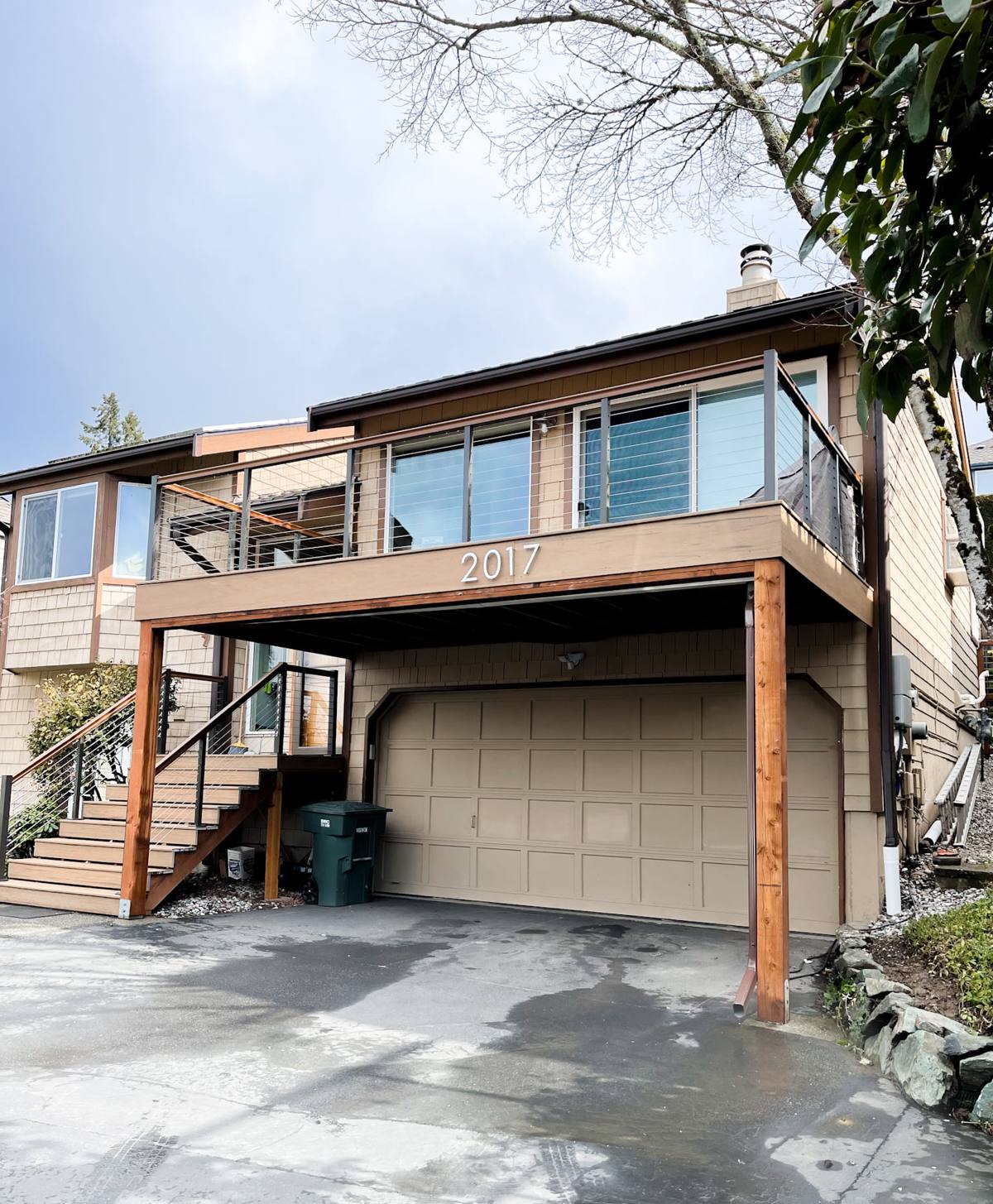
What "Correct" Looks Like for a Bow Deck Replacement
Replacing a deck is a chance to fix the things that caused the last one to fail, not just swap old boards for new ones. A proper replacement addresses the whole system, not just the surface.
Ledger Attachment and Flashing
The single most common point of failure on decks in our area is the ledger board — the piece that attaches the deck to the house. If water gets behind it, it rots the ledger, the rim joist, and sometimes the wall framing behind it, often long before anyone notices from the outside. A correct install uses proper flashing that sheds water away from the house, not just caulk and hope. Given how much rain Skagit County sees over a typical winter, this detail alone determines whether a deck lasts 10 years or 30.
Fasteners and Hardware
Salt air accelerates corrosion on standard fasteners and connectors, which is why we spec stainless steel or heavy hot-dip galvanized hardware rated for coastal exposure on Bow projects. Cheaper coated screws and joist hangers can start showing surface rust within a couple of seasons this close to the water, and once hardware corrodes it weakens before it looks bad enough to alarm anyone.
Joist Protection and Framing
Framing lumber that isn't protected from moisture will eventually rot from the top down, even when it's pressure-treated, because treatment protects against decay organisms but doesn't stop water from sitting in cuts, screw holes, and joist tops. We use joist tape or an equivalent barrier on structural framing so water sheds off instead of soaking in — a small material cost that has an outsized effect on how long the substructure holds up.
Drainage and Airflow Underneath
A deck built low to the ground, or over poorly graded soil, traps moisture underneath where it has no way to dry out between rain events. That's exactly the environment moss, mold, and rot organisms need. Where grading and clearance allow, we build in airflow and make sure water drains away from the house and the footings instead of pooling under the deck.
Decking Material: What Actually Holds Up Here
There's no single "best" decking material — there's a best material for a given budget, maintenance appetite, and how much shade and moss exposure the site gets. Here's the honest tradeoff breakdown for Bow conditions:
| Material | How it handles moss/moisture | Maintenance | Typical lifespan here |
|---|---|---|---|
| Pressure-treated wood | Needs regular sealing or moss builds up fast in shade | Annual cleaning, periodic re-sealing | 10–15 years |
| Cedar | Naturally moisture-resistant but surface still needs upkeep | Sealing/staining every 1–2 years | 15–20 years |
| Composite decking | Won't rot, but can still grow surface moss/algae in shaded, damp spots | Periodic washing, no sealing | 25–30+ years |
| PVC/capped composite | Best moisture and moss resistance of the common options | Occasional washing | 25–30+ years |
Composite and capped composite boards have become the default recommendation for shaded or partially shaded Bow properties because they don't feed the same moss and algae growth that wood surfaces do, and they don't rot from the surface down the way wood can. That said, plenty of homeowners want the look and feel of real wood, and cedar is a legitimate choice as long as you're realistic about the maintenance schedule it needs to keep performing in this climate.
Dealing With Moss, Algae, and Surface Staining
Even the most moisture-resistant decking will show some green or black film in shaded, north-facing, or tree-covered spots — that's biology, not a product defect. What matters is how the deck is built and finished to minimize it and how easy it is to clean off:
- Grooved or heavily textured board profiles hold moisture and organic debris longer than smoother profiles — worth weighing in shaded yards
- Gaps between boards should be sized correctly for drainage, not tightened up for looks at the expense of water shedding
- Overhanging trees and shrubs near the deck keep it damp longer after rain and add falling debris that feeds moss growth
- A yearly wash-down (not pressure-washing wood aggressively, which damages the surface) keeps moss from getting a foothold
- Wood decking benefits from a mildewcide-containing sealer reapplied on schedule; composite and PVC generally just need soap and water
Our Deck Replacement Process
We keep this straightforward and we walk you through it before any work starts:
- On-site assessment — we inspect the existing deck, ledger connection, framing, and footings to understand what failed and why, not just how it looks on the surface.
- Scope and material walkthrough — we go over decking material options, hardware, and any structural repairs needed, with honest tradeoffs so you can pick what fits your budget and maintenance preference.
- Permitting — deck replacements in Skagit County often require a permit depending on size, height, and scope of work; we handle that process rather than leaving it on you.
- Demolition and framing repair — old decking, and any rotted framing or ledger material we find, gets removed and replaced before new decking goes down.
- Flashing, hardware, and structural work — proper ledger flashing, corrosion-resistant fasteners, and joist protection go in as standard practice, not an upsell.
- Decking installation — boards are installed with correct spacing and fastening for the material chosen.
- Final walkthrough — we go over the finished deck with you, including a realistic maintenance schedule for whatever material you chose.
What to Check Before You Hire Anyone for This
Deck replacement is structural work, not just carpentry — a poorly built deck is a safety issue, not just a cosmetic one. Before you hire a crew for a Bow property, it's worth confirming:
- They pull permits when the job requires one, rather than skipping that step
- They can explain their ledger flashing detail specifically, not just wave at "we flash everything"
- They use stainless or coastal-rated hardware, especially this close to Samish Bay and Padilla Bay
- They inspect and address framing and footing condition, not just the visible decking
- They carry proper licensing and insurance for structural exterior work
Why Local Experience in Bow Matters
A crew that primarily works drier, inland climates can build a technically sound deck that still underperforms here, simply because they're not used to designing for salt air corrosion, near-constant winter moisture, and shaded moss buildup as the default condition rather than the exception. Working regularly in Bow and the surrounding Skagit County area means we're specifying hardware, flashing details, and material choices based on what actually holds up in this exact environment — not a generic regional average. That local pattern recognition is often the difference between a deck that needs attention again in eight years and one that goes twenty-five.
Timing Your Deck Replacement
Deck replacement can happen in most seasons, but scheduling around Skagit County's wettest months makes for a smoother project — framing and flashing work goes faster and more reliably in drier conditions, and it gives new material a chance to settle in before the next heavy rain season arrives. If your deck already shows soft spots, rust streaks at the fasteners, or separation at the ledger, it's worth having it looked at sooner rather than waiting, since framing damage tends to spread through a wet winter rather than stay put.
If your deck is showing its age, or you just want an honest opinion on whether it needs replacement or repair, we're glad to take a look. Reach out for a free, no-pressure estimate using the form below.