 Anacortes Exterior
 Why Oak Harbor Decks Wear Out Faster Than You'd Expect
A deck in Oak Harbor lives a harder life than the same deck would in a drier inland climate. The combination of salt-laden air off the water, long stretches of driving rain, and a moss season that can run from fall through spring means wood and fasteners are under near-constant moisture stress for much of the year. Even decks built with decent materials and reasonable workmanship start showing problems within a decade if the details weren't handled correctly the first time.
Salt air accelerates corrosion in metal fasteners, brackets, and hardware. Once a nail, screw, or joist hanger starts rusting, it loses holding strength long before it looks obviously bad from the surface. Combine that with moisture that gets trapped under moss, algae, and debris, and you get slow, hidden decay in the framing and ledger board — the parts of a deck that actually hold it up, not just the boards you walk on.
None of this means every deck in the area is doomed. It means repair work here has to account for what's actually happening underneath, not just what's visible on the surface.
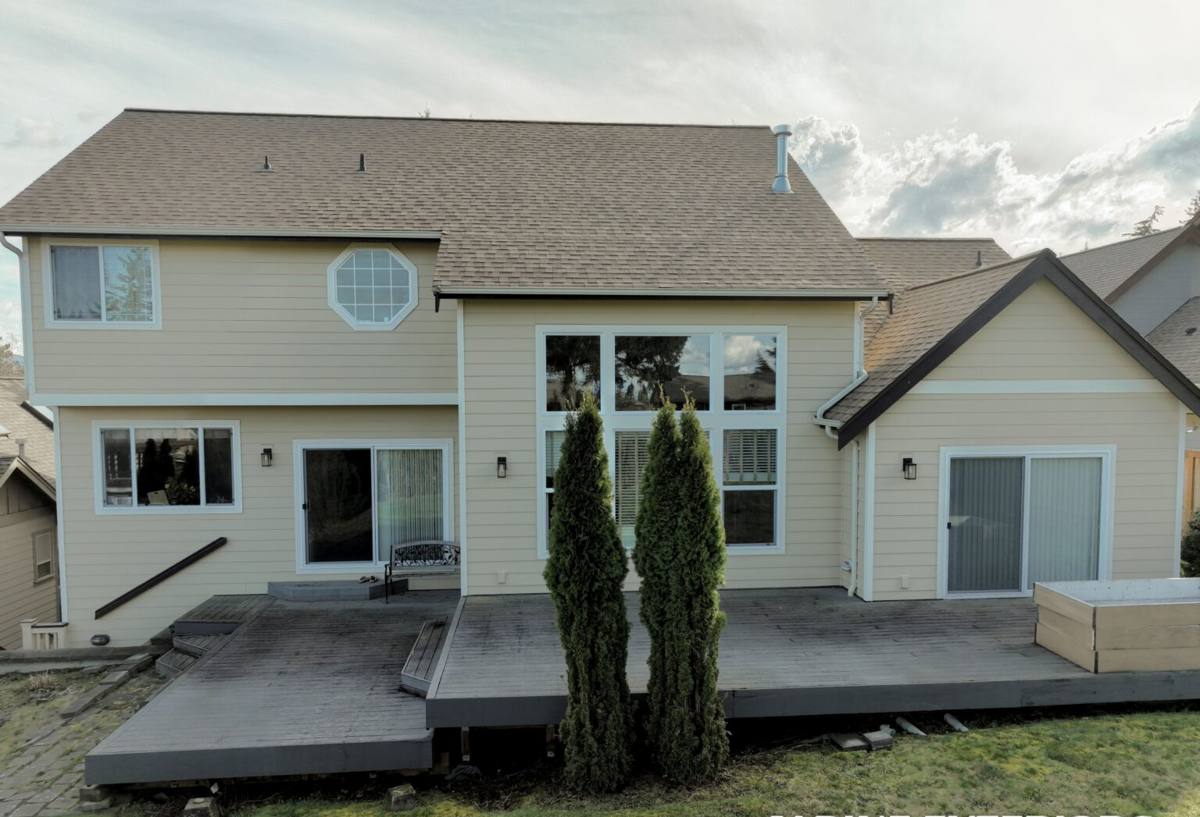
Signs Your Deck Needs Repair, Not Just a Cleaning
A pressure wash and a fresh coat of stain can make a tired deck look presentable again, but that doesn't address structural issues underneath. Here's how to tell the difference between a deck that needs cosmetic attention and one that needs real repair.
Cosmetic wear (cleaning or refinishing usually covers it)
- Faded or graying wood with no soft spots
- Surface mildew or light moss that wipes off without leaving a soft patch underneath
- Minor splintering on the top face of boards
Structural warning signs (repair needed)
- Boards that flex or feel spongy when you walk on them
- Visible gaps opening up between the deck and the house at the ledger board
- Railings or posts that wiggle more than a firm push should allow
- Rust streaks running down from screw heads or hardware
- Dark staining or a soft, crumbly texture where boards meet joists
- Stairs that feel bouncy or uneven underfoot
Any one of these on its own might be minor. Several together usually means moisture has been working on the structure for a while, and that's worth a proper inspection before it turns into a safety issue or a full rebuild.
What a Correct Deck Repair Actually Involves
Deck repair done right isn't just swapping out a few bad boards. It starts with understanding why those boards failed in the first place, because if the cause isn't addressed, the same spot fails again in a few years.
The ledger board connection
This is the board that attaches the deck to your house, and it's the single most important structural point on the whole system. In a wet climate, it's also the point most prone to trapped moisture, since water runs down the siding and can collect right where the ledger meets the house. We check flashing, fastener condition, and whether water has been getting behind the connection before deciding whether a section needs to be reinforced or rebuilt.
Joists and framing
Joists carry the weight of everyone standing on the deck. Rot here doesn't always show from below — it can hide under decking boards or behind rim joists. A proper repair means probing suspect areas with an awl or screwdriver to find soft wood, not just eyeballing it.
Fasteners and hardware
Given how corrosive the air can be near the water, hardware matters more here than in a lot of places. We replace corroded fasteners with hot-dip galvanized or stainless connectors rated for exterior and coastal-adjacent use, not the mild-steel screws that were often used on older builds.
Decking boards and railings
Individual board replacement is the most visible part of a repair, but it only works long-term if the framing underneath is sound. We also check railing posts for the same rot patterns, since a railing that looks fine but has a rotted post base is a real fall hazard.
Repair Options by Deck Material
What a repair looks like depends heavily on what the deck is built from. Here's a general breakdown of what we typically see and how repair approaches differ.
| Material | Common failure points | Typical repair approach |
|---|---|---|
| Pressure-treated wood | Rot at ledger, joist ends, and board-to-joist contact points | Sister or replace affected framing, swap boards, upgrade fasteners |
| Cedar or other natural wood | Surface checking, moss growth, fastener corrosion | Board replacement, refinishing, hardware upgrade |
| Composite decking | Substructure rot beneath sound-looking composite boards, fastener/clip failure | Inspect and repair framing first, then reattach or replace composite boards and clips |
| Older or DIY-built decks | Undersized framing, missing flashing, inadequate ledger attachment | Structural reinforcement to bring the deck up to a safe standard, not just patchwork |
Composite decking deserves a specific note: it doesn't rot the way wood does, but it doesn't fix a rotting substructure either. We've inspected decks where the composite surface looked new while the joists underneath were failing. A repair on a composite deck always starts with checking what's holding it up, not just the boards you can see.
Our Repair Process
We keep the process straightforward because homeowners deserve to know what they're paying for before work starts, not after.
- Inspection. We walk the full deck, check the ledger connection, probe framing for soft spots, and look at railings, stairs, and fasteners.
- Honest assessment. We tell you what's cosmetic, what's structural, and what's a safety concern — and we explain why, not just what.
- Written scope and estimate. You get a clear plan for what's being repaired and why, before we touch anything.
- Repair work. We address the root cause — framing, flashing, and hardware — before replacing surface boards, so the fix actually lasts.
- Final check. We walk the repaired areas with you so you know exactly what was done.
Repair vs. Replacement: How to Think About the Decision
Not every deck problem calls for a full rebuild, and not every deck is worth saving as-is. Here are the factors that actually drive that decision.
| Factor | Leans toward repair | Leans toward replacement |
|---|---|---|
| Extent of rot/damage | Isolated to a few boards or one framing section | Widespread rot across multiple structural members |
| Ledger board condition | Sound, well-flashed connection | Failed or improperly installed ledger attachment |
| Age of structure | Newer deck with a localized problem | Old deck nearing the end of its practical service life |
| Code compliance | Framing and railings meet current spacing/height standards | Undersized framing or non-compliant railings throughout |
| Your plans for the space | You're happy with the current layout and size | You want a different footprint, materials, or features |
We'll always give you a straight answer on which side of that line your deck falls on. There's no benefit to us talking you into a full rebuild when a targeted repair will genuinely hold up — and there's no benefit to patching something that's going to need the same fix again in two years.
Maintaining a Deck After Repair in a Wet, Salty Climate
A repair only holds up as long as the deck is maintained afterward. In a climate with this much moisture and moss pressure, a little seasonal attention goes a long way.
- Sweep debris and fallen leaves off the deck regularly — trapped organic material holds moisture against the wood
- Keep gutters and downspouts clear so runoff isn't draining directly onto or under the deck
- Address moss growth early with a gentle cleaning approach rather than letting it establish and spread
- Check fastener heads periodically for early rust, especially on railings and stair connections
- Re-seal or re-stain wood decking on the schedule the product calls for, not just when it looks faded
- Keep planters, grills, and furniture with rubber feet or drainage off direct wood contact where possible
- Walk the deck once or twice a year checking for soft spots, especially near the house and at stair landings
None of this is complicated, but it's the difference between a repair that lasts fifteen years and one that needs revisiting in three.
Why It Matters to Hire a Crew That Already Works in This Area
Deck repair isn't a one-size-fits-all trade. A crew that mostly works in drier climates may not think twice about hardware grade, flashing details, or how moss and standing moisture behave over a wet Pacific Northwest winter. Working regularly in and around Anacortes and communities like Oak Harbor means we see these failure patterns repeatedly — which ledger details tend to trap water, which fastener types hold up and which don't, and how quickly moss reestablishes if it's not addressed at the root.
That local pattern recognition is what separates a repair that actually solves the problem from one that just looks fixed for a season. We're not guessing at what your climate does to a deck — it's what we deal with on every job in the area.
Getting Started
If your deck has soft spots, loose railings, rust streaks, or you're just not sure whether it needs a repair or a full rebuild, we're happy to take a look. We offer free, no-pressure estimates — we'll give you a straight assessment of what's going on and what it would take to fix it right. Fill out the form below to get started.