 Anacortes Exterior
 Why March Point Decks Wear Differently
March Point sits out on the water, and that changes how a deck ages. Homes here get a steadier dose of salt-laden air off Fidalgo Bay than properties further inland, and that air finds its way into every exposed fastener, every joint, and every seam in the wood or composite decking on top. Add in the driving rain that comes through Skagit County in the fall and winter, plus a moss season that can run half the year in shaded or north-facing spots, and you end up with decks that look fine from the porch door but are quietly failing where you can't see them.
We're not describing a different kind of deck failure than you'd see anywhere else in Western Washington — it's the same rot, the same fastener corrosion, the same slick moss buildup. What's different at March Point is the pace. Salt air accelerates corrosion on standard hardware, wind-driven rain gets pushed sideways under flashing and ledger boards that would stay dry on a more sheltered lot, and moss holds moisture against the deck surface long after a storm has passed. A repair plan that ignores that reality tends to fail again in a couple of years.
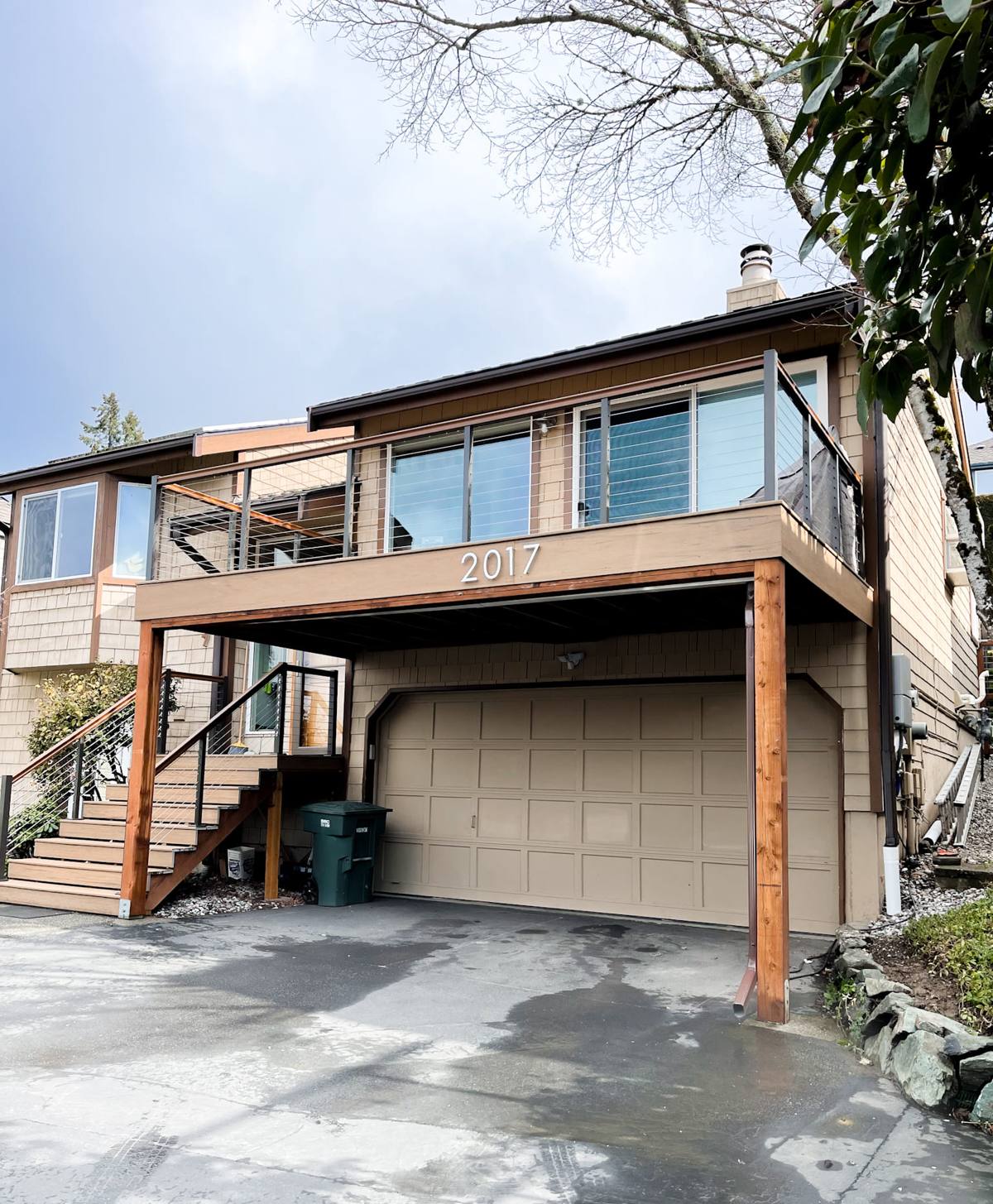
Signs Your Deck Needs Attention
Most deck problems don't announce themselves. They show up as small things a homeowner notices in passing and then forgets about — until the deck actually gives somewhere. Here's what we'd want you to flag before it becomes a safety issue:
- Boards that feel spongy, bounce, or flex more than they used to when you walk across them
- Green or black staining that keeps coming back within weeks of cleaning it off
- Rust streaks running down from screw heads or around post bases
- Gaps opening up between the deck and the house where the ledger board attaches
- Railings or posts that wiggle when you lean on them
- Stairs that feel less solid than the rest of the deck, especially near the bottom stringer
- A musty smell coming from underneath the deck, even when the surface looks dry
Any one of these on its own might be minor. A couple together, especially near a ledger board or stair stringer, usually means water has been getting into the structure for a while.
Why the Ledger Board Gets Extra Scrutiny
The ledger board — the piece that bolts the deck to the house — is the single most common source of serious deck failure, and it's also the hardest spot for a homeowner to inspect without pulling something apart. On a bay-exposed property, wind-driven rain can work its way behind poorly flashed ledger boards over several seasons before any staining shows up inside. We always check this connection first, because a deck can look structurally sound everywhere else and still be unsafe if the ledger has been quietly rotting behind the siding.
What a Correct Deck Repair Actually Involves
"Deck repair" gets used loosely in this trade, and it's worth being specific about what a thorough job covers, because a surface-only repair on a March Point deck tends to mask a problem rather than fix it.
A repair done right starts underneath the deck, not on top of it. We check the ledger board attachment and flashing, the condition of the joists and beams, the posts and footings, and the hardware holding all of it together, before we ever touch the decking boards themselves. Only after the structure is confirmed sound — or brought back to sound — does it make sense to address the surface: boards, railings, stairs, and finish.
Structural Components
This includes joists, beams, posts, and the connections between them. We're looking for soft or rotted wood, undersized or corroded joist hangers, and any post that's lost solid contact with its footing. On older decks we sometimes find hardware that was adequate when it was installed but was never rated for the kind of ongoing salt exposure a waterfront-adjacent lot delivers.
Fasteners and Hardware
This is where we see the most preventable failure. Standard coated deck screws and joist hangers corrode faster in salt air, and once a fastener starts rusting, it loses holding strength well before it looks obviously bad. We replace failing hardware with stainless steel or hot-dip galvanized fasteners rated for coastal exposure, even if that costs a bit more up front, because re-doing this work in five years costs more than doing it right once.
Decking, Railings, and Stairs
Once the structure and hardware are sound, we address what you actually see and touch — replacing rotted or cupped boards, tightening or rebuilding loose railings, and rebuilding stair stringers that have weakened at the base. We match existing materials where the rest of the deck is in good shape, and we're upfront when a full resurface makes more financial sense than board-by-board patching.
Repair or Replace? How We Help You Decide
Not every deck problem calls for a full rebuild, and not every deck is worth patching. The honest answer depends on what's failing and how much of the deck it affects. Here's the general framework we use when we're on site:
| Component | Common Issue | Usually Repairable | Usually Points to Replacement |
|---|---|---|---|
| Decking boards | Cupping, splintering, isolated rot | Scattered problem boards, structure sound | Widespread rot across most boards |
| Ledger board | Water intrusion, poor flashing | Localized rot, house framing unaffected | Extensive rot into house rim joist |
| Joists/beams | Soft spots, sagging | One or two isolated members | Rot spread across multiple joists |
| Posts/footings | Rot at base, settling | Footing sound, post needs sistering | Footing heaved, cracked, or undersized |
| Railings | Loose posts, weathered pickets | Reattach and reinforce | Code-noncompliant spacing or height |
| Fasteners | Surface rust, streaking | Swap to corrosion-resistant hardware | Widespread fastener failure throughout |
The general rule: if the framing and footings are sound, repair almost always makes sense. Once rot has spread through multiple structural members or the footings themselves are compromised, patching becomes a short-term fix that costs money without buying you real time.
Our Process for March Point Deck Repairs
- On-site inspection. We look above and below the deck — footings, posts, joists, ledger, hardware, and surface — and take note of anything specific to the site's exposure, like which side takes the worst of the weather.
- Honest assessment. We tell you what's actually wrong, what's cosmetic versus structural, and what your realistic options are, including doing nothing yet if that's genuinely fine.
- Written scope and estimate. You get a clear breakdown of what's being repaired, what materials and hardware we're using, and why, before any work starts.
- Repair from the structure out. Framing and hardware first, then decking, railings, and stairs — never the reverse.
- Site walkthrough at completion. We show you what was done and what to keep an eye on going forward, especially anything seasonal.
Materials That Hold Up to This Environment
We don't push one decking material as universally "best" — wood and composite each have real trade-offs, and the right call depends on your budget, the deck's exposure, and how much upkeep you want to take on.
Pressure-treated and cedar decking are less expensive up front and repair board-by-board easily, but they need more regular maintenance — cleaning, sealing, and moss treatment — to hold up against a long wet season. Composite decking costs more initially and resists moisture and moss growth better, but it's less forgiving to install correctly, and a poorly installed composite deck can trap moisture underneath just as easily as neglected wood. Whichever material a deck already has, our standard is to match hardware and fasteners to the exposure the deck actually sees, not just what came with it originally.
A Seasonal Maintenance Checklist
Whether we've just repaired your deck or it's still in good shape, this is the maintenance rhythm we'd recommend for a property in this area:
- Sweep debris and standing moss off the deck surface every few weeks during fall and winter
- Check for gaps or staining at the ledger board attachment once a year
- Look underneath the deck annually for soft spots, rust streaks, or musty odors
- Clean and reseal wood decking on the manufacturer's recommended schedule, typically every 1-2 years
- Keep gutters and downspouts clear so roof runoff isn't draining onto or under the deck
- Trim back vegetation that keeps sections of the deck shaded and damp
- Tighten railing hardware and check stair stringers before winter each year
Why Local Experience Matters for This Job
A deck repair crew that mostly works inland jobs can still do competent framing work, but they won't necessarily think to flag the things that matter specifically out here — the extra corrosion resistance a bay-exposed property needs in its hardware, the moss buildup pattern on a shaded lot near the water, or the way wind-driven rain behaves differently on an exposed site than a sheltered one. We work on homes throughout Anacortes and Skagit County, including waterfront and near-waterfront properties like March Point, and we bring that pattern recognition to every inspection — it's the difference between a repair that holds and one that needs redoing in a few years.
We also stay current on the permitting and code requirements that apply to deck work in this area, including railing height and guard spacing rules, so a repair doesn't leave you with something that fails inspection down the road if you ever sell or refinance.
Get an Honest Look at Your Deck
If your deck has any of the warning signs above, or it's just been a while since anyone looked at it from underneath, we're glad to come take a look. We'll give you a straight answer about what's actually going on, what it would take to fix it, and what it would cost — no pressure, no upsell. Fill out the form below to schedule a free estimate.