 Anacortes Exterior
 Building a Deck That Holds Up on March Point
March Point sits out on the water, wrapped by Fidalgo Bay and Padilla Bay, which means homes here catch more wind, more salt-laden air, and more direct rain than properties farther inland in Anacortes. A deck built to a generic spec — the kind that would be fine in a sheltered Skagit County subdivision — often shows problems within a few seasons out here: loose fasteners, soft spots at the ledger board, algae film that turns the surface slick every winter. Building a deck for March Point isn't about using fancier materials across the board. It's about knowing which details actually matter in this exposure and not cutting corners on them.
This page covers what we look at specifically for deck projects in this area — the climate factors, the build details that prevent early failure, our process from first visit to final walkthrough, and what ongoing care actually looks like once the deck is in.
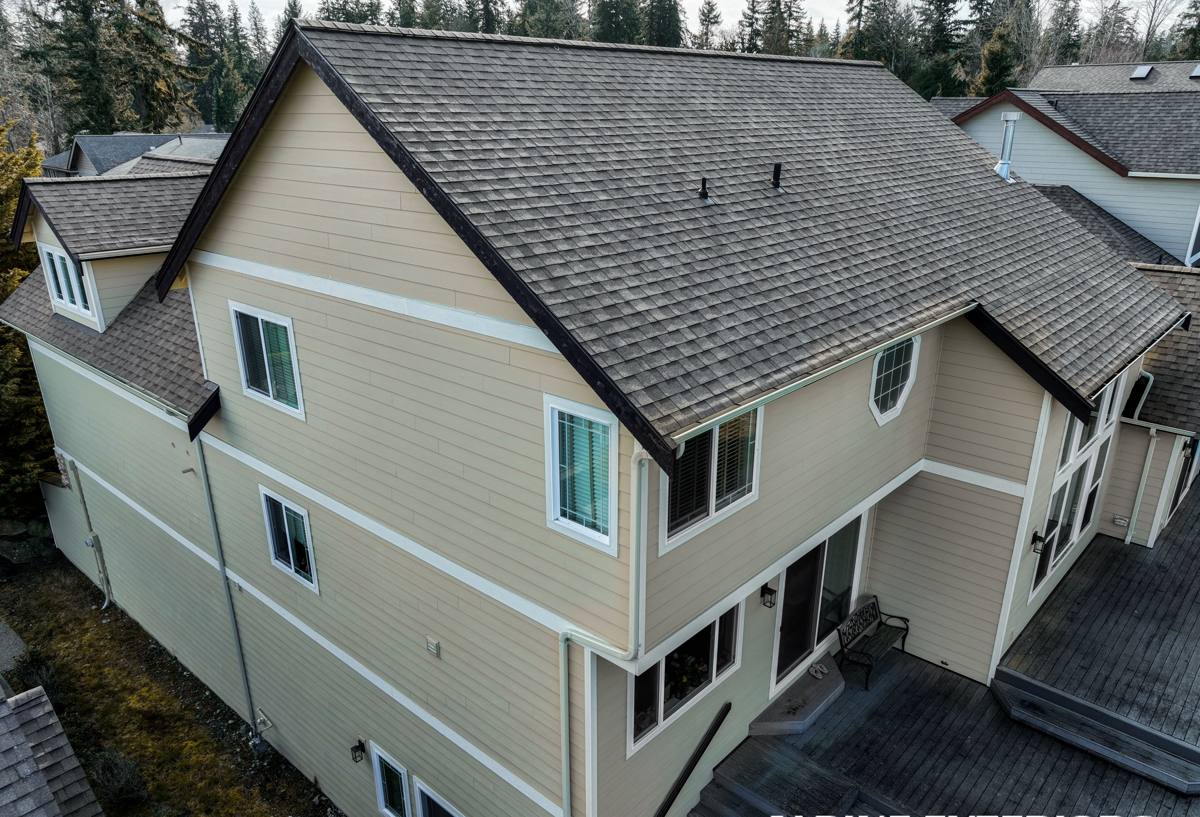
What the Local Climate Does to a Deck
Three things drive most of the deck problems we see in this part of Skagit County: salt air, driving rain, and a moss season that can run half the year.
Salt Air and Corrosion
Being close to open water means airborne salt settles on everything, including fasteners, flashing, and any exposed metal hardware. Standard electro-galvanized screws and joist hangers corrode faster near the water than they would a few miles inland. Once a fastener starts rusting, it loses holding strength long before that rust is visible from the surface, which is exactly why cheap hardware is one of the most common causes of deck failure we get called out to inspect.
Driving Rain
Wind off the bay doesn't just bring rain straight down — it pushes it sideways, into ledger connections, under poorly lapped flashing, and into end grain that isn't sealed. A deck that would shed water fine in a calm inland yard can take on moisture at every seam when the rain is coming in at an angle, which is common on exposed lots out toward the point.
Moss, Algae, and Extended Wet Season
Western Washington's wet months are long, and a deck that stays shaded or doesn't drain well grows moss and algae on the surface. Beyond looking bad, that growth holds moisture against the decking material and turns walking surfaces genuinely slippery — a real safety issue on stairs and landings.
What a Correctly Built Deck Involves
A deck is a structure first and a surface second. The parts nobody sees — footings, framing, fasteners, and flashing — determine whether the deck lasts 10 years or 30. Here's what we treat as non-negotiable on every build:
- Footings sized and set to local frost depth and soil conditions, not just poured to minimum code
- Ledger board attachment properly flashed and sealed where it meets the house — the single most common source of hidden rot on older decks
- Stainless or heavy hot-dip galvanized fasteners and joist hangers, not standard-grade coated screws, anywhere near this level of salt exposure
- Joist spacing matched to the decking material's actual span rating, not just "what's always been done"
- Proper drainage slope away from the house so water doesn't pool against the ledger or framing
- Stair stringers and railing posts anchored to resist both vertical load and lateral wind loading
None of this is exotic. It's standard good practice — but it's also the first place corners get cut on a budget build, and it's invisible until something fails.
Choosing a Decking Material for This Exposure
There's no single "best" decking material — the right choice depends on how much upkeep the homeowner wants to do and how much direct weather the deck takes. Here's how the common options actually compare in a salt-air, high-rain setting like March Point:
| Material | Upfront Cost | Maintenance | How It Handles This Climate |
|---|---|---|---|
| Pressure-treated wood | Lowest | Annual cleaning, periodic sealing | Affordable and repairable, but needs consistent upkeep to resist moss and moisture intrusion |
| Cedar | Moderate | Regular sealing to hold color and resist weathering | Naturally rot-resistant and handles moisture well, but salt air will gray it faster without maintenance |
| Composite decking | Higher | Occasional washing, no sealing | Resists rot and doesn't need sealing, but can stay damp under debris — surface care still matters for algae |
| PVC / capped polymer | Highest | Minimal — washing only | Fully sheds moisture and won't rot, best long-term option for low-maintenance owners near the water |
We'll walk through this trade-off honestly during your estimate. A composite or PVC deck costs more up front, but for a homeowner who doesn't want to be out there sealing wood every year or two, it's often the better long-term value out on this side of Anacortes.
Framing, Fasteners, and Hardware — Where We Don't Cut Corners
Even with a premium decking surface, a deck is only as good as what's underneath it. We spec structural lumber rated for ground contact where framing sits low or near soil, and we use fasteners and connectors rated for coastal exposure rather than the general-purpose hardware that's fine in a drier inland setting. Post bases are set to keep wood off the ground and away from standing water. Where the deck attaches to the house, flashing is installed to direct water away from the ledger board entirely rather than relying on caulk alone — caulk fails over time; properly lapped flashing doesn't depend on a seal staying intact.
Our Process for March Point Deck Projects
1. On-Site Walkthrough
We look at sun and wind exposure, existing drainage, soil conditions, and how the deck ties into the house. This is where we flag anything unusual about the lot — grade, tree cover, or an older structure we'd be tying into.
2. Design and Material Decision
We talk through decking material, railing style, and layout based on how the space will actually be used, then put together a straightforward quote with the trade-offs explained, not just a price.
3. Permitting
Most new decks and many substantial rebuilds in unincorporated Skagit County or within Anacortes city limits require a building permit, particularly once you're above a certain height or attaching structurally to the house. We handle that process rather than leaving it on the homeowner.
4. Construction
Footings and framing go in first and get inspected before decking goes down. We don't cover up structural work before it's been checked.
5. Final Walkthrough
We go over the finished deck together, including basic care guidance specific to the material you chose, so you know what upkeep to expect in year one versus year five.
Living With a Deck in a Wet, Salty Climate
Even a well-built deck needs some ongoing attention out here. The goal is to keep water moving and keep organic buildup off the surface before it turns into moss or algae film.
- Sweep leaves and debris off the surface and out of gaps between boards regularly through fall
- Rinse off salt film and general grime a few times a year, more often if the deck faces open water directly
- Check railing posts and stair connections annually for movement — loose hardware is easier to catch early than after it fails
- Keep gutters and downspouts near the deck clear so runoff isn't dumping extra water onto the structure
- Re-seal wood decking on the schedule appropriate to the product — skipping a cycle is when rot gets a foothold
- Address any soft, spongy, or discolored boards immediately rather than waiting for a full replacement to be needed
Why Local Build Experience Matters Here
A deck built to a statewide average spec will often underperform on a peninsula lot exposed to bay wind and salt air. Knowing to upgrade fastener grade, where flashing details matter most, and which decking materials actually hold up under this specific combination of moisture and wind isn't something you get from a generic install — it comes from building and later repairing decks in this exact kind of exposure, on this stretch of coastline, in Skagit County's marine climate. That experience shows up in the parts of the deck you never see: the footings, the ledger connection, the hardware grade — the things that determine whether you're calling someone back in five years or in twenty-five.
If you're planning a new deck or replacing one that's showing its age out on March Point, we're happy to come take a look and talk through honest options for your specific lot. Reach out using the form below for a free, no-pressure estimate.