 Anacortes Exterior
 Why Decks in Old Town Anacortes Take a Different Approach
Old Town Anacortes is one of the older, more established parts of the city, and the homes here reflect it — smaller lots, mature landscaping, and framing that was built to a different era's standards than what you'll find in a newer subdivision. A deck project here isn't a copy-paste job. It has to account for the age of the house it's attached to, the tight spacing between homes and trees, and a marine climate that's harder on wood and hardware than most homeowners realize until something starts to fail.
We build and replace decks throughout Anacortes and Skagit County, but Old Town projects come with their own short list of recurring issues: ledger boards tied into older framing, shaded yards that never fully dry out, and a salt-air environment that eats through the wrong fasteners in a fraction of the time it would take somewhere inland. Getting a deck right here means designing for those conditions from day one, not discovering them after the fact.
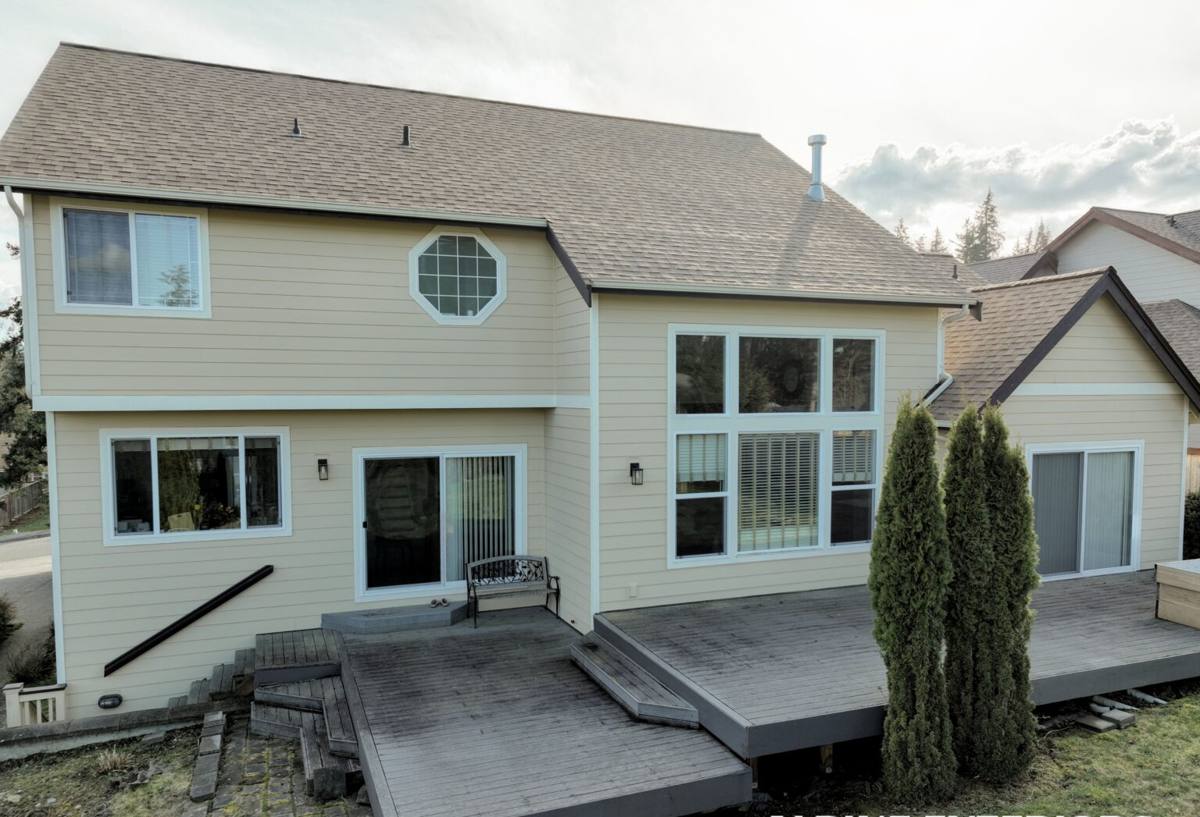
What Anacortes' Marine Climate Does to a Deck
Anacortes sits right on the water, and that proximity shapes everything about how a deck ages. Three factors matter most for Old Town homes specifically:
Salt Air
Airborne salt accelerates corrosion on any exposed metal — nails, screws, joist hangers, railing brackets. Fasteners rated for general outdoor use inland often show rust and pitting within a couple of seasons this close to Rosario Strait and the Guemes Channel. Once a fastener starts to corrode, it loses holding strength long before it looks obviously bad, which is part of what makes it dangerous to ignore.
Driving Rain
Skagit County gets a lot of rain, and Anacortes' exposure to wind off the water means it often comes in sideways rather than straight down. That matters for ledger flashing, board spacing, and how water sheds off the structure — a deck built for a calmer inland climate can trap moisture in places it was never designed to handle.
Moss Season
The long, mild, wet stretch from fall through spring is prime growing season for moss and algae on any horizontal wood surface that doesn't get much sun. Many Old Town lots have mature trees and tighter setbacks between houses, which means more shaded deck surfaces and a longer moss season than you'd get on an open, sun-exposed property.
Matching a New Deck to an Older Home
Tying a new or replacement deck into an older house is where a lot of the real decision-making happens. A few things we look at on every Old Town project:
What the Ledger Is Attaching To
The ledger board — the piece that bolts the deck to the house — has to be fastened into sound framing, and older homes don't always have the same rim joist construction you'd find in newer builds. Sometimes that means additional blocking or a different attachment method than a standard install. This is not a step to shortcut; a loose or improperly flashed ledger is one of the most common causes of deck failure industry-wide.
Working Around Existing Foundations and Grading
Older lots were often graded and built out before modern drainage standards, so footing placement, drainage paths, and existing hardscape all factor into where posts can realistically go. We work with what's there rather than forcing a design that ignores the site.
Keeping the Look Appropriate to the House
An older home with real architectural character usually looks best with a deck that respects its style — rail profiles, board orientation, and skirting that complement the house rather than looking like an obviously bolted-on addition. That's a design conversation as much as a construction one.
Choosing Decking Material for Salt Air and Moss
There's no single "best" decking material — the right choice depends on how much sun and shade the deck gets, how much upkeep you want to do, and your budget. Here's how the common options actually perform in an Old Town Anacortes setting:
| Material | Moss/Moisture Behavior | Salt Air Durability | Maintenance | Typical Lifespan |
|---|---|---|---|---|
| Pressure-treated wood | Absorbs moisture; needs sealing to resist moss and staining | Fasteners are the weak point — must be corrosion-rated | Annual cleaning, periodic sealing/staining | 10-15 years with upkeep |
| Cedar | Naturally moisture-resistant but still needs sealing in shaded spots | Wood itself holds up well; hardware still needs to be corrosion-rated | Regular cleaning and refinishing to maintain color/protection | 15-20 years with upkeep |
| Standard composite | Won't rot, but can hold surface moisture and grow moss/algae in shade if not cleaned | Good, as long as fasteners and hidden hardware are corrosion-rated | Periodic washing; no sealing or staining needed | 25+ years |
| Capped composite / PVC | Best resistance to moss and moisture staining of any option | Excellent — shell resists salt exposure well | Occasional washing | 25-30+ years |
For heavily shaded Old Town lots, we lean toward capped composite or PVC when budget allows, simply because it holds up better against moss with the least ongoing effort. Where wood is preferred for its look and cost, we're upfront that it will need more attention in a climate like this — that's a maintenance trade-off, not a flaw in the material.
Framing and Substructure: Where Old Town Decks Actually Fail
The decking surface is what you see, but the framing underneath is what determines whether the deck lasts. In our experience, problems on older Anacortes decks trace back to a handful of recurring causes:
- Ledger flashing that was missing, undersized, or improperly lapped, letting water get behind the house siding
- Standard (non-coated) fasteners and joist hangers corroding faster than expected due to salt air
- Insufficient airflow and drainage under the deck, letting moisture and moss build up on the framing itself
- Posts and footings set without enough consideration for the grading and drainage patterns unique to an older lot
Every one of these is preventable with the right materials and sequencing at the framing stage. It's also why we don't recommend patch repairs on an older deck without first checking what's happening underneath — a fresh coat of stain on failing framing just hides the problem for another season.
Our Process for Old Town Anacortes Deck Projects
The steps are the same for any custom deck, but the details at each stage are shaped by working in this specific neighborhood:
- Site visit and assessment — we look at sun/shade exposure, existing framing condition if it's a replacement, grading, and how close the structure sits to the water and prevailing wind.
- Design and material selection — we walk through decking, railing, and hardware options based on your budget, how much maintenance you want to take on, and how the deck should look against the house.
- Permitting — decks in Anacortes typically require a building permit depending on size and height; we handle that process as part of the project.
- Construction — proper ledger flashing, corrosion-rated fasteners and hardware throughout, and framing built with drainage and airflow in mind from the start.
- Final walkthrough — we go over the finished deck and what upkeep, if any, it will need going forward.
Railings, Fasteners, and Hardware Built for Salt Exposure
Hardware is the part of a deck homeowners think about least and that fails soonest in this climate if it's the wrong grade. On every Old Town project we use fasteners, joist hangers, and structural connectors rated for coastal or high-corrosion environments — typically stainless steel or heavy-duty coated hardware, rather than standard galvanized products that are fine inland but marginal this close to salt water.
Railings deserve the same attention. Metal railing systems and cable rail hardware are a common upgrade for the view lots Anacortes is known for, but they need corrosion-resistant components throughout, including the fittings you don't see once it's installed. Wood and composite railings have their own attachment hardware that needs the same standard applied.
Maintenance Checklist for Old Town Anacortes Decks
Whatever material you choose, a little seasonal attention goes a long way in this climate. We recommend homeowners keep an eye on:
- Sweeping leaves and debris off the deck surface regularly in fall, especially under trees
- Washing the deck surface at least once a year to remove moss, algae, and organic buildup before it stains or gets slippery
- Checking that gaps between boards and around posts are clear so water can drain instead of pooling
- Inspecting railings and stair connections for looseness once a year
- Watching for rust streaks around fasteners or hardware, which can signal a corrosion issue starting
- Re-sealing or re-staining wood decking on the schedule the product calls for, typically every 1-3 years depending on sun exposure
Why Local Experience in Old Town Anacortes Matters
A deck built without accounting for Anacortes' salt air, driving rain, and moss season will look fine the first year and start showing problems by the third or fourth. Framing and hardware choices that are perfectly adequate in a drier, more inland part of Skagit County aren't automatically right for a shaded lot two blocks from the water. Working with a crew that already builds in this specific neighborhood means those decisions get made correctly the first time — not corrected after a callback.
If you're planning a new deck or replacing one that's showing its age, we're happy to come take a look and talk through what makes sense for your home. Reach out for a free, no-pressure estimate using the form below.