 Anacortes Exterior
 Why Windows in Bow Wear Out Differently Than Windows Inland
Bow sits close enough to Samish Bay and the Salish Sea that homes here deal with a version of weather that inland Skagit County houses simply don't. Salt-laden air moves through on a regular basis, driving rain comes in sideways off the water during winter storms, and the shoulder seasons stay damp long enough to grow moss on anything that holds moisture. None of that is dramatic on its own, but stacked together over years, it's exactly the combination that finds every weak point in a window installation.
Salt air is corrosive to hardware — hinges, locks, balance mechanisms, and screws — long before most homeowners notice a problem with the glass itself. Driving rain tests horizontal surfaces and joints that would stay dry in a straight-down rain. And moss, once established on a sill or in a corner where water sits, holds dampness against wood and finish far longer than bare surfaces would. A window that was installed correctly shrugs all of this off. A window that was installed with shortcuts — missing flashing, poor sealant work, gaps behind the trim — starts showing it within a few years, not a few decades.
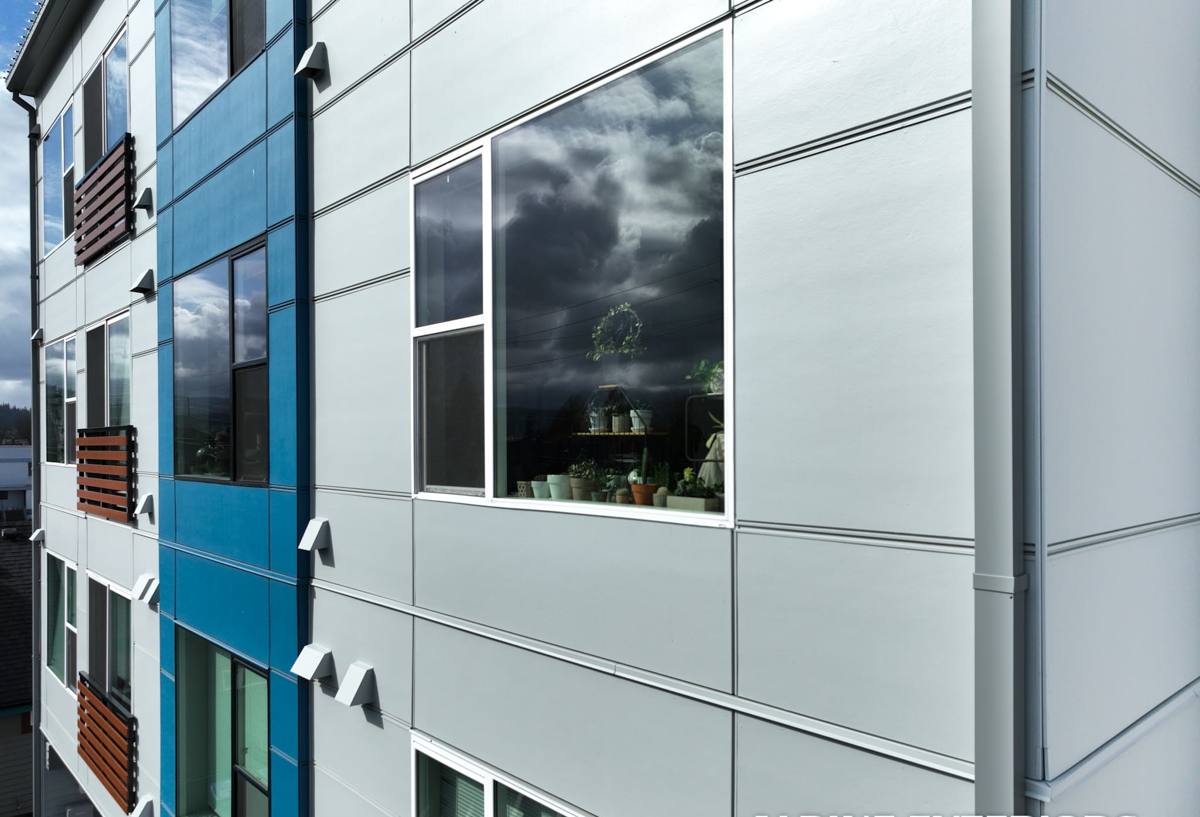
Common Window Problems We See on Bow Homes
Most of the calls we get from this area fall into a handful of categories. None of these are emergencies on day one, but they're worth acting on before they become bigger repairs.
- Soft or discolored wood at the bottom corners of the frame, usually where moss or debris has been sitting against the sill
- Windows that have gotten hard to open or lock, often from corroded hardware rather than a swollen frame
- Condensation building up between the panes of a double-pane window — a sign the seal has failed
- A persistent draft or cold spot near the window even when it's fully closed
- Visible daylight or a gap where the trim meets the siding, which usually means the original flashing or sealant has failed
- Paint or finish that's peeling specifically on the weather-facing side of the house, while other sides look fine
If you're seeing more than one of these on the same window, that's usually a sign the whole unit — not just the glass or the hardware — is due for replacement.
What a Correct Window Replacement Actually Involves
Window replacement looks simple from the outside: old window out, new window in. The part that actually determines whether the window lasts happens in the details most homeowners never see.
The Opening Itself
Before any new window goes in, the rough opening gets inspected for rot, soft framing, or water damage from the old installation. In a climate like ours, skipping this step is how a homeowner ends up paying for the same repair twice — once for the window, once a few years later for the rot it was installed over.
Flashing and Water Management
This is the single most important part of the job in a place that gets driving rain. Proper flashing directs water down and out and around the window, not into the wall cavity behind it. A sill pan at the bottom of the opening gives any water that does get past the window a way out instead of a place to collect. This is the step that's easiest to shortcut and the hardest one to fix later without pulling the window back out.
Air Sealing and Insulation
The gap between the new window frame and the rough opening needs to be filled with the right material — not stuffed with excess fiberglass, not left open, and not filled with a can of expanding foam that isn't rated for window installation. Done right, this step is what keeps drafts out and keeps your heating bill from creeping up over time.
Exterior Sealant and Trim
The visible caulk line around the outside of the window is doing real structural work, not just cosmetic work. It needs to be a sealant rated for exterior use and movement, applied to clean, dry surfaces, and it needs to be checked and refreshed over the life of the window — it's not a one-time, forever fix.
Choosing the Right Frame Material for a Coastal-Influenced Property
Frame material matters more here than it does twenty miles inland. Salt air and sustained moisture push some materials toward maintenance problems faster than others.
| Material | How It Handles Salt Air & Moisture | Maintenance | Where It Fits Best |
|---|---|---|---|
| Vinyl | Won't corrode or rot; performs consistently in damp, salty conditions | Low — occasional cleaning | Most Bow homes looking for a durable, low-upkeep option |
| Fiberglass | Very stable in temperature swings and moisture; resists corrosion well | Low | Homeowners wanting extra strength or larger window openings |
| Aluminum | Can corrode over time in salt-air environments without a marine-grade finish | Moderate to high | Limited applications; we discuss trade-offs case by case |
| Wood / wood-clad | Handles interior conditions well but the exposed exterior wood needs consistent upkeep in driving rain | High — regular refinishing | Homeowners committed to the maintenance schedule for the look they want |
We're not going to tell you a material is "bad" — every one of these has a legitimate place. What we will do is walk through the actual maintenance commitment of each option honestly, because the material that looks best on day one isn't always the one that's still low-maintenance five winters from now.
Our Process for a Bow Window Replacement
- On-site assessment. We look at the existing windows, the condition of the framing around them, and any signs of past water intrusion — not just the glass.
- Honest scope and options. You get a clear picture of what's actually needed, which windows can wait, and which frame materials make sense for your specific exposure to wind and rain.
- Precise measurement and ordering. Every opening gets measured individually — older homes in this area are rarely perfectly square, and assuming otherwise leads to gaps.
- Removal and opening inspection. Old windows come out carefully so we can actually see the condition of the framing before anything new goes in.
- Flashing, sill pan, and installation. This is where the weatherproofing happens — done to shed water, not just to hold the window in place.
- Insulation, sealing, and trim. The gap gets properly filled and sealed, and exterior trim is reinstalled or replaced to match.
- Final check and cleanup. We test operation, check the seal, and make sure the site is left clean.
What Affects the Cost of a Window Replacement in Bow
There's no single price that applies to every home, but the factors that move the number up or down are consistent. We'll go over all of these with you directly and in specific dollar terms once we've seen your windows — broad ranges below are just to set expectations.
| Factor | Why It Matters |
|---|---|
| Frame material | Vinyl is typically the most budget-friendly; fiberglass and wood-clad cost more upfront |
| Window size and count | Larger openings and whole-house replacements have different economies than one or two windows |
| Condition of the existing opening | Rot or water damage found during removal adds repair work before the new window goes in |
| Number of stories | Second-story and hard-to-access windows take more time and equipment |
| Glass package | Upgraded glazing for noise, energy performance, or extra UV protection changes the price per unit |
| Trim and exterior finish work | Matching existing trim or siding around the opening can add labor |
A Simple Checklist Before You Call for an Estimate
- Note which windows are hardest to open, close, or lock
- Check for fogging or moisture between the panes on any windows
- Look at the sills and bottom corners for soft wood, discoloration, or moss buildup
- Feel for drafts near the frame on a windy day
- Note whether the problem is on one side of the house (usually the weather-facing side) or spread evenly
- Have a rough idea of how many windows you're considering replacing now versus later
Walking through this before we arrive helps us focus the visit on what actually matters for your home, rather than a generic walkthrough.
Why Local Experience in Skagit County Matters
A crew that only occasionally works this close to the water tends to treat flashing and sealant work as a formality. A crew that works Bow, Edison, and the rest of the Anacortes area regularly treats it as the actual point of the job, because we've seen what happens when it's skipped — usually a few years later, when a homeowner calls about soft framing behind a window that looked fine from outside. We're familiar with how Skagit County's mix of salt air, sustained damp weather, and moss growth affects exterior work differently than it does even a short distance inland, and we plan the installation timing and materials around that instead of using a one-size-fits-all approach.
Timing Your Replacement Around Our Weather
Window replacement can happen in most conditions, but the driest stretches of the year give sealants and finishes the best chance to cure properly before the next round of driving rain arrives. If your windows are showing early signs of trouble — hardware that's stiff, a draft that's new this year, a sill that's starting to feel soft — it's worth scheduling an assessment before the wetter months rather than waiting until a window is failing outright. Planning ahead, rather than reacting to a problem in the middle of a storm, generally means a smoother install and a better result.
If you're in Bow or elsewhere around Anacortes and want a straightforward look at what your windows actually need, we're glad to come take a look. The estimate is free, there's no pressure attached to it, and you'll get a clear, honest picture of your options — just fill out the form below to get started.