 Anacortes Exterior
 Bow Decks Face a Different Set of Problems
Bow sits close enough to Samish Bay and the greater Skagit County coastline that decks here age differently than they would further inland. The combination of salt-laden air, near-constant winter rain, and a moss season that can stretch from October into May means a deck that looks fine in July can be hiding real damage by the time spring rolls around. We've repaired enough decks in this stretch of Skagit County to know the failure patterns are consistent: fasteners that corrode faster than the wood around them, ledger boards that trap moisture against the house, and horizontal surfaces that never fully dry out between storms.
None of this means a deck in Bow is doomed to a short life. It means the repair work has to account for the actual conditions the structure sits in, not just patch what's visibly broken. That's the difference between a fix that lasts one season and one that lasts ten.
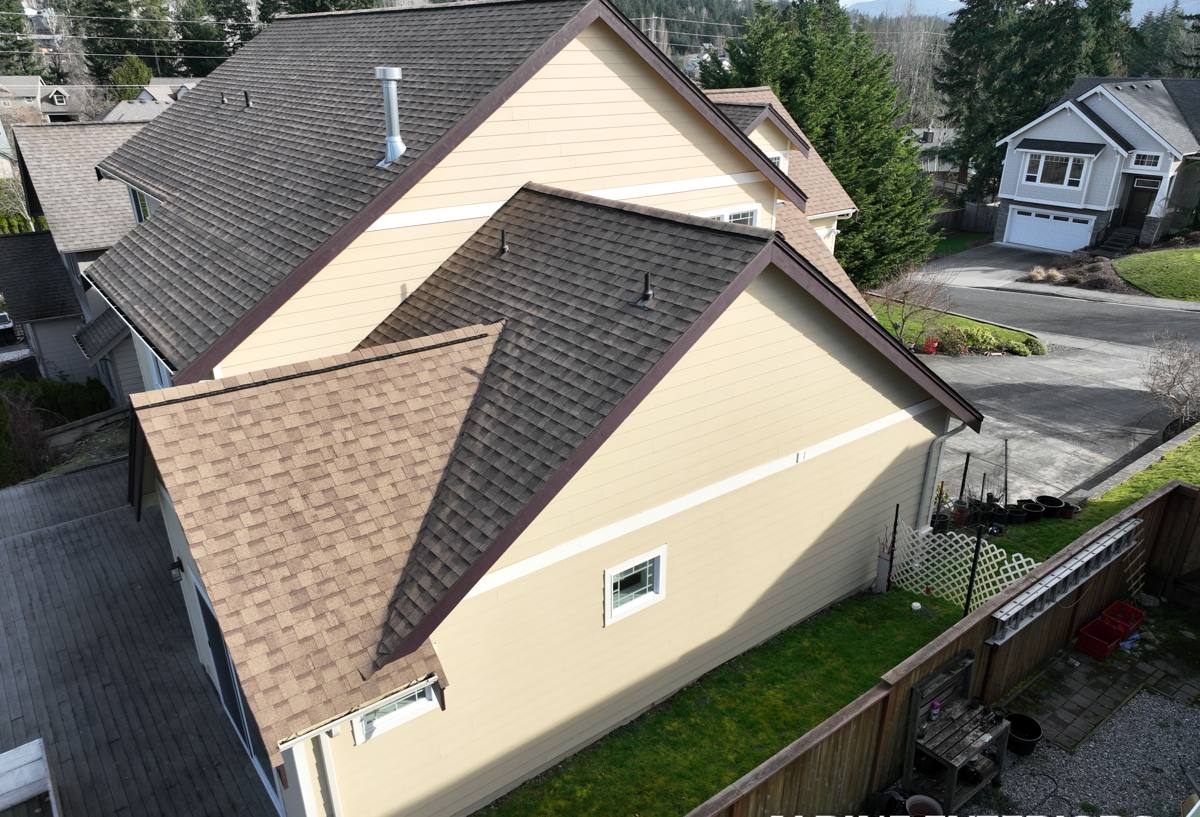
Signs Your Deck Needs Repair, Not Replacement
Most decks don't fail all at once — they fail in sections. Catching problems early is almost always the difference between a repair bill and a full rebuild. Walk your deck and check for these:
- Soft, spongy, or springy spots underfoot, especially near the house or stair landings
- Boards that have cupped, split lengthwise, or pulled away from their fasteners
- Rust streaks below screw or nail heads, or fasteners backing out on their own
- Green or black film that stays damp for days after rain stops
- A railing or post that flexes more than it did a year or two ago
- Gaps opening up where the deck meets the house siding or foundation
- Visible daylight or gaps between joists and the ledger board
Any one of these on its own might be a minor fix. Two or three together, especially near the ledger or support posts, usually points to something structural that's worth having looked at before it spreads.
What a Correct Deck Repair Actually Involves
The Ledger Board
The ledger is where the deck attaches to the house, and it's the single most common source of hidden rot on decks in this region. Rain that runs down siding and behind the deck's attachment point has nowhere to go, so it sits against the ledger and the house's rim joist. A proper repair means pulling back decking near the house, checking the flashing, and confirming the ledger is fastened correctly — not just cosmetically patched from the outside.
Framing and Joists
Joists that have gone soft or lost their crown can't be "fixed" with a coat of sealant. Depending on severity, we sister new lumber alongside a damaged joist, replace sections outright, or in some cases recommend reframing an area rather than repairing around a problem that will just resurface.
Decking Boards and Fasteners
Individual board replacement only works well if the framing underneath is sound. We also pay close attention to fastener choice — mismatched or undersized hardware is a frequent cause of the rust streaking and board-lifting we see on older decks in salt-exposed areas.
Railings and Stairs
Railings take constant hand pressure and lateral stress, and posts anchored into a deteriorating rim joist will loosen even if the railing itself looks fine. We check post attachment as part of any repair scope, not just the visible rail.
Repair or Replace? What Actually Drives the Decision
Homeowners often ask us to just "fix what's broken," which is reasonable — but sometimes the honest answer is that a repair would cost more over time than addressing the root cause once. Here's how we think through it:
| Factor | Favors Repair | Favors Replacement |
|---|---|---|
| Ledger/framing condition | Solid, dry, no soft spots | Rot at multiple joists or the ledger itself |
| Age of structure | Under 12–15 years | Original construction is 20+ years old |
| Extent of damage | Isolated boards or one section | Damage spread across most of the deck |
| Original build quality | Code-correct footings and flashing | Missing flashing, undersized footings |
| Budget goal | Extend usable life a few more years | Want long-term, low-maintenance surface |
We'll walk the deck with you and point out exactly what we're basing the recommendation on — we're not going to push a full rebuild when a targeted repair will genuinely hold up, and we won't recommend patching a deck whose framing is already compromised.
How Our Repair Process Works
- On-site assessment. We inspect the ledger, framing, posts, footings, and decking surface — not just the spot you called about, since problems in this climate rarely stay isolated.
- Written scope and estimate. You get a clear breakdown of what needs repair, what's optional, and what we'd flag as a future concern but isn't urgent yet.
- Demo of affected areas only. We remove only what needs to come out, protecting the surrounding structure and landscaping.
- Structural repair first. Framing, ledger, and post issues get resolved before any cosmetic work happens — there's no point installing new boards over a compromised frame.
- Flashing and moisture management. Anywhere the deck meets the house or a post meets a footing, we confirm water has a way to shed rather than pool.
- Surface and hardware finish. New decking, fasteners, and railing components go in matched to the existing structure where possible, or upgraded where the original hardware was the cause of the failure.
- Final walkthrough. We show you what was done and what to keep an eye on going forward.
Materials We Use and Why
Material choice matters more here than in drier climates, because the margin for error with moisture is smaller. Here's how we think about the common options:
| Material | Strengths | Trade-offs |
|---|---|---|
| Pressure-treated lumber | Affordable, easy to source-match for repairs, proven track record | Needs periodic sealing; can cup if not maintained |
| Cedar | Natural rot resistance, ages well visually | Softer surface, higher cost, still needs finish maintenance |
| Composite decking | Low maintenance, consistent appearance, no splintering | Higher upfront cost; substructure still needs to be built for real moisture control |
| Stainless or coated fasteners | Resist the corrosion salt air accelerates | Cost more than standard fasteners — worth it here |
We don't upsell composite decking as a cure-all. It solves surface-level maintenance, but if the framing underneath isn't properly flashed and ventilated, moisture problems will still show up — just underneath instead of on top. Our standard is to get the structure right first, then let you choose the surface material that fits your budget and maintenance appetite.
Moss, Salt Air, and Long-Term Maintenance
Bow's proximity to the bay means salt-laden moisture in the air even on dry days, and the surrounding tree cover common in this part of Skagit County keeps decks shaded and slow to dry after rain — ideal conditions for moss and mildew. A little maintenance goes a long way toward avoiding another repair call:
- Sweep debris and needles off the deck surface regularly, especially in fall
- Keep gutters and downspouts clear so runoff doesn't dump directly onto the deck or ledger
- Rinse off moss buildup before it stains or holds moisture against the boards
- Reseal wood decking on the manufacturer's recommended schedule, not just when it looks faded
- Check fastener heads once a year for rust or backing-out, particularly on railings
- Trim back vegetation that's shading the deck and slowing its drying time
None of this replaces a proper repair when there's already structural damage, but it does stretch the life of a deck that's currently sound.
Why a Crew That Already Works Bow Matters
Deck problems in Bow tend to look different from deck problems in a drier inland town, and a crew that hasn't worked this specific stretch of coastline can miss what's actually driving the damage. We've seen how quickly moisture moves through a ledger connection here, which fastener types hold up against the salt air and which don't, and how long moss season really runs in this pocket of Skagit County. That local pattern recognition means fewer surprises mid-repair and a scope that accounts for the whole problem the first time — not just the board that finally gave out.
It also means straightforward logistics: permitting familiarity where required, realistic scheduling around the wet season, and a crew that isn't guessing at what "normal" wear looks like on a deck built to handle this specific climate.
Get a Straight Answer on Your Deck
If your deck has soft spots, rust staining, moss buildup, or just doesn't feel as solid as it used to, it's worth having someone look before the damage spreads further into the framing. We offer free, no-pressure estimates for deck repair in Bow and the surrounding Anacortes area — use the form below and we'll take a look and tell you honestly what it needs.