 Anacortes Exterior
 Decking in Bow Has to Answer to the Weather, Not the Showroom
Bow sits close enough to the water that salt air is part of daily life, and close enough to the foothills that rain and shade linger long after storms move through. A deck here isn't just an outdoor living space — it's a structure that has to shed water fast, resist the slow creep of moss and algae, and hold up to salt-laden air without corroding its own fasteners. Composite decking handles a lot of that better than wood, but only when it's installed with those specific conditions in mind. A composite deck built the way it would be in a dry inland town won't perform the same way in Skagit County.
This page is about one job, done right, in one place: composite decking for homes in and around Bow. Not a general product pitch — the actual decisions that matter when the deck you're building has to survive marine air, moss season, and a lot of wet-dry cycling every year.
What the Local Climate Actually Does to a Deck
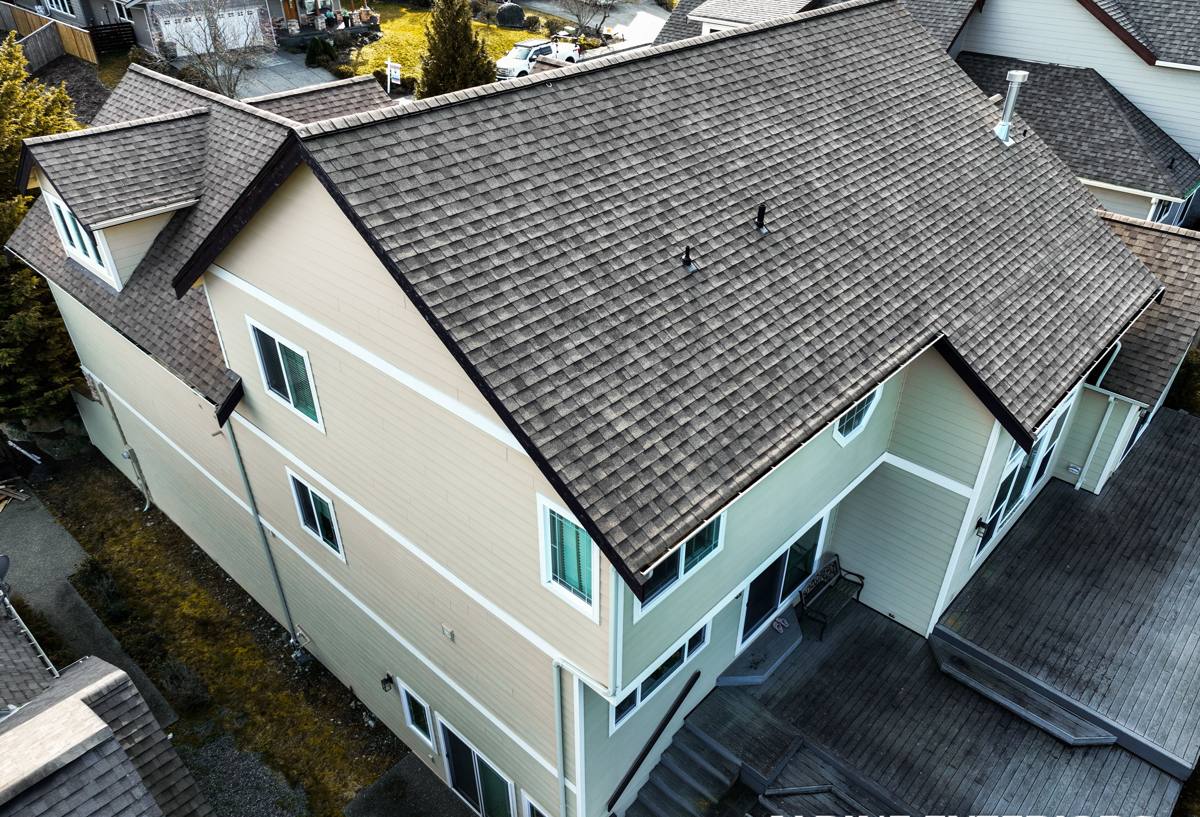
Three things drive most of the decking problems we see in this part of Skagit County:
Salt air
Even a few miles inland, airborne salt accelerates corrosion on anything metal — screws, joist hangers, railing hardware. Cheap or mismatched fasteners are usually the first thing to fail, well before the decking boards themselves show any wear.
Driving rain
Wind-driven rain doesn't just fall on a deck, it gets pushed sideways into gaps, ledger connections, and end grain. If the substructure and flashing details aren't built to shed that water immediately, moisture sits and works its way into framing over time, even under boards that are themselves waterproof.
Moss and algae season
Long stretches of shade, moisture, and mild temperatures make this a good climate for moss and green algae film, especially on north-facing decks or under tree cover. Composite boards resist rot, but the surface can still grow a film if drainage and airflow underneath aren't handled correctly, and if the board surface texture isn't suited to staying walkable when wet.
None of this means composite decking is a bad fit for Bow — it's actually a strong one. It just means the installation details matter more here than they would somewhere drier.
Why Composite Over Wood for This Area
We install both wood and composite decking, and we're honest with clients about the trade-offs rather than pushing one product across the board. For Bow specifically, composite tends to be the better long-term fit for a few concrete reasons:
- It doesn't rot, splinter, or need refinishing the way untreated or lightly treated wood does after repeated wet-dry cycles.
- Modern capped composite boards resist moss and algae staining far better than bare wood, and clean up with a simple scrub rather than sanding or re-sealing.
- It doesn't require the yearly staining schedule that keeps a lot of wood decks looking decent — which matters when the rainy season narrows your maintenance window anyway.
- Color and texture stay consistent over the life of the deck instead of graying unevenly the way wood does under partial shade.
The trade-off is upfront cost and the fact that composite is less forgiving of installation mistakes — gaps, fastening, and ventilation have to be right the first time, because you can't sand out a mistake the way you sometimes can with wood.
What a Correct Composite Deck Installation Actually Involves
Substructure and moisture management
The framing underneath a composite deck does most of the real work of keeping the structure sound. That means joist tape or another moisture barrier on top of the joists, proper slope and spacing so water drains away from the house rather than pooling, and ledger flashing that actually separates the deck from the wall assembly instead of just being screwed against it. This is the part of the job that isn't visible once the boards go down, and it's also the part that determines whether the deck is still solid in ten years.
Fasteners and hardware
Given the salt air, we use hardware rated for coastal or marine exposure — stainless or coated fasteners and hangers rather than standard galvanized, which corrodes faster here than it would further inland. This is one of the most common shortcuts we see on decks that failed early: the boards held up fine, but the fasteners holding the frame together didn't.
Board spacing and airflow
Composite boards need consistent gapping for drainage and for seasonal expansion and contraction. Too tight, and water sits on the surface and speeds up moss growth; too loose, and debris collects underneath and clogs drainage over time. Airflow underneath the deck matters just as much — enclosed skirting without vents traps moisture against the framing.
Surface texture and finish
In a climate with this much rain and shade, we favor board finishes with real slip resistance and a surface texture that sheds a moss film easily during routine cleaning, rather than a smooth, glossy finish that looks good on a showroom sample but stays slick when wet.
Comparing Decking Materials for a Bow Property
| Material | Moisture / Rot Resistance | Moss & Algae Resistance | Maintenance | Typical Lifespan |
|---|---|---|---|---|
| Pressure-treated wood | Moderate — depends on sealing | Low without regular cleaning | Annual stain/seal recommended | 10–15 years |
| Cedar | Good naturally, degrades once finish wears | Low to moderate | Regular refinishing needed | 12–18 years |
| Early-generation composite | Good | Moderate — can absorb surface moisture | Periodic scrubbing | 15–20 years |
| Capped composite | Excellent | Good with proper drainage | Occasional rinse/scrub | 25+ years |
| PVC decking | Excellent | Good | Low | 25–30 years |
Within composite specifically, the difference between a mid-tier capped board and a budget board usually shows up first in fade resistance and how the surface handles years of damp shade — not in the first season, but by year five or six.
Our Process, Start to Finish
- On-site assessment — we look at drainage, sun/shade exposure, existing framing condition (if it's a replacement), and how the deck ties into the house.
- Material selection — we walk through board options with the climate factors above in mind, not just color and price.
- Permitting — where required by height, size, or attachment to the structure, we handle the permit process rather than leaving it to the homeowner.
- Framing and moisture barrier install — this is where the long-term durability of the deck actually gets decided.
- Decking, fastening, and railing install — using coastal-rated hardware throughout.
- Final walkthrough — we go over basic care and answer questions before we consider the job done.
Maintaining a Composite Deck in a Mossy, Salty Climate
Composite decking is lower-maintenance than wood, not maintenance-free. In this climate, a little seasonal attention goes a long way toward keeping the surface clean and the drainage working:
- Sweep leaves and debris off the surface regularly in fall, especially near walls or under overhangs where moisture lingers.
- Rinse and scrub with a soft-bristle brush and mild soap a couple of times a year to prevent moss and algae film from establishing, especially on shaded sections.
- Check that gaps between boards and under skirting stay clear so water keeps draining rather than pooling.
- Inspect railing posts and fastener points once a year for any early corrosion, particularly on decks closer to the water.
- Avoid pressure washing at close range or high pressure, which can damage the board's cap layer over time.
Permits, Railings, and Local Code Considerations
Most deck projects in unincorporated Skagit County and around Bow need a permit once you're past a certain height or square footage, and railing height and baluster spacing are governed by code, not preference. We handle these requirements as part of the job rather than treating them as an afterthought, since a deck that isn't built to code can create problems at resale or with insurance down the line.
Why Hiring Local Actually Matters Here
A crew that works Bow and the surrounding Anacortes area regularly already knows which fastener grades hold up against the salt air, which sites drain poorly after a wet fall, and which board finishes actually resist moss in shaded yards versus which ones just claim to on a spec sheet. That's the kind of knowledge that comes from building and revisiting decks in this exact climate, not from a general product manual. It's also why we stand behind the workmanship on every deck we build — the install decisions we make up front are what determine whether you're dealing with a maintenance issue or a structural one ten years out.
If you're weighing composite decking for a home in Bow, we're happy to take a look at your site, talk through material options honestly, and put together a straightforward estimate — no pressure, no pushy upsell, just a clear picture of what the job involves and what it costs. The form below is the easiest way to get that started.