 Anacortes Exterior
 Board & Batten Siding for Bow Properties
Bow sits in that stretch of Skagit County between Anacortes and Bellingham where open farmland meets saltwater exposure. Homes here take a different kind of weathering than a house tucked into a sheltered inland subdivision — wind off the water, driving rain that comes in sideways more often than straight down, and a moss season that seems to start earlier and last longer every year. Board and batten siding, with its bold vertical lines and deep shadow reveals, is a popular choice for both new builds and remodels in this area. But the style only holds up if the installation underneath it accounts for what this climate actually does to a home's exterior.
This page covers what board and batten siding needs to perform well on a Bow property, what a correct installation actually involves, and why we install it exclusively in James Hardie fiber cement rather than the wood, vinyl, or engineered-wood alternatives also sold under the "board and batten" name.
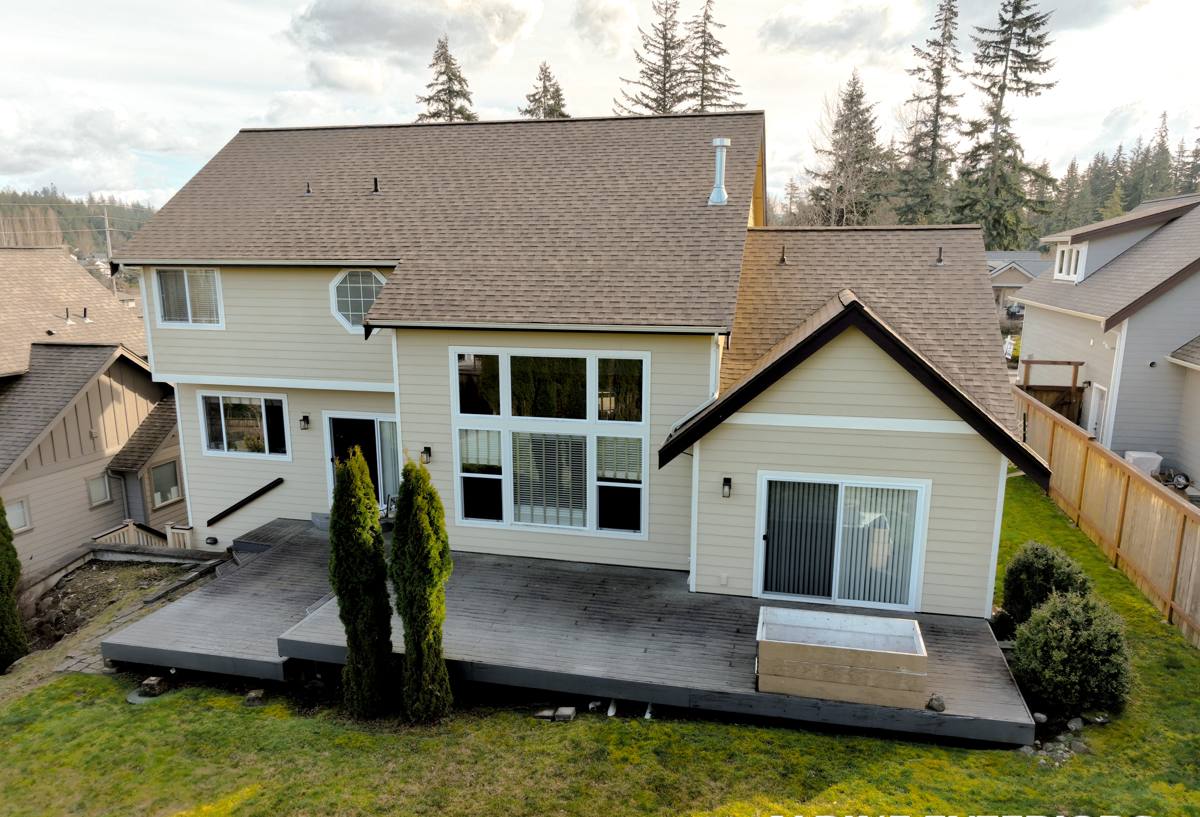
What Bow's Climate Does to Vertical Siding
Board and batten is more vulnerable to certain failure modes than horizontal lap siding, simply because of its geometry. The vertical seams between boards and battens create more edge exposure, and every batten strip is a place where water can be pushed by wind-driven rain if the flashing and fastening details aren't right. In a climate like Bow's, three factors matter more than most homeowners realize:
Salt Air and Corrosion
Proximity to Samish Bay and the greater Salish Sea means a steady low-grade dose of salt in the air, even on properties that aren't waterfront. Salt accelerates corrosion in fasteners, flashing, and any exposed metal trim. Standard fasteners that would be fine forty miles inland can start to bleed rust stains down a batten face within a few years near the water. This is a materials-selection problem as much as an installation problem — the wrong fastener spec quietly undermines an otherwise good siding job.
Driving Rain
Wind off the water doesn't just bring rain straight down — it pushes it sideways into vertical seams and up under horizontal trim. Board and batten siding has more vertical seam length per square foot than lap siding, which means more opportunities for wind-driven moisture to find a gap if the weather-resistive barrier, flashing, and caulking details aren't done correctly the first time.
Moss and Sustained Dampness
Skagit County's long, wet shoulder seasons keep exterior surfaces damp for extended stretches, especially on north-facing walls and anywhere tree cover blocks the sun. Moss and algae growth on siding isn't just cosmetic — sustained organic growth holds moisture against the substrate longer than bare siding would, which is a slow but real threat to any material that isn't fully moisture-stable.
What a Correct Board & Batten Installation Involves
Board and batten looks simple from the street — vertical boards with a batten strip covering each seam — but the details that make it perform for 30+ years are mostly invisible once the job is done. A correct install includes:
- A continuous, properly lapped weather-resistive barrier behind the siding, with all penetrations and seams sealed before a single board goes up
- Correct fastener spacing and depth per the manufacturer's specification — over-driven or under-driven fasteners are one of the most common causes of early siding failure
- Batten strips fastened independently of the base boards where the system calls for it, so the assembly can handle normal wood movement without cracking paint or opening seams
- Proper flashing at every horizontal transition — window and door heads, roof-to-wall intersections, and the base of the wall where siding meets foundation
- Rain-screen or drainage gap detailing appropriate to the wall assembly, so any moisture that does get past the surface has somewhere to go instead of sitting against the sheathing
- Corrosion-resistant fastener and flashing selection suited to a marine-influenced climate, not just a generic inland spec
Skip any one of these and the siding can still look right for a year or two. The failures that matter — trapped moisture, fastener corrosion, seam separation — tend to show up three, five, or ten years down the road, well after a corner-cutting installer has moved on to the next job.
Why We Install Board & Batten Only in James Hardie Fiber Cement
Board and batten is sold in several materials — primed spruce, cedar, vinyl, engineered wood, and fiber cement — and we get asked regularly why we've standardized on one. The short answer is that vertical board profiles put more stress on a material's dimensional stability and moisture resistance than most horizontal siding does, and in a climate like Skagit County's, that stress shows up faster in the wrong product.
Primed wood and engineered-wood board and batten look excellent on day one, but they depend heavily on paint film integrity and correct sealing at every cut edge and seam to keep moisture out. In a wall system with this much vertical seam exposure, that's a lot of vulnerable edges to maintain perfectly, year after year, in a climate that doesn't give siding much of a dry season to recover in. Vinyl board and batten avoids the moisture-absorption issue but flexes and fades differently than a rigid material, and it doesn't hold the crisp shadow lines that make board and batten a distinctive look in the first place — the reveal depth is part of what people are paying for with this style.
James Hardie fiber cement is non-combustible, dimensionally stable, and doesn't absorb water the way wood-based products do, which matters directly for a profile with this many seams. Hardie's ColorPlus factory finish is baked on under controlled conditions and backed by its own finish warranty, which removes the field-painting variable that causes most premature failures on wood-based board and batten. It's also engineered in climate-specific HZ formulations, so what we install on a Bow property is built for a wet marine climate rather than a generic national spec.
Comparing Board & Batten Materials for a Bow Property
| Factor | Primed Wood / Engineered Wood | Vinyl | James Hardie Fiber Cement |
|---|---|---|---|
| Moisture behavior | Absorbs water at cut edges and seams; relies on paint film | Doesn't absorb water, but seams can flex and gap over time | Moisture-resistant, dimensionally stable |
| Salt air / corrosion exposure | Paint film degrades faster near salt air; fasteners need matching upgrade | Panel itself is inert, but trim fasteners still need corrosion resistance | Panel is inert; still requires correct fastener spec |
| Fire resistance | Combustible | Combustible | Non-combustible |
| Shadow line / batten reveal | Authentic, but depends on install quality | Shallower reveal, less crisp shadow | Authentic deep reveal, factory-consistent profile |
| Finish maintenance | Repaint every 5-10 years, more often near the water | No paint, but fades and chalks over time | Factory ColorPlus finish, warrantied, repaint interval much longer |
| Long-term cost | Lower upfront, higher lifetime maintenance | Lowest upfront, mid-range lifetime | Higher upfront, lowest lifetime maintenance in this climate |
Our Process for Bow Board & Batten Projects
- On-site assessment. We look at wall orientation, tree cover, moss patterns on the existing exterior, and how exposed the property is to wind and rain off the water — this shapes the flashing and drainage detailing plan before we quote anything.
- Detailed proposal. You get a scope that specifies the Hardie board and batten product line, ColorPlus color, fastener and flashing spec, and a realistic timeline — not a vague line-item estimate.
- Prep and moisture check. We inspect sheathing condition before covering it, since board and batten replacement is the right time to catch and fix any hidden moisture damage from a prior siding system.
- Weather barrier and flashing installation. This is the step that determines whether the siding performs for decades or fails early — we don't rush it or treat it as a formality.
- Board and batten installation to spec. Correct fastener pattern, batten spacing, and reveal consistency, installed per Hardie's published guidelines for our climate zone.
- Final walkthrough. We review the finished work with you, including care and maintenance basics specific to a Bow property's exposure.
Maintaining Board & Batten Siding in a Moss-Prone Marine Climate
Fiber cement is low-maintenance compared to wood, but "low-maintenance" doesn't mean "no maintenance," especially in a climate that grows moss on roofs, decks, and fences without much encouragement. A simple seasonal routine goes a long way:
- Rinse siding gently once or twice a year, focusing on north-facing walls and areas shaded by trees where moss and algae take hold first
- Keep gutters clear so overflow isn't running down the face of the siding during heavy rain events
- Trim back vegetation and tree limbs that keep a wall surface shaded and damp longer than the rest of the house
- Check caulking at trim joints and penetrations annually — caulk is a wear item and needs periodic renewal regardless of the siding material behind it
- Watch for any staining below fasteners or flashing, which can be an early sign of a corrosion issue worth addressing before it spreads
Why a Crew That Already Works Bow Matters
Skagit County's exposure varies a lot over short distances — a property near the water deals with different wind loading and salt exposure than one set back on higher ground, even a few miles apart. A crew that regularly works this area already has a feel for which walls need extra attention to flashing and drainage detailing before the first board goes up, rather than learning that the hard way after a callback. Local permitting and inspection norms for Skagit County and the Town of Anacortes also move faster when the contractor already knows the process, which keeps a project on schedule instead of losing days to avoidable back-and-forth.
There's also a practical service argument: a company with an established local presence is easier to reach for warranty questions or a maintenance check years down the road, rather than a crew that did one job in the area and moved on.
Get a Free Estimate
If you're considering board and batten siding for a home in Bow, we're happy to walk the property, talk through what your specific wall exposures need, and put together a straightforward estimate — no pressure, no hard sell. Use the form below to get started.